#CNN: #Trump – #Xi meeting / #TradeWar – #China wants even more control over rare earths
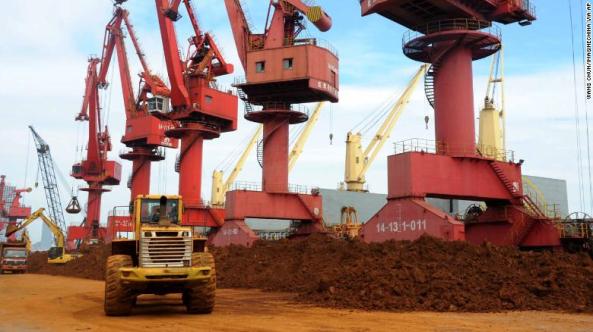
Hong Kong (CNN Business) China is preparing to tighten its grip on the supply of a group of minerals the global tech industry can’t live without.

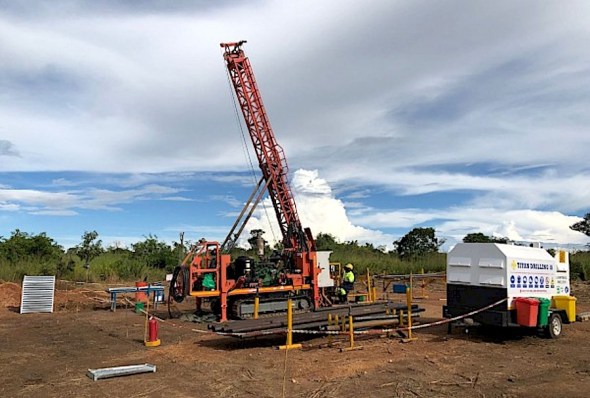
Ivanhoe Mines secured on Tuesday an additional C$612 million (about $464m) granted by its largest shareholder, China’s state-owned CITIC Metal, in April this year, which the Canadian miner is using to build a giant copper mine in the Democratic Republic of Congo.
The investment, now fully approved, is CITIC’s second major one in less than a year, bringing its total financing to about $1 billion.
WASHINGTON, June 20 (Reuters) – U.S. President Donald Trump and Canadian Prime Minister Justin Trudeau ordered officials on Thursday to develop a plan for U.S.-Canada collaboration on “critical minerals,” the White House said in a statement after a meeting of the two leaders.
Washington has grown concerned about its dependence on imports of rare earth minerals from China after Beijing suggested using them as leverage in their trade war.
Rare earths, a group of 17 elements that appear in low concentrations in the ground, are used in a wide variety of products ranging from lasers and military equipment to magnets found in consumer electronics.
China supplied 80% of the rare earths imported by the United States from 2014 to 2017.
Trump and Trudeau “instructed officials to develop a joint action plan on critical minerals collaboration,” the White House statement said. (Reporting by Eric Beech; Editing by Mohammad Zargham and Jonathan Oatis)
Source: https://finance.yahoo.com/news/1-trump-trudeau-seek-collaboration-215739132.html
A key goal in graphene research is the mass production of graphene with high quality and at low cost. Energy-storage applications typically require graphene in powder form, but so far production methods have resulted in powders with a large number of structural defects and chemical impurities, as well as nonuniform layer thickness. This has made it difficult to prepare high-quality graphene inks.
In the new paper, the researchers have demonstrated a new method for preparing graphene inks that overcomes these challenges. The method involves growing nitrogen-doped graphene nanosheets over NaCl crystals using direct chemical vapor deposition, which causes molecular fragments of nitrogen and carbon to diffuse on the surface of the NaCl crystals. The researchers chose NaCl due to its natural abundance and low cost, as well as its water solubility. To remove the NaCl, the coated crystals are submerged in water, which causes the NaCl to dissolve and leave behind pure nitrogen-doped graphene cages. In the final step, treating the cages with ultrasound transforms the cages into 2-D nanosheets, each about 5-7 graphite layers thick.
The resulting nitrogen-doped graphene nanosheets have relatively few defects and an ideal size (about 5 micrometers in side length) for printing, as larger flakes can block the nozzle. To demonstrate the nanosheets’ effectiveness, the researchers printed a wide variety of 3-D structures using inks based on the graphene sheets. Among their demonstrations, the researchers used the ink as a conductive additive for an electrode material (vanadium nitride) and used the composite ink to print flexible electrodes for supercapacitors with high power density and good cyclic stability.
Read more at: https://phys.org/news/2019-06-graphene-based-ink-printable-energy-storage.html
Washington: The United States will team up with Australia and Canada to help countries around the world develop their reserves of minerals like lithium, copper and cobalt, the State Department said on Tuesday.
The move is part of a multi-pronged strategy to reduce global reliance on China for materials crucial to high-tech industries.
Washington has grown increasingly concerned about its dependence on mineral imports after Beijing suggested using them as leverage in the ongoing trade war between the two countries.
Disruption to minerals trade would interrupt the manufacture of a wide range of consumer, industrial and military goods, including mobile phones, electric vehicles, batteries, and fighter jets.

During a press conference with Polish President Andrzej Duda, President Trump announced that the U.S. is going to deploy 1,000 more troops to Poland. Even though the soldiers and hardware will be taken from the 52,000-strong U.S. contingent in neighboring Germany, U.S. military deployments and operations require a great deal of energy and leave a major carbon footprint. A new report from Brown University has estimated that since the invasion of Afghanistan in 2001, the U.S. military has emitted 1,212 million metric tons of greenhouse gases. In 2017 alone, CO2 emissions added up to 59 million tons – more than many industrialized nations including Sweden and Switzerland.
BP’s Statistical Review of World Energy records carbon dioxide emissions in different countries and in 2017, total estimated CO2 emissions in Sweden came to 48 million tons by comparison. The U.S. military also produced more greenhouse gases than Morocco, Peru, Hungary, Finland, New Zealand and Norway. According to the research from Brown University, the Pentagon would be the world’s 55th largest CO2 emitter if it was a country.
War and preparation for it are fossil fuel intensive activities and along with being the single largest consumer of energy in the U.S., the Department of Defense is the world’s single largest institutional consumer of petroleum. 70% of all energy gets consumed by moving and utilizing troops and equipment around the world, involving the burning of vast quantities of jet fuel and diesel. Military equipment is not known for its fuel efficiency and it is estimated that the country’s remaining fleet of 60,000 humvees only gets four to eight miles per gallon of diesel. Military real estate also leaves a considerable carbon footprint and in FY2017, the Department of Defense spent $3.5 billion heating, cooling and providing electricity to 560,000 buildings at 500 installations.
Rare-earth elements are often added in very small amounts to composites that allow them to interact and produce results that neither element could do on their own. An example of rare-earth elements mixing with other alloys to form key ingredients is our military vehicles’ impact-shattering protective armor. Rare-earth elements are vital components in our nation’s next generation weapons and are already a key component in:
While the amount of rare-earth elements needed for our national defense systems is small in some cases, the amount is rather large in other products. For example:
With the U.S. having 14 Arleigh Burke guided missile destroyers either already under construction or on order, and 2,663 F-35s in the production pipeline, the availability of rare-earth elements is critical to the nation’s defense.
Read more at: https://inhomelandsecurity.com/rare-earth-elements-homeland-security/

The United States Department of Energy (DOE) has apparently started referring to carbon dioxide as “molecules of freedom” and natural gas as “freedom gas” , according to its latest press release.
In a statement announcing an increase of natural gas exports, energy officials used the surprising new terms. The statement announces the expansion of a facility in Quintana, Texas, that produces liquefied natural gas (LNG) for worldwide export.

Terbium is used to make flat-panel displays. Thulium can be found in your microwave. Dysprosium demand is growing with increased production of wind turbines and electric vehicles.
The 17 so-called “rare earth metals,” of which the three mentioned above are members, may not have household names like gold or copper, but they play strong supporting roles in many of the consumer electronics we enjoy on a daily basis, from our TVs to smartphones.
They also have important high-tech military, energy, health care and transportation applications. According to the Rare Earth Technology Alliance (RETA), each Lockheed Martin F-35 requires some 920 pounds of the metals. Some nuclear-powered submarines use up to 9,200 pounds.
All of this could be something of a concern in the near term. China, which accounts for close to 80 percent of the world’s annual production of rare earth metals, is allegedly preparing to curb the export of these important materials to the U.S. as a bargaining chip in the ongoing trade war between the two superpowers, and as retaliation for the recent U.S. ban on imports from Chinese telecommunications firm Huawei. In a tweet dated May 28, Hu Xijin, editor of the Chinese state-controlled Global Times newspaper, said that he believes the country “is seriously considering restricting rare earth exports to the U.S.” Some market commentators are already calling this China’s “nuclear” option.
(Bloomberg) — Beijing’s threat to use its dominance of rare earths in the trade war risks serious disruption to U.S. industry, by starving manufacturers of components commonplace in everything from cars to dishwashers and military equipment. And, it’s a stranglehold that might take years to break.
China could wreak maximum havoc by squeezing supplies of the magnets and motors that use the elements, said Jack Lifton, co-founder of Technology Metals Research LLC, who’s been involved with rare earths since 1962. The impact on American industry could be “devastating,” he said from Michigan.
“There is no such thing as an automobile sold in the U.S. or made in the U.S. that doesn’t have rare-earth permanent magnet motors somewhere in its assembly,” Lifton said. “It would be a tremendous hit to the consumer appliance industry and the automotive industry. That means washing machines, vacuum cleaners, cars. The list is endless.”
Beijing is gearing up to use the minerals as a counter in its trade battle with Washington, according to a salvo of media reports in China on Wednesday, potentially exploiting U.S. reliance on China for about 80% of its supply. It would represent a significant escalation in a trade dispute that has already roiled markets and threatened global growth.