Tag Archives: lithium

From #BlackMass to New Batteries: How #China Is Closing the #EV Recycling Loop – Digital Tracing

As electric vehicles (EVs) become increasingly common on roads around the world, a new challenge is emerging: what happens to their batteries when they reach the end of their useful life?

China, the world’s largest EV market, is already facing this question at scale. Industry estimates show that nearly 400,000 tonnes of retired EV batteries were generated in 2025, and that figure is expected to exceed one million tonnes annually by 2030.

Rather than viewing these batteries as waste, Chinese recycling companies are treating them as valuable urban mines. At a large recycling facility operated by Brunp Recycling, a subsidiary of battery giant CATL, discarded batteries are being transformed into high-quality materials that can be used to manufacture the next generation of EV batteries.

Giving Old Batteries a Second Life

At Brunp’s integrated circular economy industrial park in Yichang, Hubei Province, trucks carrying retired EV batteries arrive every day. Each battery pack is carefully inspected, sorted, and recorded before entering the recycling process.

Most of these batteries have degraded to less than 80 percent of their original capacity. While they can no longer deliver the performance required for modern electric vehicles, they still contain valuable materials such as lithium, nickel, cobalt, manganese, copper, and aluminum.

In the past, weak oversight sometimes allowed retired batteries to re-enter the market through unauthorized channels, creating safety and environmental risks. To address this challenge, China launched a national traceability platform in 2026 that tracks every power battery throughout its lifecycle—from manufacturing and installation to retirement and recycling.

This digital tracking system helps ensure batteries are processed by certified recyclers and gives consumers greater confidence that their retired batteries will be handled responsibly.

Inside the Recycling Process

Once verified, battery packs move onto automated dismantling lines where robotic systems remove protective casings and separate battery cells.

Safety is a critical concern. Before further processing, each battery cell undergoes complete discharge to eliminate any remaining electrical energy.

The cells are then crushed into small fragments and sent through a series of specialized treatments. High-temperature pyrolysis under a nitrogen atmosphere helps break down materials while preventing unwanted reactions. Additional screening and sorting processes recover metals such as copper and aluminum for direct reuse.

What remains is a fine black powder known throughout the industry as black mass.

The Value Hidden in Black Mass

Black mass is the most valuable output of battery recycling. It contains concentrated amounts of critical battery minerals, including lithium, nickel, cobalt, and manganese.

Recovering these materials efficiently has long been one of the biggest technical challenges in battery recycling.

At Brunp’s hydrometallurgical facility, black mass is mixed with specially formulated acidic solutions inside large reaction tanks. The metals dissolve into a complex liquid mixture, creating what engineers sometimes call a “metal soup.”

Advanced separation technologies then isolate and purify each metal. According to the company, its direct recycling process achieves recovery rates of 99.6 percent for nickel, cobalt, and manganese, while lithium recovery reaches 96.5 percent.

These recovery rates represent a significant improvement over traditional recycling methods, which often suffered from lower efficiency, higher energy consumption, and larger volumes of waste residue.

Turning Waste into New Battery Materials

The purified materials are ultimately converted into battery-grade lithium carbonate and iron phosphate—two key ingredients used in lithium iron phosphate (LFP) batteries.

One of the most impressive aspects of the operation is its integration with nearby manufacturing facilities. Once regenerated, the materials are transported directly to neighboring plants where they are processed into new cathode materials for battery production.

The entire transformation—from retired battery pack to regenerated cathode raw material—takes only about one week.

Even more remarkable, batteries produced using recycled materials can perform at levels comparable to those made from newly mined resources. According to engineers at the facility, these batteries can support faster charging speeds, longer driving ranges, and lower-carbon manufacturing processes.

Building a Circular Battery Economy

Beyond recovering materials, the recycling process is helping improve future battery designs.

Engineers continuously share lessons learned from dismantling and material recovery with battery manufacturers. This feedback loop allows designers to create batteries that are easier to disassemble, recycle, and process at the end of their lives.

Recommendations include simplifying battery pack structures for automated dismantling and optimizing material compositions to improve future recovery and purification rates.

This approach creates a true circular economy: batteries are designed for recycling, recycled into raw materials, and then transformed into new batteries that can eventually re-enter the cycle.

The Road Ahead

As EV adoption continues to accelerate globally, battery recycling will become a critical pillar of the clean energy transition.

Recycling reduces dependence on newly mined raw materials, lowers environmental impacts, improves resource security, and helps create a sustainable supply chain for future battery production.

The journey from discarded battery to new energy storage device may begin with a substance called black mass, but it ultimately demonstrates something far more valuable: how innovation can transform waste into a strategic resource for a greener future.

This version is suitable for publication on a corporate sustainability blog, energy industry website, or technology news platform.

#Beijing’s Export Restrictions: Impact on #US #CriticalMinerals Strategy

Beijing’s Latest Move Threatens America’s Critical Minerals Strategy

The global race for critical minerals has entered a new and potentially volatile chapter. China has imposed new restrictions on exports of key rare-earth materials to major U.S. companies, directly targeting efforts by Washington to rebuild domestic supply chains for strategically important magnets and advanced technologies.

The decision signals a significant escalation in the ongoing competition between the world’s two largest economies and highlights how critical minerals have become a powerful geopolitical tool.

Why Rare Earths Matter

Rare-earth elements are essential ingredients in a vast array of modern technologies. They are used in:

  • Electric vehicles
  • Wind turbines
  • Military drones
  • Advanced defense systems
  • Artificial intelligence hardware
  • Consumer electronics
  • Industrial machinery

While many countries possess rare-earth deposits, China dominates the global processing and refining industry. It supplies approximately 90% of the world’s light rare earths and refines more than 98% of heavy rare earths—materials that are particularly important for high-performance magnets and advanced technologies.

This dominance has given Beijing considerable leverage over global supply chains.

China’s New Restrictions

China’s Ministry of Commerce announced that ten American companies will face new restrictions on purchasing certain dual-use products from Chinese suppliers. Among the affected organizations are two of the most important players in the U.S. rare-earth sector:

  • MP Materials
  • USA Rare Earth

Both companies are central to the U.S. government’s strategy to reduce dependence on Chinese supplies.

The restrictions cover several critical rare-earth metals, including heavy rare earths such as dysprosium and terbium. These materials are essential for producing heat-resistant magnets used in electric motors, automotive systems, military applications, and industrial equipment.

A Blow to U.S. Supply Chain Ambitions

The timing is particularly significant.

Over the past several years, the U.S. government has invested heavily in rebuilding domestic rare-earth production capabilities. The Department of Defense and other federal agencies have directed hundreds of millions of dollars toward developing mining, refining, and magnet manufacturing infrastructure.

MP Materials operates the Mountain Pass mine in California, the largest rare-earth mining operation in the United States. The company is also constructing magnet manufacturing facilities in Texas designed to serve both commercial and defense customers.

Meanwhile, USA Rare Earth has been rebuilding domestic manufacturing capacity in Oklahoma and pursuing international partnerships to secure alternative supplies of critical minerals.

The new Chinese restrictions create additional obstacles for these efforts by limiting access to the materials needed during the industry’s transition period.

The Dysprosium Challenge

One of the most pressing concerns involves dysprosium, a heavy rare-earth element used to improve magnet performance under high temperatures.

Industry data indicates that Chinese shipments of dysprosium to the United States have effectively stopped since April 2025. The material is crucial for components found in:

  • Power steering systems
  • Braking systems
  • Electric motors
  • Aerospace applications
  • Defense technologies

Manufacturers can partially substitute dysprosium with terbium, but supplies of terbium have also become extremely limited.

Without reliable access to these materials, scaling domestic magnet production becomes significantly more difficult.

Global Concerns Growing

The latest move comes as governments worldwide seek to diversify critical mineral supply chains.

At the recent G7 summit, leaders pledged to reduce dependence on any single supplier and outlined a goal that no more than 60% of rare-earth imports should come from one country by 2030.

However, achieving that objective will be challenging. Building new mines, processing facilities, and refining operations requires years of investment, environmental approvals, technical expertise, and substantial capital.

Even promising projects in Australia, Brazil, Canada, and the United States remain far from matching China’s current production capacity.

Trade Tensions Could Reignite

The restrictions also threaten to reignite trade tensions between Washington and Beijing.

Although previous diplomatic discussions included conversations about maintaining access to critical minerals, progress has been limited. China’s latest action demonstrates that rare-earth exports remain a powerful strategic lever that can be deployed during periods of economic or political disagreement.

For U.S. policymakers, the message is clear: securing resilient supply chains for critical materials has become a national security priority rather than simply an economic objective.

Looking Ahead

China’s decision underscores a broader reality shaping the global economy. Control over critical minerals is increasingly becoming as important as control over energy resources was in previous decades.

As nations compete to secure supplies for electric vehicles, renewable energy, advanced computing, and defense systems, rare earths are likely to remain at the center of geopolitical negotiations and trade disputes.

For American manufacturers, the challenge now is accelerating efforts to develop alternative sources while navigating a market where China continues to hold overwhelming influence.

The outcome of this struggle may help determine not only the future of global trade but also which nations lead the next generation of technological innovation.

This version is optimized for a business, technology, or geopolitics audience and is written to avoid copyright concerns by presenting original analysis and structure rather than reproducing the source article.

Source: The New York Times

#Chinese Space Computing Industry Innovation Center

In early June, the Chinese government quietly approved the creation of the Space Computing Industry Innovation Center, a major initiative designed to unite rocket and satellite manufacturers, semiconductor companies, and AI technology firms in building a space-based computing network. According to Beijing officials, the project aims to integrate the entire space-computing supply chain while accelerating the development of the satellite Internet of Things (IoT) ecosystem.

The announcement largely flew under the radar, but industry observers quickly noted its significance. Research firm SemiAnalysis pointed out on X that China unveiled the initiative roughly a week before Elon Musk revealed plans for his AI1 satellite, a spacecraft intended to run AI workloads directly in orbit.

The center is scheduled to officially launch later this month and will focus on six key areas of research: developing highly reliable, heat-resistant computing chips for space environments; building high-performance interconnected computing payloads; establishing standardized satellite computing platforms; training large AI models under severe power constraints; integrating space- and ground-based cloud networking systems; and creating service-oriented, tokenized business models for orbital computing resources.

Together, these efforts are aimed at creating an AI-powered data center in orbit—one that operates independently of terrestrial power grids and sidesteps many of the energy, land, and infrastructure constraints facing traditional data centers on Earth.

While Musk’s AI1 satellite has dominated headlines this week, China’s move suggests that the race toward space-based AI infrastructure is becoming increasingly competitive. However, it is worth noting that Musk’s ambitions in this area are not new. He has discussed the concept of orbital computing since late 2025 and, in February 2026, SpaceX filed plans with the FCC for a one-million-satellite Orbital Data Center System. Meanwhile, Jeff Bezos has entered the field as well, with Project Sunrise—a proposed constellation of 51,600 satellites operating in sun-synchronous orbit.

What distinguishes China’s approach is its emphasis on collaboration. Rather than relying on a single corporate entity, Beijing is coordinating multiple companies, research institutions, and industrial partners to jointly develop the underlying technologies required for space-based AI computing. By contrast, SpaceX and Blue Origin appear to be pursuing largely independent strategies. SpaceX, in particular, seems focused on vertical integration, supported by projects such as its massive Gigasat manufacturing facility and Musk’s ambitious TeraFab initiative.

Whether a centralized, state-coordinated ecosystem will outperform the resource-intensive efforts of a handful of private companies remains an open question. A collaborative model could distribute risk and make resulting technologies broadly accessible across Chinese industry, while private-sector approaches may benefit from faster execution and tighter integration.

What is clear, however, is that China is treating orbital computing infrastructure as a strategic priority. For a country that already possesses abundant electricity generation capacity and significant room for expanding terrestrial data centers, its willingness to invest heavily in space-based computing highlights the growing belief that the next frontier of AI infrastructure may extend far beyond Earth’s surface.

Source: MSN

Forget Data Centers In Space. This Startup Wants To Float Them At Sea

While Elon Musk has been promoting an ambitious vision of orbital data centers as one of SpaceX’s major future businesses, another startup is pursuing a very different approach. Panthalassa, backed by Peter Thiel and a group of prominent technology investors, believes that ocean-based data centers offer a more practical and cost-effective solution.

The company is developing underwater facilities powered and cooled by the ocean itself. It began testing its prototype, Ocean-2, off the coast of Washington state in 2025. Panthalassa argues that this model could address many of the concerns surrounding land-based data centers, which have increasingly faced criticism for driving up utility costs, generating noise and pollution, and delivering limited economic benefits to local communities.

SpaceX, meanwhile, aims to begin launching its solar-powered orbital data centers by 2028. The concept envisions a vast network of satellites processing information in space and transmitting it back to Earth. The idea reflects the bold, futuristic vision often associated with Musk. However, the company’s IPO filing acknowledges the significant challenges involved, noting that the initiative depends on complex and largely unproven technologies that may require substantial advances before becoming commercially viable.

Source: Forbes

Shin-Etsu’s New #RareEarth Refinery: Strengthening #Japan’s Supply Chain

Global supply chains map highlighting the flow of rare earth elements and strategic resources. Features regions like North America, South America, Europe, Asia, and Australia connected by colorful supply chain routes and resource flows. Key insights include diversified sourcing and sustainability.

Shin-Etsu Chemical Co., one of Japan’s leading producers of rare earth magnets, is planning to construct a new rare earth refining facility in Japan as part of its strategy to strengthen supply chain resilience and reduce dependence on China.

The new refinery, which will be the company’s third facility in Fukui Prefecture in western Japan, is intended to enhance Shin-Etsu’s ability to maintain a stable supply of rare-earth products and permanent magnets. While the company has not disclosed the project’s capacity, schedule, or investment value, reports from the Nikkei indicate that the development will require an investment exceeding ¥35 billion (approximately US$218 million), with nearly half of the funding expected to come from government subsidies.

Rare earths have become increasingly important from both economic and geopolitical perspectives, as major economies seek to diversify supply sources and reduce China’s dominance in rare earth mining and processing. The issue is expected to feature prominently at the upcoming G7 summit in France.

Japan has also faced supply challenges following China’s suspension of exports of certain critical materials since early 2026, amid ongoing diplomatic tensions linked to comments made by Japanese Prime Minister Sanae Takaichi regarding Taiwan.

According to analysts at Citigroup, the Shin-Etsu project is considered strategically important from a national security standpoint. Shin-Etsu is one of Japan’s three major magnet manufacturers, alongside TDK Corp. and Proterial Ltd. In addition to its two existing facilities in Fukui, the company also operates a rare earth business in Vietnam.

Source: Bloomberg

Reliance, Vedanta, Adani: Investing in India’s Rare Earth Future

A silhouette of India filled with colorful rare earth mineral stones, set against a landscape featuring wind turbines and electric vehicle charging stations, highlighting the theme of sustainable energy.

Indian industrial groups Reliance, Vedanta and Adani have shown interest in developing facilities to process Andhra Pradesh state’s significant reserves of increasingly important rare-earth minerals, according to two sources with knowledge of the matter.

With New Delhi seeking to cut India’s dependence on China for rare earths, the three companies are among about 10 who have expressed interest in setting up rare earth facilities in the southern state, one of the sources said.

Andhra Pradesh holds 211 million metric tons of beach sand mineral resources, including rare earths, across 16 identified coastal deposits, according to a draft document. India has 482.6 million tons of rare earth ore resources, according to the Geological Survey of India.

RARE EARTH AMBITIONS

The interest comes as New Delhi steps up efforts to build domestic rare earth mining, processing and magnet manufacturing capacity, while Andhra Pradesh aims to attract 500 billion rupees ($5.2 billion) in rare earth and titanium investments over the next decade.

The plans were set out in a draft government document.

The Andhra Pradesh government, Reliance Industries Ltd, Vedanta Ltd and Adani Enterprises Ltd did not respond to Reuters emails seeking comment.

Andhra Pradesh was among four states identified in February’s federal budget for the development of rare earth “corridors” covering mining, processing and magnet production.

The initiative followed New Delhi’s approval in November of a 73 billion rupee programme to support rare earth magnet manufacturing.

Rare earth elements are essential for permanent magnets used in applications such as electric vehicle motors. While India holds substantial rare earth reserves, it lacks industrial-scale facilities capable of processing the minerals to high purity levels.

CAPITAL INCENTIVES AND OTHER MEASURES

Andhra Pradesh plans to issue tenders for rare earth facilities after securing cabinet approval for its rare earth corridor policy, which is expected within a month, the sources said.

The state also plans to offer capital-linked incentives and additional benefits for projects with investments of 10 billion rupees or more, the sources said.

Andhra Pradesh has been courting large-scale investments, attracting companies including Google and ArcelorMittal Nippon Steel, and aims to secure $1 trillion in investment commitments by 2029, a state minister told Reuters last November.

October 19, 2016 

‘#India not realising potential of #RareEarth industry’ | A Blog for Browsing Mining, Mineral Processing, and Metals Info

Source: MSN

Introducing Oppanol® N PLUS: A Breakthrough in #EVBattery Materials

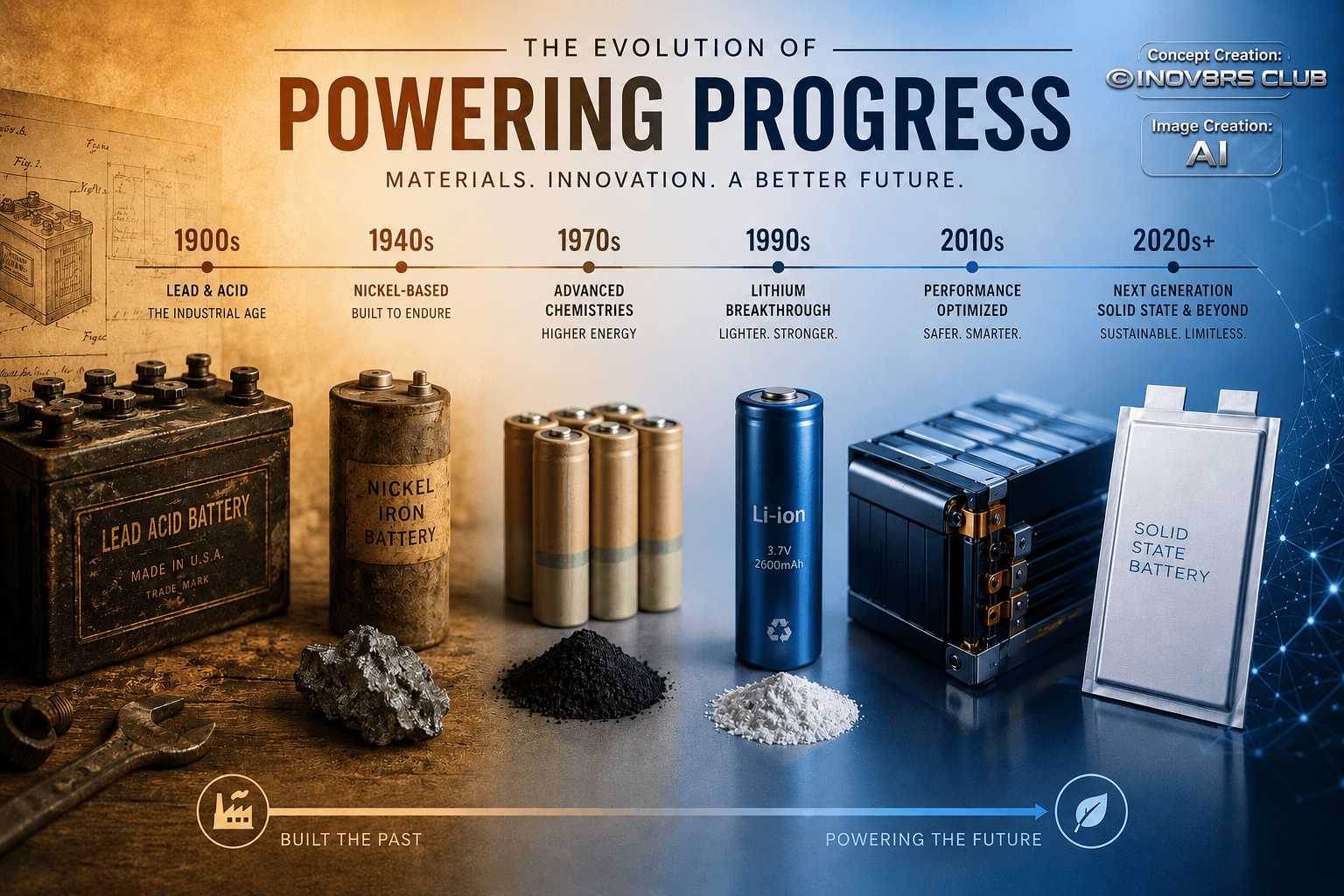
Infographic illustrating the evolution of battery technology from the 1900s to the 2020s, featuring images of various battery types including lead-acid, nickel-iron, lithium-ion, and solid-state batteries, alongside keywords and descriptions reflecting advancements in materials and performance.

BASF Introduces Oppanol® N PLUS for Next-Generation EV Batteries at Battery Show Europe 2026

BASF has unveiled Oppanol® N PLUS, a new high-performance binder designed to address the evolving demands of next-generation electric vehicle (EV) batteries. The company is showcasing the innovation at the Battery Show Europe 2026, taking place from June 9–11 in Stuttgart, Germany.

As battery technologies advance toward solid-state batteries (SSBs), manufacturers require materials that can deliver greater reliability, efficiency, and performance. Solid-state batteries are expected to provide longer driving ranges, faster charging capabilities, and enhanced safety, increasing the performance requirements for every component within the battery system.

Advancing Battery Performance and Manufacturing Consistency

Developed using BASF’s established polyisobutylene (PIB) technology, Oppanol® N PLUS is engineered specifically for modern battery applications. As a critical binder material, it helps maintain cohesion among active materials in the cathode, anode, or electrolyte while preserving structural integrity throughout the battery’s operational life.

The material’s high elasticity and flexibility enable it to absorb mechanical stresses caused by repeated charging and discharging cycles, supporting enhanced durability and long-term battery stability. Its chemically inert nature also helps minimize unwanted side reactions that could negatively affect battery performance.

One of the standout features of Oppanol® N PLUS is its consistently high product quality, achieved through tightly controlled manufacturing specifications. This allows battery producers to reduce process variability, limit reformulation efforts, streamline quality-control procedures, and implement production adjustments more efficiently and reliably.

To further support customers, BASF is improving product accessibility through stock availability and more flexible supply options, including package sizes starting at 20 kilograms. These measures are intended to help battery manufacturers and OEMs accelerate the development and commercialization of high-performance batteries for electric mobility.

According to Madeleine Jordan, Global Business Management Oppanol at BASF, the launch demonstrates the company’s commitment to combining decades of materials expertise with the evolving needs of the electromobility sector, while continuously enhancing proven technologies to support sustainable innovation.

Celebrating 95 Years of Oppanol Innovation

The introduction of Oppanol® N PLUS coincides with a major milestone for BASF: 95 years of polyisobutylene innovation.

The origins of the Oppanol product family date back to 1931, when chemist Michael Otto successfully demonstrated the polymerization of isobutene under suitable conditions. That same year, BASF patented a manufacturing process for polyisobutylene (PIB), which later became known as Oppanol—a name derived from Oppau, the Ludwigshafen district where the technology originated.

After seven years of intensive research and development, BASF began industrial-scale production in 1938 at its dedicated Oppanol facility. The material soon gained international recognition for its transparency, resistance to water and gases, chemical stability, safety profile, and strong adhesive properties.

Today, Oppanol is used across a broad range of industries and applications, including chewing gum, medical adhesive bandages, insulating glass units, cable insulation, roofing membranes, pipeline coatings, and advanced battery systems. Its durability, reliability, and chemical resistance have enabled the material to remain relevant while evolving to meet the requirements of emerging energy technologies.

With the launch of Oppanol® N PLUS, BASF is building on nearly a century of innovation, positioning the technology to support the future of electric mobility and advanced energy storage solutions.

Source: The Battery Magazine

#India’s #EV Market Gains Momentum as Fuel Costs Rise, but Challenges Remain

Busy street scene in Chennai featuring an MTC electric bus and several electric scooters, with pedestrians and signage in the background.

India’s electric vehicle (EV) market is gaining traction as rising fuel prices, regulatory changes, and expanding model offerings encourage more consumers to switch from conventional vehicles.

Electric car sales rose 25% in the year ending March 2026, with EVs surpassing 5% of India’s passenger vehicle market—a key milestone often viewed as the threshold for mainstream adoption. Growth has been strongest in vehicles priced above ₹1 million, where EVs now account for one in every ten sales.

The recent surge in crude oil prices, driven in part by tensions in the Middle East, has strengthened the economic case for EVs. India imports nearly 90% of its oil requirements, making it vulnerable to global energy price fluctuations. Higher fuel costs have prompted increased consumer interest in electric mobility.

Long-term policy support is also expected to drive adoption. Proposed CAFE-3 emission standards, scheduled to take effect from April 2027, would significantly tighten fuel-efficiency and carbon-emission requirements for automakers. Industry analysts believe the new regulations could accelerate EV penetration by making compliance targets more stringent and enforceable.

State governments are also pushing the transition. Delhi has proposed phasing out registrations of new internal combustion engine (ICE) two- and three-wheelers by 2027 as part of efforts to reduce air pollution.

Analysts expect further growth to be supported by a strong pipeline of new EV launches, particularly in the passenger vehicle and two-wheeler segments. Nomura forecasts EV penetration in India’s passenger vehicle market could reach 9% by 2030.

Despite the positive outlook, significant challenges remain. Charging infrastructure continues to lag demand, with public charging stations increasing to more than 10,000 nationwide but remaining concentrated in a few states. Consumer concerns over charging availability and driving range continue to slow adoption.

India also remains heavily dependent on imported battery materials and rare earth elements, exposing the sector to supply-chain and geopolitical risks. Industry experts note that developing a fully integrated domestic EV supply chain could take more than a decade.

While rising fuel prices and supportive policies are boosting demand, industry observers say the pace of India’s EV transition will ultimately depend on regulatory certainty, infrastructure expansion, and stronger domestic manufacturing capabilities.

This version is structured in a concise business-news style, focusing on market trends, drivers, forecasts, and risks rather than narrative storytelling.

Source: BBC News

#India to Launch Incentive Policy for #Lithium and #Nickel Processing

NEW DELHI: India’s Ministry of Mines is expected to soon introduce an incentive policy aimed at boosting domestic processing of lithium and nickel, with a proposed outlay of approximately ₹3,000 crore (US$313.48 million), according to two sources familiar with the development.

The sources requested anonymity as they were not authorized to speak publicly on the matter. The Ministry of Mines did not immediately respond to a Reuters request for comment.

Reuters had reported in January that the planned incentive scheme would focus on lithium and nickel processing. In April, the Mines Secretary stated that the government had shortlisted two critical minerals for a processing policy designed to strengthen the electric vehicle (EV) value chain, though the specific minerals were not disclosed at the time.

Lithium and nickel are key components in EV batteries and are considered vital to India’s clean mobility ambitions. The government aims to increase electric vehicle adoption to 30% of passenger car sales and 80% of two-wheeler sales by 2030, up from the current levels of 6% and 9%, respectively.

Under the proposed policy, lithium processing facilities would be required to have a minimum annual capacity of 30,000 metric tonnes, while nickel processing plants would need a minimum capacity of 50,000 metric tonnes to qualify for incentives, Reuters previously reported.

#SouthKorea export growth hits four-decade high on #AI chip boom

Graphical representation of Korea's exports featuring stacked shipping containers in blue and red, overlaid on a map of Korea, with an upward trend arrow indicating growth.

SEOUL: South Korea’s exports grew more than expected in May at the strongest annual rate in more than four decades, as chip sales hit a record on a global boom in AI investment, bolstering optimism about the trade-reliant economy and its world-beating stock market rally.

Exports from Asia’s fourth-largest economy, a bellwether for global trade, rose 53.2% from a year earlier to a record high of $87.75 billion, preliminary trade data showed on Monday, exceeding the median 48.4% increase forecast in a Reuters poll.

It was the 12th consecutive month of exports growing on a year-on-year basis and the biggest percentage rise since January 1984, bringing a record monthly trade surplus for the country.

“It is truly an unprecedented pace, raising market expectations again and again and exceeding them again and again,” said Stephen Lee, an economist at Meritz Securities in Seoul.

Read more at: The Star

« Older Entries Recent Entries »