Tag Archives: Germany

#Germany’s Role in the Global Race for #NuclearFusion
As the world races toward a cleaner and more sustainable future, one technology is capturing the attention of scientists, investors, and governments alike—nuclear fusion.

Often described as the “holy grail” of clean energy, fusion promises an almost limitless source of electricity without the carbon emissions of fossil fuels or the long-lived radioactive waste associated with traditional nuclear power. With artificial intelligence, electric vehicles, and massive data centers driving global electricity demand to record levels, the search for reliable clean energy has never been more urgent.

According to the International Energy Agency (IEA), the global fusion energy market could exceed $350 billion by 2050, making it one of the most valuable emerging industries of the coming decades.

What Makes Nuclear Fusion Different?

Unlike conventional nuclear power, which generates electricity by splitting atoms (nuclear fission), nuclear fusion combines light atomic nuclei to form heavier ones, releasing enormous amounts of energy in the process—the same reaction that powers the Sun.

Fusion offers several major advantages:

  • Produces no greenhouse gas emissions during operation.
  • Generates minimal long-term radioactive waste.
  • Has a much lower risk of catastrophic accidents.
  • Can provide continuous, weather-independent electricity.

If successfully commercialized, fusion could transform global energy production.

From Government Megaprojects to Startup Innovation

For decades, fusion research was dominated by massive publicly funded projects like ITER, the International Thermonuclear Experimental Reactor being built in southern France.

Supported by 35 countries, including members of the European Union, the United States, China, Russia, and others, ITER represents one of the largest scientific collaborations ever attempted.

However, the project has faced significant delays and soaring costs since construction began in 2007, with operations now expected sometime between 2034 and 2036.

Meanwhile, a new generation of private companies is taking a faster, more entrepreneurial approach to fusion development.

Today, around 77 private fusion companies are working worldwide to commercialize the technology.

Germany’s Four Fusion Startups

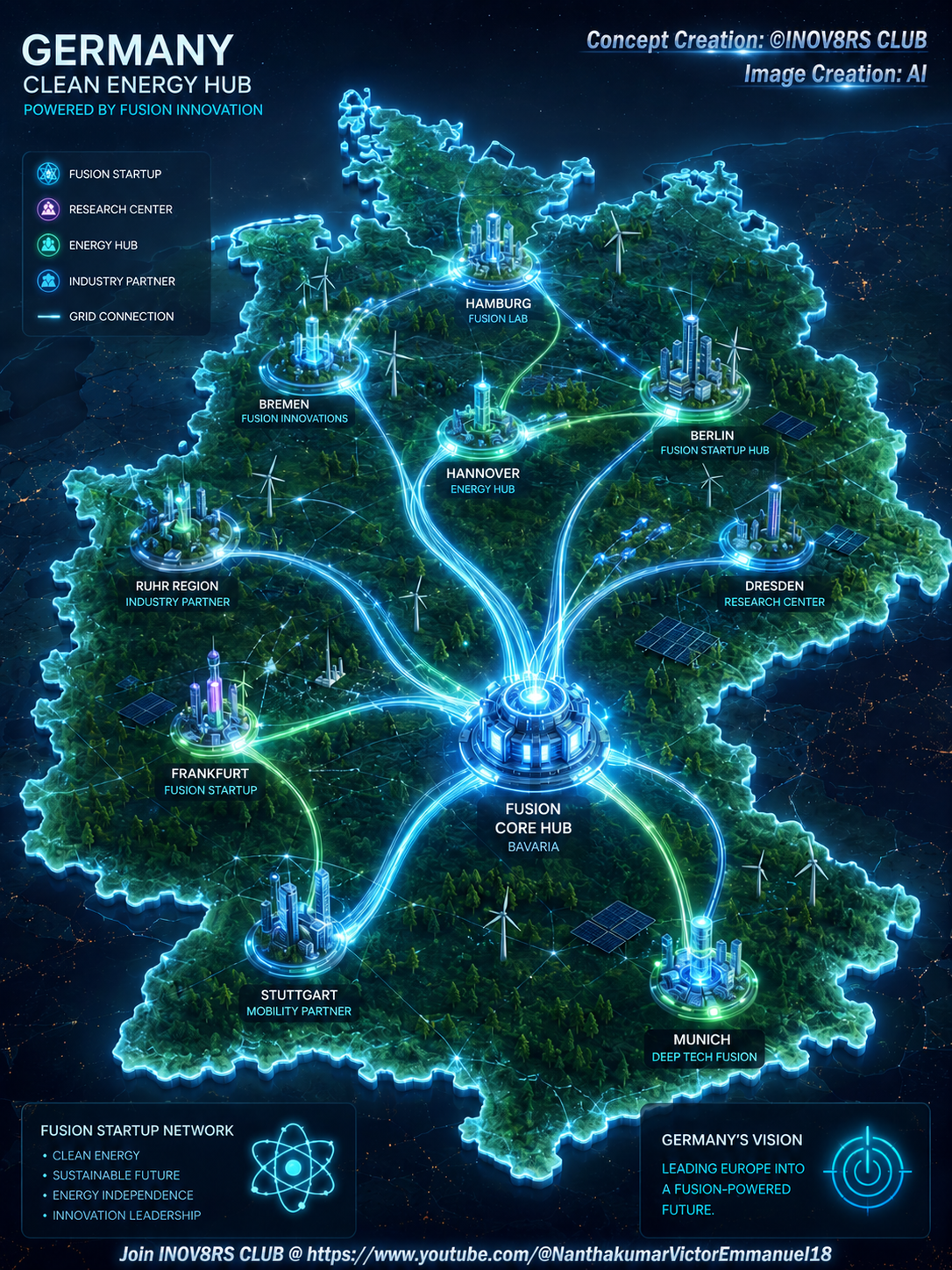
Germany has become one of Europe’s most active fusion hubs, with four ambitious startups entering the global race:

1. Focused Energy

Founded in 2021, Focused Energy specializes in laser-driven fusion, inspired by breakthroughs achieved at the U.S. National Ignition Facility.

The company recently secured an additional €60 million investment from energy giant RWE, which plans to host a prototype fusion plant at its former nuclear site in Biblis.

Focused Energy aims to build a commercial reactor prototype by 2037, with the first commercial power plant expected in the early 2040s.

2. Marvel Fusion

Marvel Fusion has attracted some of the largest private investments among European fusion startups.

Like Focused Energy, it focuses on laser-based fusion technology and continues expanding its partnerships with industrial and research organizations.

3. Proxima Fusion

Proxima Fusion is pursuing advanced magnetic confinement technologies and aims to develop highly efficient fusion reactors designed for commercial electricity generation.

The startup has quickly become one of Europe’s most closely watched fusion companies.

4. Gauss Fusion

Gauss Fusion is working on integrating advanced reactor technologies while collaborating with industrial partners across Europe.

Its goal is to accelerate the commercialization of large-scale fusion power systems.

Billions Are Flowing Into Fusion

Fusion is one of the most capital-intensive technologies ever developed.

By the end of 2025, nearly €13 billion in private investment had been committed worldwide, with funding increasing by roughly 30% during 2025 alone.

Investment distribution shows where the global leaders currently stand:

  • 53% invested in U.S. companies
  • Around one-third invested in Chinese firms
  • Just over €700 million invested across European fusion startups

Among European companies, Germany’s Marvel Fusion and Focused Energy have attracted the largest share of funding.

The U.S. and China Still Lead

Although Germany’s ecosystem is growing rapidly, the United States and China currently dominate the fusion landscape.

China benefits from substantial government investment, while American companies receive strong backing from major technology firms and private investors.

Examples include:

  • Google investing in TAE Technologies and Commonwealth Fusion Systems.
  • Microsoft signing future electricity purchase agreements with Helion Energy.
  • OpenAI CEO Sam Altman backing Helion Energy through private investment.

This combination of public funding and private capital has allowed U.S. companies to move aggressively toward commercialization.

Germany’s Competitive Advantage

Despite the funding gap, German researchers remain optimistic.

Professor Markus Roth, co-founder of Focused Energy, believes Germany possesses a unique innovation ecosystem combining world-class universities, industrial manufacturers, and cutting-edge research institutes.

Germany also holds a major advantage in precision optics—a critical technology for laser-based fusion.

According to Roth, the next challenge is manufacturing laser systems at industrial scale, much like Germany’s world-renowned automotive industry produces vehicles with exceptional precision.

If successful, the optics industry could become another cornerstone of Germany’s future economy.

Government Support Is Growing

Recognizing fusion’s strategic importance, the German government included nuclear fusion among the country’s six key future technologies in its High-Tech Agenda.

More than €2 billion in public funding has been pledged during the current legislative term to accelerate research and commercialization.

However, building commercial fusion plants will require far greater investment.

Focused Energy estimates it currently needs between €150 million and €200 million annually, while the first pilot commercial plant could ultimately cost several billion euros.

Looking Ahead

Commercial fusion power remains a long-term challenge, but progress is accelerating faster than many experts expected just a few years ago.

If current development timelines hold, the world’s first commercial fusion reactors could begin supplying electricity in the early 2040s.

The global race is no longer confined to government laboratories. Startups, venture capital, industrial giants, and national governments are now competing to unlock one of humanity’s most transformative energy technologies.

Whether Germany’s emerging fusion companies can compete with the financial powerhouses of the United States and China remains uncertain. But one thing is clear: the race to harness the power of the stars has truly begun—and its outcome could reshape the future of global energy.

Source: MSN

#G7 aims take on #China without launching a new trade war – #China supply no more than 60% of #RareEarthElements

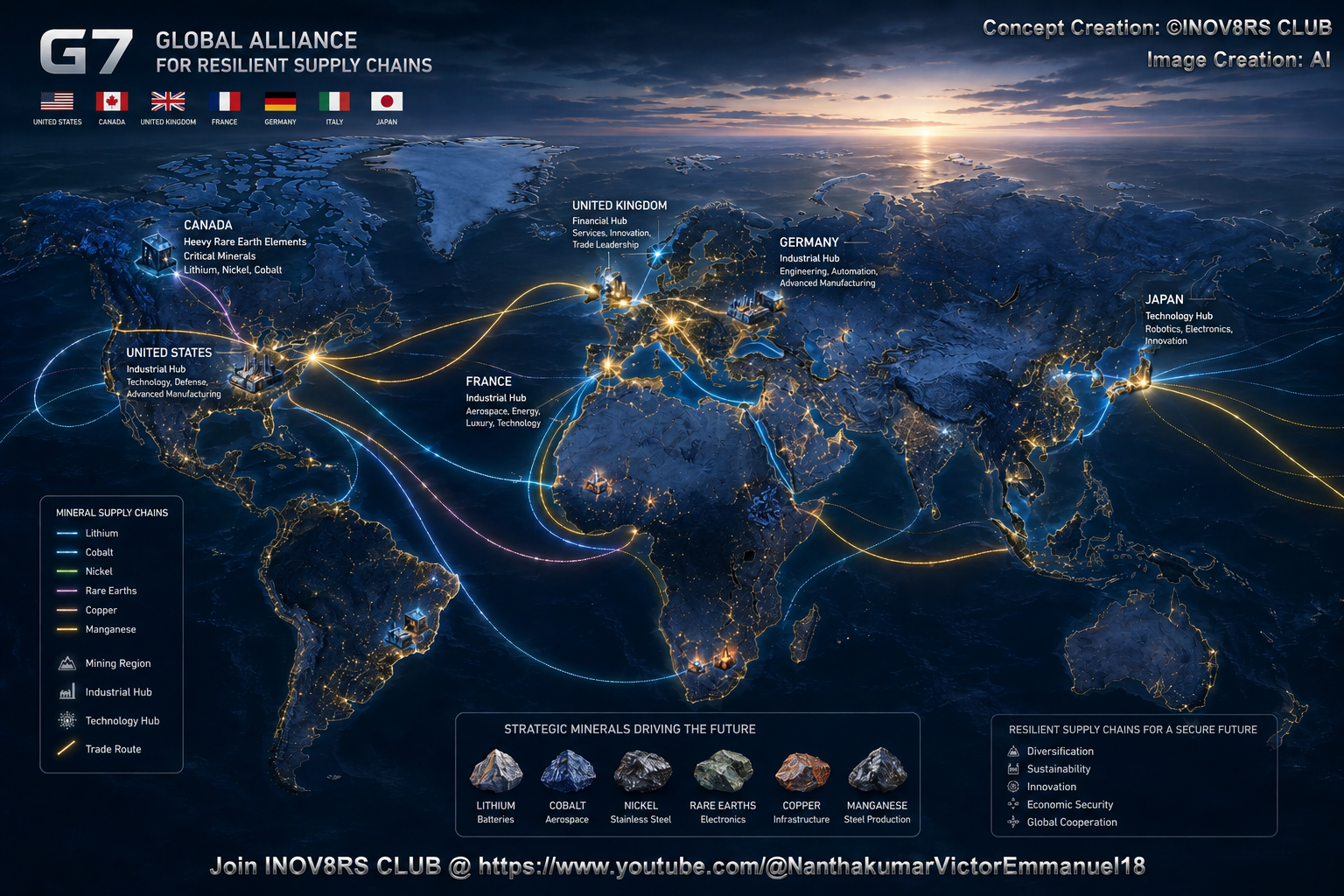
A world map illustrating the G7 Global Alliance for Resilient Supply Chains, highlighting various countries, their industrial hubs, and strategic minerals like lithium, cobalt, and rare earth elements.

# The G7 Just Pledged to Break China’s Rare Earth Grip — There’s a Lot of Work to Do

For decades, the world’s advanced economies have enjoyed the benefits of globalization while quietly allowing a critical vulnerability to emerge: dependence on China for rare earth minerals and permanent magnets.

Now, the Group of Seven (G7) nations are finally attempting to confront that reality. At their recent summit in Evian, France, G7 leaders agreed on an ambitious goal: by 2030, no single country should account for more than 60% of their imports of rare earth elements and permanent magnets. Beyond that, they hope to reduce reliance further, targeting a 50% threshold as soon as possible.

The message is clear. The world’s leading democracies have concluded that China’s dominance over critical minerals has become both an economic and national security risk.

The challenge? Breaking that dependence may take far longer than the politicians would like.

## Why Rare Earths Matter

Rare earths are a group of 17 metallic elements that play an essential role in modern technology. On their own, these materials may seem obscure. But when processed into permanent magnets—particularly neodymium-iron-boron (NdFeB) magnets—they become indispensable.

These magnets are found in:

* Electric vehicles

* Wind turbines

* Smartphones

* Industrial robotics

* Military drones

* Precision-guided missiles

* Radar systems

* Advanced defense technologies

Their unique properties allow manufacturers to build lighter, stronger, and more energy-efficient motors and electronic systems. In other words, rare earth magnets have become one of the foundational technologies of the 21st century.

## China’s Dominance Is Overwhelming

China’s position in this market is difficult to overstate. The country currently accounts for roughly:

* 70% of global rare earth production

* Around 70% of critical mineral refining capacity

* Approximately 95% of rare earth permanent magnet manufacturing

This dominance wasn’t built overnight. For years, China invested heavily in mining, refining, processing expertise, and manufacturing infrastructure while many Western nations outsourced these activities due to environmental concerns, lower costs, and regulatory hurdles. The result is a supply chain where much of the world depends on China not merely for raw materials but for the highly specialized processing required to make those materials usable.That processing stage has become the true strategic bottleneck.

## Why the G7 Is Acting Now

The urgency stems from recent geopolitical tensions.

Over the past several years, Beijing has increasingly used export controls on critical minerals as a policy tool. Since 2020, China has imposed multiple restrictions on key materials used in defense and clean energy technologies.

Last year, China introduced sweeping export controls on rare earths and other critical minerals, raising fears that manufacturing lines across North America, Europe, and Asia could face severe disruptions.

The issue became even more visible during escalating trade disputes with the United States and amid growing tensions surrounding Taiwan.

Officials across the G7 have come to a sobering realization:

If China chose to significantly restrict exports, major sectors of the global economy could be affected almost immediately. The International Energy Agency has warned that trillions of dollars of economic activity outside China could be exposed to supply disruptions if export controls were fully implemented.

For military planners, the concern is even more immediate. Rare earth magnets are embedded in everything from fighter aircraft and missile guidance systems to surveillance drones. Dependence on a geopolitical rival for these materials creates a strategic vulnerability few governments are comfortable accepting.

## Lessons From Japan

The G7 is not the first group to recognize this problem. Japan learned the lesson more than a decade ago. In 2010, following a maritime dispute with China, Japanese companies suddenly found themselves facing restrictions on rare earth exports. Tokyo responded with a long-term strategy to diversify suppliers, invest in overseas mining projects, and build stockpiles. Yet even after more than 15 years of effort, Japan still sources roughly 75% of its rare earth imports from China.

That reality offers a sobering perspective on the G7’s latest pledge.

Diversification is possible. Rapid diversification is much harder.

## Building a Western Supply Chain

Despite the challenges, efforts are underway to create alternative supply chains. In the United States, several companies are positioning themselves as key players in what policymakers increasingly call a “mine-to-magnet” strategy.

### MP Materials

MP Materials operates Mountain Pass in California, the only commercial-scale rare earth mine in the United States.

The company has also expanded processing and magnet manufacturing capabilities in Texas and recently received significant support from the U.S. Department of Defense to strengthen domestic separation and refining capacity.

Its goal is straightforward: reduce reliance on Chinese processing and create a fully integrated American supply chain.

### USA Rare Earth

Another emerging player is USA Rare Earth. The company is developing mining, processing, and magnet manufacturing operations designed to produce rare earth permanent magnets domestically. Backed by federal incentives through the CHIPS and Science Act, the company aims to establish large-scale production capabilities and become a cornerstone of a Western rare earth ecosystem. These efforts represent important progress. But they are only the beginning.

## The Hard Part: Heavy Rare Earths

One major complication is that not all rare earths are equal. Many Western projects focus primarily on so-called “light” rare earth elements.

China, however, remains especially dominant in the production and processing of “heavy” rare earths—materials that are crucial for many advanced defense and high-performance industrial applications. Without secure access to these heavier elements, building a truly independent magnet supply chain remains difficult. Industry experts caution that current Western investments, while encouraging, do not yet solve this deeper problem.

## Obstacles Ahead

The G7’s target may be politically appealing, but achieving it will require overcoming significant obstacles.

### Capital Requirements

Mining and refining projects require billions of dollars in investment before they produce meaningful output.

### Regulatory Challenges

Permitting new mines can take years, particularly in North America and Europe.

### Environmental Concerns

Rare earth extraction and refining are energy-intensive and can create substantial environmental impacts if not carefully managed.

### Community Opposition

Many proposed mining projects face local resistance regardless of their strategic importance.

### Technical Expertise

China’s advantage isn’t just geological.

It also possesses decades of accumulated processing knowledge, engineering expertise, and industrial capacity that cannot be replicated overnight.

## More Than Mining

Recognizing these realities, G7 leaders are discussing additional measures beyond simply opening new mines.

These include:

* Expanding recycling of rare earth materials

* Developing strategic stockpiles

* Supporting refining and processing facilities

* Creating industrial procurement quotas

* Coordinating investments across allied nations

Defense manufacturing may become a particular focus, with governments potentially requiring portions of critical materials to come from non-Chinese sources. Such policies could help create the guaranteed demand necessary for new projects to attract financing.

## The Bottom Line

The G7’s commitment marks one of the strongest collective efforts yet to reduce dependence on China for critical minerals. The goal is ambitious, and perhaps necessarily so. Without clear targets, governments and industries often fail to act. But ambition alone will not be enough.

China’s dominance in rare earths was built over decades through sustained investment, industrial policy, and strategic planning. Reversing that dominance will require the same level of long-term commitment from the United States, Europe, Japan, and their allies.

The good news is that the process has begun. The difficult reality is that diversification is not a five-year project—it may be a generation-long effort.

The G7 has taken an important first step.

Now comes the hard part: turning a political pledge into a functioning supply chain.

#BASF launches biggest overseas project in #China with green-powered mega-site

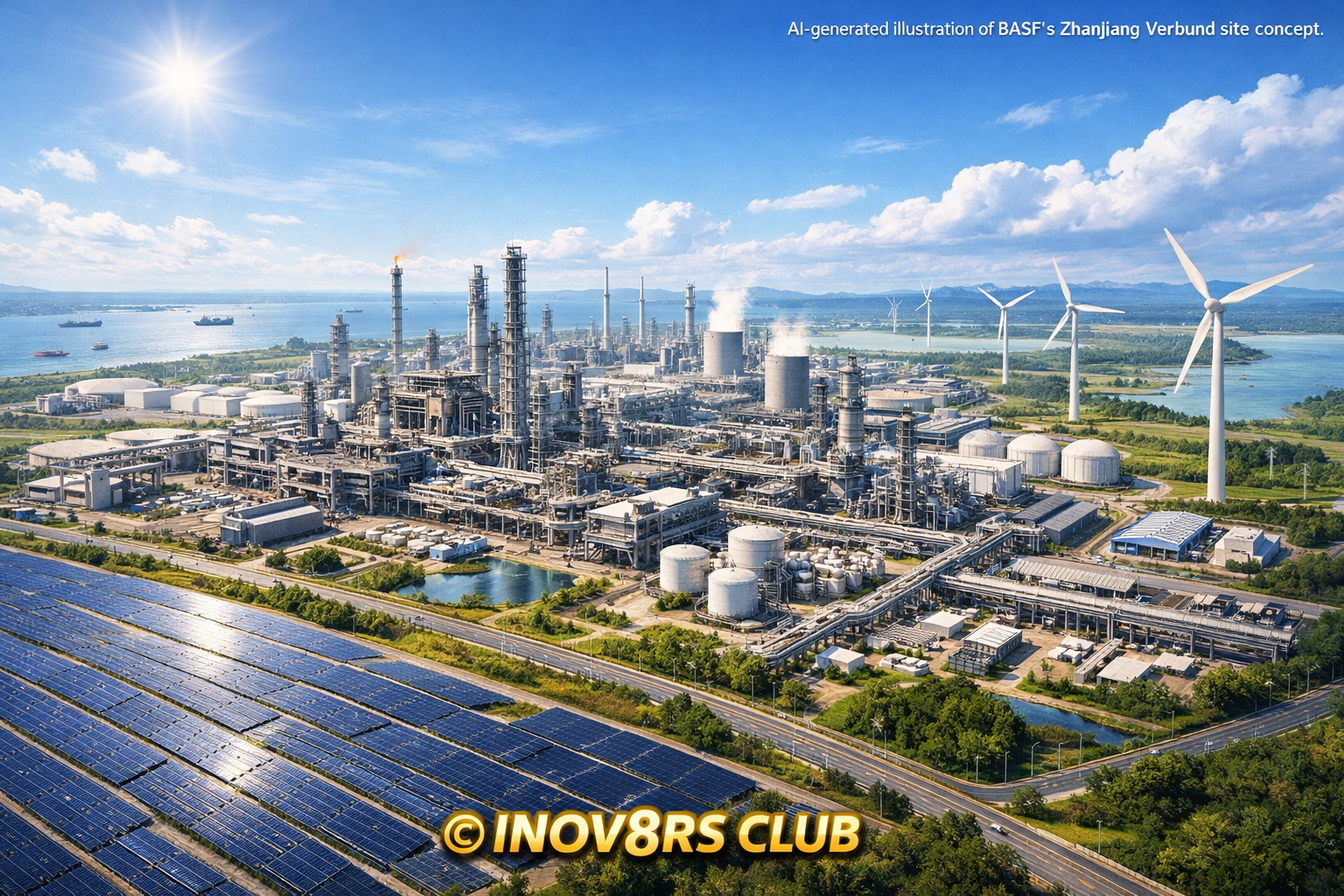
Aerial view of an industrial site featuring large oil refinery structures, solar panels in the foreground, and wind turbines in the background, under a bright blue sky.

German chemical giant opens US$10 billion Zhanjiang complex, its largest overseas investment, as Beijing courts foreign capital.

Germany’s chemical giant BASF has launched operations at its China production base – its largest overseas investment to date – with a total outlay of €8.7 billion (US$10 billion), and the country’s first wholly foreign-owned large-scale Verbund site.

The company on Thursday inaugurated the world-scale complex in Zhanjiang, Guangdong province, designed to run entirely on renewable electricity.

A Verbund site is an integrated chemical complex where plants, energy use and materials are interconnected to maximise efficiency and minimise waste.

The site has brought 18 plants and 32 production lines into operation, producing more than 70 types of products spanning basic chemicals, intermediates and specialty chemicals for industries including transport, consumer goods, electronics, home care and personal care.

Read more at: https://www.scmp.com/business/article/3348021/basf-launches-biggest-overseas-project-china-green-powered-mega-site