Tag Archives: Energy

#Congo’s #Cobalt Power Play: How #Kinshasa Is Reshaping the Global #CriticalMinerals Landscape

The Democratic Republic of Congo (DRC) is no longer content with being merely the world’s largest cobalt supplier. Through a combination of export controls, strategic partnerships, and geopolitical repositioning, Kinshasa is transforming its role from resource provider to market maker.

The implications extend far beyond commodity markets. Congo’s evolving cobalt strategy is influencing global supply chains, altering China’s dominance in critical minerals, and creating new opportunities for Western investors seeking secure access to strategic resources.

From Price Taker to Price Setter

For years, Congo’s vast cobalt reserves fueled global battery production while the country remained vulnerable to commodity price cycles and foreign influence. That dynamic is changing.

Since imposing cobalt export restrictions in early 2025, Congo has steadily tightened control over the flow of the metal. A complete export ban eventually gave way to a quota system, but the impact on global supply has been profound.

China, historically the dominant buyer of Congolese cobalt, has seen imports collapse. Customs data show that Chinese imports of Congolese cobalt intermediates during the first four months of 2026 were only a fraction of the volumes recorded during the same period a year earlier.

The result has been a dramatic tightening of supply. Cobalt prices have more than doubled from pre-restriction levels, while unusual pricing patterns have emerged throughout the supply chain. Cobalt hydroxide—the primary form exported from Congo—has at times traded at prices equal to or even above refined cobalt metal, highlighting growing concerns about access to raw material.

What initially appeared to be a temporary supply disruption increasingly looks like a structural shift. Market participants are beginning to attach a premium to cobalt sourced from Congo, reflecting both scarcity and strategic importance.

Reducing Dependence on China

Perhaps the most significant aspect of Congo’s strategy is its attempt to diversify away from overwhelming dependence on Chinese operators.

China has spent decades building a dominant position in Congolese mining and refining. Chinese companies control many of the country’s largest cobalt and copper assets, while Chinese refiners process much of the world’s cobalt supply.

Now, however, Kinshasa appears determined to rebalance those relationships.

Recent developments suggest growing momentum behind Western investment initiatives. U.S.-based critical minerals platform Virtus Minerals recently acquired the copper and cobalt assets of Chemaf, positioning itself to revive operations that have faced years of uncertainty.

At the same time, Congo’s state-backed Entreprise Générale du Cobalt (EGC) has entered into agreements with commodity trader Trafigura and U.S. startup EVelution to support a proposed cobalt refinery in Arizona. Such projects could create direct links between Congolese mines and American manufacturing, reducing reliance on Chinese processing capacity.

These developments align closely with broader U.S. efforts to secure critical mineral supply chains amid intensifying competition with China.

Infrastructure Creates New Options

Infrastructure is playing a crucial role in Congo’s westward pivot.

The Lobito Atlantic Railway, backed by Western governments and investors, is emerging as a strategic alternative export route. Connecting the Congolese copper belt to Angola’s Atlantic port of Lobito, the corridor provides access to global markets without relying exclusively on transport networks historically aligned with Chinese interests.

The railway has become a symbol of a larger geopolitical contest over critical minerals. Control over extraction matters, but so does control over logistics, processing, and market access.

For Western investors, the corridor offers a practical pathway for moving minerals to Europe and North America. For Congo, it provides leverage and flexibility.

Solving the Artisanal Mining Challenge

Despite these opportunities, one major obstacle remains: artisanal and small-scale mining (ASM).

Artisanal miners produce a significant share of Congo’s cobalt, but the sector has long been associated with unsafe working conditions, child labor concerns, and informal trading networks. These issues have discouraged many Western buyers from sourcing Congolese cobalt directly.

The government understands that expanding access to Western markets requires stronger assurances around responsible sourcing.

To address this challenge, EGC has partnered with commodity trader Mercuria to establish what is being described as a “gold standard” framework for ethical artisanal cobalt production at the Kasulo mining site.

Success is far from guaranteed. Previous efforts to formalize the artisanal mining sector have delivered mixed results. However, creating a transparent and verifiable supply chain is essential if Congo hopes to attract Western customers seeking ethically sourced critical minerals.

The stakes are high. Without credible solutions, concerns over “blood cobalt” could continue limiting market access regardless of supply shortages.

Growing Leverage in a Tightening Market

Congo’s position is being strengthened by supply disruptions elsewhere.

Several competing sources of cobalt face challenges. Canadian producer Sherritt International’s refining operations have come under pressure from U.S. sanctions affecting its Cuban partnerships. Madagascar’s Ambatovy nickel-cobalt project suffered cyclone-related disruptions and is undergoing ownership changes. Meanwhile, Indonesian producers are grappling with tighter mining quotas and processing constraints.

These developments further increase Congo’s influence over a market where it already accounts for more than 70% of global mine production.

In other words, there are few realistic alternatives.

A New Strategic Role

The broader story is not simply about higher cobalt prices. It is about a country leveraging its resource dominance to reshape its geopolitical position.

By restricting exports, encouraging Western investment, developing alternative infrastructure, and attempting to formalize artisanal production, Congo is seeking greater control over both its resources and its future.

Whether the strategy succeeds remains uncertain. Balancing relationships with China while attracting Western capital will require careful diplomacy. Reforming the artisanal mining sector will be difficult. And sustaining investor confidence will depend on political stability and regulatory consistency.

Yet one thing is increasingly clear: Congo is no longer just supplying the global cobalt market. It is actively redefining it.

As demand for batteries, electric vehicles, defense technologies, and advanced electronics continues to grow, Congo’s decisions will have an outsized influence on the future of critical minerals. The country is emerging not merely as a producer of cobalt, but as one of the most important strategic players in the global race for resources.

This version is designed for a business, commodities, mining, or geopolitical affairs audience and is fully original rather than a rewrite of the Reuters text.

From #BlackMass to New Batteries: How #China Is Closing the #EV Recycling Loop – Digital Tracing

As electric vehicles (EVs) become increasingly common on roads around the world, a new challenge is emerging: what happens to their batteries when they reach the end of their useful life?

China, the world’s largest EV market, is already facing this question at scale. Industry estimates show that nearly 400,000 tonnes of retired EV batteries were generated in 2025, and that figure is expected to exceed one million tonnes annually by 2030.

Rather than viewing these batteries as waste, Chinese recycling companies are treating them as valuable urban mines. At a large recycling facility operated by Brunp Recycling, a subsidiary of battery giant CATL, discarded batteries are being transformed into high-quality materials that can be used to manufacture the next generation of EV batteries.

Giving Old Batteries a Second Life

At Brunp’s integrated circular economy industrial park in Yichang, Hubei Province, trucks carrying retired EV batteries arrive every day. Each battery pack is carefully inspected, sorted, and recorded before entering the recycling process.

Most of these batteries have degraded to less than 80 percent of their original capacity. While they can no longer deliver the performance required for modern electric vehicles, they still contain valuable materials such as lithium, nickel, cobalt, manganese, copper, and aluminum.

In the past, weak oversight sometimes allowed retired batteries to re-enter the market through unauthorized channels, creating safety and environmental risks. To address this challenge, China launched a national traceability platform in 2026 that tracks every power battery throughout its lifecycle—from manufacturing and installation to retirement and recycling.

This digital tracking system helps ensure batteries are processed by certified recyclers and gives consumers greater confidence that their retired batteries will be handled responsibly.

Inside the Recycling Process

Once verified, battery packs move onto automated dismantling lines where robotic systems remove protective casings and separate battery cells.

Safety is a critical concern. Before further processing, each battery cell undergoes complete discharge to eliminate any remaining electrical energy.

The cells are then crushed into small fragments and sent through a series of specialized treatments. High-temperature pyrolysis under a nitrogen atmosphere helps break down materials while preventing unwanted reactions. Additional screening and sorting processes recover metals such as copper and aluminum for direct reuse.

What remains is a fine black powder known throughout the industry as black mass.

The Value Hidden in Black Mass

Black mass is the most valuable output of battery recycling. It contains concentrated amounts of critical battery minerals, including lithium, nickel, cobalt, and manganese.

Recovering these materials efficiently has long been one of the biggest technical challenges in battery recycling.

At Brunp’s hydrometallurgical facility, black mass is mixed with specially formulated acidic solutions inside large reaction tanks. The metals dissolve into a complex liquid mixture, creating what engineers sometimes call a “metal soup.”

Advanced separation technologies then isolate and purify each metal. According to the company, its direct recycling process achieves recovery rates of 99.6 percent for nickel, cobalt, and manganese, while lithium recovery reaches 96.5 percent.

These recovery rates represent a significant improvement over traditional recycling methods, which often suffered from lower efficiency, higher energy consumption, and larger volumes of waste residue.

Turning Waste into New Battery Materials

The purified materials are ultimately converted into battery-grade lithium carbonate and iron phosphate—two key ingredients used in lithium iron phosphate (LFP) batteries.

One of the most impressive aspects of the operation is its integration with nearby manufacturing facilities. Once regenerated, the materials are transported directly to neighboring plants where they are processed into new cathode materials for battery production.

The entire transformation—from retired battery pack to regenerated cathode raw material—takes only about one week.

Even more remarkable, batteries produced using recycled materials can perform at levels comparable to those made from newly mined resources. According to engineers at the facility, these batteries can support faster charging speeds, longer driving ranges, and lower-carbon manufacturing processes.

Building a Circular Battery Economy

Beyond recovering materials, the recycling process is helping improve future battery designs.

Engineers continuously share lessons learned from dismantling and material recovery with battery manufacturers. This feedback loop allows designers to create batteries that are easier to disassemble, recycle, and process at the end of their lives.

Recommendations include simplifying battery pack structures for automated dismantling and optimizing material compositions to improve future recovery and purification rates.

This approach creates a true circular economy: batteries are designed for recycling, recycled into raw materials, and then transformed into new batteries that can eventually re-enter the cycle.

The Road Ahead

As EV adoption continues to accelerate globally, battery recycling will become a critical pillar of the clean energy transition.

Recycling reduces dependence on newly mined raw materials, lowers environmental impacts, improves resource security, and helps create a sustainable supply chain for future battery production.

The journey from discarded battery to new energy storage device may begin with a substance called black mass, but it ultimately demonstrates something far more valuable: how innovation can transform waste into a strategic resource for a greener future.

This version is suitable for publication on a corporate sustainability blog, energy industry website, or technology news platform.

#Beijing’s Export Restrictions: Impact on #US #CriticalMinerals Strategy

Beijing’s Latest Move Threatens America’s Critical Minerals Strategy

The global race for critical minerals has entered a new and potentially volatile chapter. China has imposed new restrictions on exports of key rare-earth materials to major U.S. companies, directly targeting efforts by Washington to rebuild domestic supply chains for strategically important magnets and advanced technologies.

The decision signals a significant escalation in the ongoing competition between the world’s two largest economies and highlights how critical minerals have become a powerful geopolitical tool.

Why Rare Earths Matter

Rare-earth elements are essential ingredients in a vast array of modern technologies. They are used in:

  • Electric vehicles
  • Wind turbines
  • Military drones
  • Advanced defense systems
  • Artificial intelligence hardware
  • Consumer electronics
  • Industrial machinery

While many countries possess rare-earth deposits, China dominates the global processing and refining industry. It supplies approximately 90% of the world’s light rare earths and refines more than 98% of heavy rare earths—materials that are particularly important for high-performance magnets and advanced technologies.

This dominance has given Beijing considerable leverage over global supply chains.

China’s New Restrictions

China’s Ministry of Commerce announced that ten American companies will face new restrictions on purchasing certain dual-use products from Chinese suppliers. Among the affected organizations are two of the most important players in the U.S. rare-earth sector:

  • MP Materials
  • USA Rare Earth

Both companies are central to the U.S. government’s strategy to reduce dependence on Chinese supplies.

The restrictions cover several critical rare-earth metals, including heavy rare earths such as dysprosium and terbium. These materials are essential for producing heat-resistant magnets used in electric motors, automotive systems, military applications, and industrial equipment.

A Blow to U.S. Supply Chain Ambitions

The timing is particularly significant.

Over the past several years, the U.S. government has invested heavily in rebuilding domestic rare-earth production capabilities. The Department of Defense and other federal agencies have directed hundreds of millions of dollars toward developing mining, refining, and magnet manufacturing infrastructure.

MP Materials operates the Mountain Pass mine in California, the largest rare-earth mining operation in the United States. The company is also constructing magnet manufacturing facilities in Texas designed to serve both commercial and defense customers.

Meanwhile, USA Rare Earth has been rebuilding domestic manufacturing capacity in Oklahoma and pursuing international partnerships to secure alternative supplies of critical minerals.

The new Chinese restrictions create additional obstacles for these efforts by limiting access to the materials needed during the industry’s transition period.

The Dysprosium Challenge

One of the most pressing concerns involves dysprosium, a heavy rare-earth element used to improve magnet performance under high temperatures.

Industry data indicates that Chinese shipments of dysprosium to the United States have effectively stopped since April 2025. The material is crucial for components found in:

  • Power steering systems
  • Braking systems
  • Electric motors
  • Aerospace applications
  • Defense technologies

Manufacturers can partially substitute dysprosium with terbium, but supplies of terbium have also become extremely limited.

Without reliable access to these materials, scaling domestic magnet production becomes significantly more difficult.

Global Concerns Growing

The latest move comes as governments worldwide seek to diversify critical mineral supply chains.

At the recent G7 summit, leaders pledged to reduce dependence on any single supplier and outlined a goal that no more than 60% of rare-earth imports should come from one country by 2030.

However, achieving that objective will be challenging. Building new mines, processing facilities, and refining operations requires years of investment, environmental approvals, technical expertise, and substantial capital.

Even promising projects in Australia, Brazil, Canada, and the United States remain far from matching China’s current production capacity.

Trade Tensions Could Reignite

The restrictions also threaten to reignite trade tensions between Washington and Beijing.

Although previous diplomatic discussions included conversations about maintaining access to critical minerals, progress has been limited. China’s latest action demonstrates that rare-earth exports remain a powerful strategic lever that can be deployed during periods of economic or political disagreement.

For U.S. policymakers, the message is clear: securing resilient supply chains for critical materials has become a national security priority rather than simply an economic objective.

Looking Ahead

China’s decision underscores a broader reality shaping the global economy. Control over critical minerals is increasingly becoming as important as control over energy resources was in previous decades.

As nations compete to secure supplies for electric vehicles, renewable energy, advanced computing, and defense systems, rare earths are likely to remain at the center of geopolitical negotiations and trade disputes.

For American manufacturers, the challenge now is accelerating efforts to develop alternative sources while navigating a market where China continues to hold overwhelming influence.

The outcome of this struggle may help determine not only the future of global trade but also which nations lead the next generation of technological innovation.

This version is optimized for a business, technology, or geopolitics audience and is written to avoid copyright concerns by presenting original analysis and structure rather than reproducing the source article.

Source: The New York Times

#Chinese Space Computing Industry Innovation Center

In early June, the Chinese government quietly approved the creation of the Space Computing Industry Innovation Center, a major initiative designed to unite rocket and satellite manufacturers, semiconductor companies, and AI technology firms in building a space-based computing network. According to Beijing officials, the project aims to integrate the entire space-computing supply chain while accelerating the development of the satellite Internet of Things (IoT) ecosystem.

The announcement largely flew under the radar, but industry observers quickly noted its significance. Research firm SemiAnalysis pointed out on X that China unveiled the initiative roughly a week before Elon Musk revealed plans for his AI1 satellite, a spacecraft intended to run AI workloads directly in orbit.

The center is scheduled to officially launch later this month and will focus on six key areas of research: developing highly reliable, heat-resistant computing chips for space environments; building high-performance interconnected computing payloads; establishing standardized satellite computing platforms; training large AI models under severe power constraints; integrating space- and ground-based cloud networking systems; and creating service-oriented, tokenized business models for orbital computing resources.

Together, these efforts are aimed at creating an AI-powered data center in orbit—one that operates independently of terrestrial power grids and sidesteps many of the energy, land, and infrastructure constraints facing traditional data centers on Earth.

While Musk’s AI1 satellite has dominated headlines this week, China’s move suggests that the race toward space-based AI infrastructure is becoming increasingly competitive. However, it is worth noting that Musk’s ambitions in this area are not new. He has discussed the concept of orbital computing since late 2025 and, in February 2026, SpaceX filed plans with the FCC for a one-million-satellite Orbital Data Center System. Meanwhile, Jeff Bezos has entered the field as well, with Project Sunrise—a proposed constellation of 51,600 satellites operating in sun-synchronous orbit.

What distinguishes China’s approach is its emphasis on collaboration. Rather than relying on a single corporate entity, Beijing is coordinating multiple companies, research institutions, and industrial partners to jointly develop the underlying technologies required for space-based AI computing. By contrast, SpaceX and Blue Origin appear to be pursuing largely independent strategies. SpaceX, in particular, seems focused on vertical integration, supported by projects such as its massive Gigasat manufacturing facility and Musk’s ambitious TeraFab initiative.

Whether a centralized, state-coordinated ecosystem will outperform the resource-intensive efforts of a handful of private companies remains an open question. A collaborative model could distribute risk and make resulting technologies broadly accessible across Chinese industry, while private-sector approaches may benefit from faster execution and tighter integration.

What is clear, however, is that China is treating orbital computing infrastructure as a strategic priority. For a country that already possesses abundant electricity generation capacity and significant room for expanding terrestrial data centers, its willingness to invest heavily in space-based computing highlights the growing belief that the next frontier of AI infrastructure may extend far beyond Earth’s surface.

Source: MSN

Shin-Etsu’s New #RareEarth Refinery: Strengthening #Japan’s Supply Chain

Global supply chains map highlighting the flow of rare earth elements and strategic resources. Features regions like North America, South America, Europe, Asia, and Australia connected by colorful supply chain routes and resource flows. Key insights include diversified sourcing and sustainability.

Shin-Etsu Chemical Co., one of Japan’s leading producers of rare earth magnets, is planning to construct a new rare earth refining facility in Japan as part of its strategy to strengthen supply chain resilience and reduce dependence on China.

The new refinery, which will be the company’s third facility in Fukui Prefecture in western Japan, is intended to enhance Shin-Etsu’s ability to maintain a stable supply of rare-earth products and permanent magnets. While the company has not disclosed the project’s capacity, schedule, or investment value, reports from the Nikkei indicate that the development will require an investment exceeding ¥35 billion (approximately US$218 million), with nearly half of the funding expected to come from government subsidies.

Rare earths have become increasingly important from both economic and geopolitical perspectives, as major economies seek to diversify supply sources and reduce China’s dominance in rare earth mining and processing. The issue is expected to feature prominently at the upcoming G7 summit in France.

Japan has also faced supply challenges following China’s suspension of exports of certain critical materials since early 2026, amid ongoing diplomatic tensions linked to comments made by Japanese Prime Minister Sanae Takaichi regarding Taiwan.

According to analysts at Citigroup, the Shin-Etsu project is considered strategically important from a national security standpoint. Shin-Etsu is one of Japan’s three major magnet manufacturers, alongside TDK Corp. and Proterial Ltd. In addition to its two existing facilities in Fukui, the company also operates a rare earth business in Vietnam.

Source: Bloomberg

Introducing Oppanol® N PLUS: A Breakthrough in #EVBattery Materials

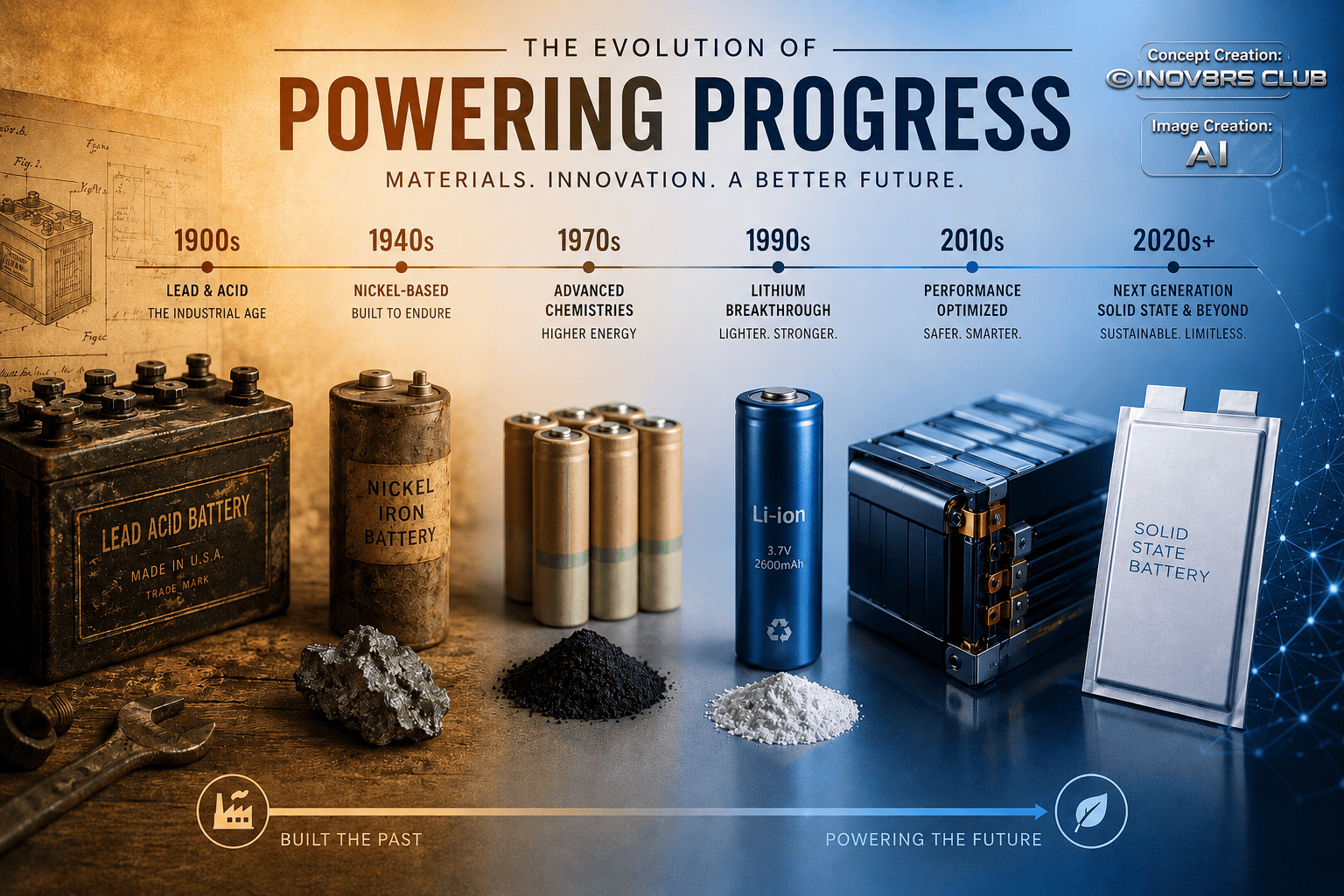
Infographic illustrating the evolution of battery technology from the 1900s to the 2020s, featuring images of various battery types including lead-acid, nickel-iron, lithium-ion, and solid-state batteries, alongside keywords and descriptions reflecting advancements in materials and performance.

BASF Introduces Oppanol® N PLUS for Next-Generation EV Batteries at Battery Show Europe 2026

BASF has unveiled Oppanol® N PLUS, a new high-performance binder designed to address the evolving demands of next-generation electric vehicle (EV) batteries. The company is showcasing the innovation at the Battery Show Europe 2026, taking place from June 9–11 in Stuttgart, Germany.

As battery technologies advance toward solid-state batteries (SSBs), manufacturers require materials that can deliver greater reliability, efficiency, and performance. Solid-state batteries are expected to provide longer driving ranges, faster charging capabilities, and enhanced safety, increasing the performance requirements for every component within the battery system.

Advancing Battery Performance and Manufacturing Consistency

Developed using BASF’s established polyisobutylene (PIB) technology, Oppanol® N PLUS is engineered specifically for modern battery applications. As a critical binder material, it helps maintain cohesion among active materials in the cathode, anode, or electrolyte while preserving structural integrity throughout the battery’s operational life.

The material’s high elasticity and flexibility enable it to absorb mechanical stresses caused by repeated charging and discharging cycles, supporting enhanced durability and long-term battery stability. Its chemically inert nature also helps minimize unwanted side reactions that could negatively affect battery performance.

One of the standout features of Oppanol® N PLUS is its consistently high product quality, achieved through tightly controlled manufacturing specifications. This allows battery producers to reduce process variability, limit reformulation efforts, streamline quality-control procedures, and implement production adjustments more efficiently and reliably.

To further support customers, BASF is improving product accessibility through stock availability and more flexible supply options, including package sizes starting at 20 kilograms. These measures are intended to help battery manufacturers and OEMs accelerate the development and commercialization of high-performance batteries for electric mobility.

According to Madeleine Jordan, Global Business Management Oppanol at BASF, the launch demonstrates the company’s commitment to combining decades of materials expertise with the evolving needs of the electromobility sector, while continuously enhancing proven technologies to support sustainable innovation.

Celebrating 95 Years of Oppanol Innovation

The introduction of Oppanol® N PLUS coincides with a major milestone for BASF: 95 years of polyisobutylene innovation.

The origins of the Oppanol product family date back to 1931, when chemist Michael Otto successfully demonstrated the polymerization of isobutene under suitable conditions. That same year, BASF patented a manufacturing process for polyisobutylene (PIB), which later became known as Oppanol—a name derived from Oppau, the Ludwigshafen district where the technology originated.

After seven years of intensive research and development, BASF began industrial-scale production in 1938 at its dedicated Oppanol facility. The material soon gained international recognition for its transparency, resistance to water and gases, chemical stability, safety profile, and strong adhesive properties.

Today, Oppanol is used across a broad range of industries and applications, including chewing gum, medical adhesive bandages, insulating glass units, cable insulation, roofing membranes, pipeline coatings, and advanced battery systems. Its durability, reliability, and chemical resistance have enabled the material to remain relevant while evolving to meet the requirements of emerging energy technologies.

With the launch of Oppanol® N PLUS, BASF is building on nearly a century of innovation, positioning the technology to support the future of electric mobility and advanced energy storage solutions.

Source: The Battery Magazine

#India’s #EV Market Gains Momentum as Fuel Costs Rise, but Challenges Remain

Busy street scene in Chennai featuring an MTC electric bus and several electric scooters, with pedestrians and signage in the background.

India’s electric vehicle (EV) market is gaining traction as rising fuel prices, regulatory changes, and expanding model offerings encourage more consumers to switch from conventional vehicles.

Electric car sales rose 25% in the year ending March 2026, with EVs surpassing 5% of India’s passenger vehicle market—a key milestone often viewed as the threshold for mainstream adoption. Growth has been strongest in vehicles priced above ₹1 million, where EVs now account for one in every ten sales.

The recent surge in crude oil prices, driven in part by tensions in the Middle East, has strengthened the economic case for EVs. India imports nearly 90% of its oil requirements, making it vulnerable to global energy price fluctuations. Higher fuel costs have prompted increased consumer interest in electric mobility.

Long-term policy support is also expected to drive adoption. Proposed CAFE-3 emission standards, scheduled to take effect from April 2027, would significantly tighten fuel-efficiency and carbon-emission requirements for automakers. Industry analysts believe the new regulations could accelerate EV penetration by making compliance targets more stringent and enforceable.

State governments are also pushing the transition. Delhi has proposed phasing out registrations of new internal combustion engine (ICE) two- and three-wheelers by 2027 as part of efforts to reduce air pollution.

Analysts expect further growth to be supported by a strong pipeline of new EV launches, particularly in the passenger vehicle and two-wheeler segments. Nomura forecasts EV penetration in India’s passenger vehicle market could reach 9% by 2030.

Despite the positive outlook, significant challenges remain. Charging infrastructure continues to lag demand, with public charging stations increasing to more than 10,000 nationwide but remaining concentrated in a few states. Consumer concerns over charging availability and driving range continue to slow adoption.

India also remains heavily dependent on imported battery materials and rare earth elements, exposing the sector to supply-chain and geopolitical risks. Industry experts note that developing a fully integrated domestic EV supply chain could take more than a decade.

While rising fuel prices and supportive policies are boosting demand, industry observers say the pace of India’s EV transition will ultimately depend on regulatory certainty, infrastructure expansion, and stronger domestic manufacturing capabilities.

This version is structured in a concise business-news style, focusing on market trends, drivers, forecasts, and risks rather than narrative storytelling.

Source: BBC News

#India to Launch Incentive Policy for #Lithium and #Nickel Processing

NEW DELHI: India’s Ministry of Mines is expected to soon introduce an incentive policy aimed at boosting domestic processing of lithium and nickel, with a proposed outlay of approximately ₹3,000 crore (US$313.48 million), according to two sources familiar with the development.

The sources requested anonymity as they were not authorized to speak publicly on the matter. The Ministry of Mines did not immediately respond to a Reuters request for comment.

Reuters had reported in January that the planned incentive scheme would focus on lithium and nickel processing. In April, the Mines Secretary stated that the government had shortlisted two critical minerals for a processing policy designed to strengthen the electric vehicle (EV) value chain, though the specific minerals were not disclosed at the time.

Lithium and nickel are key components in EV batteries and are considered vital to India’s clean mobility ambitions. The government aims to increase electric vehicle adoption to 30% of passenger car sales and 80% of two-wheeler sales by 2030, up from the current levels of 6% and 9%, respectively.

Under the proposed policy, lithium processing facilities would be required to have a minimum annual capacity of 30,000 metric tonnes, while nickel processing plants would need a minimum capacity of 50,000 metric tonnes to qualify for incentives, Reuters previously reported.

#SouthKorea export growth hits four-decade high on #AI chip boom

Graphical representation of Korea's exports featuring stacked shipping containers in blue and red, overlaid on a map of Korea, with an upward trend arrow indicating growth.

SEOUL: South Korea’s exports grew more than expected in May at the strongest annual rate in more than four decades, as chip sales hit a record on a global boom in AI investment, bolstering optimism about the trade-reliant economy and its world-beating stock market rally.

Exports from Asia’s fourth-largest economy, a bellwether for global trade, rose 53.2% from a year earlier to a record high of $87.75 billion, preliminary trade data showed on Monday, exceeding the median 48.4% increase forecast in a Reuters poll.

It was the 12th consecutive month of exports growing on a year-on-year basis and the biggest percentage rise since January 1984, bringing a record monthly trade surplus for the country.

“It is truly an unprecedented pace, raising market expectations again and again and exceeding them again and again,” said Stephen Lee, an economist at Meritz Securities in Seoul.

Read more at: The Star

#China’s Secret Advantage in the #RareEarth Race Isn’t Mining—It’s Talent

A digital illustration of Earth from space highlighting Asia, featuring glowing city lights and the countries China, Japan, South Korea, North Korea, and Taiwan, with colorful crystals and gems cascading towards the viewer.

When the world talks about rare earths, the conversation usually centers on mines, supply chains, and geopolitics. Governments in Washington, Brussels, Canberra, and Tokyo are investing billions to reduce dependence on China for these critical minerals, which are essential for electric vehicles, wind turbines, advanced electronics, and military systems.

But while Western policymakers focus on extracting more rare earths from the ground, China has spent decades investing in something much harder to replicate: people.

In the northern Chinese city of Baotou, often called the country’s rare earth capital, a sophisticated ecosystem of universities, research institutes, laboratories, and industrial facilities has created a steady pipeline of highly specialized talent. This workforce may be China’s most durable advantage in the global competition for critical minerals.

Building a Rare Earth Talent Factory

Each year, hundreds of students enroll in specialized rare earth programs at institutions such as the Inner Mongolia University of Science and Technology. Unlike traditional mining degrees found elsewhere in the world, these programs focus specifically on the science, engineering, and processing of rare earth elements.

Graduates can move directly into nearby refining facilities, magnet manufacturing plants, or advanced research institutes. In Baotou, the distance between classroom, laboratory, and factory can be measured in kilometers rather than continents.

This tight integration between education and industry has produced a workforce capable of contributing immediately upon graduation. Industry veterans who have worked in both China and the West often note that Chinese graduates arrive with practical knowledge tailored to rare earth production, while workers elsewhere may require years of additional training.

Why Rare Earths Are So Difficult

The challenge isn’t finding rare earths. These elements are relatively abundant in the Earth’s crust.

The real difficulty lies in processing them.

Rare earth refining involves separating 17 chemically similar elements, a complex and costly process requiring advanced expertise in chemistry, metallurgy, and engineering. Producing materials such as neodymium and praseodymium—critical ingredients in high-performance magnets—requires intricate sequences of chemical treatments and separations.

Success depends not only on equipment and capital but also on decades of accumulated technical knowledge.

That expertise has become one of China’s most valuable strategic assets.

A Nationwide Research Network

China’s rare earth dominance is supported by an extensive research infrastructure.

The country hosts more than 40 dedicated rare earth laboratories and research institutes, many located near major mining regions. Universities, state-owned enterprises, and government-funded research centers collaborate closely, accelerating the transfer of new discoveries from laboratory experiments to industrial-scale production.

This model allows innovations to move rapidly through the development pipeline. Researchers develop new processing technologies, which can then be adopted by state-backed producers and scaled up for commercial use.

The result is a level of coordination that few countries have been able to match.

The West’s Lost Expertise

For much of the twentieth century, the United States and Europe led the world in rare earth processing.

That leadership gradually disappeared as environmental concerns, lower costs overseas, and shifting industrial priorities pushed much of the industry to China. As refining capacity moved abroad, educational programs and specialized expertise followed.

Today, relatively few Western universities offer dedicated rare earth programs. While institutions such as Ames National Laboratory in Iowa maintain strong research capabilities, the broader educational ecosystem remains limited compared with China’s.

The challenge is not simply building new mines or processing facilities. It is rebuilding a generation of scientists, engineers, and technicians with highly specialized skills.

That process can take decades.

The Geopolitical Stakes

Rare earths sit at the intersection of economic competitiveness and national security.

Advanced fighter aircraft, missile guidance systems, submarines, radar equipment, electric vehicles, and renewable energy technologies all depend on materials refined using rare earth processing expertise.

As tensions between China and the United States continue, Beijing’s control over more than 90% of global rare earth processing and magnet production gives it significant leverage in global supply chains.

Recent export restrictions and tighter controls on technology transfer suggest that China increasingly views rare earth expertise as a strategic resource that must be protected, much like advanced semiconductor technologies.

For policymakers in the West, this raises a difficult question: Can billions of dollars in investment recreate a talent ecosystem that China has spent decades building?

The Road Ahead

The race for rare earth independence is often portrayed as a battle over mines and factories. In reality, it is equally a competition for knowledge.

China’s dominance did not emerge overnight. It was built through long-term investment in education, research, industrial policy, and workforce development. Mines can be developed relatively quickly, and factories can be constructed within a few years. Building generations of specialists, however, requires patience and sustained commitment.

As countries seek to diversify supply chains and secure access to critical minerals, they may discover that the most valuable rare earth resource is not buried underground at all.

It is the expertise required to turn those minerals into the technologies that power the modern world.

Source: Reuters

« Older Entries Recent Entries »