The U.S. Department of Defense has asked Congress to let it fund facilities in the United Kingdom and Australia that process strategic minerals used to make electric vehicles and weapons, calling the proposal crucial to national defense.
The request to alter the Cold War-era Defense Production Act (DPA) came as part of the Pentagon’s recommendations to Congress for how to write the upcoming U.S. military funding bill, known as the National Defense Authorization Act.
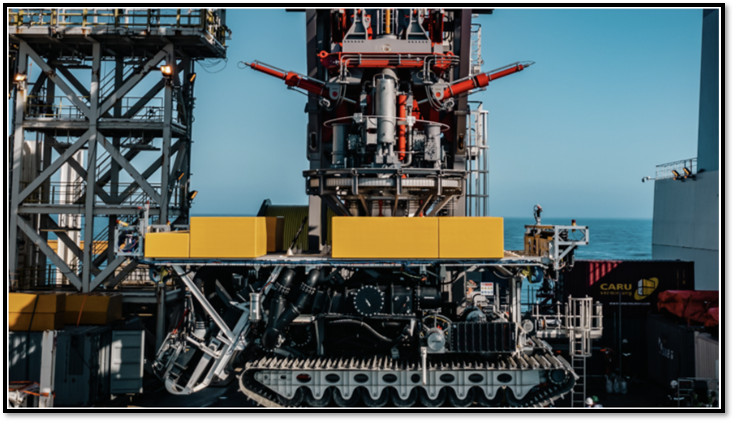
The Metals Company, an explorer of lower-impact battery metals from seafloor polymetallic nodules, announced Tuesday it has completed initial deep-water trials of the polymetallic nodule collector vehicle in the Atlantic Ocean.
Mining international waters is in the spotlight as companies and countries are looking at minerals concentrated on the ocean floor that can be used in batteries for smart phones and electric vehicles. Last year, TMC said the nodule resource is now estimated at four megatons (Mt) measured, 341Mt indicated and 11Mt inferred mineral resources.
The Vancouver-based company said engineers successfully lowered the Allseas-designed collector vehicle to the seafloor at depths of 2,470 meters, marking the first time the vehicle had been subjected to ultra-deep-water temperatures and pressures. The company said engineers then subjected the vehicle to extensive testing of its various pumps and critical mobility functions, driving 1,018 meters across the seafloor.
According to the Tesla’s so-called Impact Report released on Friday, nickel is by far the biggest problem in its supply chain for batteries when it comes to emissions, outpacing CO2 created by cathode manufacture and cell assembly combined.
Tesla said it commissioned London-based consulting and software firm Minviro “to identify hotspots with high global warming potential across eight specific processing routes from which we currently source cobalt, nickel and lithium.”
The report says Tesla sources over 95% of its lithium, 50% of its cobalt and 30% of its nickel directly and that “key drivers of CO2 in its global supply chain are the cathode and anode supply chains.”
Cobalt represents only 1%, while lithium, responsible for 13%, makes a more modest contribution than anode material graphite with the company pointing out that “chemical processing (refining / smelting) was a larger driver than mining.”
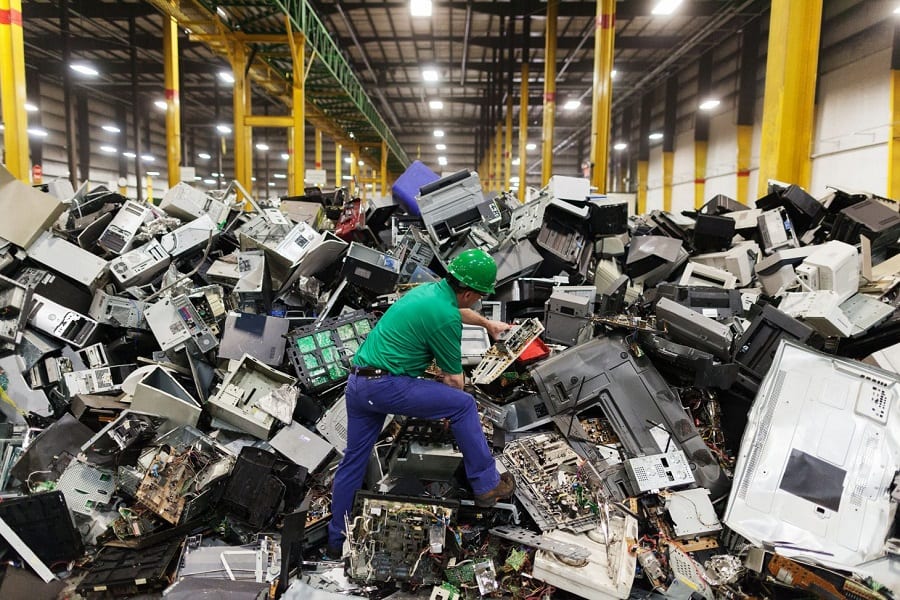
New research by the RSC also revealed a growing demand from consumers for more sustainable technology. In an online survey of 10,000 people across 10 countries, 60% said they would be more likely to switch to a rival of their preferred tech brand if they knew the product was made in a sustainable way.
The survey also suggested that people did not know how to deal with their own e-waste. Many respondents said they worried about the environmental effect of unused devices they have in their homes, but did not know what to do with them or were concerned about the security of recycling schemes.
Elements in smartphones that could run out in the next century:
Gallium: Used in medical thermometers, LEDs, solar panels, telescopes and has possible anti-cancer properties
Arsenic: Used in fireworks, as a wood preserver
Silver: Used in mirrors, reactive lenses that darken in sunlight, antibacterial clothing and gloves for use with touch screens
Indium: Used in transistors, microchips, fire-sprinkler systems, as a coating for ball-bearings in Formula One cars and solar panels
Yttrium: Used in white LED lights, camera lenses and can be used to treat some cancers
Tantalum: Used in surgical implants, electrodes for neon lights, turbine blades, rocket nozzles and nose caps for supersonic aircraft, hearing aids and pacemakers.
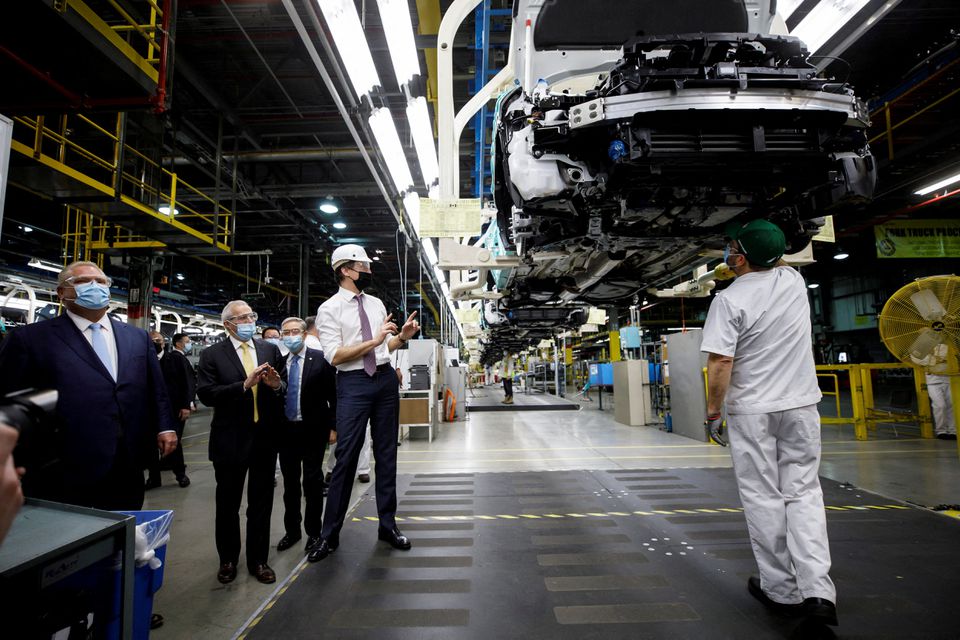
OTTAWA, May 4 (Reuters) – Canada is talking to a number of companies interested in setting up production in the electric vehicle (EV) supply chain, the industry minister said, as the government seeks to cut carbon emissions to net zero by 2050 and play a role in the shift toward greener cars.
There are “very active discussions with a number of players” to develop an EV supply chain, Industry Minister Francois-Philippe Champagne said in an interview last week.
Canada is urging critical minerals producers and processors to scale up production. It has invested in EV projects through a multi-billion dollar fund set up in 2020, and last month pledged C$3.8 billion ($3 billion) over eight years to help boost the production and processing of critical minerals used for EVs.
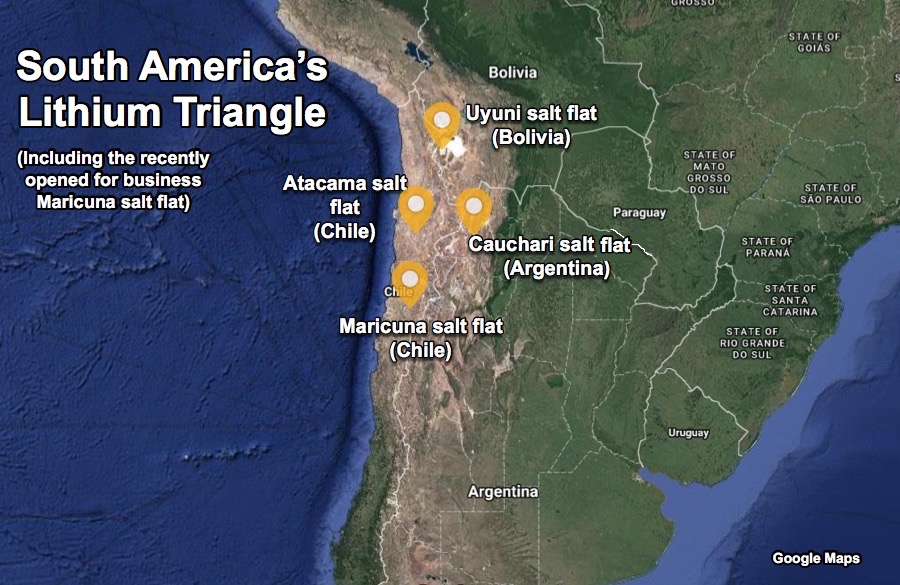
Mexico is working with governments of Argentina, Bolivia and Chile to create a lithium association so the countries can share their expertise to exploit the battery mineral, Mexican President Andres Manuel Lopez Obrador said on Tuesday.
“We’re going to work. We’re already doing so together on development, on exploration, processing, new technologies,” Lopez Obrador told a regular news conference.
Bolivia, Chile and Argentina sit atop the so-called “lithium triangle,” a region containing nearly 56% of the world’s resources of the metal, according to the most recent figures from the United States Geological Survey (USGS).
WASHINGTON — President Joe Biden is turning to a Cold War-era law to boost production of lithium and other minerals used to power electric vehicles, but experts say the move by itself is unlikely to ensure the robust domestic mining Biden seeks as he promotes cleaner energy sources.
Biden’s order directs the Defense Department to consider at least five metals — lithium, cobalt, graphite, nickel and manganese — as essential to national security and authorizes steps to bolster domestic supplies. Biden and former President Donald Trump both used the defense production law previously to speed the U.S. response to the COVID-19 pandemic.
On minerals, Biden wants to ensure the U.S. has enough lithium and other materials needed for EV batteries, heat pumps and large-capacity batteries for the electric grid. A majority of global lithium production comes from China, Australia, Argentina and Chile, while Russia dominates the global nickel market and the Democratic Republic of Congo is the world’s largest cobalt producer.
“Unless the president streamlines permitting, we should not expect to see any meaningful increase in American mineral production,’’ said Wyoming Sen. John Barrasso, the top Republican on the Senate Energy and Natural Resources Committee. At a recent committee hearing. Barrasso urged Biden to “stand up to mining opponents in his own party.”
Democratic Gov. Gavin Newsom has labeled California the “Saudi Arabia of lithium,” and two projects there could produce lithium by 2024.
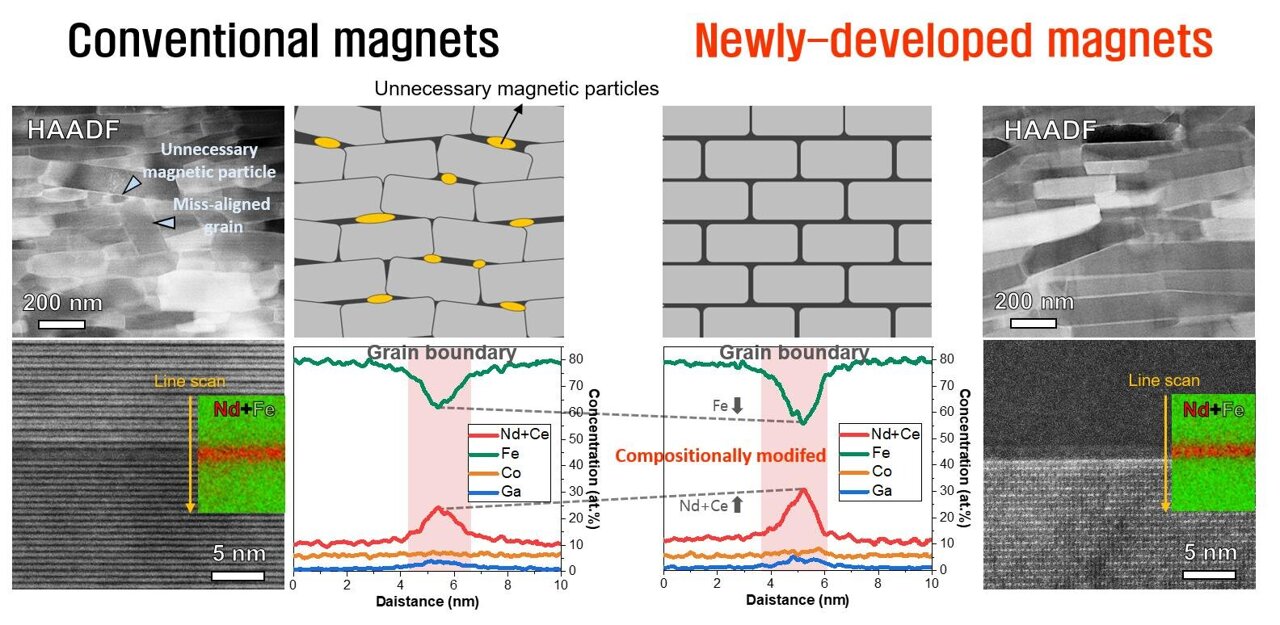
Neodymium is an expensive and unstably supplied material, but it is essential for manufacturing rare-earth permanent magnets. In order to develop an Nd-reduced permanent magnet, the content of cerium (Ce), an inexpensive element, was increased, instead of reducing the content of Nd. Until now, with the increased content of Ce, deterioration of the magnetic properties was inevitable. The research team focused on clarifying the reason for and mechanism of the deterioration of the magnetic properties caused by the increased Ce content, and they successfully solved the problem of rare-earth-reduced permanent magnets by controlling the atomic-scale microstructure.
The researchers discovered that unnecessary magnetic particles were formed during the manufacturing process, the underlying reason for the deterioration of the magnetic and microstructural properties of the magnets. They modified the microstructure and enhanced the magnetic properties by preventing the diffusion of atoms so that the formation of unnecessary magnetic particles is suppressed.
The research team applied the melt-spinning method and the hot-deformation method, which have very fast cooling rates compared to the conventional process, to the process of fabricating rare-earth-reduced precursors and final bulk magnets, respectively. As a result, they succeeded in optimizing the microstructure of the magnets by suppressing the formation of unnecessary magnetic particles. In addition, they were able to simultaneously improve the residual magnetization and coercive force, which are the main properties of permanent magnets.
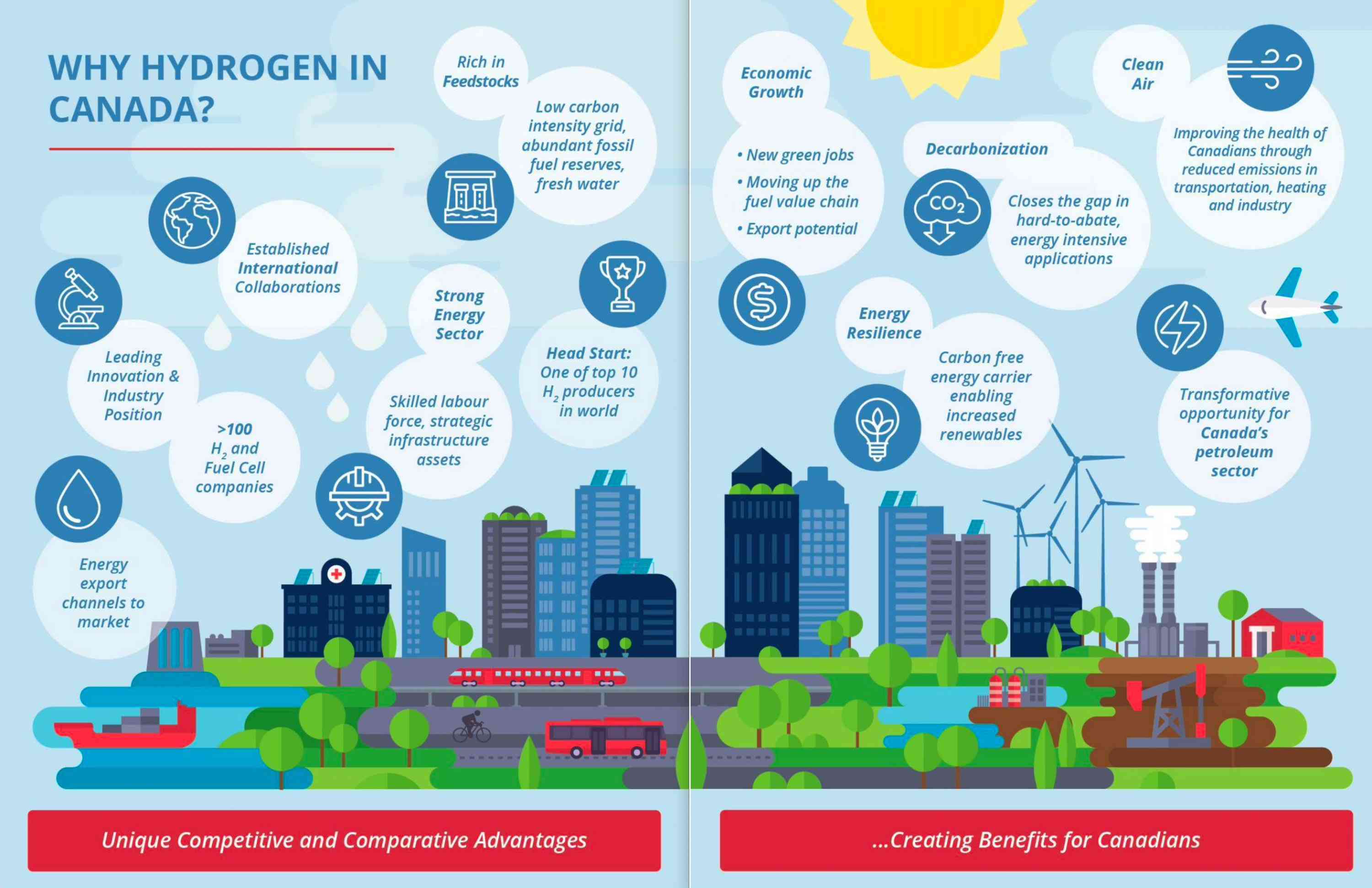
Hydrogen is still in the early stages as an energy industry in Canada — Canada is in the top 10 of hydrogen producers globally but makes about three million tonnes of it for industrial use. China, the world’s top producer, makes more than eight times that much.
But hydrogen was a major part of the conversation between German Chancellor Olaf Scholz and Prime Minister Justin Trudeau when they met in Berlin Wednesday.
“This is one aspect for a very long-term strategic co-operation between Canada and Germany, because we understand acutely that Canada is a country that can help us import hydrogen, which will be produced in an environmentally friendly manner,” Scholz said in German.
It is not entirely clear how Canada can quickly ramp up hydrogen production to supply Europe, or how Europe can quickly adjust its energy systems to use more hydrogen.
On March 21, the International Energy Agency is hosting a meeting in Paris to discuss options to help Europe. Natural Resources Minister Jonathan Wilkinson is to attend.
At the CERAWeek energy conference in Houston Tuesday, Wilkinson also pitched Canada’s hydrogen but as a “medium- and longer-term opportunity.”
“Canada has huge opportunities associated with the production of ultralow carbon hydrogen,” he said. “Hydrogen will be important for domestic use but can also enable huge international opportunities for supply to geographies including Europe and Japan.”
Wilkinson pointed specifically to hydrogen projects announced recently, including an Air Products $1.3 billion net-zero hydrogen production and liquefaction facility, a joint venture into hydrogen between Suncor and ATCO, and an agreement between Mitsubishi and Shell Canada to produce hydrogen for export to Japan.
Biden-Harris Administration, Companies Announce Major Investments to Expand Domestic Critical Minerals Supply Chain, Breaking Dependence on China and Boosting Sustainable Practices.
Critical minerals provide the building blocks for many modern technologies and are essential to our national security and economic prosperity. These minerals—such as rare earth elements, lithium, and cobalt—can be found in products from computers to household appliances. They are also key inputs in clean energy technologies like batteries, electric vehicles, wind turbines, and solar panels. As the world transitions to a clean energy economy, global demand for these critical minerals is set to skyrocket by 400-600 percent over the next several decades, and, for minerals such as lithium and graphite used in electric vehicle (EV) batteries, demand will increase by even more—as much as 4,000 percent. The U.S. is increasingly dependent on foreign sources for many of the processed versions of these minerals. Globally, China controls most of the market for processing and refining for cobalt, lithium, rare earths and other critical minerals.
Today, President Biden will meet with Administration and state partners, industry executives, community representatives, labor leaders, and California Governor Gavin Newsom to announce major investments in domestic production of key critical minerals and materials, ensuring these resources benefit the community, and creating good-paying, union jobs in sustainable production.











 A Blog for Browsing Mining, Mineral Processing, and Metals Info