Breakthrough technology: Chinese scientists created a 3D photothermal material that converts seawater to drinking water using sunlight alone, reducing energy use by 45.7%.
BASF Introduces Oppanol® N PLUS for Next-Generation EV Batteries at Battery Show Europe 2026
BASF has unveiled Oppanol® N PLUS, a new high-performance binder designed to address the evolving demands of next-generation electric vehicle (EV) batteries. The company is showcasing the innovation at the Battery Show Europe 2026, taking place from June 9–11 in Stuttgart, Germany.
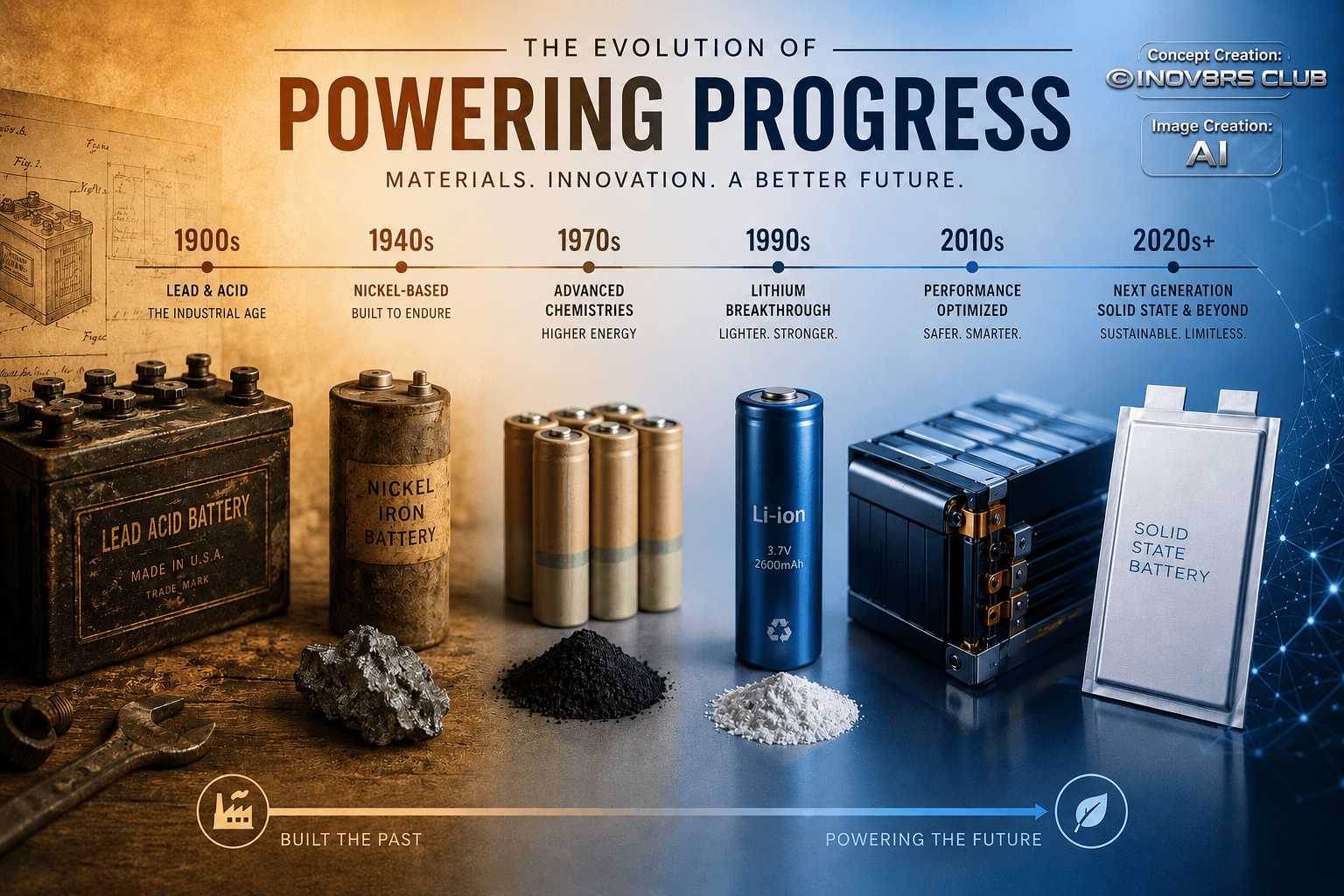
As battery technologies advance toward solid-state batteries (SSBs), manufacturers require materials that can deliver greater reliability, efficiency, and performance. Solid-state batteries are expected to provide longer driving ranges, faster charging capabilities, and enhanced safety, increasing the performance requirements for every component within the battery system.
Advancing Battery Performance and Manufacturing Consistency
Developed using BASF’s established polyisobutylene (PIB) technology, Oppanol® N PLUS is engineered specifically for modern battery applications. As a critical binder material, it helps maintain cohesion among active materials in the cathode, anode, or electrolyte while preserving structural integrity throughout the battery’s operational life.
The material’s high elasticity and flexibility enable it to absorb mechanical stresses caused by repeated charging and discharging cycles, supporting enhanced durability and long-term battery stability. Its chemically inert nature also helps minimize unwanted side reactions that could negatively affect battery performance.
One of the standout features of Oppanol® N PLUS is its consistently high product quality, achieved through tightly controlled manufacturing specifications. This allows battery producers to reduce process variability, limit reformulation efforts, streamline quality-control procedures, and implement production adjustments more efficiently and reliably.
To further support customers, BASF is improving product accessibility through stock availability and more flexible supply options, including package sizes starting at 20 kilograms. These measures are intended to help battery manufacturers and OEMs accelerate the development and commercialization of high-performance batteries for electric mobility.
According to Madeleine Jordan, Global Business Management Oppanol at BASF, the launch demonstrates the company’s commitment to combining decades of materials expertise with the evolving needs of the electromobility sector, while continuously enhancing proven technologies to support sustainable innovation.
Celebrating 95 Years of Oppanol Innovation
The introduction of Oppanol® N PLUS coincides with a major milestone for BASF: 95 years of polyisobutylene innovation.
The origins of the Oppanol product family date back to 1931, when chemist Michael Otto successfully demonstrated the polymerization of isobutene under suitable conditions. That same year, BASF patented a manufacturing process for polyisobutylene (PIB), which later became known as Oppanol—a name derived from Oppau, the Ludwigshafen district where the technology originated.
After seven years of intensive research and development, BASF began industrial-scale production in 1938 at its dedicated Oppanol facility. The material soon gained international recognition for its transparency, resistance to water and gases, chemical stability, safety profile, and strong adhesive properties.
Today, Oppanol is used across a broad range of industries and applications, including chewing gum, medical adhesive bandages, insulating glass units, cable insulation, roofing membranes, pipeline coatings, and advanced battery systems. Its durability, reliability, and chemical resistance have enabled the material to remain relevant while evolving to meet the requirements of emerging energy technologies.
With the launch of Oppanol® N PLUS, BASF is building on nearly a century of innovation, positioning the technology to support the future of electric mobility and advanced energy storage solutions.
Pip: Welcome to the feed where ore meets amp-hours — A Blog for Browsing Mining, Mineral Processing, and Metals Info, and today we are talking batteries.
Mara: Specifically, a major development in solid-state battery technology out of China — the energy density numbers, the fast-charging claims, and what the underlying chemistry actually involves. All of it reported by Nanthakumar Victor Emmanuel, P.Eng. Let’s start with the breakthrough itself.
China’s Solid-State Battery Leap
Mara: The setup here is a familiar tension in battery research: solid-state designs promise better performance and safety than conventional liquid-electrolyte batteries, but making them practical at scale has been the hard part. Researchers from the Chinese Academy of Sciences are claiming a significant step forward.
Pip: The headline number comes straight from the study. The post quotes the team reporting “stable cycling” for 700 cycles with an 81.9 percent capacity retention — and that’s on top of an energy density of 451.5 watt-hours per kilogram, more than double what commercial lithium iron phosphate EV cells currently achieve.
Mara: What that means in practice: a battery that holds roughly twice the charge in the same weight, charges in three minutes, and still performs reliably after hundreds of cycles. For EV range, that combination would be a genuine step change.
Pip: The chemistry doing that work is a compatibilizing-solvent plasticization strategy — which sounds like something a materials scientist invented to win an argument at a conference.
Mara: It is dense, but the mechanism matters. Conventional plasticizers used in PVDF polymer electrolytes suffer from poor electrochemical stability. The new approach uses acetone as a temporary solvent to improve compatibility, then lets it evaporate during film formation, locking the plasticizers into the polymer network and creating a lithium-fluoride-rich interfacial layer that stabilizes everything.
Pip: So the upshot is: they solved a known instability problem in the electrolyte, and that’s what makes the high-density, fast-charge performance possible without the system degrading quickly.
Mara: The post is careful to note the challenges that remain. Dendrites — high-current metallic cracks that cause short circuits — are still a real concern for dense solid-state designs. The piece also flags that China’s new all-iron battery may offer a lower-cost alternative to lithium options entirely, and that nuclear batteries represent a longer-horizon possibility worth watching.
Pip: From doubling energy density to rethinking the chemistry from the ground up — the pace of movement here is hard to ignore.
Mara: The gap between lab result and production line is still wide, but the direction is clear.
Pip: Next time, we’ll see what else is moving fast — in the ground and out of it.