Tag Archives: Copper

How a deeper #US – #Burundi partnership could unlock #CriticalMineral and security gains

Aerial view of a rugged landscape with a defined border, featuring rocky formations and lakes, under a cloudy sky.

Atlantic Council: A strategic opportunity

Burundi’s size makes it an ideal candidate for a targeted security partnership, one that would not overextend US defense resources. Its minerals, strategic position in the eastern DRC conflict, and active role in peacekeeping missions align closely with US interests on the continent.

Given that Burundi’s nickel and NdPr will inevitably be mined, the real question is whether this becomes another quiet win for Chinese industrial strategy—or proof that US security engagement can still shape global markets.

The United States risks missing a critical opportunity—particularly in the mining sector—if policymakers and defense actors do not move quickly to prioritize Burundi.

Read more at: https://www.atlanticcouncil.org/blogs/africasource/how-a-deeper-us-burundi-partnership-could-unlock-mineral-and-security-gains/

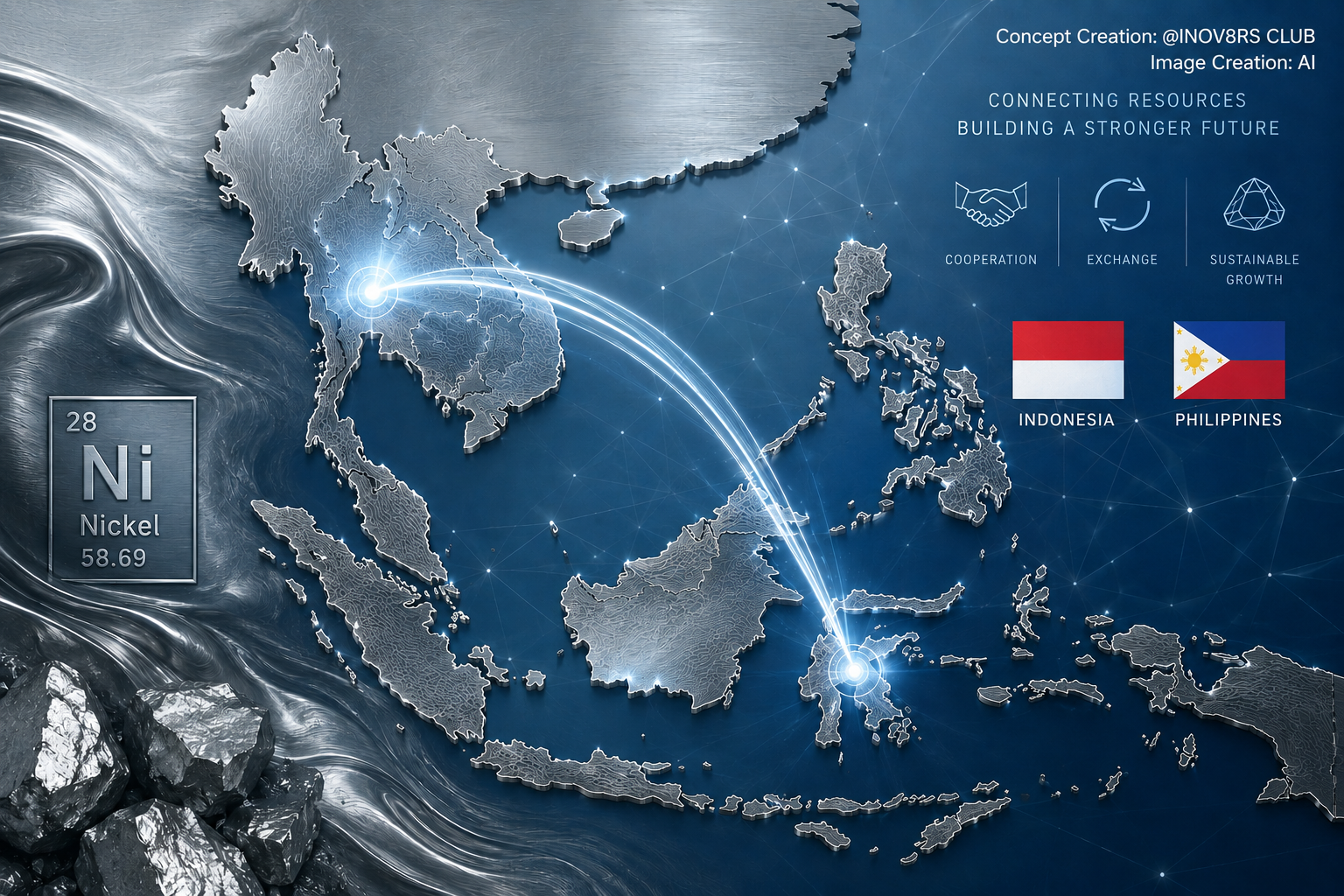
#Jakarta: #Coal and #Nickel dilemma: Racing for revenue, lagging in readiness

A silhouette of Indonesia features an industrial landscape on the left with smokestacks and an oil rig, and a renewable energy scene on the right with wind turbines. Road signs reading 'DEAD END' and 'Hope Ahead' are included.

A potentially widening budget deficit amid soaring global oil prices has prompted Jakarta to explore alternative revenue sources, including export duties on nickel and coal, commodities that are currently benefiting from relatively strong price trends.

The push for rapid revenue mobilization, however, appears to be running ahead of sectoral readiness. President Prabowo Subianto has approved a coal export duty, with tariffs reportedly still under discussion depending on price levels, initially slated for implementation on April 1. However, its rollout remains subject to ongoing cross-ministerial deliberations, particularly regarding its impact on mining sector profitability.

As highlighted by Energy and Mineral Resources Minister Bahlil Lahadalia, the structure of Indonesia’s coal exports complicates policy design. Around 60-70 percent of exports consist of low-calorific, lower-value coal, meaning that a uniform export duty risks disproportionately burdening producers operating on thin margins. This has prompted the minister to adopt a more cautious stance, delaying implementation until a more calibrated approach is formulated. Yet this caution contrasts with parallel intervention on the supply side. The government has tightened production through the Work Plan and Budget (RKAB) mechanism, capping approved output at around 580 million tonnes. This figure is well below the previous year’s realization of 790 million tonnes, aimed at preventing oversupply and supporting global prices.

The escalation of geopolitical conflict in the Middle East has helped sustain elevated energy and mineral commodity prices. Coal prices have remained consistently above US$135 per tonne, while nickel prices have also stayed relatively stable. This sustained price momentum has prompted the government to take strategic measures to safeguard the state budget. Export duty revenues in the 2026 state budget are projected to surge to Rp 42.56 trillion (US$2.5 billion), marking an increase of more than 850 percent. This sharp rise underscores the urgency behind recent policy initiatives.

This creates a fragmented policy mix. While fiscal authorities push for revenue mobilization through export duties, sectoral regulators simultaneously restrict output to stabilize prices. Rather than a fully coherent strategy, the current approach reflects an unresolved tension between short-term fiscal pressures and longer-term industrial and market considerations.

This tension becomes even more apparent when compared with the government’s more assertive stance in the nickel sector. The government is currently formulating an export duty on nickel-based products, particularly nickel pig iron (NPI), although the exact tariff structure and rates remain under deliberation. At the same time, supply-side controls have been introduced, with the nickel ore RKAB capped at around 150 million tonnes to safeguard domestic availability.

Read more at: https://www.thejakartapost.com/opinion/2026/04/08/analysis-coal-and-nickel-dilemma-racing-for-revenue-lagging-in-readiness.html?utm_source=(direct)&utm_medium=single_latest

#DRC – #Kinshasa on verge of winning its bet on the #Cobalt market

Illustration of the Democratic Republic of the Congo highlighted on a map of Africa, featuring a mining scene with a mineral processing plant and various minerals like cobalt, copper, coltan, and lithium. The country's flag is prominently displayed.

Fully focused on its goal of regulating the precious mineral sector, Félix Tshisekedi’s presidency expects significant fiscal returns this year. The authorities, however, have had to contend with pressure from Chinese operators eager to obtain larger quotas, as well as the reluctance of certain administrations.

Read more at: https://www.africaintelligence.com/central-africa/2026/04/07/kinshasa-on-verge-of-winning-its-bet-on-the-cobalt-market,110698845-eve

Under the presidency of Félix Tshisekedi, the Democratic Republic of Congo (DRC) is aggressively reshaping its role in the global mineral market, specifically targeting the cobalt and gold sectors to maximize state revenue and economic sovereignty. 

Fiscal Returns and Strategic Control 

For 2026, the Congolese Treasury has set ambitious financial targets tied to its newfound status as a market “price maker”. 

  • Projected Revenue: The government expects roughly $2.3 billion in public revenue this year from cobalt alone.
  • Market Influence: By implementing a strict quota system (capped at 96,600 tonnes for 2026), Kinshasa successfully pushed prices from $21,000 in early 2025 to over $56,000 as of April 2026.
  • Alternative Scenario: Authorities estimate that without these regulatory interventions, revenues would have been limited to approximately $617 million

Friction with Chinese Operators

The administration is navigating complex relationships with Chinese mining companies, which currently dominate much of the DRC’s mineral extraction. 

  • Quota Resistance: Major Chinese firms, notably CMOC Group, have vocally opposed the 2026 quotas, arguing they are too restrictive compared to their production capacity.
  • Processing Ultimatum: The Ministry of Mines is leveraging these quotas to force Chinese operators into local processing agreements, aiming to shift the country away from being a mere raw material exporter.
  • Audit of Legacy Deals: In March 2026, the government launched a comprehensive technical and financial audit of the Sicomines “infrastructure-for-minerals” deal to ensure compliance and fair returns. 

Administrative and Geopolitical Hurdles

Domestic and international pressures continue to complicate the regulatory rollout:

  • Bureaucratic Reluctance: Delays in implementing new export procedures at the end of 2025 caused bottlenecks at key transit points like the Kasumbalesa border post, forcing the government to refine its administrative arrangements.
  • The “U.S. Pivot”: Under a strategic partnership signed in late 2025, the U.S. is pushing for access to critical minerals to counter Chinese dominance. This includes a 44-project shortlist handed to Washington in February 2026, creating additional geopolitical friction.
  • New Enforcement Measures: To counter administrative weakness, the state recently partnered with Quantum to establish a “tax brigade” for better oversight of mining operators. 

#WhiteHouse taps Highland #Copper in local supply push

A graphic featuring the shape of Michigan with an overlay of scenic landscapes, flanked by the American and Canadian flags, and the text 'Highland Copper' above.

The US administration has named Highland Copper as a contributor to expanding domestic copper supply, highlighting the Canadian miner’s growing strategic relevance.

The recognition follows President Donald Trump’s move last week to adjust national security tariffs on steel, aluminum and copper imports, lowering duties on derivative products, simplifying compliance and addressing under-reporting of import values. 

The White House document highlights Highland alongside Ivanhoe Electric, Rio Tinto and Wieland as part of a broader effort to expand US mining, smelting and fabrication capacity.

Read more at: White House taps Highland Copper in local supply push – MINING.COM

#Indonesia bets on nickel levy to break its #China habit

A stylized image of Indonesia's map cut out from an Indonesian flag background, showcasing an industrial scene within the map outline.

Indonesia’s sweeping nickel downstreaming policy, launched in 2020, is entering a more consequential phase. Having successfully halted raw ore exports, the government is now preparing to deploy a more assertive instrument: an additional export levy on processed nickel products.

Energy and Mineral Resources Minister Bahlil Lahadalia, who also oversees investment, has made clear that the move is not merely about boosting state revenue but about navigating mounting global economic uncertainty and growing saturation in the base metals market.

The proposal is a direct response to the oversupply of lower-grade nickel products — such as nickel pig iron and ferronickel — which have flooded global markets from Indonesia’s rapidly expanding smelting sector.

This glut has depressed international nickel prices, eroding royalties and state income. From a mining economics perspective, the policy represents a large-scale market correction aimed at safeguarding the value of Indonesia’s strategic resources from being undervalued internationally.

The levy will target nickel derivatives produced through pyrometallurgical processes, particularly nickel pig iron and ferronickel, whose nickel content remains relatively low to mid-range.

Read more at: https://asiatimes.com/2026/04/indonesia-bets-on-nickel-levy-to-break-its-china-habit/

Idaho National Laboratory (#INL) – #CriticalMinerals Recycling Innovations

Illustration of the state of Idaho featuring an INL Recycling Innovations facility, surrounded by mountains and greenery, with recycling materials displayed.

The critical materials in discarded rocks, e-waste and other sources don’t degrade over time and can be recovered. However, the U.S. lacks the infrastructure to recycle them.

Recycling facilities could tap into these largely untouched sources, helping meet U.S. demand. These facilities could be built far more quickly than new mines, which can take over a decade due to permitting, costs and infrastructure needs.

“The U.S. doesn’t recycle well,” said Bob Fox, a senior manager at INL. “There’s a willingness to recover critical materials from recycled sources, but there’s no infrastructure or market for it. Right now, critical materials recycling doesn’t have the economic incentives to drive infrastructure development.”

INL is working to change that by making recycling more efficient, less energy-intensive and economically viable.

“Recycling represents a crucial pathway for the U.S. to obtain critical materials, including rare earth elements like dysprosium,” said Arindam Mukhopadhyay, a staff scientist at INL. “Even critical materials we mine domestically, such as lithium, cobalt, nickel and manganese, can be recovered through recycling.”

Read more at: https://inl.gov/feature-story/idaho-researchers-advance-critical-materials-recycling-technologies/

Datavault AI working with #American Strategic Minerals to tokenize refined metals, #CriticalMetals

Datavault AI (DVLT) said Thursday it has partnered with American Strategic Minerals to develop and monetize one of the latter’s resource extraction projects in Arizona through a $78.2 million digital tokenization initiative.

Under the agreement, American Strategic will receive up to $68.8 million, while Datavault AI may earn up to a 20% equity stake in the company upon meeting performance milestones under the tokenization program.

Datavault AI said antimony will be the first element tokenized, followed by gold, copper and silver. The initial phase will cover about 5% of the project’s antimony resource through the ASMI Antimony 1 Token.

The partnership sets the stage for the launch of an International Elements Exchange, the company added.

Read more at: https://www.msn.com/en-us/money/companies/datavault-ai-working-with-american-strategic-minerals-to-tokenize-refined-metals-rare-earth-elements/ar-AA1ZrQ9y

#BASF launches biggest overseas project in #China with green-powered mega-site

Aerial view of an industrial site featuring large oil refinery structures, solar panels in the foreground, and wind turbines in the background, under a bright blue sky.

German chemical giant opens US$10 billion Zhanjiang complex, its largest overseas investment, as Beijing courts foreign capital.

Germany’s chemical giant BASF has launched operations at its China production base – its largest overseas investment to date – with a total outlay of €8.7 billion (US$10 billion), and the country’s first wholly foreign-owned large-scale Verbund site.

The company on Thursday inaugurated the world-scale complex in Zhanjiang, Guangdong province, designed to run entirely on renewable electricity.

A Verbund site is an integrated chemical complex where plants, energy use and materials are interconnected to maximise efficiency and minimise waste.

The site has brought 18 plants and 32 production lines into operation, producing more than 70 types of products spanning basic chemicals, intermediates and specialty chemicals for industries including transport, consumer goods, electronics, home care and personal care.

Read more at: https://www.scmp.com/business/article/3348021/basf-launches-biggest-overseas-project-china-green-powered-mega-site

Energy Fuels Produces ‘Heavy’ #RareEarthMetal at #Utah Mill

A stylized map of the United States filled with the American flag design, featuring an industrial processing facility in Utah with large equipment and a sign that reads 'Energy Fuels'.

Energy Fuels Inc. produced a so-called heavy rare earth element for the first time at its plant in Utah, advancing efforts to build a domestic supply of critical minerals used in electronics and defense technology.

The US company said on 24th March 2026 that it successfully recovered its first kilogram of terbium oxide at the White Mesa Mill as part of a pilot project to scale production at the facility, which predominantly processes uranium.

Terbium — a heavy rare earth element — is essential to building magnets that support consumer electronics, cars and military-grade weaponry. Heavy rare earths are less abundant and typically more valuable than “light” elements such as neodymium-praseodymium. Mining companies like Energy Fuels are pushing to scale production of these metals through facilities in the US as part of the United States effort to create a supply chain that circumvents China.

Read more at: https://www.bloomberg.com/news/articles/2026-03-25/energy-fuels-produces-key-heavy-rare-earth-metal-at-utah-mill

Two Months of #RareEarths Left – #Reuters / #SCMP

“You can’t fight a twenty-first-century war with twentieth-century supply chains”. “Modern weapons rely on materials that are difficult to source, difficult to process, and difficult to replace once inventories begin to tighten.”

Reports from the South China Morning Post and Reuters indicate Washington could have only weeks or months of certain rare-earth inventories available for defense manufacturing if supply disruptions deepen.

Rare earth elements are embedded throughout modern military systems—from missile guidance and drone propulsion to radar systems and fighter aircraft electronics.

Note: War is only necessary for protecting human rights, human lives and the nature.

Read more at: https://finance.yahoo.com/sectors/energy/articles/chinese-publication-claims-u-two-014600091.html

« Older Entries Recent Entries »