Tag Archives: Cobalt

Western #Canada holds potential to become a ‘critical minerals processing behemoth,’ expert says

A group of battery metal exploration companies and startups says it has a plan to turbocharge Canada’s critical minerals sector by building out “midstream” mineral processing facilities in Western Canada.

Two reports published by the Battery Metals Association of Canada, which hired analysts at the Transition Accelerator to consult with their members, identified nine critical minerals — copper, graphite, iron, nickel, lithium, phosphate, rare earths and vanadium — and five regions where they see big opportunities for major projects.

For example, British Columbia has at least four producing copper mines, which all ship their copper concentrate overseas, primarily to China, because there are no smelters in Western Canada. Building a copper smelter could encourage copper production and exploration while also creating higher-value products to sell, the reports said.

“If you wanted to put together a critical minerals processing behemoth anywhere in the world, the assets that we have in Alberta to do that are just phenomenal,” Bentley Allan, a professor of political economy at Johns Hopkins University and a principal at Transition Accelerator, said. “It has the chemical processing expertise, the clean power resources, other kinds of machining and precision instruments, which make Alberta a really incredible place to do this.”

Read more at: https://financialpost.com/commodities/mining/western-canada-critical-minerals-processing-behemoth

#Nigeria to open two #Chinese-backed #Lithium processing plants this year

Note: Canada is a resource-rich country. Canada does not have to go to another continent for critical mineral. Canada needs investment and technology development (refining and recycling). Bring the investment to Canada.

LAGOS, May 26 (Reuters) – Nigeria is set to commission two major lithium processing plants this year, the country’s mining minister announced on Sunday, marking a shift from raw mineral exports towards adding value domestically.

The facilities, largely funded by Chinese investors, could help transform Nigeria’s vast mineral wealth into jobs, technology, and manufacturing growth within the country. Mining Minister Dele Alake said a $600 million lithium processing plant near the Kaduna-Niger border is slated for commissioning this quarter, while a $200 million lithium refinery on the outskirts of Abuja is nearing completion. Two additional processing plants are expected in Nasarawa state, which borders the capital Abuja, before the third quarter of 2025, the minister said. “We are now focused on turning our mineral wealth into domestic economic value – jobs, technology, and manufacturing,” Alake said. Over 80% of the funding for the four facilities has been provided by Chinese firms, including Jiuling Lithium Mining Company and Canmax Technologies, according to separate announcements by governors of the states where the plants are located.

Read more at: https://www.reuters.com/business/energy/nigeria-open-two-chinese-backed-lithium-processing-plants-this-year-2025-05-26/

Yes, Canada is considered a resource-rich country. It has abundant natural resources, including:

  1. Energy Resources:
    • Oil and Natural Gas: Canada has some of the largest reserves of oil in the world, particularly in the oil sands of Alberta. It is a major exporter of oil and natural gas, especially to the United States.
    • Hydroelectric Power: Canada is a leader in hydroelectricity production, with large dams and water resources, especially in provinces like Quebec and British Columbia.
  2. Minerals and Metals:
    • Gold, Silver, and Platinum: Canada has significant reserves of precious metals, making it one of the largest producers of gold and other precious metals.
    • Nickel, Copper, and Zinc: The country is a leading producer of these metals, which are essential for various industries, including manufacturing and electronics.
    • Uranium: Canada is one of the world’s top producers of uranium, used in nuclear power generation.
  3. Forests:
    • Canada has vast forest resources, making it one of the largest producers of timber and paper products. The forest industry is especially important in provinces like British Columbia and Quebec.
  4. Agricultural Resources:
    • Canada is a major producer of wheat, canola, and other crops. It also has extensive livestock farming, including cattle and poultry.
  5. Freshwater:
    • Canada holds around 20% of the world’s freshwater supply, making it an important resource for both domestic use and potential global trade.

These resources contribute significantly to Canada’s economy, especially through exports, and help maintain its position as one of the world’s wealthiest nations in terms of natural wealth

A millennial is building #America’s first #Nickel-#Cobalt refinery

America had no nickel-cobalt refineries of its own.

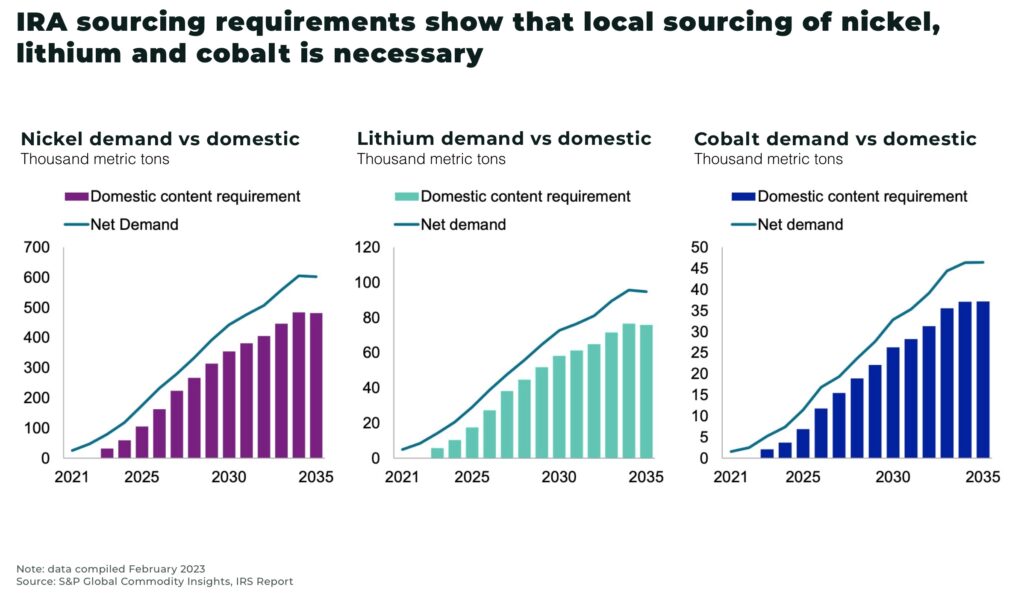
The promise of the largesse doled out by the Inflation Reduction Act (IRA), Joe Biden’s signature bill to catalyse America’s clean-energy transition. Subsidies for electric cars attracted $110bn in investments in green manufacturing and battery-making within a year of the IRA’s passage in 2022. But as firms boosted production it became clear that China’s grip on the world’s mineral mines and refineries could prove perilous for its political foes. If China decides not to export refined metals tomorrow, as it has threatened to do, dozens of brand-new American gigafactories could soon sit idle.

Even with subsidies, mining and refining in America are not for the faint of heart. Regulations can make both activities uncompetitive. But the maths flipped in refiners’ favour in December 2023 when the tax agencies charged with implementing the IRA made it more protectionist. Their new rules clarified that companies selling electric cars made with materials processed by firms with at least 25% Chinese ownership are ineligible for subsidies. For makers of batteries and cars this was bad news—their inputs got pricier overnight.

Read more at: https://www.economist.com/united-states/2024/02/29/a-millennial-is-building-americas-first-nickel-cobalt-refinery

#Pentagon plans #AI-based program to estimate prices for critical minerals

The US Department of Defense plans to develop a program to estimate prices and predict supplies of nickel, cobalt and other critical minerals, a move aimed at boosting market transparency but one that throws a new, uncertain variable into global metals markets.

The program, which received little attention after it was announced on a Pentagon website in October, is part of Washington’s broader efforts to jumpstart US production of critical minerals used in weapons manufacturing and the energy transition.

US output lags market leader China partly because attempts to build new American mines can be heavily influenced by commodity price swings.

The Pentagon’s work is being run by its Defense Advanced Research Projects Agency (DARPA) division, which was formed in response to the Soviet Union’s 1957 launch of the Sputnik 1 satellite and helped develop the Internet and the mRNA vaccine for Covid-19.

DARPA and the US Geological Survey plan to hire one or more private contractors to develop an artificial intelligence-backed model that would construct a metal’s “structural price” based on where and when it is produced, as well as labor, supply and other costs, according to documents seen by Reuters that describe the program, including a slide deck that DARPA presented last November to prospective contractors.

Read more at: https://www.mining.com/web/pentagon-plans-ai-based-program-to-estimate-prices-for-critical-minerals/?utm_source=Daily_Digest&utm_medium=email&utm_campaign=MNG-DIGESTS&utm_content=pentagon-plans-aibased-program-to-estimate-prices-for-critical-minerals

#Vale’s $10 billion spend on #Canada targets existing potential

Vale Base Metals chairman Mark Cutifani is undertaking a unit-wide asset review that will likely find more potential at the company’s operations in Sudbury, Ontario; Thompson, Manitoba; and Voisey’s Bay and Long Harbour, Newfoundland; Olson said.

Vale also may have an announcement soon on the Bécancour nickel sulphide processing project it’s advancing to supply 25,000 tonnes of nickel a year to General Motors, she said. That deal, announced just over one year ago could be worth about C$762 million per year.

“There’s just a clarity and a certainty in regulation and Canada is a mining country and with that comes a lower risk, and equally you have the wonderful benefit of renewable and clean power,” Olson said. “Canada has a great opportunity to further establish itself as a leader in our industry with community and Indigenous rights leaders.”

Read more at: https://www.mining.com/future-minerals-forum-vales-us10b-for-canada-targets-existing-potential/

#China likely to beat #Europe, #US in meeting battery metals demand through recycling – study

China is the most likely candidate to first meet its entire demand for the three most important raw materials for batteries – lithium, cobalt and nickel – through recycling, new research has found.

According to a study by a team at the University of Münster, the race to achieve a complete circular economy for key battery metals will see Europe arriving in second and the US in third place.

In detail, the results show that China is expected to be able to employ recycling to meet its own demand for primary lithium for electric vehicles from 2059 onwards; in Europe and the US, this will not happen until after 2070. 

When it comes to cobalt, recycling is expected to ensure that China will be able to meet its needs after 2045, at the earliest; in Europe, this will happen in 2052 and in the US not until 2056.

Finally, for nickel, China can probably meet demand through recycling in 2046 at the earliest, with Europe following in 2058 and the US from 2064 onwards, according to the report.

Read more at: https://www.mining.com/china-likely-to-beat-europe-us-in-meeting-battery-metals-demand-through-recycling-study/

#China metals firms see #US rules unlikely to upend supply chains

Chinese firms producing and processing battery materials see new US rules aimed at limiting Beijing’s grip on the electric-vehicle industry as less stringent than feared, allowing them to preserve a key role in the global supply chain.

Washington’s move, which seeks to cut China out of US tax credits and curb the country’s control over joint ventures, created uncertainty at the end of last week, with questions swirling around the status of Chinese-owned battery-material operations outside the mainland, and over the impact on the wider car and battery industry.

Read more at: https://www.mining.com/web/china-metals-firms-see-us-rules-unlikely-to-upend-supply-chains/

#Norway lawmakers back deep-sea mining in Arctic Ocean

Norway has secured a parliamentary majority to go ahead with plans to open the Arctic Ocean to seabed mineral exploration, despite environmental groups and the fishing industry’s warnings that the move would risk the biodiversity of vulnerable ecosystems.

The country’s minority centre-left government and two large opposition parties backed on Tuesday a government’s proposal announced in June to position the country as a frontrunner in commercial-scale deep-sea mining.

The move by the European country, where vast oil and gas reserves have made it one of the world’s wealthiest nations, has as goal to diversify its economy away from fossil fuels.

Read more at: https://www.mining.com/norway-lawmakers-back-deep-sea-mining-in-arctic-ocean/

#Bloomberg: #Volvo Cars Goes for Blockchain Tech to Avoid Unethical #Cobalt

Volvo-China-in-first-blockchain-project-for-recycled-cobalt-1120x669

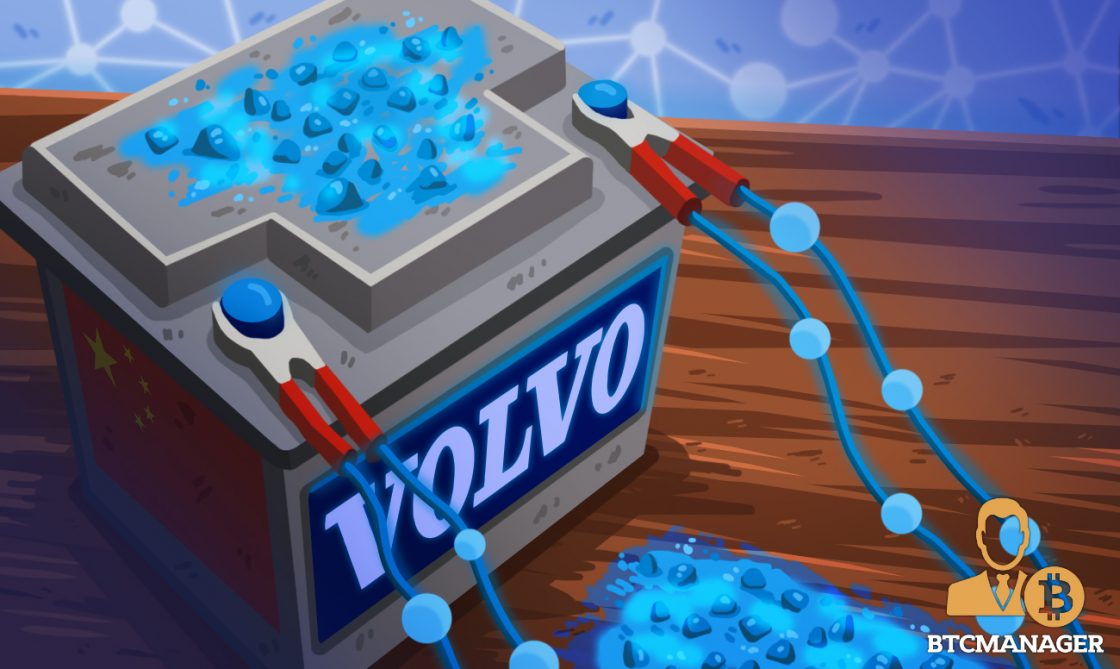
Volvo Cars will use blockchain technology to trace the origin of cobalt used in its batteries in an effort to avoid supplies produced by children and under unethical conditions.

The commodity, an important ingredient in lithium-ion batteries, is mainly extracted in Congo, which last year produced more than two-thirds of the world’s cobalt.

While the mineral is mainly taken out of the ground by large industrial mines, about 17% is dug by hand by thousands of miners operating in the southeastern Katanga region before being sold on to intermediaries, according to trading house Darton Commodities. At that point, it’s difficult to distinguish from ethically mined cobalt.

Read more at: https://www.bloomberg.com/news/articles/2019-11-06/volvo-cars-goes-for-blockchain-tech-to-avoid-unethical-cobalt

Chinese demand for cobalt raw material will be healthy this year, Jinchuan exec says

Demand for cobalt raw material in China will be healthy this year as there is “no stock” in the country, according to the head of Jinchuan International’s nickel and cobalt division.

http://www.metalbulletin.com/Article/3184563/Minor-and-precious-metals/Chinas-demand-for-cobalt-raw-material-will-be-healthy-this-year.html

Recent Entries »