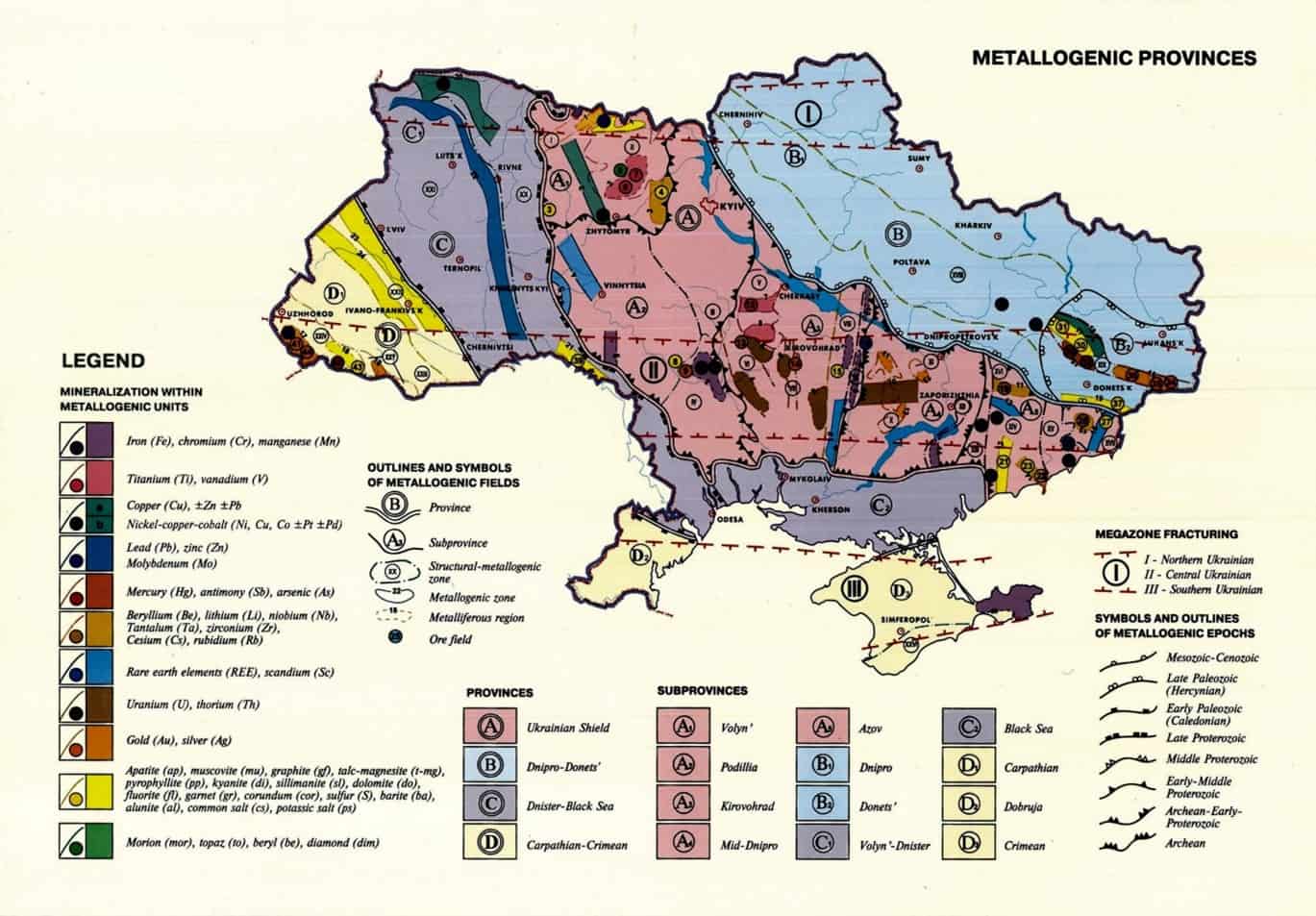
President Trump said Monday he wants to strike a deal with Ukraine whereby Kyiv would supply the United States with rare earth minerals in exchange for American aid, offering the clearest sign yet of his transactional approach to supporting the war-torn nation.
“We’re looking to do a deal with Ukraine, where they’re going to secure what we’re giving them with their rare earths and other things,” Mr. Trump said from the Oval Office, where he was signing executive orders. “We want a guarantee.”
India’s Cabinet on Wednesday approved a 163 billion-rupee (US$1.9 billion) program to secure supplies of a range of minerals used mainly in battery, electronics, defense and agriculture sectors.
The National Critical Mineral Mission will focus on local mining and processing of 24 vital minerals, as well as acquisitions of mining blocks overseas, Information and Broadcasting Minister Ashwini Vaishnaw told reporters.
The initiative, which will also give a thrust to the recycling of materials such as lithium, cobalt, potash and graphite, will help reduce the country’s reliance on imports, he said in New Delhi. The nation relies almost entirely on overseas shipments for energy transition materials, including cobalt, nickel, lithium and copper ore and concentrates, with China being a key supplier.
Mercedes-Benz has partnered with an Australian company to become the first car manufacturer worldwide to close the loop on batteries with its own in-house recycling facility.
The battery recycling plant in Kuppenheim, southern Germany has an integrated mechanical-hydrometallurgical process that will recover valuable and scarce raw materials such as lithium, nickel and cobalt to then be used in new batteries for future all-electric Mercedes-Benz vehicles.
The plant has an annual capacity of 2500 tonnes. Unlike existing established processes, the expected recovery rate of the plant is more than 96 per cent.
Safe and efficient energy storage is important for American prosperity and security. With the adoption of both renewable energy sources and electric vehicles on the rise around the world, it is no surprise that research into a new generation of batteries is a major focus. Researchers have been developing batteries with higher energy storage density and, thus, longer driving range. Other goals include shorter charging times, greater tolerance to low temperatures and safer operation.
One of the more promising such batteries has a lithium-containing cathode supplemented with nickel, manganese and cobalt (NMC). At the U.S. Department of Energy’s (DOE) Argonne National Laboratory, a team of scientists has recently developed a new coating method for NMC cathodes with high nickel content, which boosts the energy density substantially. The cathode is the positively charged battery component that supplies lithium ions that shuffle between it and the battery’s negatively charged electrode, called the anode, during cycling.
The repeated charging of batteries under conditions of high voltage and rapid recharge leads to structural instability and breakdown over time. To overcome the problem, Argonne scientists developed a new coating that allows the cathode particles to withstand the fracturing in their crystalline structure that had previously occurred upon cycling. They call this material “epitaxial entropy-assisted coating,” or EEC for short. According to Xu, “entropy assistance” ensures that the coating helps to prevent the breakdown of the material beneath it due to a thermodynamic effect, which leads materials to naturally become destabilized over time.
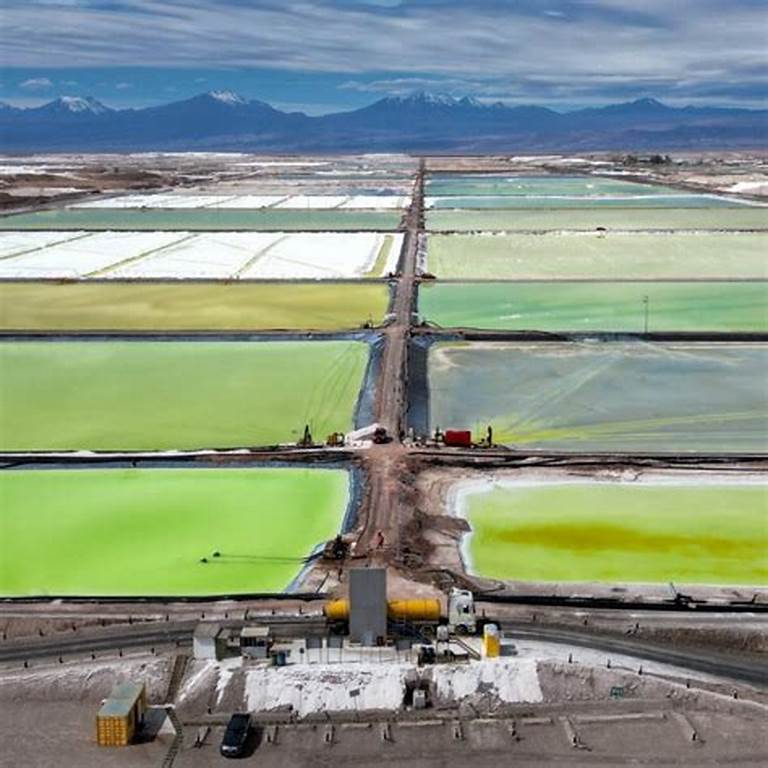
Chilean state miner Codelco and the world’s No. 2 lithium producer SQM struck a pivotal deal on Friday over a joint venture that will reshape the Andean country’s lithium sector and give the state a front-line role in developing the key electric vehicle battery metal.
The new entity will let SQM boost output through 2060 in the Salar de Atacama, one of the world’s most prized areas for extracting lithium.
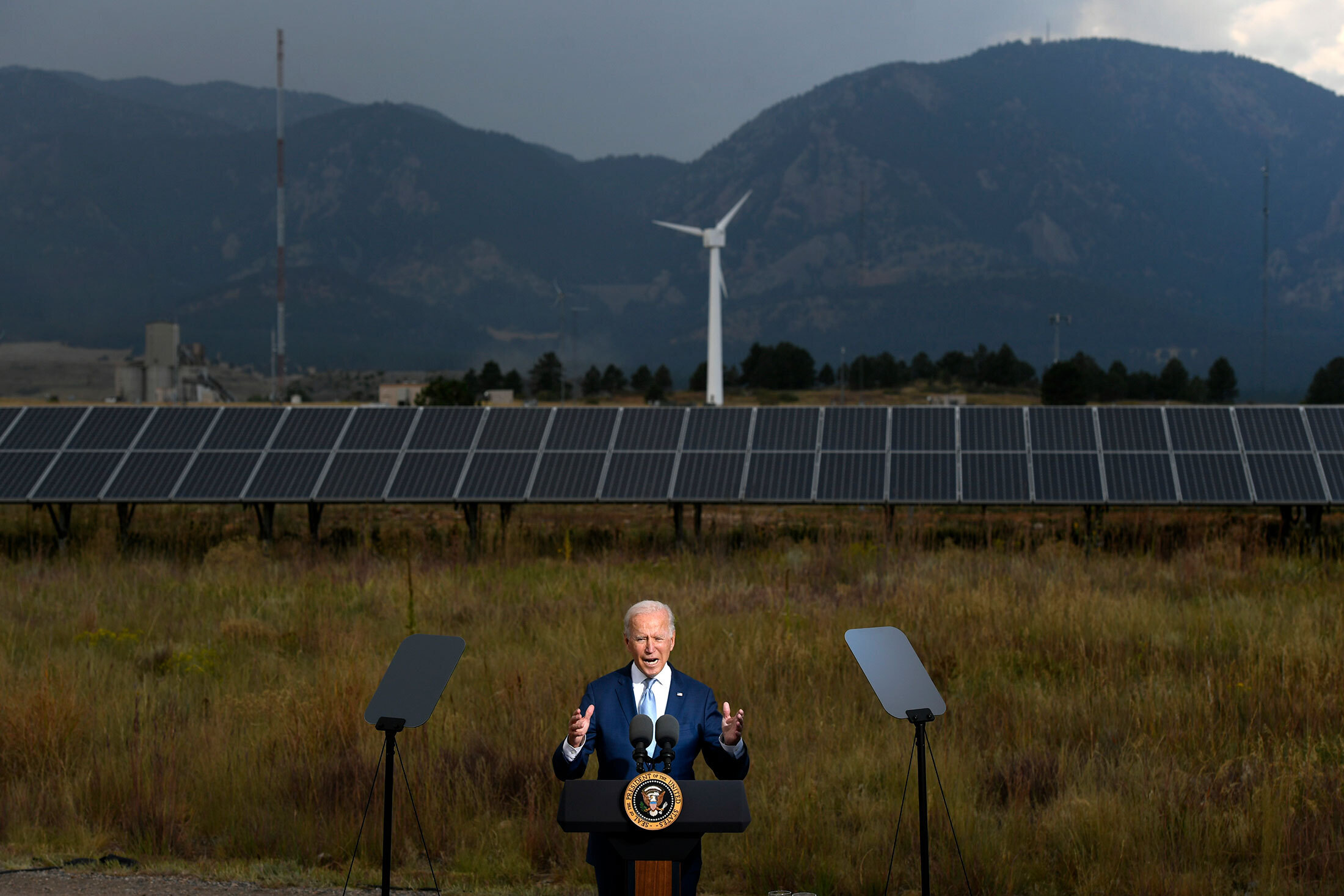
President Joe Biden speaks at Prince William Forest Park on Earth Day, Monday, April 22, 2024, in Triangle, Va. Biden is announcing $7 billion in federal grants to provide residential solar projects serving low- and middle-income communities and expanding his American Climate Corps green jobs training program. (AP Photo/Manuel Balce Ceneta)
WASHINGTON, D.C. — The Biden-Harris Administration celebrated Earth Day on Monday. They announced $7 billion in solar grants that could make the upfront cost of installing residential rooftop solar panels low-cost or free for low-income neighborhoods. The money will be distributed to 60 different nonprofit, state, city, and Tribal agencies.
WASHINGTON—The Biden administration is providing a shot of energy into America’s flagging electric-vehicle industry.
The Biden administration is offering a $2.26 billion loan to help Lithium Americas Corp. develop a Nevada lithium deposit that’s the country’s largest.
The conditional loan from the US Department of Energy will provide the vast majority of the capital needed to fund the first phase of development, the Vancouver-based company said in a statement Thursday.
Australia classified nickel as a “critical mineral” on Friday, opening the way for the crisis-hit industry to access billions of dollars in cheap government loans, as its prime minister prepared wider policy support for the green energy industry.
Australia wants to build a battery chemicals industry to reap more value from its mineral wealth, but the nickel sector is facing thousands of job cuts after a jump in Indonesian supply saw prices plunge 40% in a year.
Mining firm Canada Nickel Co. Inc. plans to develop a nickel processing plant in Ontario that would cost US$1 billion and be North America’s largest once completed.
The plans aim to fill a gap in North America’s electric vehicle supply chain, which broadly lacks the infrastructure to process and refine key materials like nickel, copper and lithium. The vast majority of metals that are extracted from mines in the region are shipped to China for processing, before returning to North America for domestic auto manufacturers.
The US Department of Defense plans to develop a program to estimate prices and predict supplies of nickel, cobalt and other critical minerals, a move aimed at boosting market transparency but one that throws a new, uncertain variable into global metals markets.
The program, which received little attention after it was announced on a Pentagon website in October, is part of Washington’s broader efforts to jumpstart US production of critical minerals used in weapons manufacturing and the energy transition.
US output lags market leader China partly because attempts to build new American mines can be heavily influenced by commodity price swings.
The Pentagon’s work is being run by its Defense Advanced Research Projects Agency (DARPA) division, which was formed in response to the Soviet Union’s 1957 launch of the Sputnik 1 satellite and helped develop the Internet and the mRNA vaccine for Covid-19.
DARPA and the US Geological Survey plan to hire one or more private contractors to develop an artificial intelligence-backed model that would construct a metal’s “structural price” based on where and when it is produced, as well as labor, supply and other costs, according to documents seen by Reuters that describe the program, including a slide deck that DARPA presented last November to prospective contractors.














 A Blog for Browsing Mining, Mineral Processing, and Metals Info