Category Archives: Related Inventions

Development of new magnet that reduces use of rare-earth element by 30%

Neodymium is an expensive and unstably supplied material, but it is essential for manufacturing rare-earth permanent magnets. In order to develop an Nd-reduced permanent magnet, the content of cerium (Ce), an inexpensive element, was increased, instead of reducing the content of Nd. Until now, with the increased content of Ce, deterioration of the magnetic properties was inevitable. The research team focused on clarifying the reason for and mechanism of the deterioration of the magnetic properties caused by the increased Ce content, and they successfully solved the problem of rare-earth-reduced permanent magnets by controlling the atomic-scale microstructure.

The researchers discovered that unnecessary magnetic particles were formed during the manufacturing process, the underlying reason for the deterioration of the magnetic and microstructural properties of the magnets. They modified the microstructure and enhanced the magnetic properties by preventing the diffusion of atoms so that the formation of unnecessary magnetic particles is suppressed.

The research team applied the melt-spinning method and the hot-deformation method, which have very fast cooling rates compared to the conventional process, to the process of fabricating rare-earth-reduced precursors and final bulk magnets, respectively. As a result, they succeeded in optimizing the microstructure of the magnets by suppressing the formation of unnecessary magnetic particles. In addition, they were able to simultaneously improve the residual magnetization and coercive force, which are the main properties of permanent magnets.

Read more at: Development of new magnet that reduces use of rare-earth element by 30% (phys.org)

How #Trudeau proposes to make #Canada a key supplier of critical minerals

Chrystia Freeland’s second budget as finance minister proposes billions of dollars in new spending to incentivize more mining of critical minerals through investments in infrastructure, tax credits for exploration, and funding to help attract the downstream industries that turn those minerals into products such as electric vehicles and battery cells.

Critical minerals include not only the lithium, nickel and cobalt used in batteries, but a far wider array of elements, from copper to manganese. The budget proposes allocating at least $3.8 billion in cash, plus more in tax credits, between now and 2030, to develop a supply chain of critical minerals. Whether that investment sounds like too much money, or far too little, depends on how you view the threats posed by climate change and the urgency of the energy transition.

Much of the strategy outlined in the budget hinges on the idea that creating a supply chain will help attract industrial investment to Canada, and thus boost future economic growth. To that end, Prime Minister Justin Trudeau’s government would spend up to $1.5 billion by 2030 on the infrastructure needed to get those materials from the ground to factories.

Read more at: https://financialpost.com/commodities/energy/how-trudeau-proposes-to-make-canada-a-key-supplier-of-critical-minerals

India: Simple Energy invests $150M on Lithium ion cell factory

Chennai: Electric vehicle startup Simple Energy, which is setting up its EV factory at Hosur (Tamil Nadu), will invest $150 million (around Rs 1136.5 crore) on a lithium ion cell manufacturing unit. The company has tied up with US-based battery company C4V for technology and knowhow.

Simple Energy’s flagship product, Simple One, will be produced at Phase I of the company’s manufacturing unit located at Hosur which has an annual production capacity of up to one million units. The factory will be operational in the coming weeks. The company has also commissioned a second plant in Dharmapuri, Tamil Nadu, which will have a capacity of 12.5 million units annually as part of its Phase 2 ramp up.

Read more at: https://timesofindia.indiatimes.com/business/india-business/simple-energy-invests-150-mn-on-lithium-ion-cell-factory/articleshow/90693184.cms

#India to invest in exploring #lithium, #cobalt mines in #Australia.

NEW DELHI — India has committed to jointly invest $6 million with the Australian government to explore lithium and cobalt mines in Australia over the next six months, in a bid to firm up supplies of key minerals needed to further its electric vehicle plans.

India’s KABIL, a mining joint venture between state-run firms National Aluminium Co, Hindustan Copper Ltd and Mineral Exploration Corp Ltd, has signed a preliminary agreement with Australia’s Critical Minerals Facilitation Office (CMFO), the Indian government said on Tuesday.

The move comes at a time when India is offering $2.4 billion of incentives for companies to build battery cells locally for electric vehicles. Lithium, whose price has surged in the recent days, is a key raw material used to make electric vehicle batteries.

Read more at: https://financialpost.com/pmn/business-pmn/india-to-invest-in-exploring-lithium-cobalt-mines-in-australia

#Eramet, #Suez eye #EV battery recycling in #France by 2024

PARIS, March 16 (Reuters) – French mining group Eramet (ERMT.PA) said on Wednesday it could develop jointly with Suez a recycling facility in France for electric vehicle batteries by 2024.

Eramet, a major producer of nickel and manganese for the steel sector, has focused increasingly on materials for electric vehicles.

In addition to large mine deposits in Indonesia and Argentina, it sees recycling as contributing to its potential to cover 20% of the European Union’s nickel requirements, 25% of the bloc’s lithium needs and 12% of its cobalt demand for EV batteries by 2030.

The joint project would produce black mass, a metal concentrate containing nickel, cobalt, manganese, lithium and graphite that is suitable for hydrometallurgical refining.

Read more at: https://www.reuters.com/technology/eramet-suez-eye-ev-battery-recycling-france-by-2024-2022-03-16/

#TheWhiteHouse: FACT SHEET- Securing a Made in America Supply Chain for Critical Minerals

Biden-Harris Administration, Companies Announce Major Investments to Expand Domestic Critical Minerals Supply Chain, Breaking Dependence on China and Boosting Sustainable Practices.

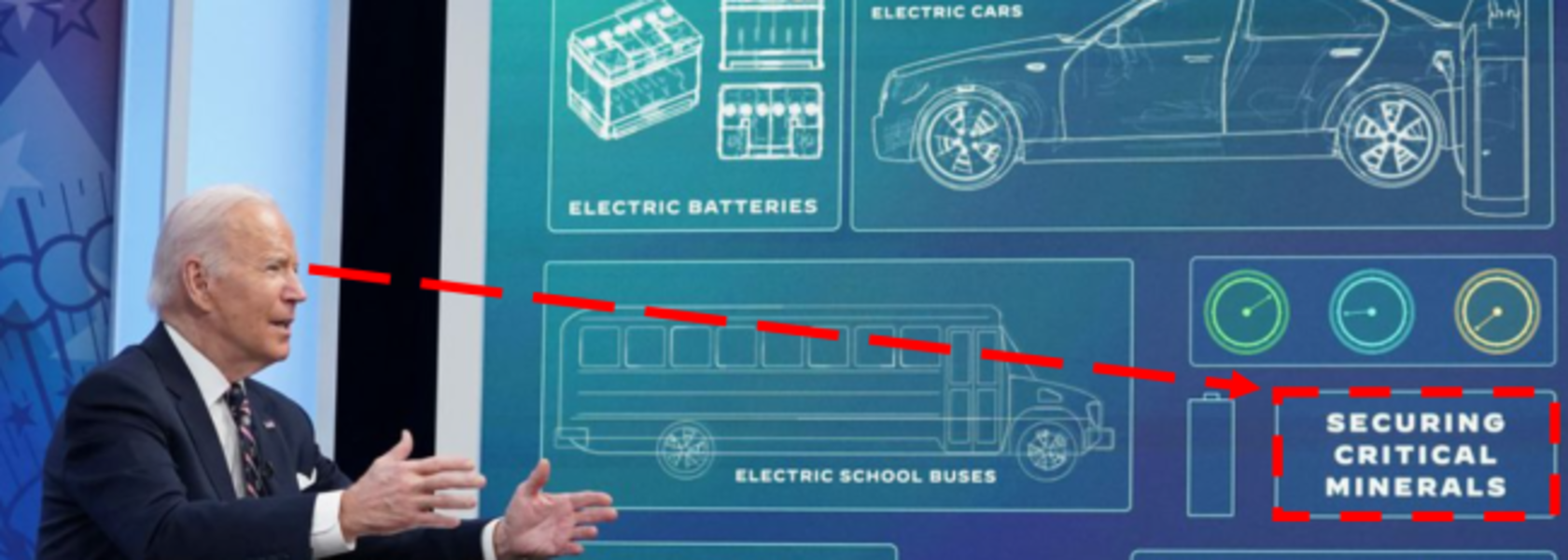
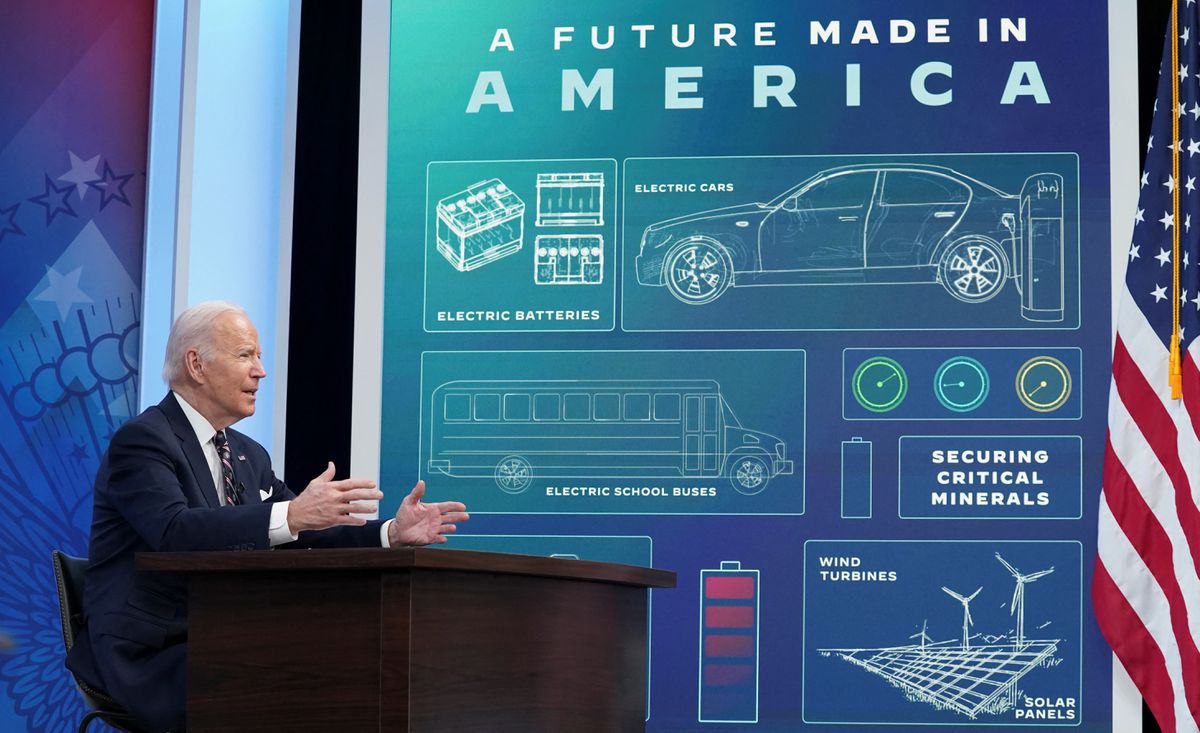
Critical minerals provide the building blocks for many modern technologies and are essential to our national security and economic prosperity. These minerals—such as rare earth elements, lithium, and cobalt—can be found in products from computers to household appliances. They are also key inputs in clean energy technologies like batteries, electric vehicles, wind turbines, and solar panels. As the world transitions to a clean energy economy, global demand for these critical minerals is set to skyrocket by 400-600 percent over the next several decades, and, for minerals such as lithium and graphite used in electric vehicle (EV) batteries, demand will increase by even more—as much as 4,000 percent. The U.S. is increasingly dependent on foreign sources for many of the processed versions of these minerals. Globally, China controls most of the market for processing and refining for cobalt, lithium, rare earths and other critical minerals.

Today, President Biden will meet with Administration and state partners, industry executives, community representatives, labor leaders, and California Governor Gavin Newsom to announce major investments in domestic production of key critical minerals and materials, ensuring these resources benefit the community, and creating good-paying, union jobs in sustainable production.

Read more at: FACT SHEET: Securing a Made in America Supply Chain for Critical Minerals | The White House

#Blockchain #RareEarth scheme to certify sustainable output for EVs

LONDON, Feb 8 (Reuters) – An EU-funded certification scheme using blockchain is being developed for rare earths as automakers demand proof that materials used to make magnets for electric vehicles (EVs) are not linked to toxic pollution.

The system will set global standards and give confidence to consumers demanding sustainable products, two of the organisers told Reuters ahead of an official announcement on Tuesday.

The Circular System for Assessing Rare Earth Sustainability or CSyARES is due to be ready in about three years, the Rare Earth Industry Association (REIA) and Dutch supply chain traceability firm Circularise said.

Read more at: Blockchain rare earth scheme to certify sustainable output for EVs | Reuters

#Tesla vs #Volkswagen vs #BYD – battery power, #Lithium, #Nickel, #Cobalt use

Tesla holds a wide lead. Tesla lectures in Paris, 1892. Stock image

Tesla deployed 27% of the world’s battery nickel, despite the fact that overall LFP accounts for more than a quarter of the kWh hours in all of its vehicles sold last year. Tesla still does not sell LFP-powered models in North America.  

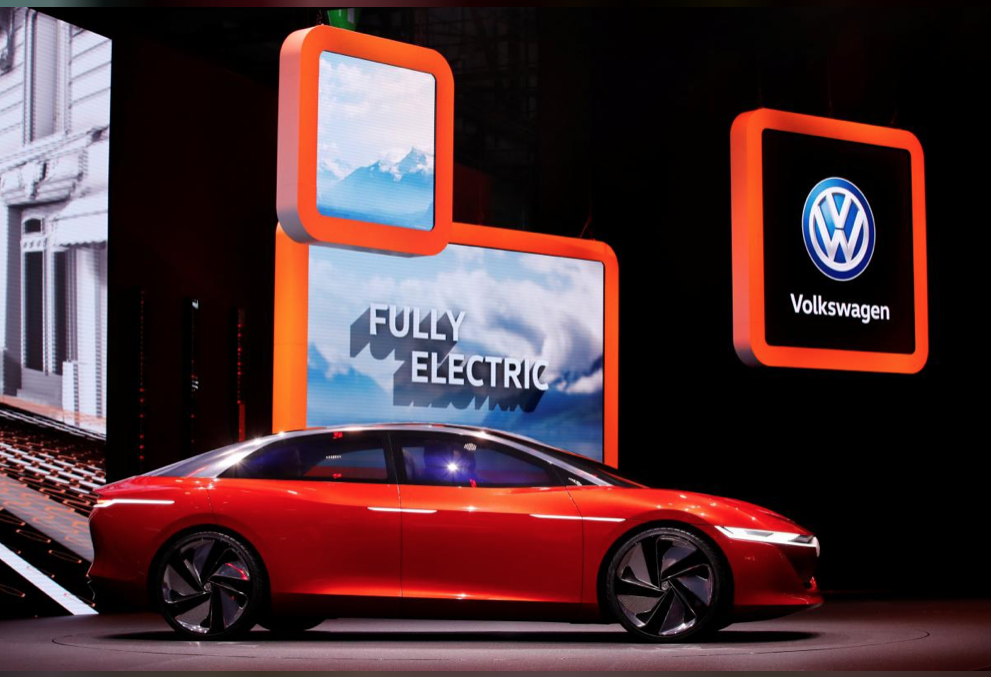
Despite selling half the number of BEVs than Tesla, thanks to the absence of LFP in its line-up, Volkswagen deployed more cobalt and on a relative basis more metals across its brands. That’s in part due to high-performance vehicles like the Porsche Taycan and Audi e-tron, some of which come equipped with higher nickel NCM batteries where cobalt can represent up to 20% of the metal mix. 

Read more at: CHARTS: Tesla v Volkswagen v BYD – battery power, lithium, nickel, cobalt use – MINING.COM

#Ottawa looks on as #China buys #Canadian #Lithium operations

Efforts to strengthen Canada’s supply chains for critical minerals were undermined last week when our own government decided not to conduct a national security review into the purchase of a Canadian lithium producer by a Chinese state-owned enterprise.

The decision is bizarre. Lithium, which is on a list of 31 minerals that Ottawa says are critical to Canada’s economy, is imperative to modern manufacturing, including large-scale battery storage needed for clean energy transition and, significantly, batteries for the flourishing electric vehicle (EV) industry.

Now the Zijin Mining Group Ltd is cleared to buy Toronto-based Neo Lithium Corp.

China is establishing global dominance of high-tech manufacturing, including EVs, by having state-owned enterprises acquire foreign intellectual property, technologies and assets. Securing access to critical minerals is essential to that mission.

Read more at: Ottawa looks on as China buys Canadian lithium operations | The Star

How The #US Is Losing The #Lithium Industry To #China

In the early days of the oil industry, the U.S. quickly established dominance as the world’s most important producer and consumer of petroleum. But over time, depletion in the U.S. and discoveries abroad caused U.S. dominance of the petroleum industry to fade.

The U.S. received a rare second chance to regain energy independence as a result of the shale oil boom. But the lessons we have learned over the evolution of the oil industry have direct implications as the world transitions to new sources of energy.

Petroleum was the raw material that enabled the growth of the global transportation industry over the past century. But increasingly in the next century, it is lithium that will be the critical commodity. U.S. automakers aspire to have 40% to 50% of new vehicle sales by 2030 be electric vehicles (EVs). This will result in a tremendous increase in lithium consumption

It is estimated that the U.S. alone will need 500,000 metric tons per year of unrefined lithium by 2034 just to power EVs. The U.S. produces just a fraction of that today. The current global production of lithium in 2020 was about 440,000 metric tons of lithium carbonate equivalent (LCE, contains about 18% of pure lithium), and not all of that is in pure enough form for batteries.

But just as the U.S. eventually ceded its petroleum security to foreign countries, it is in the process of doing the same with lithium. According to the 2021 BP Statistical Review, China has 7.9% of the world’s lithium reserves. The U.S. has 4.0%. (The majority of global lithium reserves are in South America and Australia). Nevertheless, China has become the 3rd largest lithium producer in the world, outproducing the U.S. in 2020 by more than a factor of 15.

This dominance didn’t happen by accident. Over the past decade, China has spent over $60 billion to build its lithium industry. U.S. investments have lagged significantly behind, which has enabled China to build a robust lithium supply chain.

Read more at: https://www.forbes.com/sites/rrapier/2022/01/11/the-us-is-losing-the-lithium-industry-to-china/?sh=48a63da16a15

« Older Entries Recent Entries »