Author Archives: Nanthakumar Victor Emmanuel, P.Eng

How #Canada can capitalize on #US auto sector’s pivot to electric

China is already working hard to become the “source of a new way” to power vehicles, U.S. President Joe Biden warned last week.

“We just have to step up.”

Canada has both the resources and expertise to do the same, says Mr. Volpe (President of the Automotive Parts Manufacturers’ Association), whose ambitious Project Arrow concept – a homegrown zero-emissions vehicle named for the 1950s-era Avro interceptor jet – is designed to showcase exactly that.

“We’re going to prove to the market, we’re going to prove to the [manufacturers] around the planet, that everything that goes into your zero-emission vehicle can be made or sourced here in Canada,” he says.

Read more at: https://www.theglobeandmail.com/business/article-how-canada-can-capitalize-on-us-auto-sectors-abrupt-pivot-to-electric/

#Bloomberg: Climate Is Next Race for Global Supremacy, Bank of America Says

Put aside the trade and technology wars. The next race for global political and economic supremacy will focus on climate.

That’s according to Bank of America Corp.s’ research group, which said climate change will be this decade’s most important theme, just as technology underpinned economic growth during the past decade. China has spent twice as much as the U.S. on climate action, said Haim Israel, the bank’s head of global thematic investing research, in a report Monday.

“We believe climate strategies offer a route to global supremacy,” he said. “Whether through regulation, limits on exports, tariffs or significant investments, we believe the U.S. and China will do whatever it takes to take the lead on climate action.”

The economic impact of climate change could reach $69 trillion this century, and investments in the energy transition need to increase to $4 trillion a year, Israel said. That will lead to more than $100 billion a year in research and development.

Bank of America estimates that the potential market capitalization for companies tackling climate to be about $6 trillion across things like renewables, electric vehicles, and environmental, social and governance. China dominates EVs and batteries, while Europe excels in renewables, the report says.

Read more at: https://www.bloomberg.com/news/articles/2021-02-08/climate-seen-as-next-race-for-global-supremacy-bofa-says

#Tesla to Submit Investment Proposal as #Indonesia’s Battery Plan Is Taking Shape

Jakarta. Indonesia has expected Tesla, the world’s largest carmaker company by market capitalization, to submit a proposal about the company’s plan to establish a car battery plant and energy storage system in the archipelago today, as the country’s plan to dominate the electric car battery market begins to take shape. 

Tesla’s proposal could be one in a series of ore processing and battery investments that the government hope would make up the bulk of the country’s $64 billion investment target for this year. 

Read more at: https://jakartaglobe.id/business/tesla-to-submit-investment-proposal-as-indonesias-battery-plan-is-taking-shape

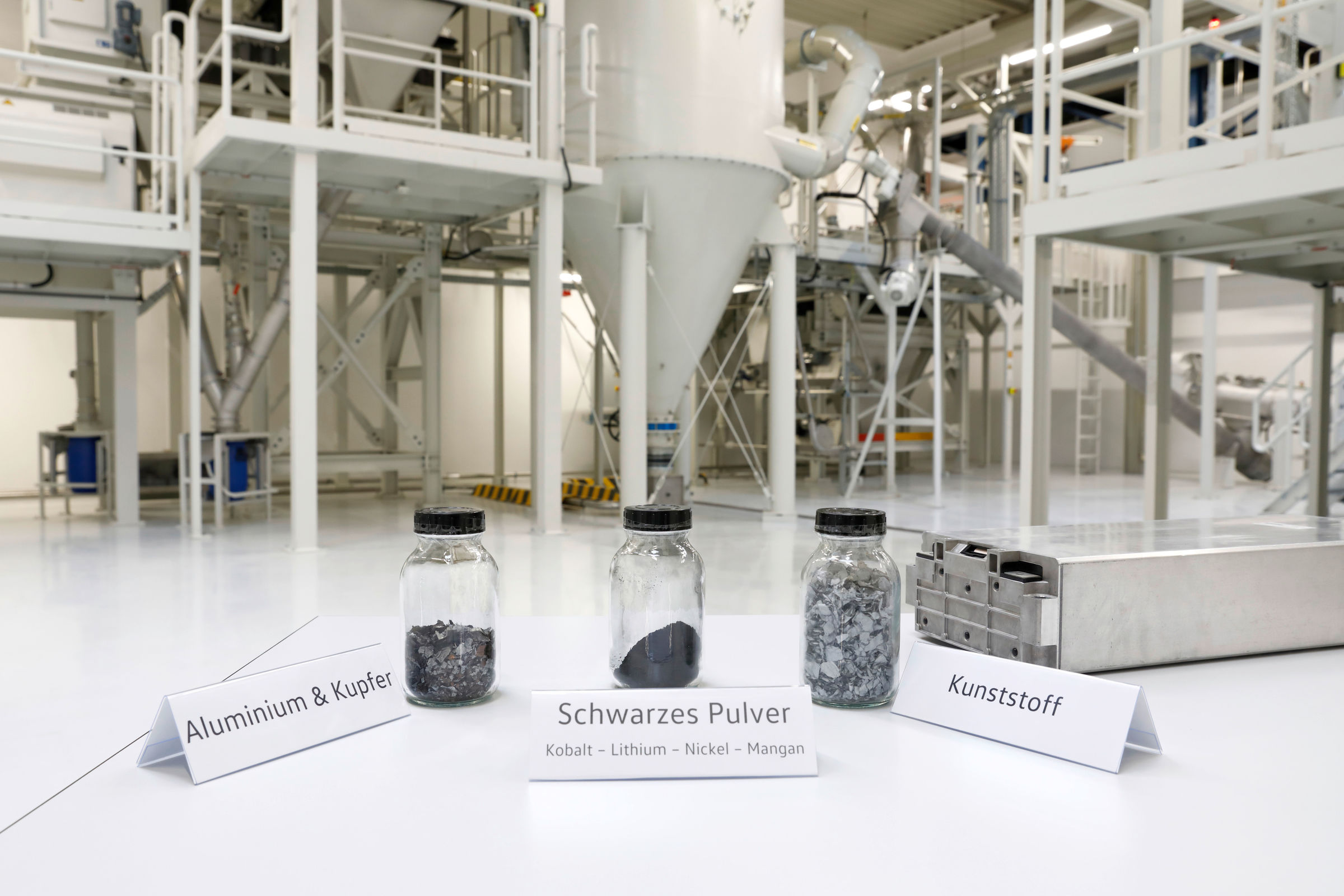
#Volkswagen Begins Battery Recycling Pilot Project In Salzgitter

https://www.volkswagen-newsroom.com/en/stories/from-old-to-new-battery-recycling-in-salzgitter-6782

Part of the electric car revolution is making batteries — lots of batteries. But in the not too distant future, another part of the revolution will be dismantling those same batteries and reclaiming the materials inside to be used again in the manufacture of new batteries. What sorts of things can be reclaimed from old batteries? Aluminum, copper, lithium, manganese, nickel, and cobalt, along with various plastics.

Read more at: https://cleantechnica.com/2021/02/01/volkswagen-battery-recycling-pilot-project-salzgitter/

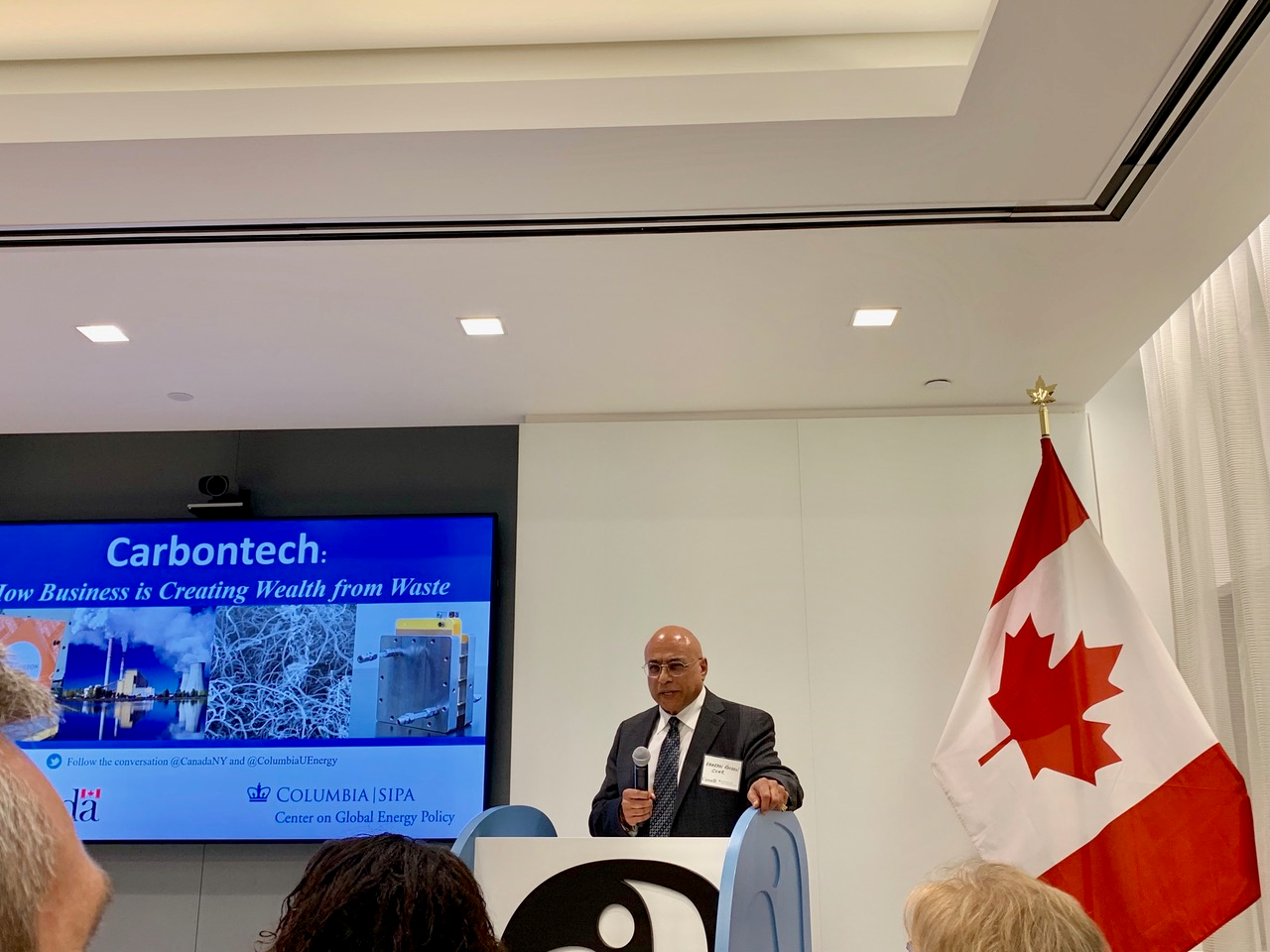
#FORBES: WE CAN CAPTURE CARBON, BUT WHAT THEN? TURNING A PROFIT WILL BE KEY

CO2 to Graphite and Graphene – A Build Back Better approach

It’s not new: the technology has been commercially available since the 1970s and is currently used to help industrial plants reduce the amount of carbon and other greenhouse gases they spew into the air, mostly through powerful scrubbers at the site. 

A more practical challenge is that carbon emissions are still predominantly seen as an expense for companies. One of the hurdles for the blossoming of carbon capture technology will be coming up with creative ways to convert it into a valuable product. 

Read more at: https://www.forbes.com/sites/uhenergy/2021/01/27/we-can-capture-carbon-but-what-then-turning-a-profit-will-be-key/?sh=1d3027ab3d90

#Forbes: #China’s Rare Earths ‘Slump’ A Sign Of Domestic ‘Hoarding’ For EV Batteries

China loves to be in everybody’s strategic supply chains. Rare earths is one of them. These are the minerals, often dug out of mines in Africa, that China controls.

China’s rare earth exports fell to 35,448 tons last year from 46,330 tonnes in 2019, customs data showed on Thursday. The 2020 exports were the lowest since 2015,  according to Reuters.

Last month, China’s export control law (ECL) went live. It’s their latest effort to control the export of strategic commodities — including minerals used for EV batteries — and to increase dependency on China by ‘hoarding’ supply.

Read more at: https://www.forbes.com/sites/kenrapoza/2021/01/17/chinas-rare-earths-slump-a-sign-of-domestic-hoarding-for-ev-batteries-and-more/?sh=3df293ad79a8

Around 73% of rare earth elements are used in mature industries, including glass, ceramics and metallurgy. The remaining 27% are used in the production of neomagnets, which are essential components in electric vehicles (EVs).

Using the force produced when two magnets with opposing poles repel each other, electric motors use permanent magnets and coils that have been magnetised by electricity to propel an axle. The force (torque) of the spinning axle is used to power the wheels of an electric car.

Induction-based electrical motors, which do not use permanent magnets, can also power EVs. However, they are an unpopular solution compared to their magnetic cousins. Tesla, one of the only holdouts in induction motors, has used a magnetic engine in its new Model 3.

Read more at: https://www.edisongroup.com/edison-explains/electric-vehicles-and-rare-earths/

#Bloomberg: Getting Closer to Producing ‘Green’ Lithium for EV Batteries

Europe is trying to build up a local battery-manufacturing industry to reduce dependency on Asian suppliers. Electric vehicles have become a focal point in the region, with governments bolstering subsidies to help carmakers recover from the pandemic and comply with stricter emissions standards.

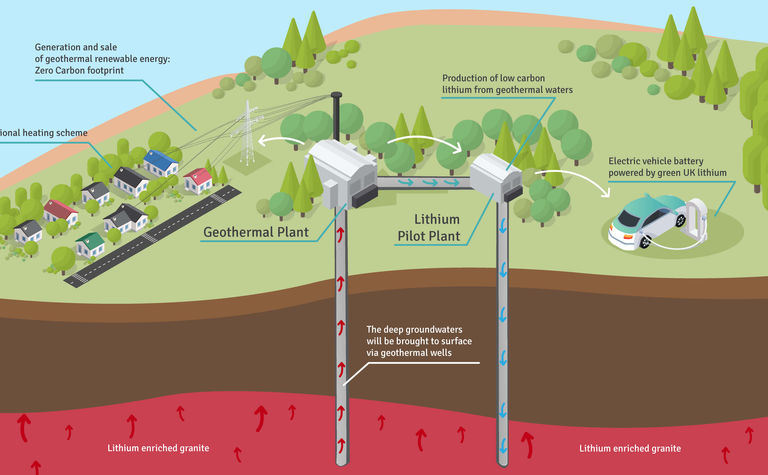
While fully-electric cars drive emissions-free, the production of batteries has been criticized for its carbon footprint. Mining lithium from rocks is energy-intensive and extracting it from dried lake beds, as is often done in South America, drains local water reserves.

A process developed by an Australian firm is more environmentally friendly because its feedstock — hot salar brine — provides not only lithium but also heat to generate renewable energy, reducing the method’s overall carbon footprint.

Read more at: https://www.bloomberg.com/news/articles/2021-01-15/miner-gets-closer-to-producing-green-lithium-for-ev-batteries

#Tesla comes to #India, sets up office in #Bengaluru

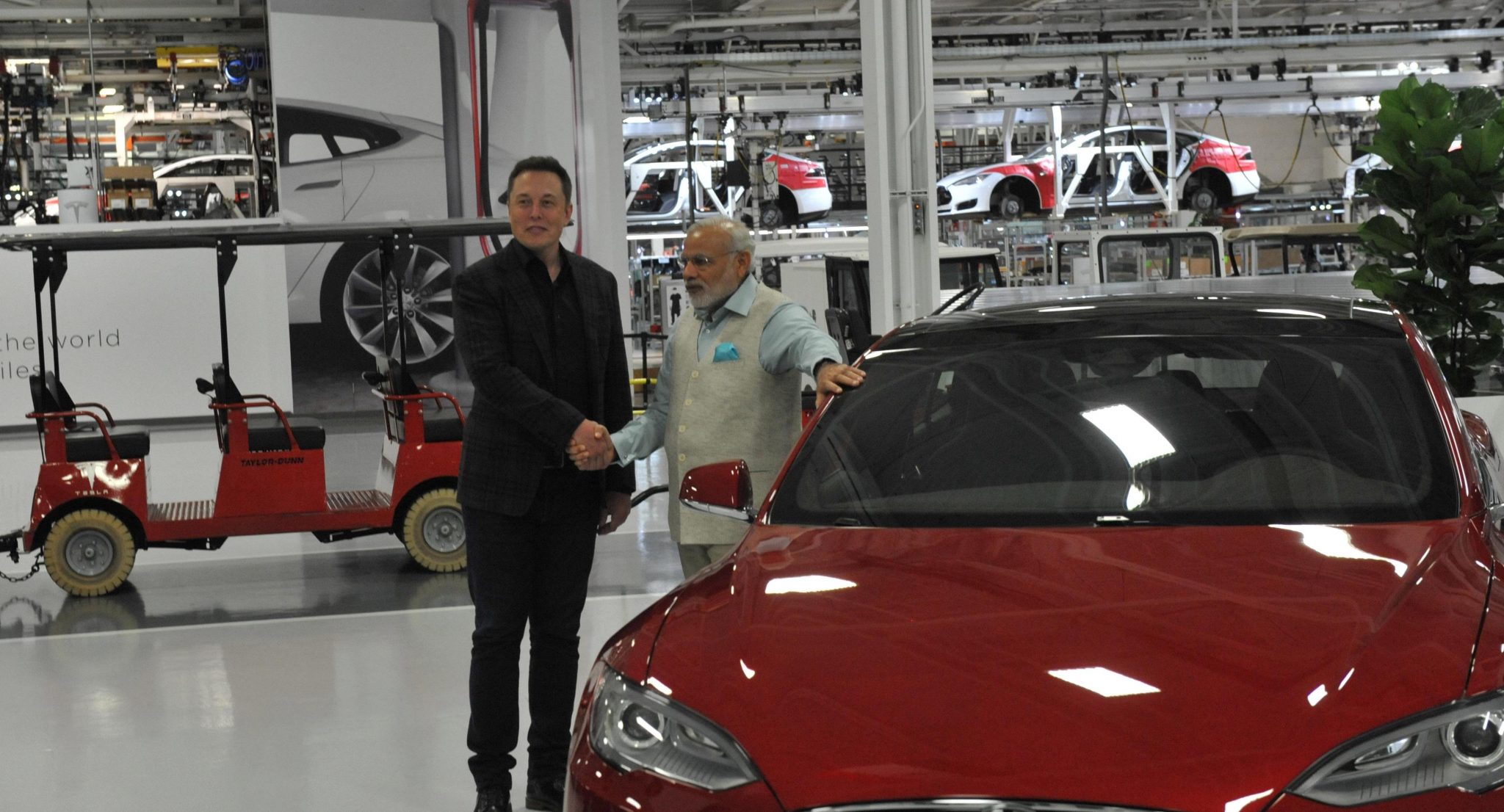
BENGALURU: Ending speculations of whether or not it would come to India and where in the country, Elon Musk’s Tesla has set up its office in Bengaluru, even as details of what the company plans to do in India remains elusive.

Read more at:
http://timesofindia.indiatimes.com/articleshow/80236713.cms?utm_source=contentofinterest&utm_medium=text&utm_campaign=cppst

#Norway eyes sea change in deep dive for metals instead of oil

This time, Oslo is looking for a leading role in mining copper, zinc and other metals found on the seabed and in hot demand in green technologies.

Norway could license companies for deep-sea mining as early as 2023, its oil and energy ministry told Reuters, potentially placing it among the first countries to harvest seabed metals for electric vehicle batteries, wind turbines and solar farms.

Read more at: https://www.reuters.com/article/us-norway-deepseamining-insight/norway-eyes-sea-change-in-deep-dive-for-metals-instead-of-oil-idUSKBN29H1YT

What if our smartphone screens could produce solar energy?

The scientists developed a solar cell from a glass substrate and a metal oxide electrode, on which they deposited thin layers of TiO2, then NiO, before adding a coating of silver nanowires.

The cell was highly reactive and operated in low-light conditions. In addition, more than 57% of the visible light was transmitted through the layers of the cell, giving it a transparent appearance, say the research authors.

“While this innovative solar cell is still in its infancy, our results suggest that it is possible to further improve transparent photovoltaics by optimizing the cell’s optical and electrical properties,” said professor Joondong Kim of the department of electrical engineering at Incheon National University, who led the research.

Read more: https://technology.inquirer.net/107095/what-if-our-smartphone-screens-could-produce-solar-energy#ixzz6jFcKzGR0

« Older Entries Recent Entries »