Author Archives: Nanthakumar Victor Emmanuel, P.Eng

3 New Technologies Shaping General Electric Company’s Future
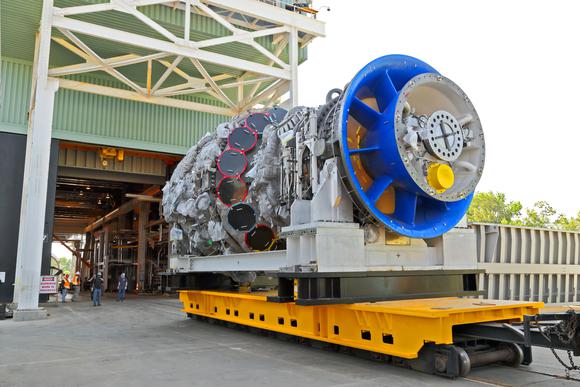
GE-HA Turbine

Three new technologies
The three technologies in question are industrial gas turbines, aircraft engines, and locomotives, and investors hope orders expand as planned. A  brief look at them:

  • CFM International’s (a joint venture between General Electric and France’s Snecma) LEAP aircraft engine is rapidly expanding sales on the Airbus A320neo and Boeing 737 MAX.
  • The new HA gas turbine already has 16 units in backlog and could expand orders as the first turbines are delivered and put into service this year.
  • GE’s Evolution Series Tier 4 Locomotive is the first to meet federal Tier 4 regulations (a tighter set of emissions standards) as already in production in 2015.

Management recently estimated that LEAP would generate $200 billion in sales over its lifetime, while the HA turbine is forecast to bring in $100 billion and the Tier 4 locomotive about $40 billion. To put these figures into context, the total company backlog stood at $263 billion at the end of the first quarter. 3

Read more at: http://www.fool.com/investing/general/2015/07/02/general-electric-company.aspx

China to lift ban on entry of miner Vale’s mega-ships

vale-brasil-biggest-bulk-carrier-top3-300x179

(Reuters) – China said on Friday it will allow 400,000-deadweight tonne ships to dock at its ports, officially ending a more than three-year ban that had effectively shut out Brazilian miner Vale SA’s giant vessels.

Four domestic ports – Qingdao, Dalian, Tangshan Caofeidian and Ningbo – will be allowed to receive the carriers after they meet technical standards, China’s state planner, the National Development & Reform Commission, said in a joint statement with the Ministry of Transport.

Read more at: http://www.reuters.com/article/2015/07/03/china-port-vale-idUSL3N0ZJ15220150703

US Gov’t offers $20 million to projects aimed at recovering rare earths from coal

US Gov’t offers $20 million to projects aimed at recovering rare earths from coalThe US Department of Energy (DOE) has set aside about $20 million to fund projects aimed to quickly develop bench scale and pilot scale plans for recovering Rare Earth Elements (REE) from coal and coal by-products.

Last year, the National Energy Technology Laboratory (NETL) begun investigating the economic feasibility of recovering the coveted elements — used as ingredients in magnets, batteries, catalytic converters and high-tech products—from coal.

Read more at: http://www.mining.com/us-govt-offers-20-million-to-projects-aimed-at-recovering-rare-earths-from-coal/

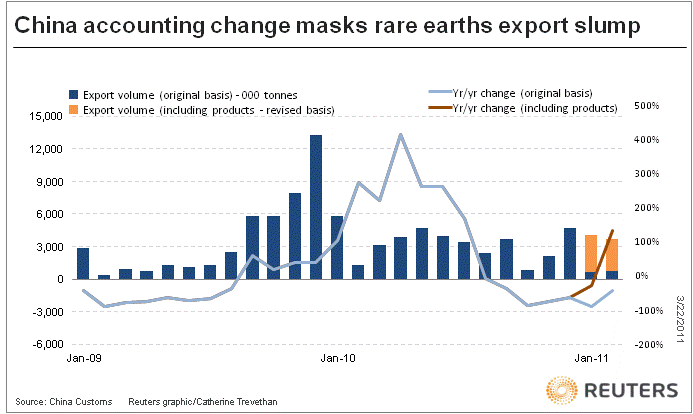
After the boom and the bust, what next for rare earths?

REE Slumps - Reutres

” It is ironic that the collective pressure on China to lift trade restrictions has caused prices to fall to the point that non-Chinese producers such as Molycorp and Lynas are now struggling, potentially handing back monopolistic pricing power to the Chinese. Indeed, China’s current drive to force its REE sector into six consolidated, vertically integrated producers will only enhance the country’s influence.

The question is how it will use that lever.

Is this about controlling global supply of strategic commodities or controlling its own supply chain?

Many observers outside China, particularly parts of the Western defence industry, fear it’s the former.”

Read more at: http://www.reuters.com/article/2015/06/30/rareearths-china-ahome-idUSL8N0ZG39Z20150630

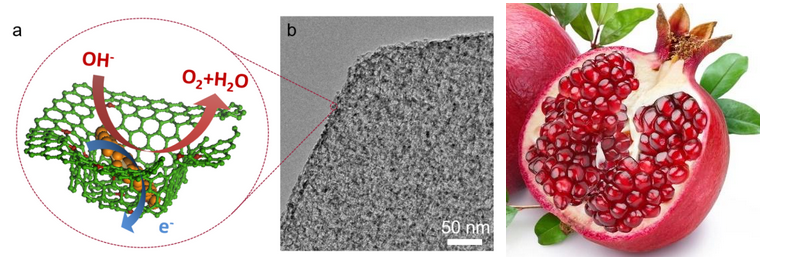
Pomegranate-like nanocomposites: The new avenue of graphene in water splitting

NiFe-Graphene

The looming fossil energy crisis and serious environment and climate issues urgently call for sustainable energy systems and next-generation energy storage technologies. Instead of a traditional “carbon cycle” based on fossil energy, the “hydrogen cycle” has emerged and may be a promising alternative. With a water splitting device, H2 can be generated from water by electricity or solar energy, and energy transforms between electrical/solar and chemical energy in rechargeable batteries. However, the core issue of water splitting, oxygen evolution reaction (OER) (4OH —> 2H2O + O2 + 4e, in base), is a kinetically sluggish half-reaction, which requires a high overpotential and hinders the development of water splitting.

Recently, a research group from China, led by Prof. Qiang Zhang in Tsinghua University, has developed a novel graphene/metal hydroxide composite with superior oxygen evolution activity. This work is published in the journal Advanced Materials.

Read more at: http://phys.org/news/2015-06-pomegranate-like-nanocomposites-avenue-graphene.html#jCp

Wimbledon and the graphene revolution

djokovic_novak

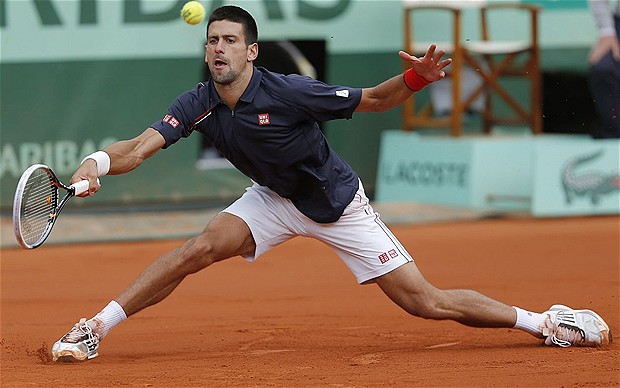
Novak Djokovic….helped by Nobel-Prize winning technology. AFP by Jonathan Barrett.

 When world number one Novak Djokovic starts his title defence at Wimbledon, which starts Monday, he’ll be wielding a racquet that relies on Noble-Prize-wining technology.

The Amsterdam-headquartered tennis and ski company Head, which sponsors Djokovic, reinforces its racquets with a wonder material called grapheme.

Read more at: http://www.afr.com/business/sport/wimbledon-and-the-graphene-revolution-20150628-ghrfmb

Malaysia gains as Indonesian miners go overseas after ban

Malaysia gains as Indonesian miners go overseas after ban 

Malaysia is emerging as an unexpected beneficiary of Indonesia’s ban on ore exports as mining companies from its larger Southeast Asian neighbour pump cash into local bauxite deposits to meet demand from China.
At least five Indonesian miners invested in Malaysia by the end of last year, teaming up with partners to extract the ore and ship it to China, according to Erry Sofyan, chairman of the Association of Indonesia Bauxite and Iron Ore Producers. More companies may follow, Sofyan said in an interview in Jakarta.

Canada picks engineering group to operate nuclear labs

AECL

Ottawa says it has completed a multi-year restructuring of Canada’s nuclear operations with the selection of a preferred bidder to operate a nuclear laboratory in eastern Ontario that is one of the world’s largest producers of medical isotopes.

Canadian National Energy Alliance was chosen Friday over three other engineering groups to manage and operate Canadian Nuclear Laboratories (CNL), a subsidiary of Atomic Energy of Canada Ltd.

The consortium includes SNC-Lavalin, CH2M HILL Canada Ltd., Fluor Government Group Canada Inc., Energy Solutions Canada Group Ltd. and Rolls-Royce Civil Nuclear Canada Ltd.

Read more at: http://www.theglobeandmail.com/report-on-business/canada-picks-engineering-group-to-operate-nuclear-labs/article25130863/

Korean Research Team Develops One Atom Thick Semiconductor

A local research team has successfully developed a technique to make the thinnest semiconductor possible.

The National Research Foundation announced on June 25 that Professor Ahn Jong-ryeol and Ph.D. student Shin Ha-cheol at Sungkyunkwan University succeeded in developing a technique for a 0.25 nm semiconductor. The width is the minimum limit for making nanomaterials, because ~0.25 nm is the diameter of one atom.

Local semiconductor companies are currently conducting studies to make 10 nm semiconductor devices, but this research team pushed the limits, since they thought that it would be possible to produce a semiconductor material just one atom thick.

Read more at: http://www.businesskorea.co.kr/article/11189/025-nanometers-thin-korean-research-team-develops-one-atom-thick-semiconductor

Samsung doubles battery capacity

ed8fd9233b9a62f5acbb42d7837166eb
Samsung researchers have developed materials that double the power capacity of lithium-ion batteries.

Samsung Advanced Institute of Technology (SAIT) said the technology uses silicon cathode material coded with high-crystalline graphene to produce batteries with twice as much capacity as ordinary lithium-ion batteries.

The institute said the research result was published in the international science journal Nature Communication on Thursday.

« Older Entries Recent Entries »