
The Future of #Copper: Infrastructure and Supply Challenges
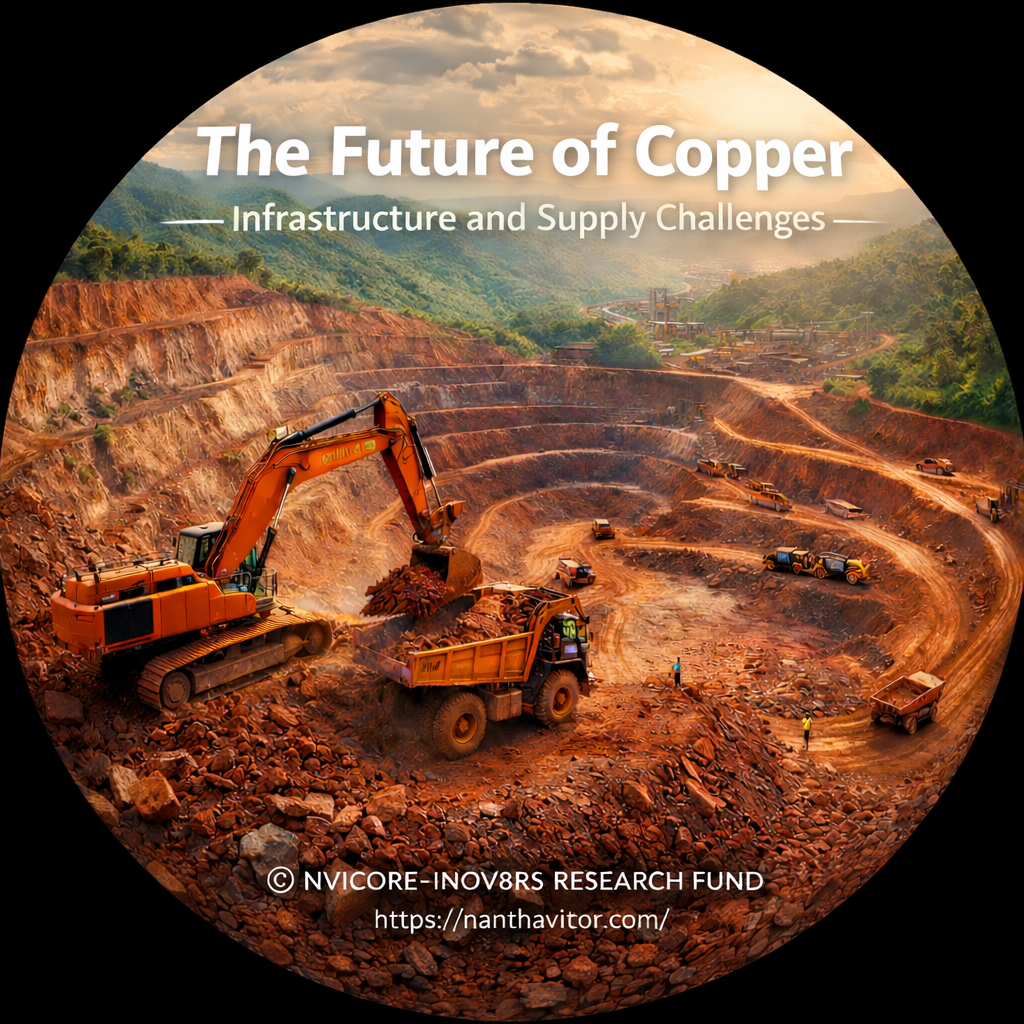
Copper exchange inventories have surpassed 1 million tons for the first time in 21 years. Despite a slowdown in smelter activity and softened demand from China, prices remain elevated, although they have retreated from January highs. This situation stems from a lack of confidence in long-term supply.
We are entering an era characterized by electricity intensity, where copper is no longer just a cyclical industrial input but a fundamental component of the 21st-century economy. Electric vehicles require approximately four times more copper than internal combustion vehicles. Additionally, solar farms, wind turbines, and the grid expansions necessary to connect them are heavily reliant on copper. Hyperscale data centers, which form the physical backbone of AI and cloud computing, are being deployed at an unprecedented pace.
There is a notable disconnect between the lead time required to bring new mine supply online and the demand drivers. A new data center can be constructed in as little as nine months, while establishing a new mine may take over 20 years.
In response, major miners are adapting with strategic focus. Teck’s $53 billion merger with Anglo American plc will create “Anglo Teck,” positioning it as a top-five global copper producer with over 70% exposure to copper. Other companies are opting for organic growth; after its acquisition attempt for Anglo American, BHP Group Limited is prioritizing expansion at Escondida, Pampa Norte, and the Vicuña project. Rio Tinto Plc has allocated 85% of its exploration budget to copper, emphasizing the Oyu Tolgoi expansion in Mongolia. Glencore Plc is also expanding in the DRC, aiming for 300,000 tons annually at Kamoto Copper Company and planning to nearly double output over the next decade.
As supply-side numbers tighten due to existing mines facing surging capital expenditures—estimated at $250 billion over the next decade just to maintain current production—the focus is shifting to emerging markets. The Democratic Republic of Congo (DRC) has emerged as the world surpassing Chile.
Read more at: https://uk.finance.yahoo.com/news/copper-going-places-everyone-hitching-190014098.html?

 A Blog for Browsing Mining, Mineral Processing, and Metals Info