
Innovative #Carbon Injection Pilot Achieves Success – #Canadian #Nickel Mining
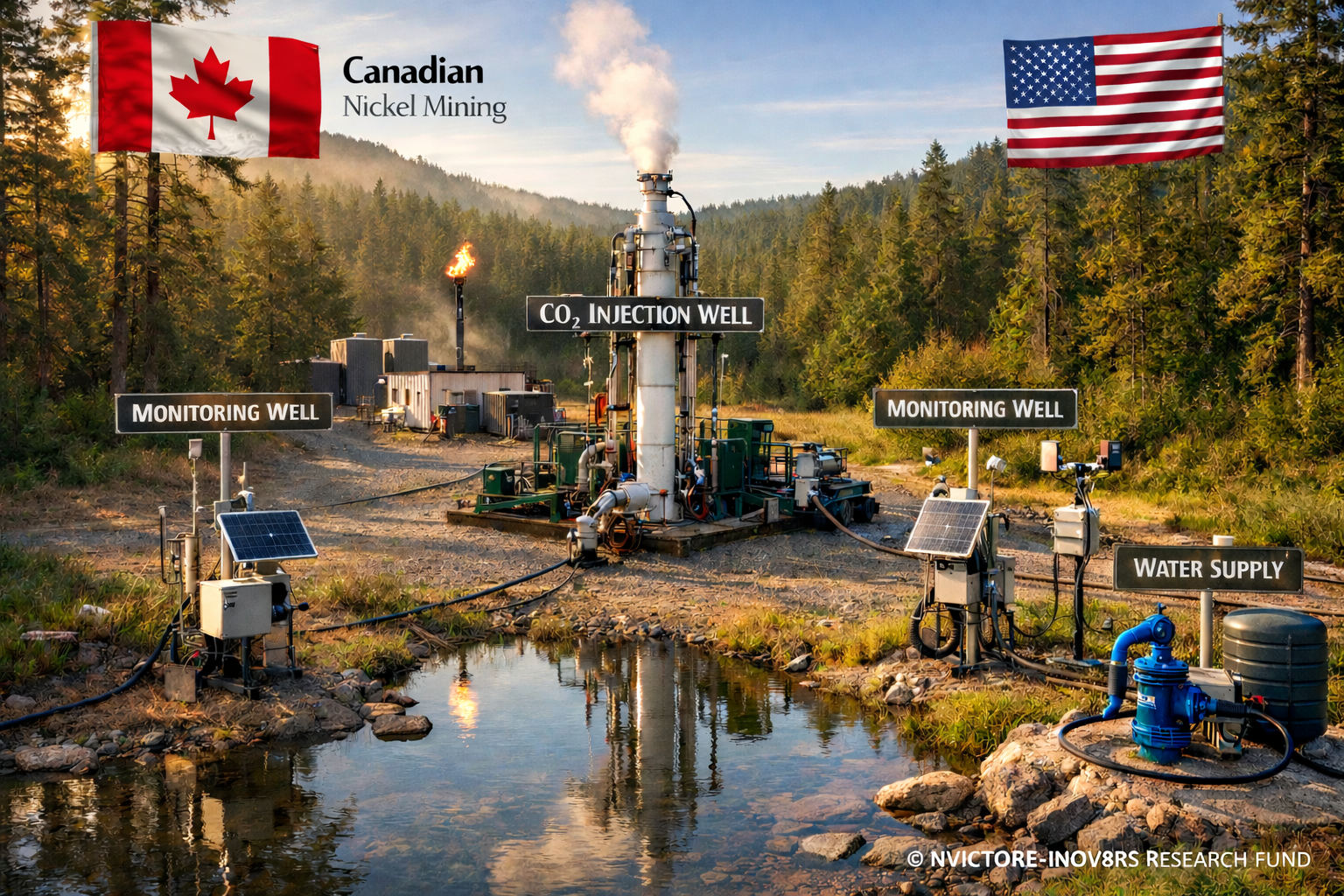
In-situ carbon injection pilot successfully sequesters 12 tonnes of CO2 at the Crawford Nickel Project.
This initiative operates independently of Canada Nickel’s In-Process Tailings (IPT) Carbonation and NetCarb Programs, marking a significant advancement in the company’s carbon capture and storage capabilities. The results from this study will inform future post-mining carbon sequestration strategies, reinforcing Canada Nickel’s vision for a Zero-Carbon Industrial Cluster in the Timmins Region.
Conducted in collaboration with the U.S. Department of Energy’s Advanced Research Projects Agency – Energy (DOE ARPA-E) funded team, led by Dr. Estibalitz Ukar from the University of Texas at Austin, the pilot project involved nearly two years of planning, laboratory experiments, and the deployment of an extensive monitoring network. The CO₂ injection field test took place from mid-November to mid-December 2025, with all data indicating a successful operation. Approximately 12 tonnes of injected CO₂ remained dissolved at depth, with no surface leakage detected.
The pilot project initiated short-duration injection trials starting on November 20, 2025, over a 12-day period, followed by continuous CO2-saturated water injection from December 2nd to December 18th. The injection well, drilled to a depth of 396m, confirmed that the injected CO₂ remained fully dissolved within the water column, with no upward migration observed.
The water used for dissolving carbon dioxide was sourced from an onsite well, and the well configuration included an injection well, a water supply well, four water monitoring wells, 12 surface seismic monitoring stations, and three seismic monitoring boreholes. Continuous monitoring for seismicity and potential CO₂ gas leakage revealed no significant seismic events and no CO₂ emerging from monitoring wells or through the sedimentary cover. Preliminary chemical analyses suggest that the injected CO₂-rich water has not reached the monitoring wells, aligning with predictions from reactive transport modeling. The absence of surface leakage strongly indicates that all the injected CO₂ remained at depth.

 A Blog for Browsing Mining, Mineral Processing, and Metals Info