Tag Archives: Xstrata

#Africa’s #CriticalMinerals are a huge economic opportunity: #G20 framework sets out ways to seize it

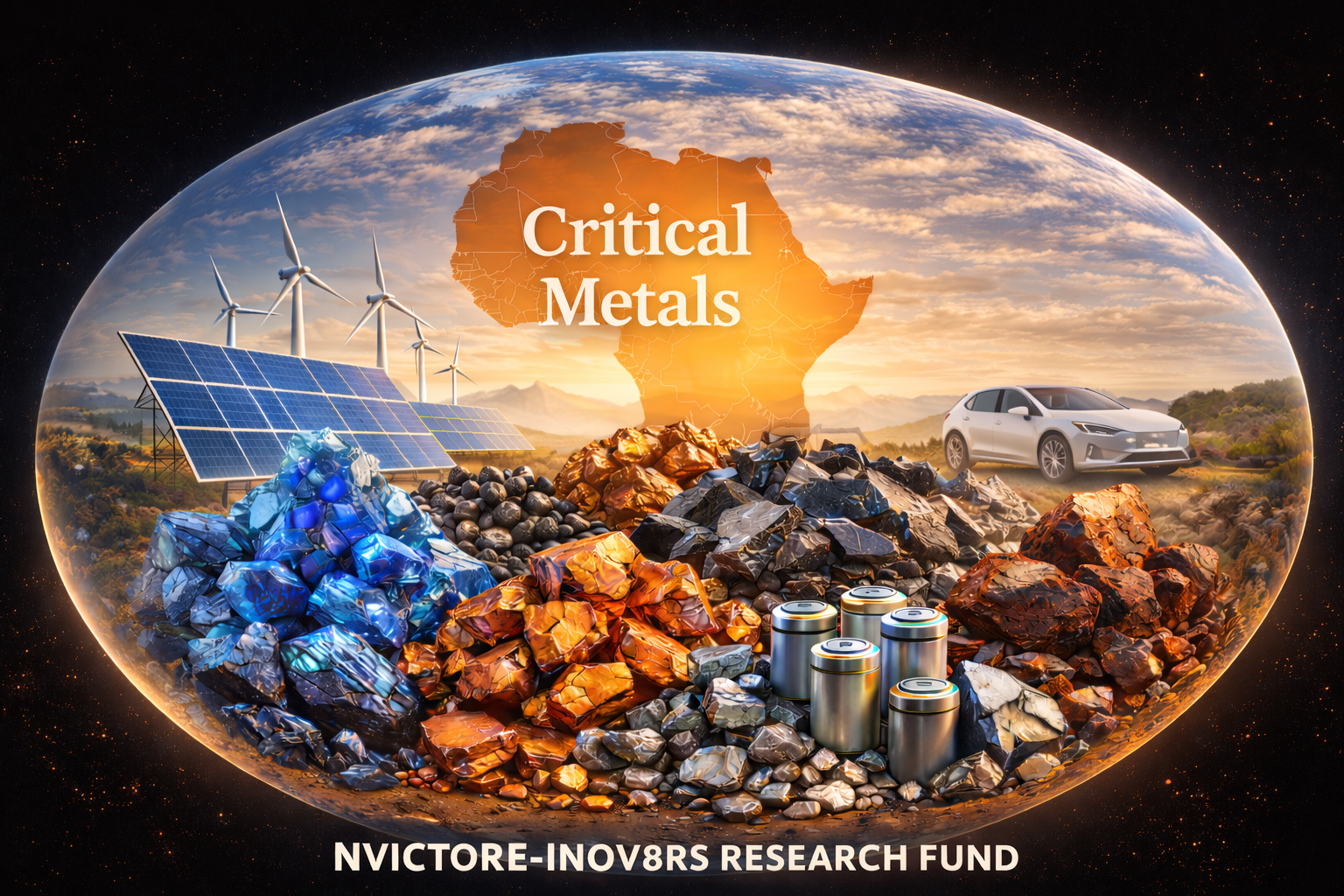
An artistic depiction showcasing critical metals, featuring piles of colorful mineral ores, solar panels, wind turbines, and a white electric car against a backdrop of an outlined African map.

Cobalt, manganese, natural graphite, copper, nickel, lithium, and iron ore are essential inputs for solar panels, wind turbines, electric vehicle batteries, and other clean-energy technologies.

Africa hosts some of the world’s largest reserves of critical minerals, including approximately 55–70% of global cobalt resources, nearly half of known manganese reserves, and more than 20% of natural graphite. The continent also contains around 5–7% of global copper and nickel reserves, smaller but strategically important shares of lithium, and limited iron ore reserves.

South Africa alone holds between 80% and 90% of the world’s platinum group metals, as well as over 70% of global chromium reserves, making it central to clean-energy and industrial supply chains.

According to the International Energy Agency, demand for lithium is expected to increase four- to six-fold by 2040, while demand for graphite and nickel will roughly double or more. Cobalt and rare earth element demand is projected to rise by 50–70%, and copper demand by approximately 30% over the same period.

Read more at: https://www.modernghana.com/news/1466175/africas-critical-minerals-are-a-huge-economic.amp

#CNN: #SaudiArabia says it has $2.5 trillion in mineral reserves. That could make it a key player in the race for #RareEarths

A mining landscape featuring a Saudi Arabian flag with visible mining trucks and industrial structures in the background. Various mineral deposits, including gold and colorful rare earth elements, are in the foreground.

Speaking to CNN last week at the Future Minerals Forum in Riyadh, Saudi Arabia, Abigail Hunter, executive director of the Minerals Center at SAFE (Securing America’s Future Energy), a nongovernment organization, described China as “light years ahead” of the US, “through decades of strategic investments, state-backed projects and coordination with the private sector, and investing internationally.

But now Saudi Arabia is growing its mineral sector, to reduce its economic dependence on oil and, according to analysts, increase its geopolitical influence.

Saudi claims it has $2.5 trillion in mineral reserves. These include gold, zinc, copper and lithium, but also rare earth deposits, including dysprosium, terbium, neodymium and praseodymium, which are used in everything from electric cars and wind turbines to high-speed computing.

Saudi Arabia’s budget for exploratory mining increased 595% between 2021 and 2025, per S&P Global (though it is still modest by the standards of advanced mining nations like Canada and Australia). Licensing new mining sites to domestic and international companies has gathered pace.

But exploration is one thing, end product is another. “The reality is mining is a really long game,” said Hunter. “It takes three to five years to build a processing plant. It can take up to 29 years in some jurisdictions.”

The nation is cutting red tape, reducing tax rates for mining investment and intends to spend big to catch up with established players.

Read more at: https://www.cnn.com/2026/01/23/middleeast/saudi-arabia-minerals-investment-spc

“If you are not at the table, you are on the menu”

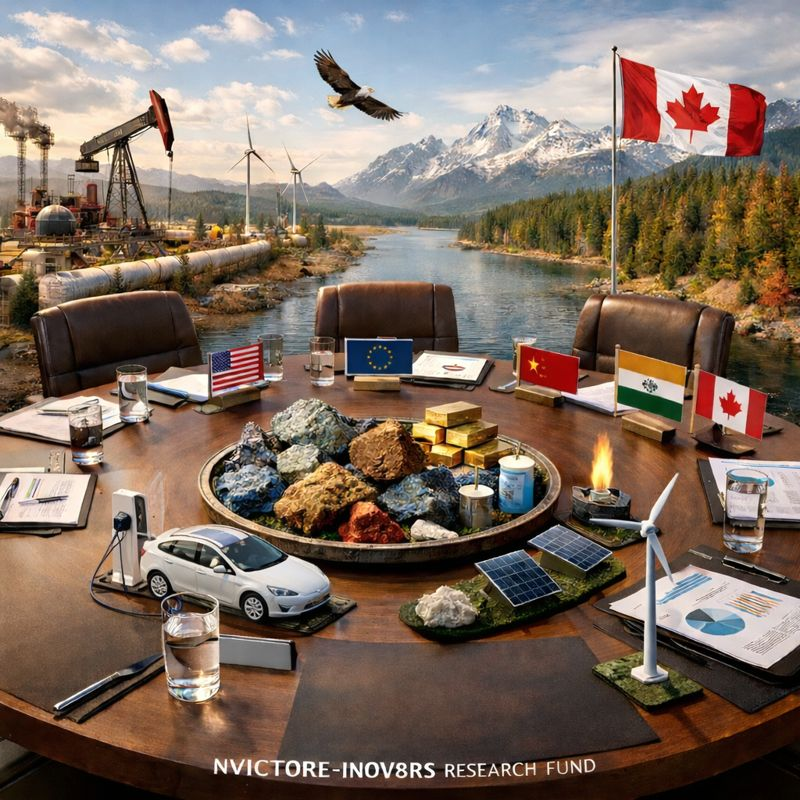
A round conference table with flags from various countries, surrounded by a scenic landscape featuring mountains and a river. The table displays models of a car, solar panels, and a wind turbine, alongside rocks and gold pieces.

Political: If you are not at the table, your country’s sovereignty will be on the menu.

Direct message. World will remember forever.

Commercial: End products of Canadian Critical Minerals and Canadian power is on the menu. Join Canada to expand the menu and invite the world to enjoy the menu.

Interpreted message. Canada will remember forever.

#Turkey’s bid to develop #RareEarth minerals hits wall of technology restrictions

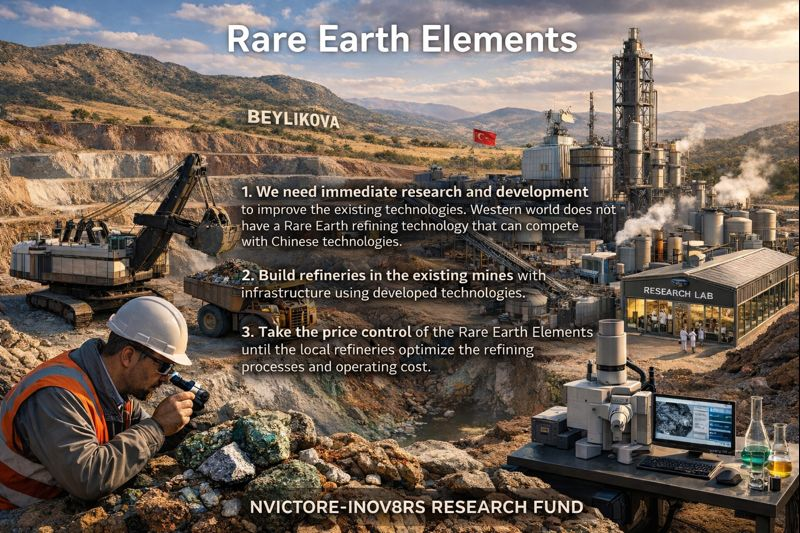
An industrial landscape showing the extraction of rare earth elements, featuring a mining site with heavy machinery, a worker inspecting materials, and a refinery complex. In the foreground, text outlines three strategic recommendations for improving rare earth element processing and control.

Turkey is attempting to position itself as a new player in the global rare earth elements (REEs) market, yet the country continues to face significant technological, economic and geopolitical obstacles in transforming extensive underground reserves into a functioning industrial ecosystem.

Turkey is attempting to position itself as a new player in the global rare earth elements (REEs) market, yet the country continues to face significant technological, economic and geopolitical obstacles in transforming extensive underground reserves into a functioning industrial ecosystem.

A January 3 letter by Turkish Energy and Natural Resources Minister Alparslan Bayraktar, a copy of which was obtained by Nordic Monitor, acknowledged Turkey’s limitations, particularly in technology, even though the country reportedly has the world’s fourth-largest REE reserves.

The minister highlighted promising deposits, particularly in Eskişehir’s Beylikova district, where exploration has identified 694 million tons of complex ore containing REEs along with barite, fluorite and thorium. Drilling has extended more than 125,000 meters across 310 locations, and over 59,000 samples have undergone laboratory analysis.

Despite this geological potential, the letter suggests that converting resources into industrial capacity remains elusive.

To process the Beylikova ore, state-owned mining company Eti Maden established the Beylikova Fluorite, Barite and Rare Earth Elements Directorate and in 2023 launched a pilot facility with a capacity of 1,200 tons per year. The plant produces an initial REE concentrate using physical and chemical methods, but the sophisticated technology needed to separate individual rare earth oxides is still under development.

1. We need immediate research and development to improve the existing technologies. Western world does not have a Rare Earth refining technology that can compete with Chinese technologies.

2. Build refineries in the existing mines with infrastructure using developed technologies.

3. Take the price control of the Rare Earth Elements by tariffs or other means until the local refineries optimize the refining processes and operating cost.

Read more at: https://nordicmonitor.com/2026/01/turkeys-bid-to-develop-rare-earth-minerals-hit-wall-of-technology-restrictions/

#Trump’s #RareEarth Push Extends Lifeline to #GreenTech in the #US

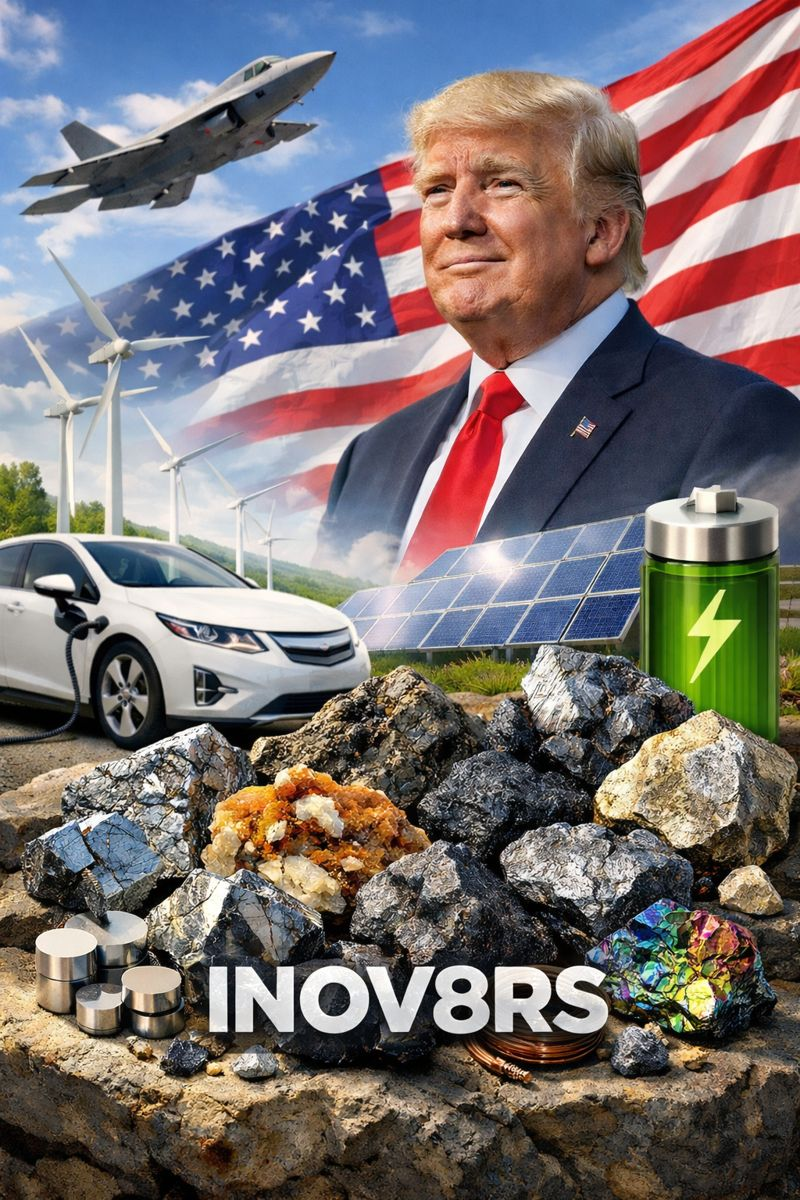
A collage featuring a smiling man with light hair, American flag in the background, an airplane flying overhead, wind turbines, solar panels, a charging electric vehicle, and various mineral rocks with the text 'INOV8RS' prominently displayed.

A new wave of innovation and technological revolution is still required in rare earth refining in the Western World.

The industry saw record funding in 2025 as the US looks to build out a supply chain of elements crucial to the defense and energy sectors.

US President Donald Trump has vowed to cut into China’s overwhelming lead in producing critical minerals as part of his national security push, including a new supply chain proclamation on Wednesday. In response, investors are pouring a record amount of money into US startups, providing support to an industry that also plays a key role in the energy transition.

The minerals — a set of 17 metallic elements — are used in products ranging from smartphones and electric vehicles to fighter jets. China controls roughly 60% of the world’s rare earth mining output and more than 90% of the global refining capacity, according to an October report by the International Energy Agency. That leaves industries in the US exposed to potential supply shocks.

Read more at: https://www.bloomberg.com/news/articles/2026-01-15/trump-national-security-mandate-boosts-us-rare-earth-startups

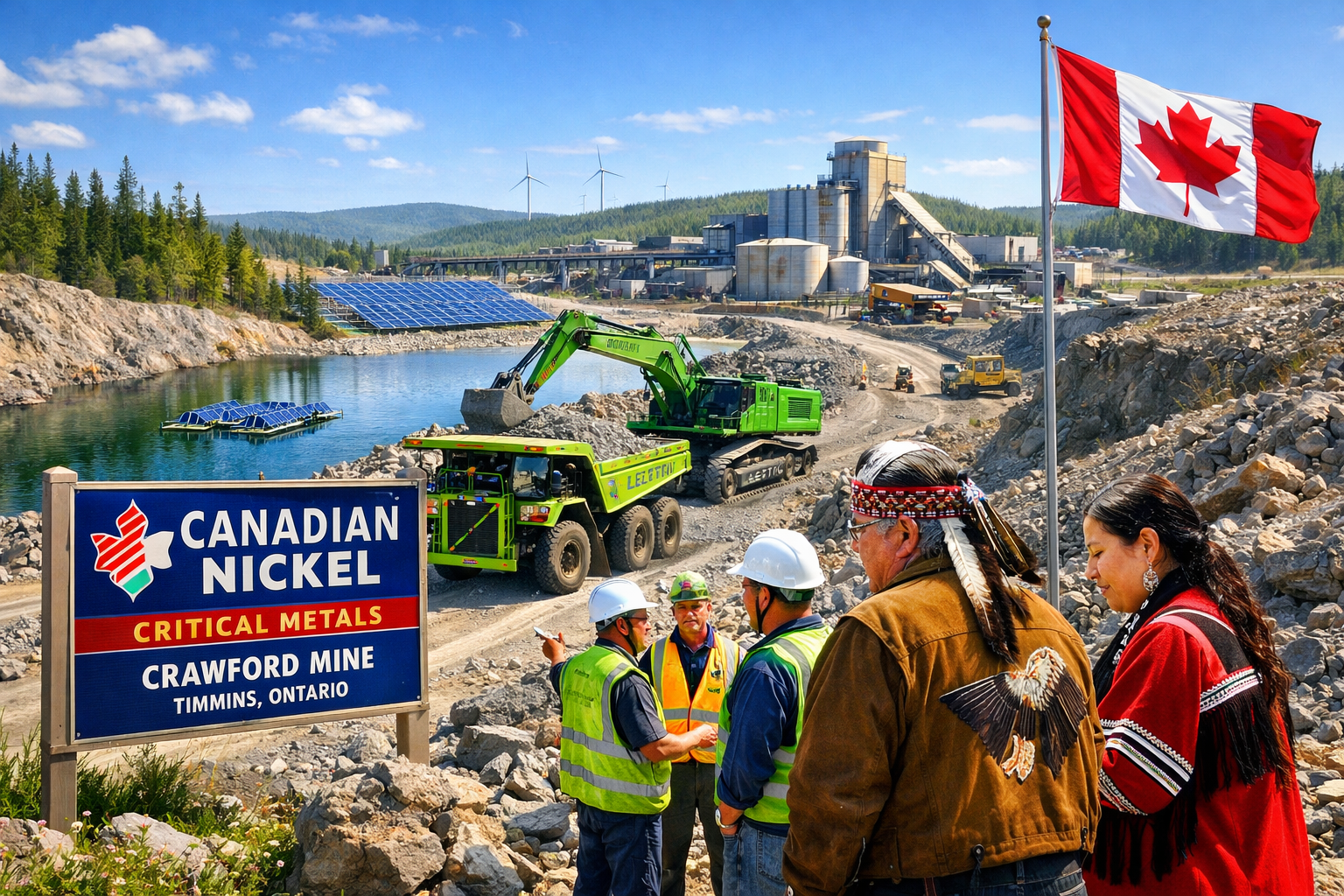
‘Full endorsement’: #Timmins #Nickel mine gets another green light

TIMMINS – Having the backing of the province is giving a Timmins nickel mine a push towards the finish line. 

Ontario Energy and Mines Minister Stephen Lecce was in Timmins today (Jan. 13) to add Canada Nickel’s Crawford mine to the province’s One Project, One Process framework. 

“Permitting certainty is a key thing for mining projects and today’s announcement crystalizes what the province has already been doing,” said Mark Selby, Canada Nickel CEO. 

Being designated by the province gives Selby more certainty that they’ll meet the construction milestone of breaking ground by year-end. The aim is to open the mine by the end of 2028.

In November, the project was also referred to Canada’s Major Projects Office, making it the first to be endorsed federally and provincially. 

What stands out for Lecce is that it’s shovel-ready. 

“This is a pretty incredible turnaround. So we want to create jobs. We want to displace Chinese, dirty nickel in global markets with green nickel that is being produced here, among the cleanest nickel on Earth,” said Lecce.

The critical minerals are needed for aerospace and military projects, said Lecce. 

“And this is a company that’s demonstrated a strong commitment to collaboration, both with First Nations and with community. So they have our full endorsement,” he said.

Crawford is Canada Nickel’s flagship project in the area that the company has coined as the Timmins nickel district. It’s the second-largest nickel reserve in the world and would be the only source of chromium in North America. It would also supply cobalt, platinum and palladium.

It has the potential to become the Western world’s largest nickel operation, said Selby. 

Read more at: https://www.timminstoday.com/local-news/full-endorsement-timmins-nickel-mine-gets-another-green-light-11733157

#SouthChinaMiningPost: #Japan firms seen ‘stockpiling’ #RareEearths as #Tokyo looks to #G7 in face of #China controls

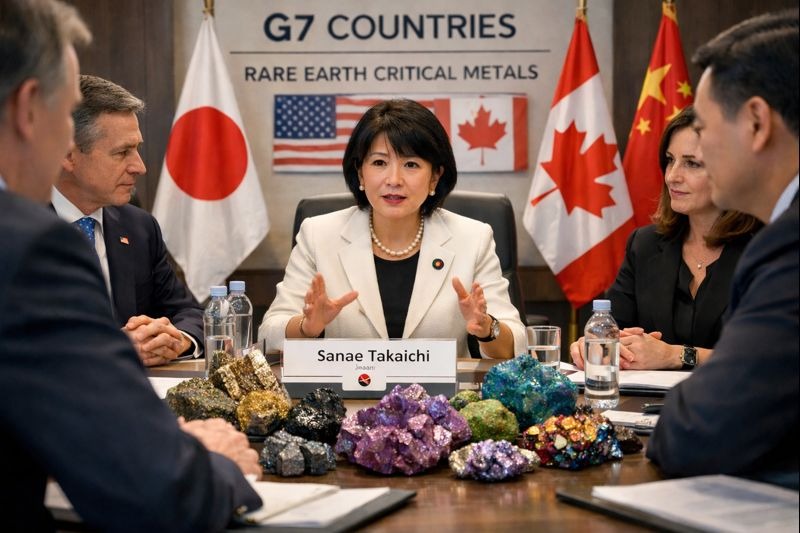
A conference scene featuring Japanese politician Sanae Takaichi discussing rare earth metals, with representatives from other G7 countries seated around a table. Various colored minerals are displayed in front of her.

Fears of China choking off exports of critical minerals to Japan amid a deepening political dispute have set off industry alarms and prompted Tokyo to elevate the issue at a G7 gathering of finance ministers this week, despite Beijing’s assurances that civilian trade would be spared.

Japanese Finance Minister Satsuki Katayama said last week that she would attend the Group of Seven event in Washington on Monday with the “risk of a rare-earth-supply interruption from China in mind”, the Tokyo-based Jiji Press reported. Officials from Canada, the United States and Australia were also expected to participate.

The inclusion of rare earths on the G7 agenda reflects heightened concern in Japan over China controlling exports of 17 rare earth elements that are crucial for Japan’s massive manufacturing sector, from consumer electronics to vehicles, according to analysts.

Although Japan has reduced its reliance on Chinese rare earths since 2010, when China stopped rare earth exports for two months following a vessel collision near disputed islets, it still depends heavily on Chinese supplies, as replacements take time, the experts said.

Read more at: https://www.scmp.com/economy/global-economy/article/3339615/japan-firms-seen-stockpiling-rare-earths-tokyo-looks-g7-face-china-controls

Glencore Xstrata Q1 results show solid performance from metals division

JOHANNESBURG (miningweekly.com) – The newly merged Glencore Xstrata group on Monday posted combined first-quarter 2013 production results, which saw the metals and minerals division delivering solid results, despite some softening in prices towards the end of the quarter.

http://www.miningweekly.com/article/glencore-xstrata-q1-results-show-solid-performance-from-metals-division-2013-05-13?

Xstrata’s Koniambo Nickel project goes into production

LONDON (SHARECAST) –Xstrata has announced that its Koniambo Nickel project in New Caledonia has gone into production after producing its first metal this week, a key milestone for the five billion-dollar greenfield project.

http://www.sharecast.com/cgi-bin/sharecast/story.cgi?story_id=20819933

Glencore pushes back Xstrata merger again due to China probe

Glencore has been waiting for several months for China, the biggest buyer of the materials it trades and mines, to give the go-ahead before it can complete its $35-billion acquisition of miner Xstrata, the largest deal in the sector to date.

http://www.miningweekly.com/article/glencore-pushes-back-xstrata-merger-again-due-to-china-probe-2013-04-02?

« Older Entries Recent Entries »