Tag Archives: Vale

#Turkey’s bid to develop #RareEarth minerals hits wall of technology restrictions
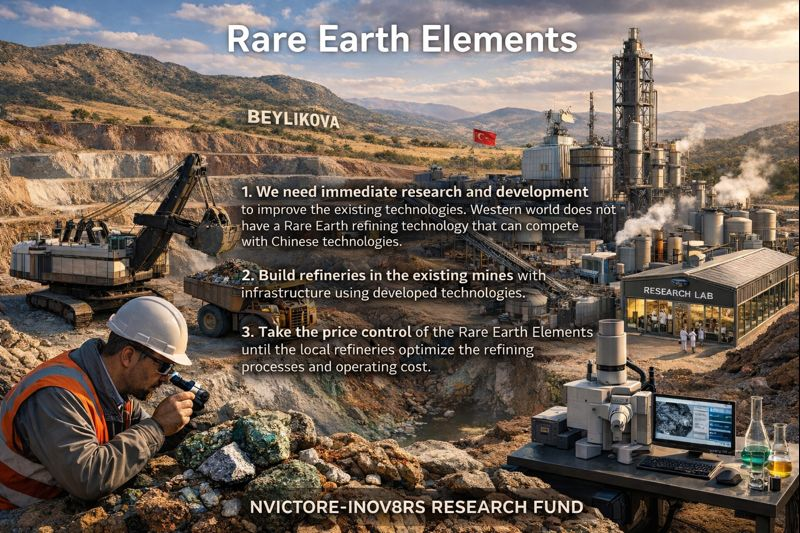
An industrial landscape showing the extraction of rare earth elements, featuring a mining site with heavy machinery, a worker inspecting materials, and a refinery complex. In the foreground, text outlines three strategic recommendations for improving rare earth element processing and control.

Turkey is attempting to position itself as a new player in the global rare earth elements (REEs) market, yet the country continues to face significant technological, economic and geopolitical obstacles in transforming extensive underground reserves into a functioning industrial ecosystem.

Turkey is attempting to position itself as a new player in the global rare earth elements (REEs) market, yet the country continues to face significant technological, economic and geopolitical obstacles in transforming extensive underground reserves into a functioning industrial ecosystem.

A January 3 letter by Turkish Energy and Natural Resources Minister Alparslan Bayraktar, a copy of which was obtained by Nordic Monitor, acknowledged Turkey’s limitations, particularly in technology, even though the country reportedly has the world’s fourth-largest REE reserves.

The minister highlighted promising deposits, particularly in Eskişehir’s Beylikova district, where exploration has identified 694 million tons of complex ore containing REEs along with barite, fluorite and thorium. Drilling has extended more than 125,000 meters across 310 locations, and over 59,000 samples have undergone laboratory analysis.

Despite this geological potential, the letter suggests that converting resources into industrial capacity remains elusive.

To process the Beylikova ore, state-owned mining company Eti Maden established the Beylikova Fluorite, Barite and Rare Earth Elements Directorate and in 2023 launched a pilot facility with a capacity of 1,200 tons per year. The plant produces an initial REE concentrate using physical and chemical methods, but the sophisticated technology needed to separate individual rare earth oxides is still under development.

1. We need immediate research and development to improve the existing technologies. Western world does not have a Rare Earth refining technology that can compete with Chinese technologies.

2. Build refineries in the existing mines with infrastructure using developed technologies.

3. Take the price control of the Rare Earth Elements by tariffs or other means until the local refineries optimize the refining processes and operating cost.

Read more at: https://nordicmonitor.com/2026/01/turkeys-bid-to-develop-rare-earth-minerals-hit-wall-of-technology-restrictions/

#Tesla Fires Up #America’s First Major #Lithium Refinery

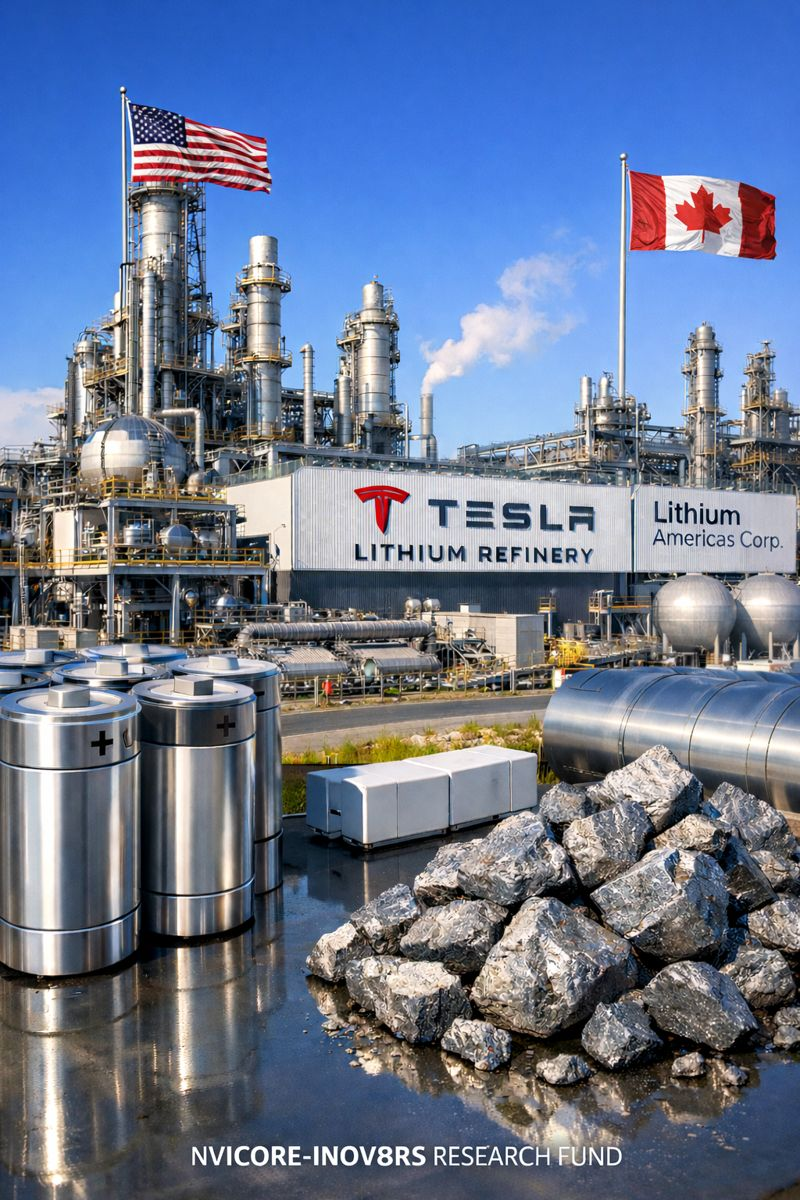
Tesla lithium refinery with American and Canadian flags, featuring industrial structures and lithium ore piles in the foreground.

The Tesla Lithium Refinery just outside of Corpus Christi, Texas, is another step toward the U.S. goal of having domestic refined lithium resources to counter China’s market dominance.

The refinery converts spodumene ore directly into battery-grade lithium hydroxide, in a first-of-its-kind process in North America.

Tesla uses a new technology platform that allows a cleaner, simpler, and cheaper process to obtain battery-grade lithium from the raw material, spodumene ore, says Jason Bevan, Site Manager for Tesla’s Gulf Coast Lithium Refinery.

The U.S. Administration is increasingly looking to have a direct equity involvement in America’s critical minerals supply chain, in the race to close the gap with China.

Direct Administration bets on lithium mining projects were a key theme in the sector last year.

For example, the Department of Energy (DOE) has agreed to provide a $2.26 billion loan to Vancouver-based Lithium Americas Corp. to help it complete a major lithium project in Humboldt County in northern Nevada.

Read more at: https://www.theglobeandmail.com/investing/markets/stocks/TSLA/pressreleases/37108880/tesla-fires-up-americas-first-major-lithium-refinery/

Can #US-led bloc ease #China’s ‘vice-like grip’ on #RareEarths?

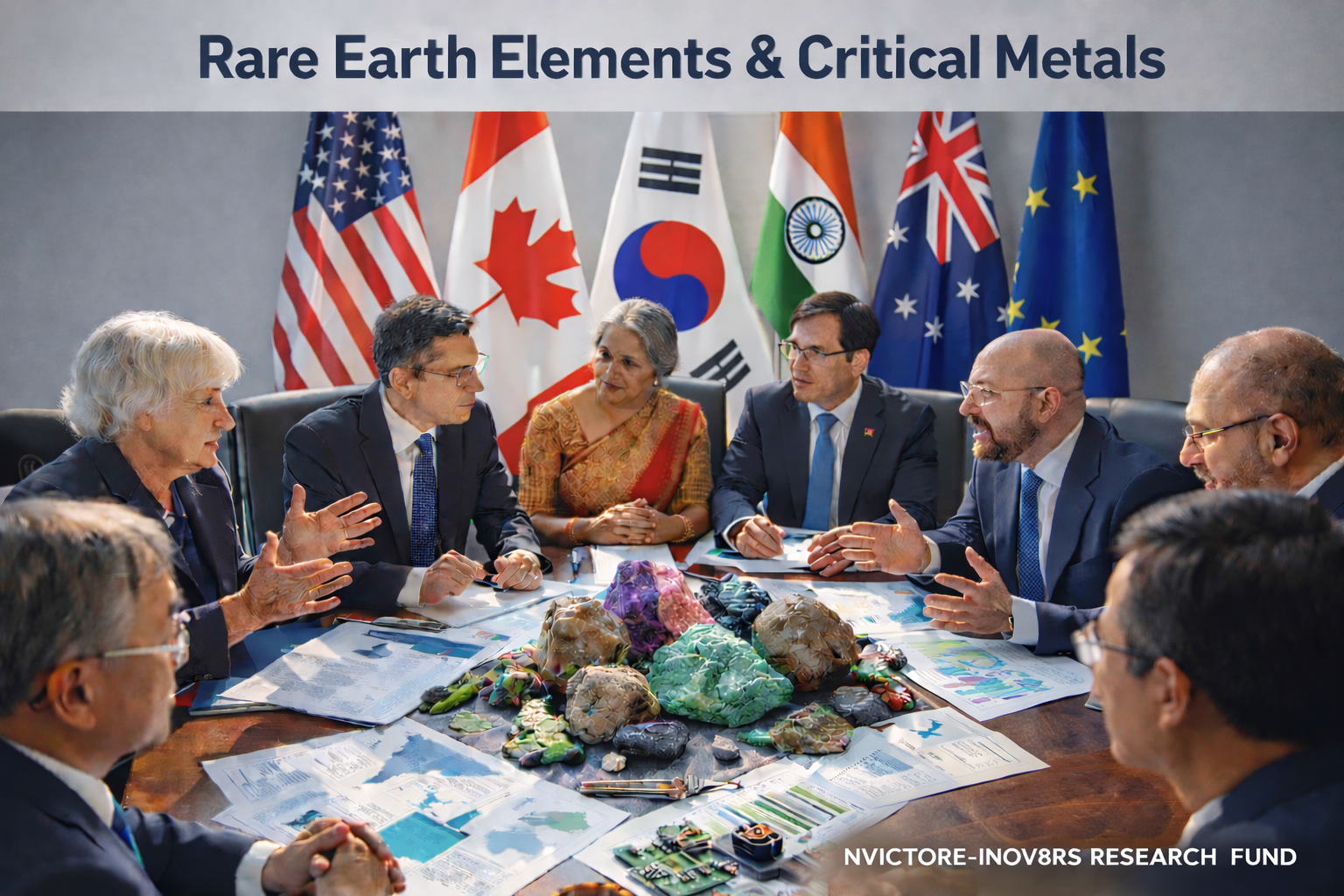
A diverse group of international leaders and experts discussing rare earth elements and critical metals at a conference table, with various minerals and documents displayed.

A US-led meeting with its allies to reduce the global reliance on rare earths from China was an “easy sell”, even as analysts warn that such an ambitious goal would depend on their long-term investment commitments and ability to narrow differences over national policy.

On Monday, the US hosted a meeting in Washington with G7 finance ministers and other allies, including Australia, India, South Korea and the EU, to address vulnerabilities in the rare earth supply chain, as they close ranks against what they perceive as coercive Chinese control of the export of the critical minerals.

The agenda items included proposals to set price floors to make non-Chinese rare earth projects more viable and explore new partnerships for alternative supplies.

Prior to going into mining in unexplored part of the world:

1. We need immediate research and development to improve the existing technologies. Western world does not have a Rare Earth refining technology that can compete with Chinese technologies.

2. Build refineries in the existing mines with infrastructure using developed technologies.

3. Take the price control of the Rare Earth Elements by tariffs or other means until the local refineries optimize the refining processes and operating cost.

https://www.linkedin.com/feed/update/urn:li:activity:7309993748703166464/

Read more at: https://www.scmp.com/week-asia/economics/article/3340241/can-us-led-bloc-ease-chinas-vice-grip-rare-earths

#Trump’s #RareEarth Push Extends Lifeline to #GreenTech in the #US

A collage featuring a smiling man with light hair, American flag in the background, an airplane flying overhead, wind turbines, solar panels, a charging electric vehicle, and various mineral rocks with the text 'INOV8RS' prominently displayed.

A new wave of innovation and technological revolution is still required in rare earth refining in the Western World.

The industry saw record funding in 2025 as the US looks to build out a supply chain of elements crucial to the defense and energy sectors.

US President Donald Trump has vowed to cut into China’s overwhelming lead in producing critical minerals as part of his national security push, including a new supply chain proclamation on Wednesday. In response, investors are pouring a record amount of money into US startups, providing support to an industry that also plays a key role in the energy transition.

The minerals — a set of 17 metallic elements — are used in products ranging from smartphones and electric vehicles to fighter jets. China controls roughly 60% of the world’s rare earth mining output and more than 90% of the global refining capacity, according to an October report by the International Energy Agency. That leaves industries in the US exposed to potential supply shocks.

Read more at: https://www.bloomberg.com/news/articles/2026-01-15/trump-national-security-mandate-boosts-us-rare-earth-startups

‘Full endorsement’: #Timmins #Nickel mine gets another green light

TIMMINS – Having the backing of the province is giving a Timmins nickel mine a push towards the finish line. 

Ontario Energy and Mines Minister Stephen Lecce was in Timmins today (Jan. 13) to add Canada Nickel’s Crawford mine to the province’s One Project, One Process framework. 

“Permitting certainty is a key thing for mining projects and today’s announcement crystalizes what the province has already been doing,” said Mark Selby, Canada Nickel CEO. 

Being designated by the province gives Selby more certainty that they’ll meet the construction milestone of breaking ground by year-end. The aim is to open the mine by the end of 2028.

In November, the project was also referred to Canada’s Major Projects Office, making it the first to be endorsed federally and provincially. 

What stands out for Lecce is that it’s shovel-ready. 

“This is a pretty incredible turnaround. So we want to create jobs. We want to displace Chinese, dirty nickel in global markets with green nickel that is being produced here, among the cleanest nickel on Earth,” said Lecce.

The critical minerals are needed for aerospace and military projects, said Lecce. 

“And this is a company that’s demonstrated a strong commitment to collaboration, both with First Nations and with community. So they have our full endorsement,” he said.

Crawford is Canada Nickel’s flagship project in the area that the company has coined as the Timmins nickel district. It’s the second-largest nickel reserve in the world and would be the only source of chromium in North America. It would also supply cobalt, platinum and palladium.

It has the potential to become the Western world’s largest nickel operation, said Selby. 

Read more at: https://www.timminstoday.com/local-news/full-endorsement-timmins-nickel-mine-gets-another-green-light-11733157

#SouthChinaMiningPost: #Japan firms seen ‘stockpiling’ #RareEearths as #Tokyo looks to #G7 in face of #China controls

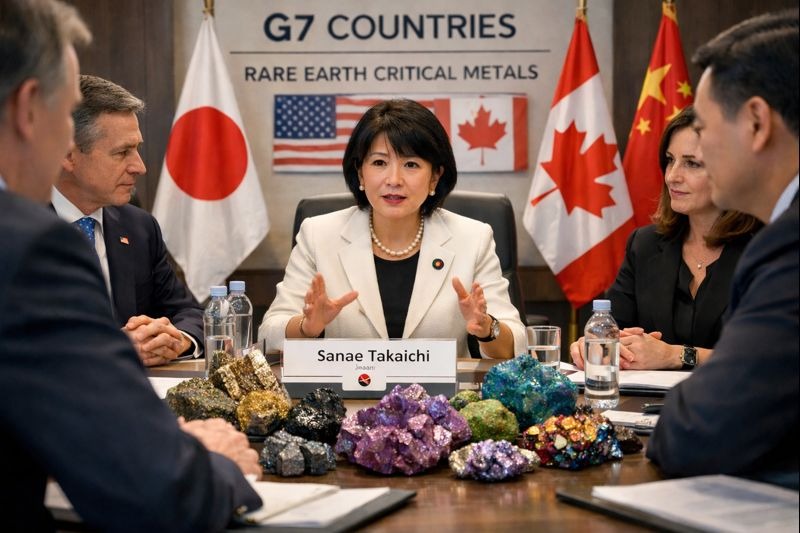
A conference scene featuring Japanese politician Sanae Takaichi discussing rare earth metals, with representatives from other G7 countries seated around a table. Various colored minerals are displayed in front of her.

Fears of China choking off exports of critical minerals to Japan amid a deepening political dispute have set off industry alarms and prompted Tokyo to elevate the issue at a G7 gathering of finance ministers this week, despite Beijing’s assurances that civilian trade would be spared.

Japanese Finance Minister Satsuki Katayama said last week that she would attend the Group of Seven event in Washington on Monday with the “risk of a rare-earth-supply interruption from China in mind”, the Tokyo-based Jiji Press reported. Officials from Canada, the United States and Australia were also expected to participate.

The inclusion of rare earths on the G7 agenda reflects heightened concern in Japan over China controlling exports of 17 rare earth elements that are crucial for Japan’s massive manufacturing sector, from consumer electronics to vehicles, according to analysts.

Although Japan has reduced its reliance on Chinese rare earths since 2010, when China stopped rare earth exports for two months following a vessel collision near disputed islets, it still depends heavily on Chinese supplies, as replacements take time, the experts said.

Read more at: https://www.scmp.com/economy/global-economy/article/3339615/japan-firms-seen-stockpiling-rare-earths-tokyo-looks-g7-face-china-controls

#Canada #Nickel nears four billion tonnes in total nickel resources near #Timmins

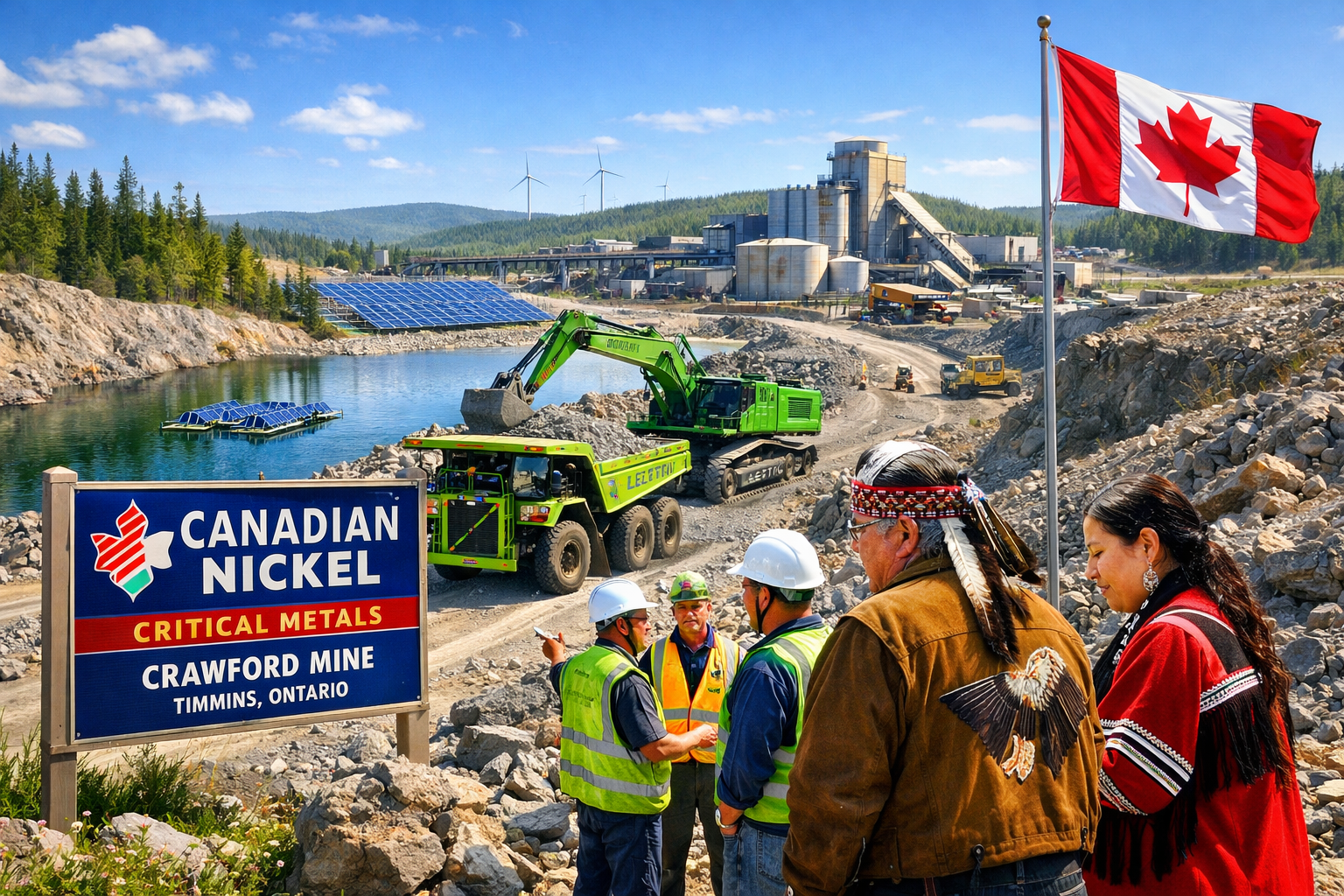
Heavy mining equipment operating in a snowy landscape, with Canada Nickel branding and a Canadian flag overlay.

Canada Nickel has amassed almost four billion tonnes in nickel resources in the ground around Timmins.

Just before Christmas, the Toronto multi-mine developer published mineral resources for more two deposits, Midlothian and Bannockburn, both situated south of the city.

Like Canada Nickel’s other properties in the area, including its flagship Crawford project, the Midlothian and Bannockburn projects are shaping up to be low-grade, big-tonnage type of nickel deposits.

To date, Canada Nickel has posted resource estimates on eight of its nine properties in the region.

That amounts to 3.98 billion tonnes of 0.24 per cent nickel in the measured and Indicated resources, for a total of 9.4 million tonnes of nickel metal. There’s an inferred resource of 4.95 billion tonnes of 0.23 per cent nickel, for a total of 11.5 million tonnes of contained nickel metal.

Read more at: https://www.northernontariobusiness.com/industry-news/mining/canada-nickel-nears-four-billion-tonnes-in-total-nickel-resources-near-timmins-11681534

#US minerals projects seek ‘industrial vision’ from #Washington to compete with #China


A serious-looking man in a black jacket holding a mineral sample, with a backdrop featuring the maps of the U.S. and China, representing the competition in the minerals sector.

Washington must move even faster to bolster critical minerals projects and offset Beijing’s grip on the world’s supply of the building blocks for electronics, weapons and a range of other goods, three U.S. mining and refining executives said on Thursday.

The push underscores how Washington’s surging support this year for the sector – including taking stakes in mining companies and guaranteeing a price floor for the only U.S. rare earths mine – is falling short of what industry leaders say is needed amid intense Chinese competition.

Executives from Perpetua Resources, American Rare Earths and Westwin Elements told the Reuters NEXT conference in New York that the U.S. government should release a comprehensive minerals plan, pressure Indonesia to trim nickel production, and speed up the time for the U.S. Export-Import Bank and other agencies to approve loan funding, among other steps.

Read more at: https://www.reuters.com/business/autos-transportation/us-minerals-projects-seek-more-support-washington-compete-with-china-2025-12-04/

Impact of #US Tariffs on #Canadian #Nickel Industry

Tariffs will disrupt the long-standing flow of nickel between Canada and the US

Canada is the single largest supplier of nickel metal to the US market, typically delivering between 35–40% of the United States’ annual primary nickel requirements over the past decade according to trade statistics and CRU’s Nickel Service. However, US President-Elect Donald Trump has announced potential 25% tariffs on Canadian imports, threatening to disrupt the flow of nickel across the border.

This will not only have a negative impact on the Canadian nickel industry, which is already struggling with high costs amid a global market in chronic surplus, but also on the US industry that needs a stable and secure source of high-purity nickel in a world that is increasingly dominated by China.

US market has no domestic nickel industry and is fully reliant on imports

In the US, nickel is largely used to make stainless steel followed by uses in foundry, alloying and plating applications – very little nickel is used domestically in battery applications. When it comes to stainless steel, the US has a mature scrap collection and distribution network meeting more than 80% of stainless-steel nickel requirement. The remainder needs to be secured by purchasing ferronickel or high-purity nickel. For all other applications, high-purity nickel is required.

The US has one operating nickel mine located in Michigan, owned by Lundin. This mine produces a concentrate that is exported, given the US has no domestic nickel smelters or refineries with the capability to process nickel-bearing concentrates. However, this mine is anticipated to exhaust its production by the end of 2025, leaving the US with no domestic nickel industry. As a result, the US will be completely reliant on imports to meet its primary nickel requirements.

Depending on the permanence of tariffs, US domestic nickel refining may become an attractive proposition and there is at least one company with plans to build a carbonyl nickel refinery producing high-purity nickel. However, the challenge this plant will have is sourcing intermediate feed.

Tariffs will push Canadian nickel to other markets

Although Canada is home to several large nickel producers, only one has the right surface assets and ore sources to be able to supply the US market from Canada. Vale produces high-purity nickel from its Sudbury and Long Harbor operations. However, its Canadian assets sit in the third and fourth quartile of CRU’s Net Cash Cost Excl. Royalties Industry Costs Curve.


Despite being positioned near the top of the cost curve, Vale’s operations appear to be able to turn a profit at YTD prices. However, when simulating for the impact of tariffs, Vale’s operations come under tremendous pressure.


Read more at: https://www.crugroup.com/en/communities/thought-leadership/2024/impact-of-us-tariffs-on-canadian-nickel-industry/

#Vale’s $10 billion spend on #Canada targets existing potential

Vale Base Metals chairman Mark Cutifani is undertaking a unit-wide asset review that will likely find more potential at the company’s operations in Sudbury, Ontario; Thompson, Manitoba; and Voisey’s Bay and Long Harbour, Newfoundland; Olson said.

Vale also may have an announcement soon on the Bécancour nickel sulphide processing project it’s advancing to supply 25,000 tonnes of nickel a year to General Motors, she said. That deal, announced just over one year ago could be worth about C$762 million per year.

“There’s just a clarity and a certainty in regulation and Canada is a mining country and with that comes a lower risk, and equally you have the wonderful benefit of renewable and clean power,” Olson said. “Canada has a great opportunity to further establish itself as a leader in our industry with community and Indigenous rights leaders.”

Read more at: https://www.mining.com/future-minerals-forum-vales-us10b-for-canada-targets-existing-potential/

« Older Entries Recent Entries »