
#UN calls for fair play in the global race for #CriticalMinerals
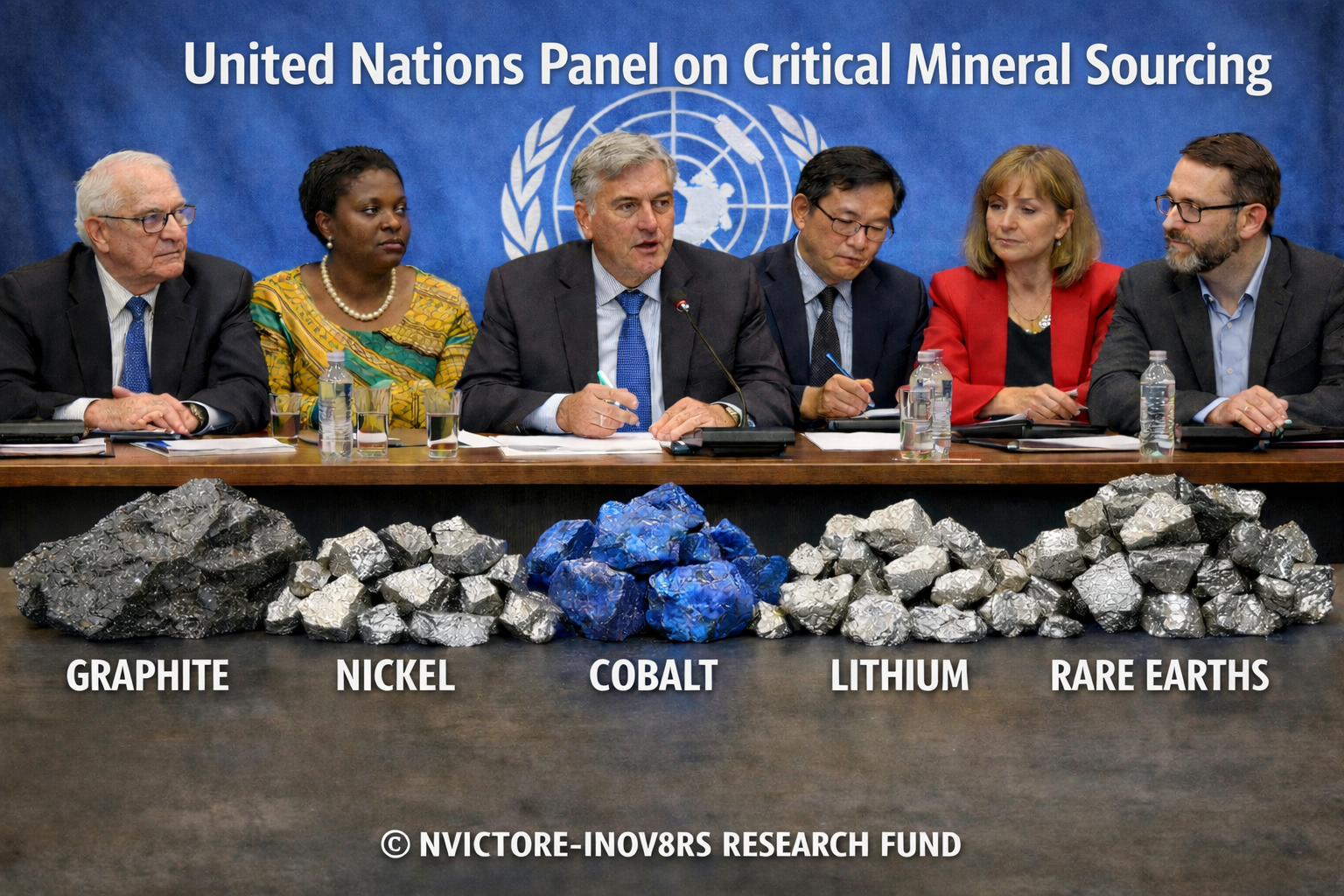
UN Panel on Critical Energy Transition Minerals
On Thursday, the UN Security Council convened to discuss the links between energy, critical minerals, and global security. The discussion highlighted ongoing UN efforts to ensure that the transition to clean energy is both fair and inclusive.
Despite current geopolitical tensions, the global shift from a fossil-fuel-based economy to one powered by clean electricity continues to move forward.
According to the International Energy Agency (IEA)—an independent international body outside the UN system—demand for lithium increased by nearly 30 percent in 2024. Demand for nickel, cobalt, graphite, and rare earth elements also rose by roughly 6–8 percent. This rapid growth is largely driven by the expansion of electric vehicles, battery production, and renewable energy technologies, all of which rely heavily on critical minerals.
Across the UN system—from the Secretary-General to multiple agencies and partners—efforts are underway to guide responsible mineral extraction and use. Through policy guidance, global meetings, and research reports, the UN aims to ensure that the benefits of the clean energy transition are shared broadly and support a low-carbon global economy.
Panel on Critical Energy Transition Minerals
In April 2024, UN Secretary-General António Guterres established the Panel on Critical Energy Transition Minerals to promote a transition that is just, equitable, and environmentally sustainable, while ensuring that countries and communities rich in these resources benefit fully.
Later that year, the panel published its first report, which Guterres described as a practical roadmap for achieving both prosperity and fairness alongside the growth of clean energy.
The report outlines strategies to ensure that the expansion of renewable energy is grounded in principles of justice and equity. It emphasizes sustainable development, respect for communities, environmental protection, and economic opportunities for developing countries with abundant mineral resources.
UN Guidance for Action on Critical Energy Transition Minerals
Released in June 2025, the UN’s guidance on critical energy transition minerals recommends policies to ensure that mineral extraction and use promote human rights, protect ecosystems, and support equitable development. The framework is built around three key principles:
Human rights at the centre. This includes conducting human rights due diligence, performing impact assessments, securing free, prior, and informed consent from affected communities, safeguarding civic space, and establishing effective grievance mechanisms.
Environmental protection and planetary integrity. The guidance calls for strong environmental and social impact assessments, biodiversity conservation, the designation of no-go zones, decarbonisation of mining activities, circular-economy approaches, and progressive mine-site restoration.
Justice and equity throughout the value chain. The framework stresses meaningful community participation, gender equality, the inclusion of Indigenous Peoples, and fair distribution of economic benefits.
A major development opportunity: UN trade agency
The UN Conference on Trade and Development (UNCTAD) notes that surging demand for critical minerals is reshaping global economic and geopolitical dynamics. As a result, resource-rich developing countries are becoming increasingly central to emerging clean-energy supply chains.
UNCTAD describes the energy transition as a significant development opportunity for these countries. By shifting from exporting raw minerals to processing and adding value domestically, they can greatly increase their economic gains. For example, in the Democratic Republic of the Congo, local cobalt processing helped raise export value from $167 million to $6 billion in 2022.
Environmental concerns: UN environment agency
The UN Environment Programme (UNEP) warns that the rapid expansion of mineral production also carries serious environmental and social risks. UNEP calls for governance frameworks that cover the entire mineral value chain—not just mining sites—and for stronger international cooperation, transparent oversight, and collaboration among governments, industry, and communities.
Mining and mineral processing can lead to high greenhouse-gas emissions, biodiversity loss, pollution, and human rights violations, including impacts on Indigenous communities. In addition, supply shortages and tight markets can cause price volatility, heighten geopolitical tensions, and increase pressure to open mines in environmentally sensitive regions.

 A Blog for Browsing Mining, Mineral Processing, and Metals Info