Tag Archives: lithium

#China’s #RareEarth Policy: Driving Innovation and Competitiveness

A colorful assortment of various geometric and crystalline shapes representing critical minerals, displayed against a blurred laboratory background. The image also features the flag of China and text in Chinese and English labeling the minerals.

Policy Framework Supporting Innovation Ecosystem

The Chinese State Council’s “Rare Earth Industry Development Plan (2021-2025)” establishes coordinated targets that explicitly connect mining output with downstream technology milestones. This policy framework differs from market-driven approaches where private investment decisions occur independently of government industrial planning.

Key coordination mechanisms include:

  • Research funding allocation aligned with five-year industrial development priorities
  • State-owned enterprise operations integrated with private sector innovation incentives
  • Regulatory environments designed to support domestic technology development clusters
  • University-industry partnerships with explicit commercialization mandates

Government research institutes, including Chinese Academy of Sciences divisions focused on materials science, receive dedicated funding for rare earth materials research aligned with broader industrial objectives. This creates predictable resource flows for long-term research projects while ensuring alignment between fundamental research and commercial applications.

The integration extends to environmental and regulatory considerations. Chinese facilities operate under different environmental compliance requirements compared to Western competitors, enabling cost structures that support both current operations and reinvestment in technology development. Additionally, these operations increasingly benefit from decarbonization benefits that enhance long-term competitiveness. This regulatory environment, combined with established supply chains and vertical integration advantages, creates compound benefits for innovation funding.

How Does China’s Patent Strategy Create Competitive Moats in Critical Technologies?

Intellectual Property Accumulation in Emerging Materials

China’s patent filing activity in rare earth materials significantly exceeds Western competitors, with China accounting for approximately 40-50% of global rare earth materials patents and higher percentages in emerging technology areas including nanomaterials and energy storage applications, according to World Intellectual Property Organization data from 2023.

Patent applications in rare earth nanomaterials and energy storage categories have grown at approximately 15-20% year-over-year in China between 2018-2023, while Western filing rates in equivalent categories have remained relatively flat or declined. This divergence reflects different strategic approaches to materials innovation and intellectual property development.

Focus areas for Chinese patent activity include:

  • Energy storage nanomaterials with enhanced conductivity and thermal stability
  • Magnetic separation processes optimizing cost structures and efficiency
  • Luminescent compounds for specialized optical and sensor applications
  • Advanced alloy compositions targeting aerospace and electronics sectors

Consequently, organizations must develop comprehensive IP protection strategies to safeguard their technological advantages in this competitive landscape.

Research Institution Networks and Knowledge Transfer

Chinese university-industry collaboration operates under different structural incentives compared to Western academic systems. Chinese institutions receive explicit mandates to commercialize research findings, supported by government incentive structures that reward technology transfer activities. This contrasts with Western university systems where commercialization typically occurs post-publication through licensing offices, creating longer development timelines.

Read more at: https://discoveryalert.com.au/strategic-technology-development-critical-material-sectors-2026/

#US to push for quicker action in reducing reliance on #China for #RareEarths

A group of business leaders and officials sitting at a conference table during a meeting focused on rare earth and critical metals, with flags of various nations displayed in the background and a presentation screen showing 'G7' and related topics.

WASHINGTON, Jan 11 (Reuters) – U.S. Treasury Secretary Scott Bessent will urge Group of Seven nations and others to step up their efforts to reduce reliance on critical minerals from China when he hosts a dozen top finance officials on Monday, a senior U.S. official said.

The meeting, which kicks off with a dinner on Sunday evening, will include finance ministers or cabinet ministers from the G7 advanced economies, the European Union, Australia, India, South Korea and Mexico, said the official who was not authorized to speak publicly.

Together, the grouping accounts for 60% of global demand for critical minerals.

“Urgency is the theme of the day. It’s a very big undertaking. There’s a lot of different angles, a lot of different countries involved and we really just need to move faster,” the official said.

Read more at: https://www.reuters.com/business/energy/us-push-quicker-action-reducing-reliance-china-rare-earths-2026-01-11/

#US: #Oklahoma’s #CriticalMinerals Hub: Driving Strategic Industrial Growth

Oklahoma’s emergence as a critical minerals hub represents a strategic convergence of geographic advantages, established infrastructure, and national security imperatives. The state’s positioning within North American transportation networks, combined with abundant energy resources and experienced industrial workforce, creates unique opportunities for domestic processing operations that reduce import dependencies while supporting defense manufacturing requirements.

Oklahoma’s emergence as a strategic processing hub demonstrates how transportation networks and energy infrastructure create multiplicative advantages for critical minerals operations. The state’s positioning at the intersection of continental transportation corridors provides unprecedented access to both raw material sources and end-user markets across North America.

Chemical processing expertise from Oklahoma’s refining and petrochemical operations transfers directly to mineral separation and purification systems. Workers experienced in hydrocarbon separation, distillation, and reduction chemistry possess foundational knowledge for solvent extraction, precipitation, and crystallization processes essential to lithium, nickel, and rare earth processing.

Environmental compliance experience accumulated through decades of Clean Air Act and Clean Water Act requirements in energy operations reduces training requirements for mineral processing facilities. The regulatory framework familiarity and OSHA certification systems provide established pathways for workforce transition rather than development from baseline.

Read more at: https://discoveryalert.com.au/oklahoma-critical-minerals-hub-2025-geographic-infrastructure/

#NASA’s Advanced Hyperspectral Systems Revolutionise #CriticalMineral Discovery

A satellite equipped for mineral mapping is shown orbiting Earth, with colorful mineral mapping data displayed over mountainous terrain.

NASA mineral mapping technology represents a groundbreaking advancement in mineral exploration, utilising hyperspectral imaging to identify critical battery materials from stratospheric altitudes. This technology captures electromagnetic radiation across 224 contiguous spectral bands, enabling detection of lithium, cobalt, and titanium compounds across vast geographic regions whilst accelerating discovery timelines that traditionally required decades of ground-based exploration.

NASA mineral mapping technology operates fundamentally differently from conventional satellite imaging through its ability to capture electromagnetic radiation across 224 contiguous spectral bands spanning 400-2,500 nanometres. Traditional satellite systems like Landsat utilise only 11 spectral bands, while Sentinel-2 operates with 13 bands, creating significant limitations in mineral identification capabilities.

Read more at: https://discoveryalert.com.au/nasa-mineral-mapping-hyperspectral-imaging-2025/

#US minerals projects seek ‘industrial vision’ from #Washington to compete with #China


A serious-looking man in a black jacket holding a mineral sample, with a backdrop featuring the maps of the U.S. and China, representing the competition in the minerals sector.

Washington must move even faster to bolster critical minerals projects and offset Beijing’s grip on the world’s supply of the building blocks for electronics, weapons and a range of other goods, three U.S. mining and refining executives said on Thursday.

The push underscores how Washington’s surging support this year for the sector – including taking stakes in mining companies and guaranteeing a price floor for the only U.S. rare earths mine – is falling short of what industry leaders say is needed amid intense Chinese competition.

Executives from Perpetua Resources, American Rare Earths and Westwin Elements told the Reuters NEXT conference in New York that the U.S. government should release a comprehensive minerals plan, pressure Indonesia to trim nickel production, and speed up the time for the U.S. Export-Import Bank and other agencies to approve loan funding, among other steps.

Read more at: https://www.reuters.com/business/autos-transportation/us-minerals-projects-seek-more-support-washington-compete-with-china-2025-12-04/

#India’s push for self-reliance in #RareEarth Magnet making is laudable

A collection of various rare earth magnets in different shapes and colors, displayed prominently in an industrial setting, with flags of India in the background.

Presently, there are a few small Indian companies engaged in manufacturing rare earth magnets. The industry needs a big push to feed the new generation of industries – from electric vehicles to fighter aircraft engines, wind turbines, and laptops to mention a few. Lately, it has come into a big focus as the world is moving towards electric vehicles. Rare earth magnet is a crucial component of electric vehicles (EVs). Fortunately, India has large rare earth deposits. Globally, it ranks third after China and Brazil.

The demand for rare earth magnets in India is expected to increase sharply in the coming years, driven by the expansion of EV manufacturing, increasing electronics output, defence production, industrial automation and renewable energy generation. For the present, the country uses rare earth magnets to the extent of 4,000 tonnes per year, mostly through imports. Among the companies currently manufacturing rare earth magnets in India are: IREL (India) Limited, Permanent Magnets Limited, Ashvini Magnets Private Limited, Star Trace, Eriez Magnets, Kumar Magnet, Sonal Magnetics, A to Z Magnet Mfg. Co. and Pragati Enterprises. The demand for rare earth magnets is projected to double by 2030. Lately, China has imposed restrictions on exports. Earlier this year, China slapped export licenses for seven types of rare earth elements and derivative products.

Posted on October 19, 2016

Read more at: https://thenorthlines.com/indias-push-for-self-reliance-in-rare-earth-magnet-making-is-laudable/

#US, #SaudiArabia strike deal to build #RareEarths refinery in the #Kingdom

An industrial facility with tall structures and pipes, featuring a US flag and a Saudi flag in a desert landscape.

Rare earths company MP Materials is partnering with the US military and Saudi Arabia’s flagship mining company to build a rare earth refinery in the Kingdom, in a move that aims to diversify the global critical minerals supply chain.

Saudi Arabian Mining Company (Maaden) and the Pentagon will create a joint venture to process rare earth materials from Saudi Arabia and other parts of the world to supply the US and Saudi manufacturing and defense sectors.

Read more at: https://english.alarabiya.net/News/saudi-arabia/2025/11/19/us-saudi-arabia-strike-deal-to-build-rare-earths-refinery-in-the-kingdom

Western #Canada holds potential to become a ‘critical minerals processing behemoth,’ expert says

A group of battery metal exploration companies and startups says it has a plan to turbocharge Canada’s critical minerals sector by building out “midstream” mineral processing facilities in Western Canada.

Two reports published by the Battery Metals Association of Canada, which hired analysts at the Transition Accelerator to consult with their members, identified nine critical minerals — copper, graphite, iron, nickel, lithium, phosphate, rare earths and vanadium — and five regions where they see big opportunities for major projects.

For example, British Columbia has at least four producing copper mines, which all ship their copper concentrate overseas, primarily to China, because there are no smelters in Western Canada. Building a copper smelter could encourage copper production and exploration while also creating higher-value products to sell, the reports said.

“If you wanted to put together a critical minerals processing behemoth anywhere in the world, the assets that we have in Alberta to do that are just phenomenal,” Bentley Allan, a professor of political economy at Johns Hopkins University and a principal at Transition Accelerator, said. “It has the chemical processing expertise, the clean power resources, other kinds of machining and precision instruments, which make Alberta a really incredible place to do this.”

Read more at: https://financialpost.com/commodities/mining/western-canada-critical-minerals-processing-behemoth

#Nigeria to open two #Chinese-backed #Lithium processing plants this year

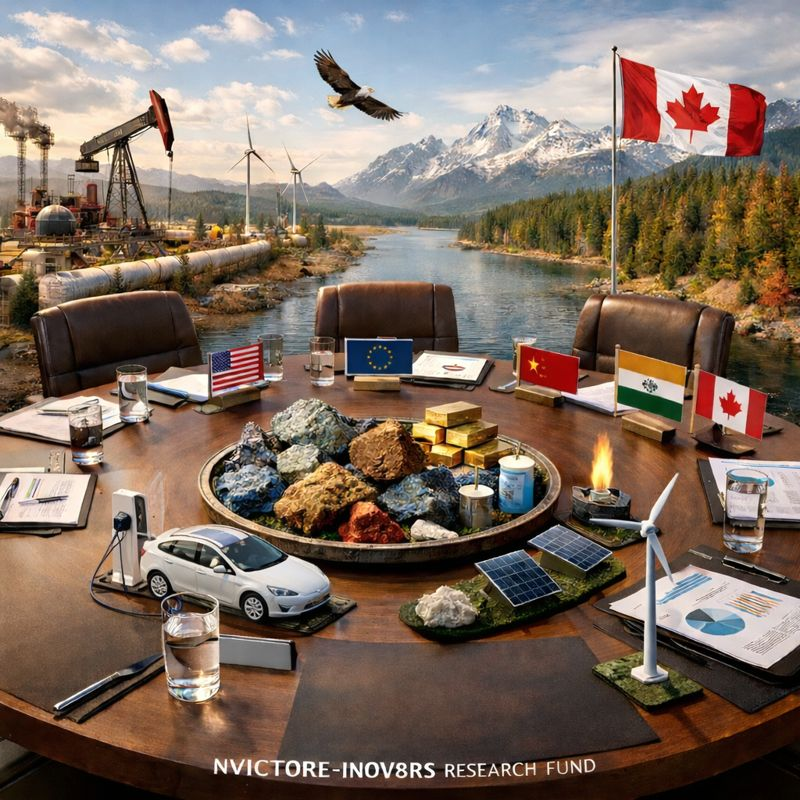
Note: Canada is a resource-rich country. Canada does not have to go to another continent for critical mineral. Canada needs investment and technology development (refining and recycling). Bring the investment to Canada.

LAGOS, May 26 (Reuters) – Nigeria is set to commission two major lithium processing plants this year, the country’s mining minister announced on Sunday, marking a shift from raw mineral exports towards adding value domestically.

The facilities, largely funded by Chinese investors, could help transform Nigeria’s vast mineral wealth into jobs, technology, and manufacturing growth within the country. Mining Minister Dele Alake said a $600 million lithium processing plant near the Kaduna-Niger border is slated for commissioning this quarter, while a $200 million lithium refinery on the outskirts of Abuja is nearing completion. Two additional processing plants are expected in Nasarawa state, which borders the capital Abuja, before the third quarter of 2025, the minister said. “We are now focused on turning our mineral wealth into domestic economic value – jobs, technology, and manufacturing,” Alake said. Over 80% of the funding for the four facilities has been provided by Chinese firms, including Jiuling Lithium Mining Company and Canmax Technologies, according to separate announcements by governors of the states where the plants are located.

Read more at: https://www.reuters.com/business/energy/nigeria-open-two-chinese-backed-lithium-processing-plants-this-year-2025-05-26/

Yes, Canada is considered a resource-rich country. It has abundant natural resources, including:

  1. Energy Resources:
    • Oil and Natural Gas: Canada has some of the largest reserves of oil in the world, particularly in the oil sands of Alberta. It is a major exporter of oil and natural gas, especially to the United States.
    • Hydroelectric Power: Canada is a leader in hydroelectricity production, with large dams and water resources, especially in provinces like Quebec and British Columbia.
  2. Minerals and Metals:
    • Gold, Silver, and Platinum: Canada has significant reserves of precious metals, making it one of the largest producers of gold and other precious metals.
    • Nickel, Copper, and Zinc: The country is a leading producer of these metals, which are essential for various industries, including manufacturing and electronics.
    • Uranium: Canada is one of the world’s top producers of uranium, used in nuclear power generation.
  3. Forests:
    • Canada has vast forest resources, making it one of the largest producers of timber and paper products. The forest industry is especially important in provinces like British Columbia and Quebec.
  4. Agricultural Resources:
    • Canada is a major producer of wheat, canola, and other crops. It also has extensive livestock farming, including cattle and poultry.
  5. Freshwater:
    • Canada holds around 20% of the world’s freshwater supply, making it an important resource for both domestic use and potential global trade.

These resources contribute significantly to Canada’s economy, especially through exports, and help maintain its position as one of the world’s wealthiest nations in terms of natural wealth

#DOE Announces $2.26 Billion Loan to #Lithium Americas Corp.

As part of the Biden-Harris Administration’s Investing in America agenda, the U.S. Department of Energy (DOE), through its Loan Programs Office (LPO), today announced the closing of a $2.26 billion loan to Lithium Americas Corp’s subsidiary, Lithium Nevada Corp. (including $1.97 billion of principal and $289.7 million of capitalized interest), to help finance the construction of facilities for processing lithium at Thacker Pass in Humboldt County, Nevada.

The project is located next to a mine site that contains the largest confirmed lithium resource in North America. Once fully operational, the facilities are expected to produce approximately 40,000 tonnes per year of battery-grade lithium carbonate—supporting good-paying, high-quality jobs while helping ensure the United States can meet anticipated skyrocketing demand for the critical minerals necessary for the clean energy future. Today’s announcement reinforces the Biden-Harris Administration’s whole-of-government approach to building America’s clean transportation future, boosting America’s global manufacturing competitiveness, and securing reliable domestic critical minerals supply chains.  

Read more at: https://www.energy.gov/lpo/articles/doe-announces-226-billion-loan-lithium-americas-corp

« Older Entries Recent Entries »