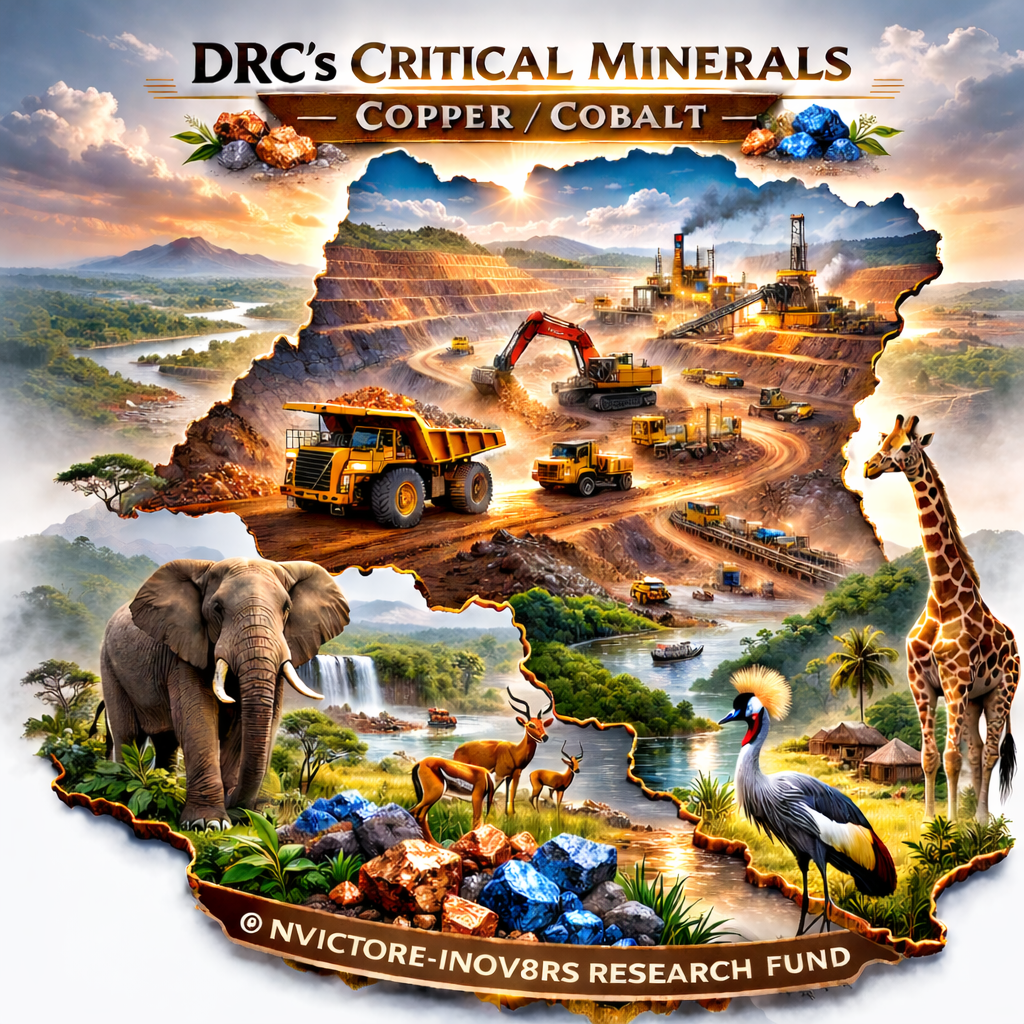
Gecamines is set to sell nearly half of Kamoto Copper Co.’s (KCC) copper output over the next two years, with an option to market 30% of production in subsequent years. This arrangement aligns with similar agreements Gecamines has formed with other major Congolese mines, where it maintains a minority stake.
In a significant development, Glencore PLC has agreed to sell a 40% share in its Democratic Republic of Congo copper and cobalt assets to the US-backed Orion Critical Mineral Consortium for approximately $9 billion, including debt. This transaction encompasses Glencore’s Mutanda Mining (Mumi) and Kamoto Copper Company (KCC) assets, which are among the leading Western-owned cobalt and copper producers in the DRC.
Additionally, the consortium has the option to sell its share of output to designated purchasers, while Glencore will continue to manage the daily operations of the mines.
This agreement underscores Washington’s increasing concern regarding supply chain risks, particularly its dependence on China for essential minerals utilized in renewable energy, electric vehicles, and defense technology.
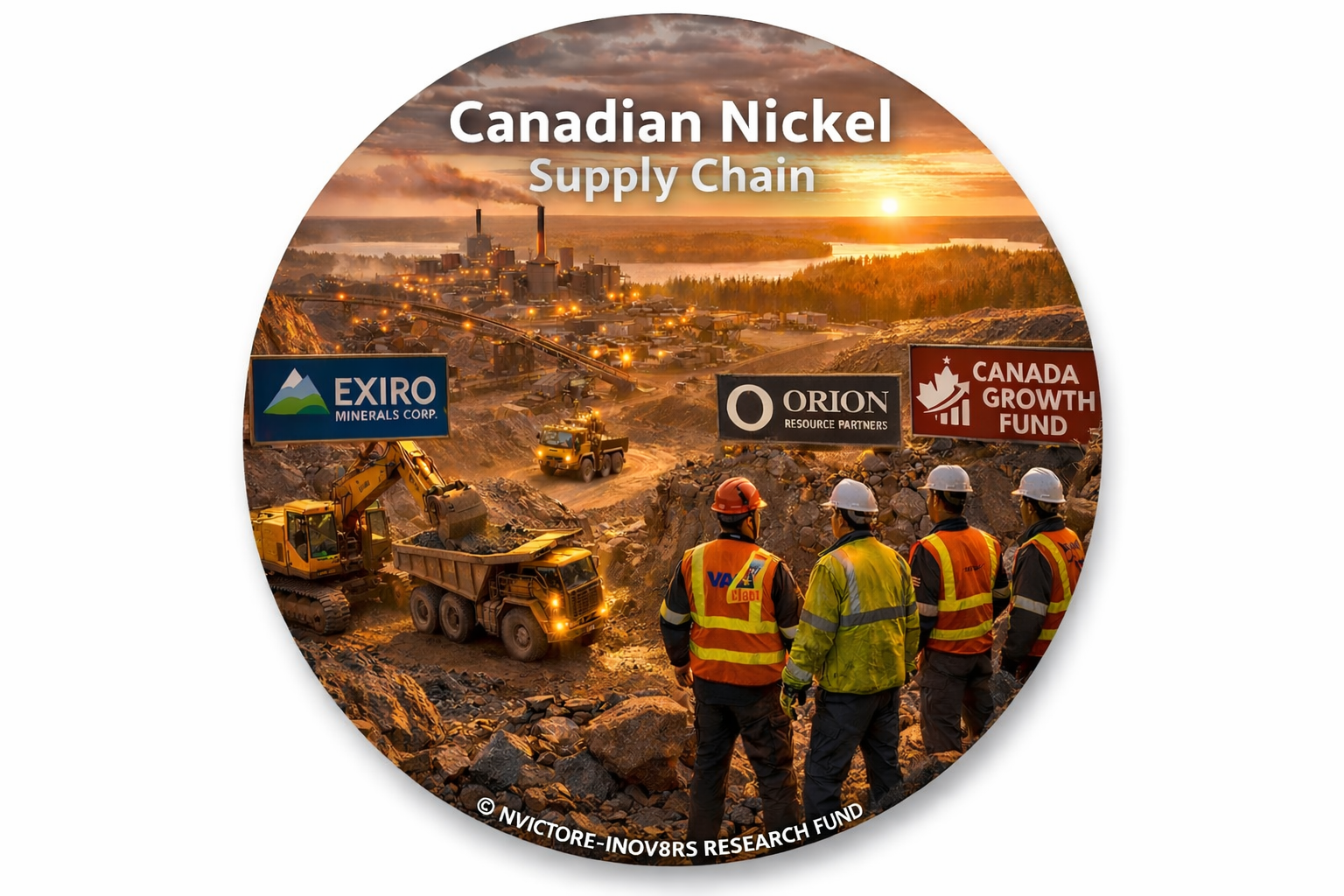
Vale SA agreed to sell most of its stake in a Canadian nickel venture to Exiro Minerals Corp., Orion Resource Partners LP and Canada Growth Fund Inc. as part of an optimization of its metals business.
The Brazilian iron ore miner’s Vale Base Metals unit signed an agreement to create a new consortium of owners for the Thompson Nickel Belt operations in Manitoba, it said in a statement Thursday. Exiro, Orion and CGF will own about 81% of the new company, with Vale retaining 19%.
The consortium partners will form a new company called Exiro Nickel Company and committed to investing as much as $200 million at Thompson. Vale Base Metals signed an offtake agreement for concentrate produced at the Thompson Mill, thereby maintaining its status as Canada’s top nickel supplier.
In-situ carbon injection pilot successfully sequesters 12 tonnes of CO2 at the Crawford Nickel Project.
This initiative operates independently of Canada Nickel’s In-Process Tailings (IPT) Carbonation and NetCarb Programs, marking a significant advancement in the company’s carbon capture and storage capabilities. The results from this study will inform future post-mining carbon sequestration strategies, reinforcing Canada Nickel’s vision for a Zero-Carbon Industrial Cluster in the Timmins Region.
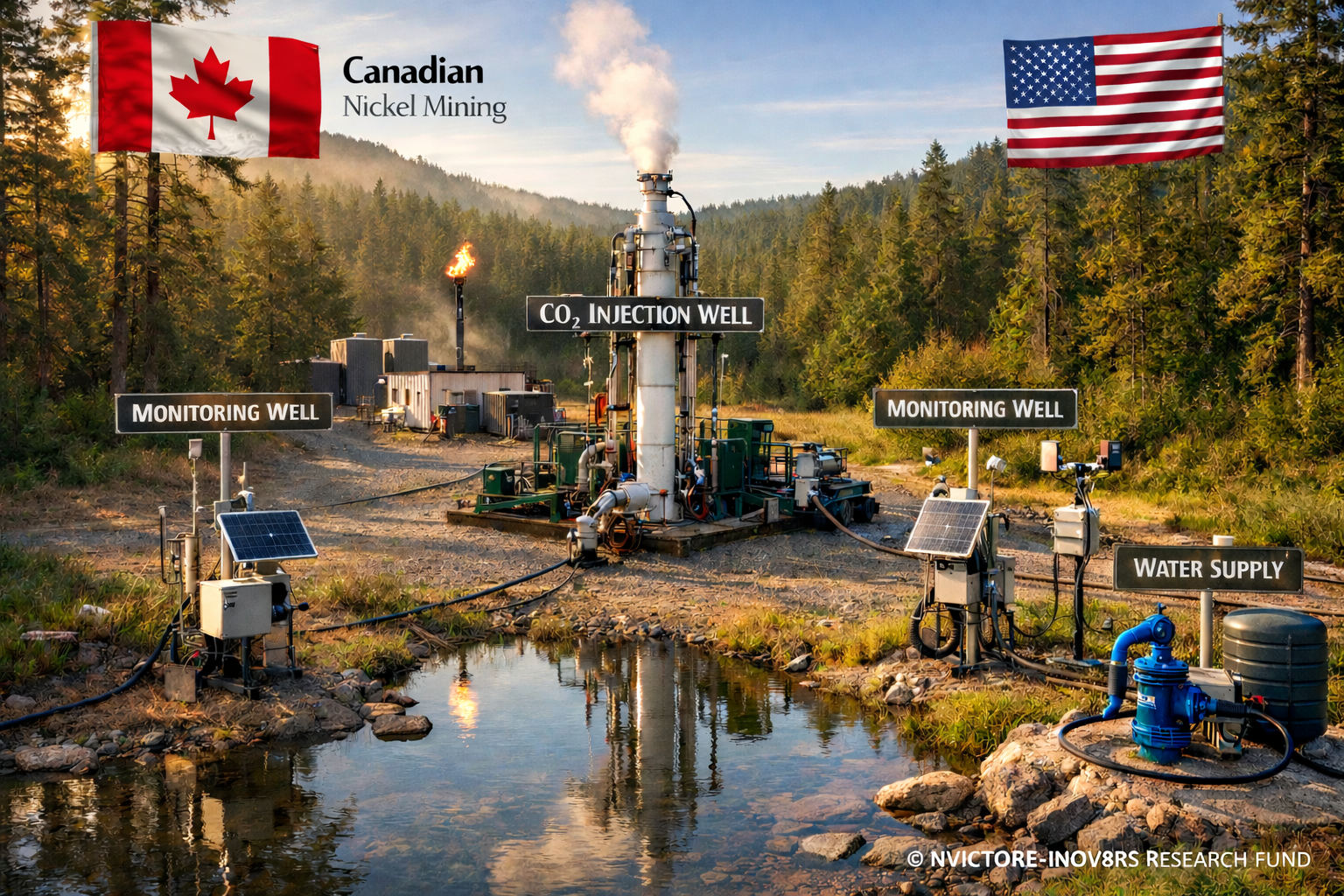
Conducted in collaboration with the U.S. Department of Energy’s Advanced Research Projects Agency – Energy (DOE ARPA-E) funded team, led by Dr. Estibalitz Ukar from the University of Texas at Austin, the pilot project involved nearly two years of planning, laboratory experiments, and the deployment of an extensive monitoring network. The CO₂ injection field test took place from mid-November to mid-December 2025, with all data indicating a successful operation. Approximately 12 tonnes of injected CO₂ remained dissolved at depth, with no surface leakage detected.
The pilot project initiated short-duration injection trials starting on November 20, 2025, over a 12-day period, followed by continuous CO2-saturated water injection from December 2nd to December 18th. The injection well, drilled to a depth of 396m, confirmed that the injected CO₂ remained fully dissolved within the water column, with no upward migration observed.
The water used for dissolving carbon dioxide was sourced from an onsite well, and the well configuration included an injection well, a water supply well, four water monitoring wells, 12 surface seismic monitoring stations, and three seismic monitoring boreholes. Continuous monitoring for seismicity and potential CO₂ gas leakage revealed no significant seismic events and no CO₂ emerging from monitoring wells or through the sedimentary cover. Preliminary chemical analyses suggest that the injected CO₂-rich water has not reached the monitoring wells, aligning with predictions from reactive transport modeling. The absence of surface leakage strongly indicates that all the injected CO₂ remained at depth.
The US has developed a critical minerals price floor system that it’s pitching to allies as the Trump administration and more than 50 countries look to reduce dependence on China for the resources that are deemed critical to national security.
Under Secretary of State for Economic Affairs Jacob Helberg said multiple US agencies have developed the system and are having conversations with allies and partners. It’s the latest update to progress being made by the US and its allies to ringfence Western companies from China’s pressure on those markets.
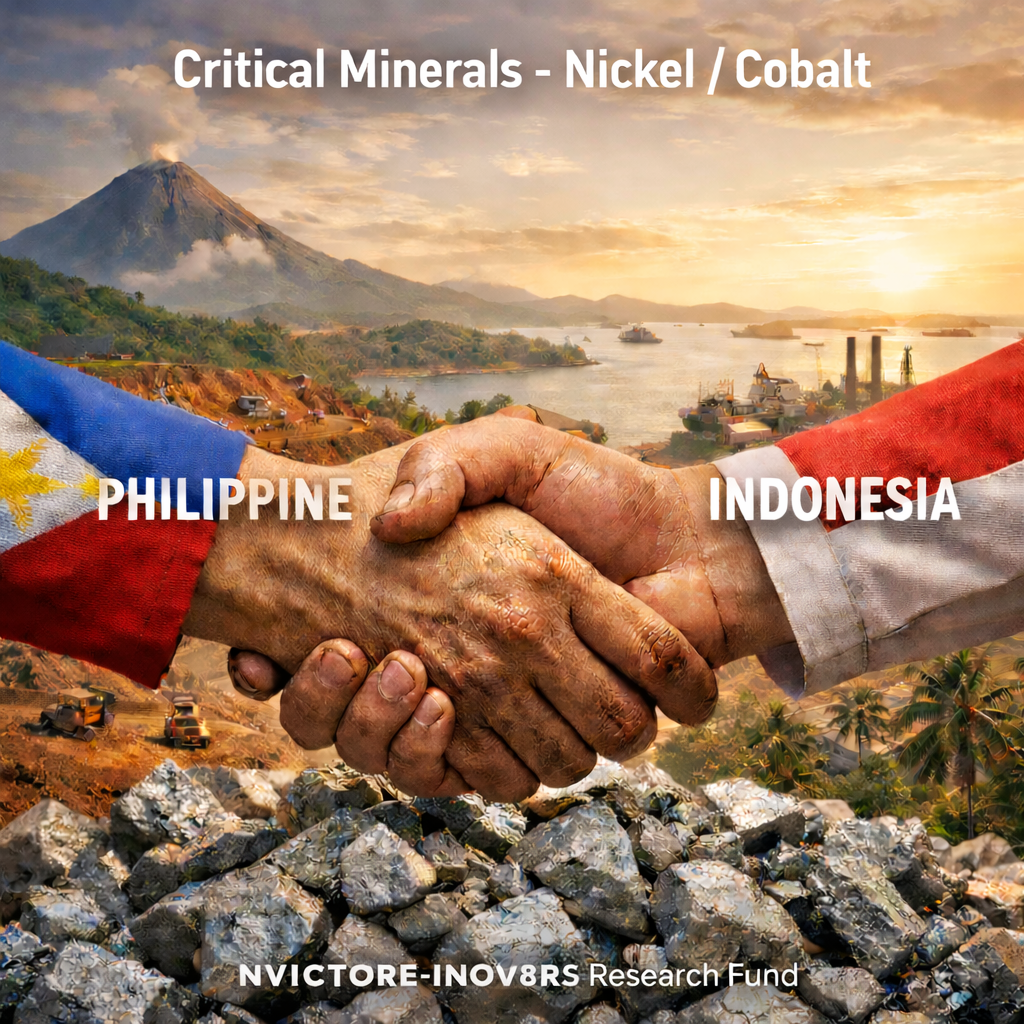
Premier nickel industry bodies of the Philippines and Indonesia have entered into a partnership to formalize a regional supply chain corridor, aiming to cement Southeast Asia’s dominance in the global energy transition.
The Philippine Nickel Industry Association (PNIA) signed a partnership agreement with the Asosiasi Penambang Nikel Indonesia (APNI), otherwise known as the Indonesia Nickel Miners Association, to outline the shared direction of both countries’ nickel mining industries.
Under the agreement, the PNIA and APNI sought to promote the IndoPhil Nickel Corridor, a unified platform designed to elevate the global significance of Indonesian and Philippine nickel.
The corridor is envisioned to build investment confidence, encourage policy dialogue, and promote responsible mining, especially as mineral resources are becoming the central component to the global energy transition.
“The corridor signals that Philippine and Indonesian nickel is developed with clearer standards and accountability,” PNIA Executive Director Charmaine Olea-Capili.
By bringing together industry leadership from PNIA and APNI, Olea-Capili said the initiative demonstrates that both the Philippines and Indonesia are committed to building a supply chain that other countries can rely on.
The Philippines is the second-largest producer of nickel in the world, trailing Indonesia. Combined, the two countries are estimated to account for around 75 percent of the global supply of the mineral.
Nickel plays a critical role in supporting strategic sectors such as energy, mobility, and infrastructure, as well as the green and digital transitions.
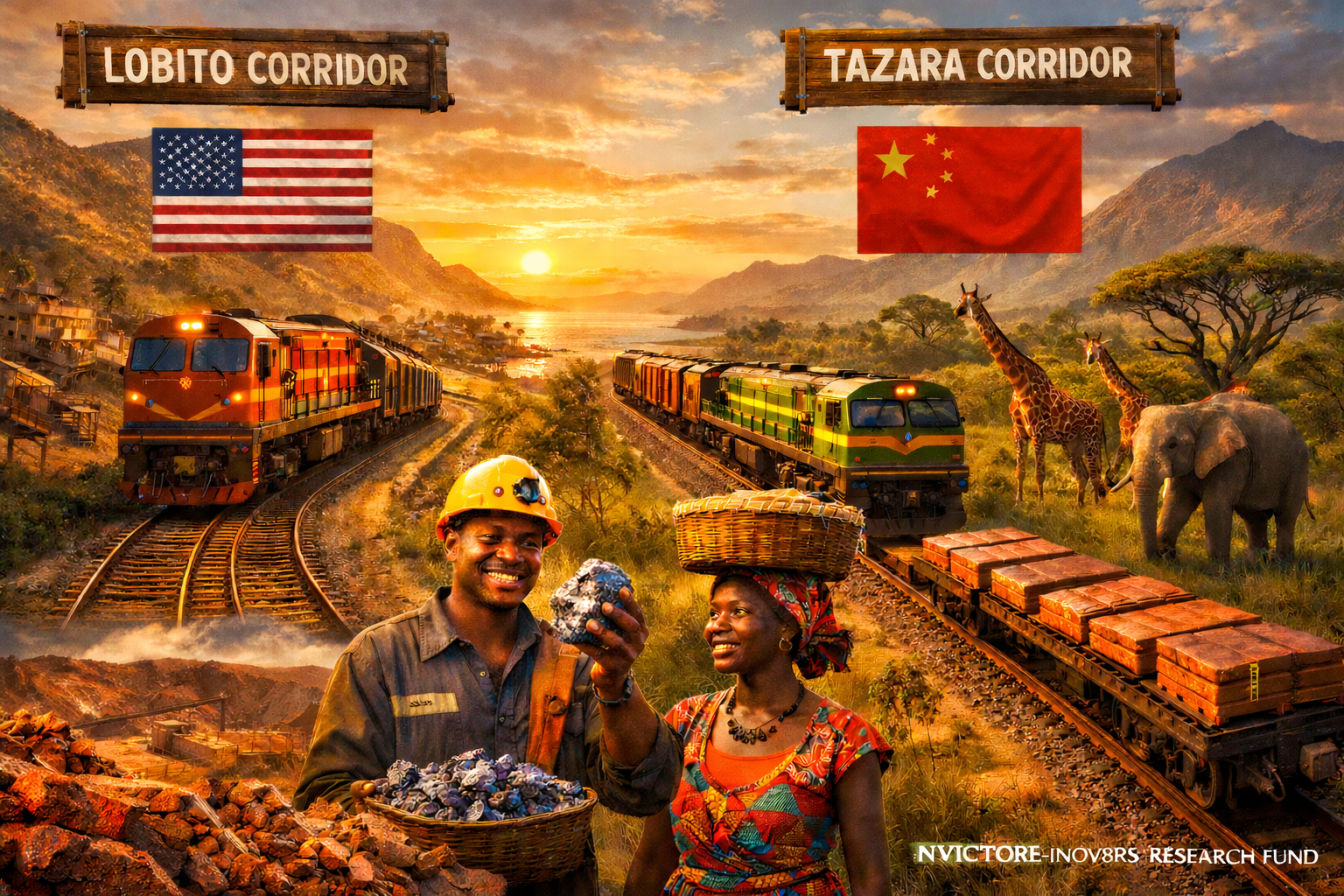
CAPE TOWN, Feb 12 (Reuters) – Two multi-billion dollar rail projects in Africa. One headed west, the other east. One backed by Western countries, the other by China. Both aiming to ship vast quantities of critical minerals. Welcome to the new scramble for Africa.
The Lobito rail corridor will cost up to $6 billion by the time it’s planned to be finished by 2030, with around 1,700 kilometres (1,050 miles) of track taking mainly copper and cobalt from the Democratic Republic of the Congo (DRC) and Zambia west to the Angolan port of Lobito.
Much of the funding is coming from the United States and Europe and aims to upgrade the existing railway and build new lines in order to boost the annual capacity to 4.6 million metric tons per year.
Heading the other way east to Tanzania is the TAZARA railway, a 1,860 kilometer line that links the same mineral-rich parts of Zambia and the DRC to a port on the Indian Ocean, which offers shorter sailing times to China and other Asian markets.
Similar to the Lobito project it is a rehabilitation of an existing colonial-era railway and its Chinese backers are slated to spend around $1.4 billion to upgrade its annual capacity to 2.4 million tons.
These two projects are emblematic of how the world’s great powers are seeking to source and control the minerals needed to power industrial economies and the energy transition.
But they also show the contrasting ways that Western countries and China are trying to achieve their aims of security of supply.
Stuck in the middle are African countries, blessed by their resource endowment but cursed by a lack of coordinated policies on how to ensure they are not exploited by stronger nations, as well as too often being hobbled by poor governance and an inability to offer consistent and reliable investment regimes.
What is different this time compared to the colonial conquest of Africa two centuries ago is that African countries have far more choice.
They can set the rules and decide who they want to partner with, and if they get it correct then they stand to benefit from increased investment, jobs and revenue from taxes and royalties.
The models being offered are slightly different, insofar as the Western countries largely prefer private operators, coupled with public partnerships and funding in order to build mines and transport infrastructure.
U.S. WOOS
One of the major shifts at this week’s Mining Indaba conference in Cape Town was how the United States has changed tack, eschewing the bombastic and combative rhetoric of President Donald Trump and trying to focus on promoting trade and investment.
It is perhaps a tacit acknowledgement that insulting countries that you need for their resources is not a winning policy, but U.S. officials were out in force touting their capital for investment and their willingness to effectively re-risk mining projects by guaranteeing offtake and prices.
If the United States does go down this path, and African countries can look past the prior Trump insults and gutting of U.S. aid, there is a real possibility that new mines and infrastructure will proceed.
The planned U.S. “vault” of critical minerals will need African resources and a meeting of more than 50 countries last week shows the Trump administration appears to be serious about building and securing supplies of metals.
Will the efforts by the United States, and to a lesser extent the European Union, be enough to wean African states from Chinese investment, which has tended to be more all-encompassing as Chinese companies explore, build, operate and transport minerals.
An example is the massive Simandou iron ore mine in Guinea, currently ramping up to its 120 million tons a year capacity.
For years the project languished as Western companies struggled to mount a viable economic plan to make it work.
But Chinese investment and technical skill has brought the project to life, albeit with a minority partner in Rio Tinto and the ore from Simandou will flow almost entirely to China as a result.
The Chinese also have a strong first-mover advantage in Africa, having been active for decades.
But the question for African countries is whether China’s investment in extracting the continent’s minerals has been mutually beneficial, or whether it has been skewed towards Beijing.
The follow-up question is whether Western countries and their trading and mining companies will offer anything substantially better.
What is almost certain is that more investment is heading to exploit Africa’s mineral endowment, which will boost competition and de-risk projects.
Is the prize big enough to make everybody a winner? Yes, but it will take considerable effort and cooperation and the track record for that in Africa is patchy at best.
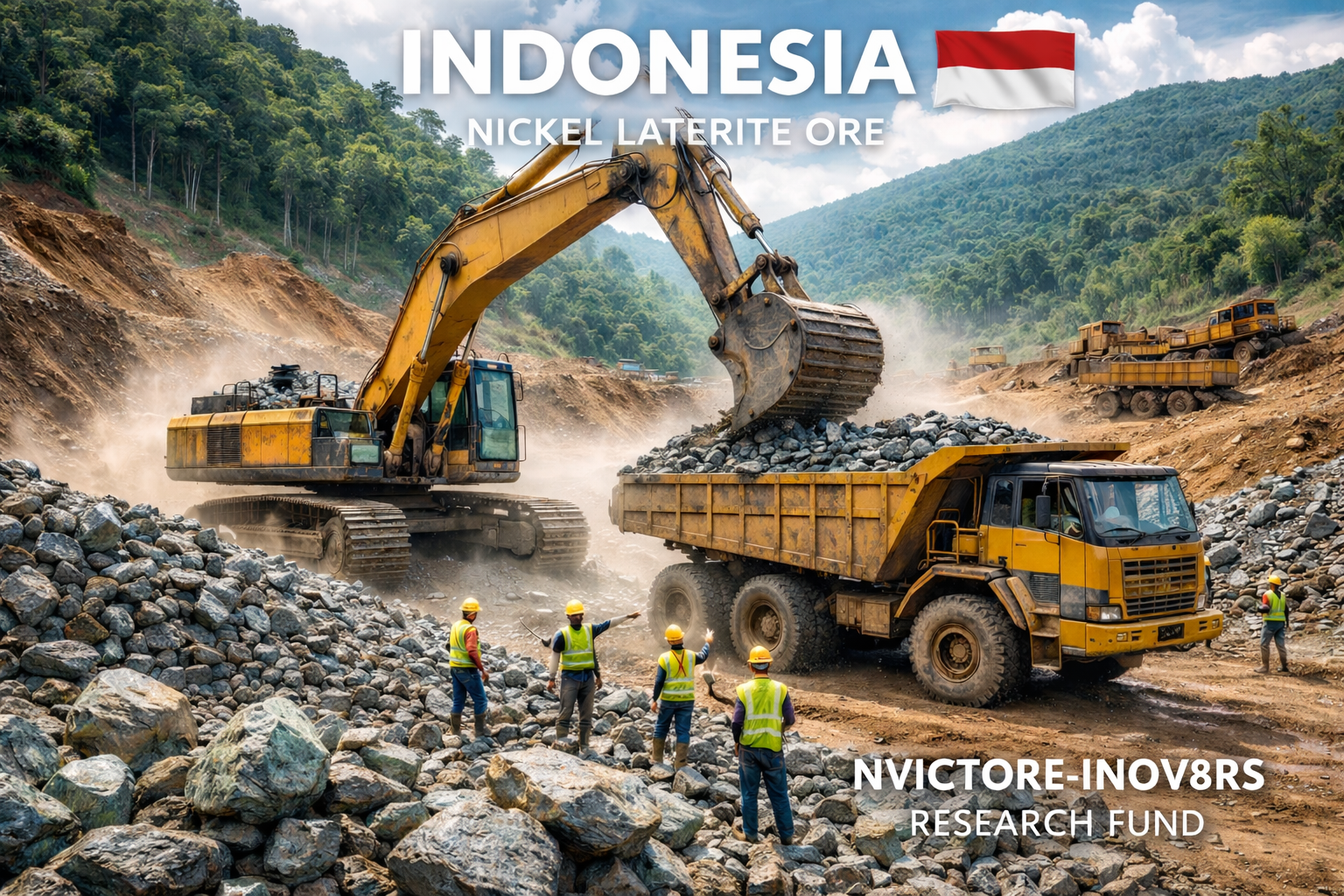
Indonesia has been taking drastic steps to boost prices of its biggest export commodity, largely through scaling back volumes that key miners are allowed to produce. Before the latest round of cutbacks, supply from the country had risen to about two-thirds of global production, creating a surplus.
The country will issue production quotas of between 260 million and 270 million tons of nickel ore this year, Director General of Minerals and Coal Tri Winarno said. That’s slightly above a previous estimate of 250 million to 260 million tons, but well below the 379 million tons targeted in 2025.
Though higher than the earlier estimate, volumes below 270 million tons are still seen as bullish for prices, said Fan Jianyuan, an analyst with Shanghai-based consultancy Mysteel Global, adding that quota issuance should be completed by March.
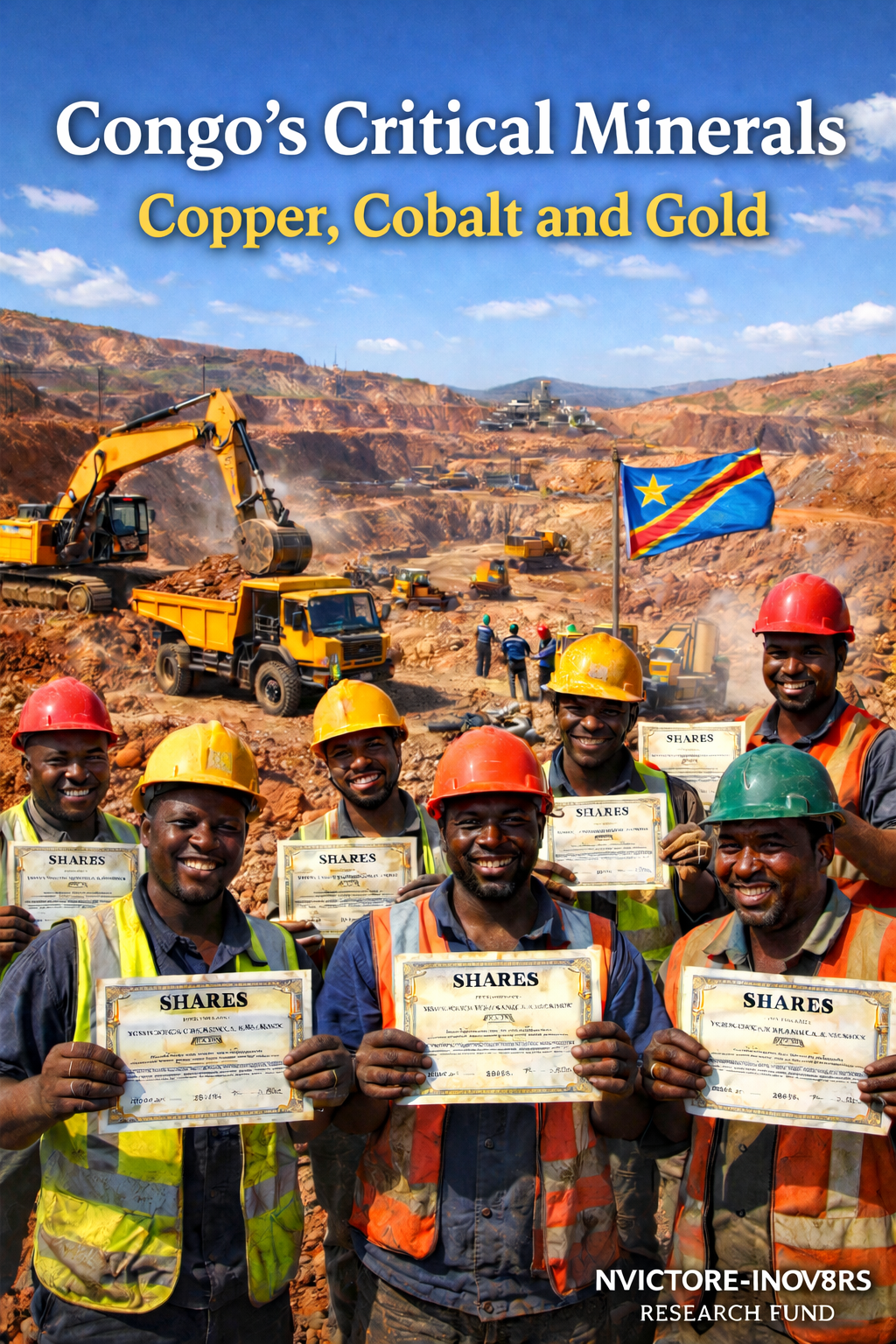
Democratic Republic of Congo will enforce a long-dormant rule requiring local employee ownership for mines in a move that may rebalance shareholdings in some of the world’s biggest copper and cobalt producers.
In a letter dated Jan. 30 and addressed to miners of all metals in the country, Mines Minister Louis Watum said firms must demonstrate that 5% of their share capital is held by Congolese employees.
The decision could affect multiple industrial mining projects in the central African nation, which provides about 70% of cobalt supply and is the second-largest copper producer. Glencore Plc, CMOC Group Ltd., Ivanhoe Mines Ltd., Eurasian Resources Group and Zijin Mining Group Co. are among the country’s biggest miners. Barrick Mining Corp. operates one of Africa’s largest gold mines in the country, which also has vast deposits of lithium, tantalum, tin and zinc.
The move comes amid ongoing negotiations between the Trump administration and Congo that could see more US companies invest in the country’s mining industry, which has previously been dominated by Chinese enterprises.
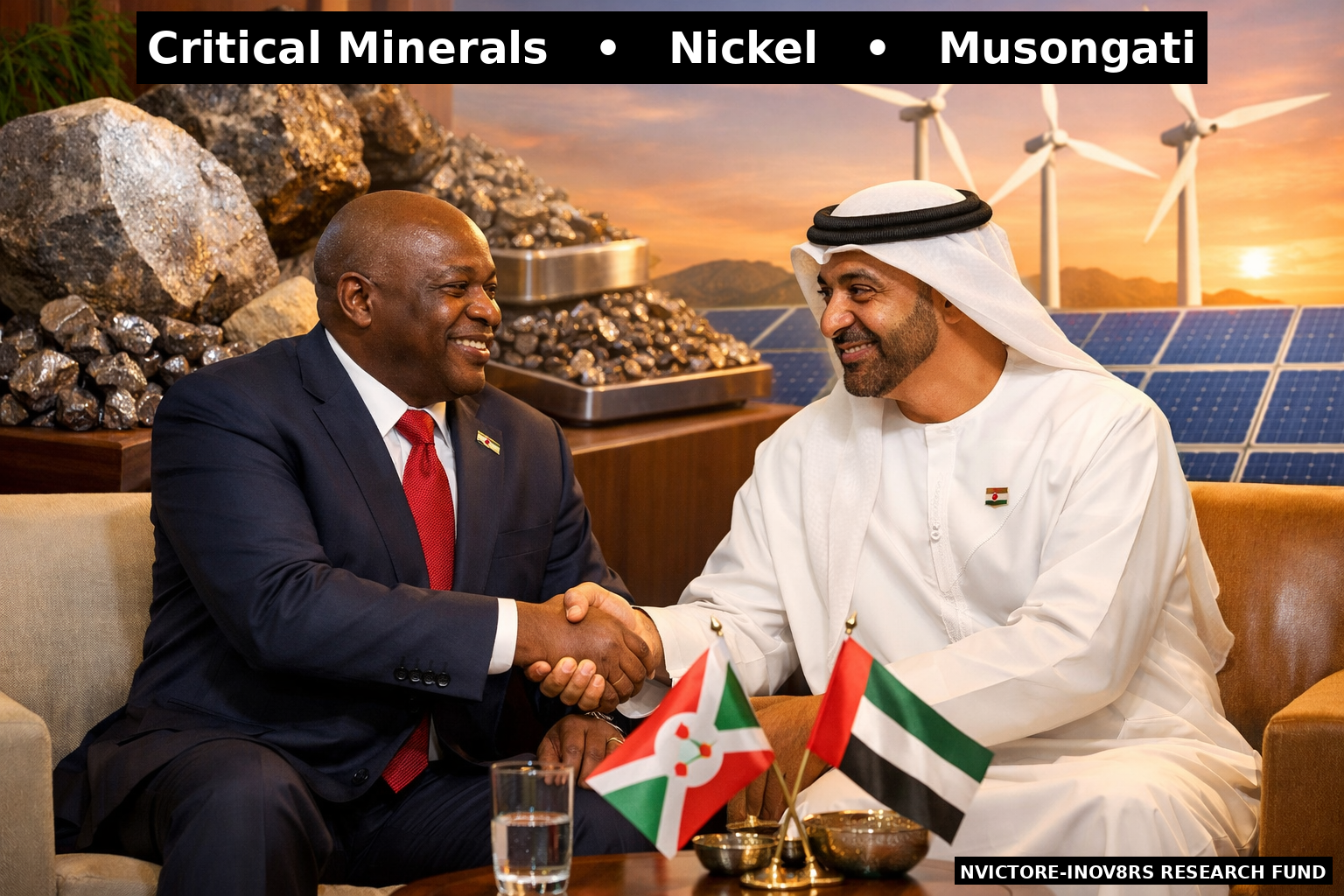
President Evariste Ndayishimiye of Burundi has launched an ambitious move seeking enhanced cooperation with the United Arab Emirates.
During the World Governments Summit, Gen. Ndayishimiye was received by the President of the United Arab Emirates, HE Mohammed bin Zayed Al Nahyan.
“They discussed issues of diplomatic and economic cooperation within a win-win partnership,” Burundi presidency said shortly after.
A highly isolated Burundi with it’s entire western frontier closed off due to frozen relations with Rwanda since 2015 and an ongoing war in DRC, Ndayishimiye badly needs to look beyond the border for new friends.
Burundi is considering securing investments into the country’s critical minerals sector.
Burundi’s critical mineral resources, particularly its rare earth elements, niobium, and tantalum, are positioned to play a significant role in the global energy transition.
These minerals are crucial for the production of renewable energy technologies, including solar panels, wind turbines, and energy storage systems.
Burundi’s rare earths and nickel deposits, still underexplored, have the potential to attract international investment and boost the country’s role in the mineral supply chain.
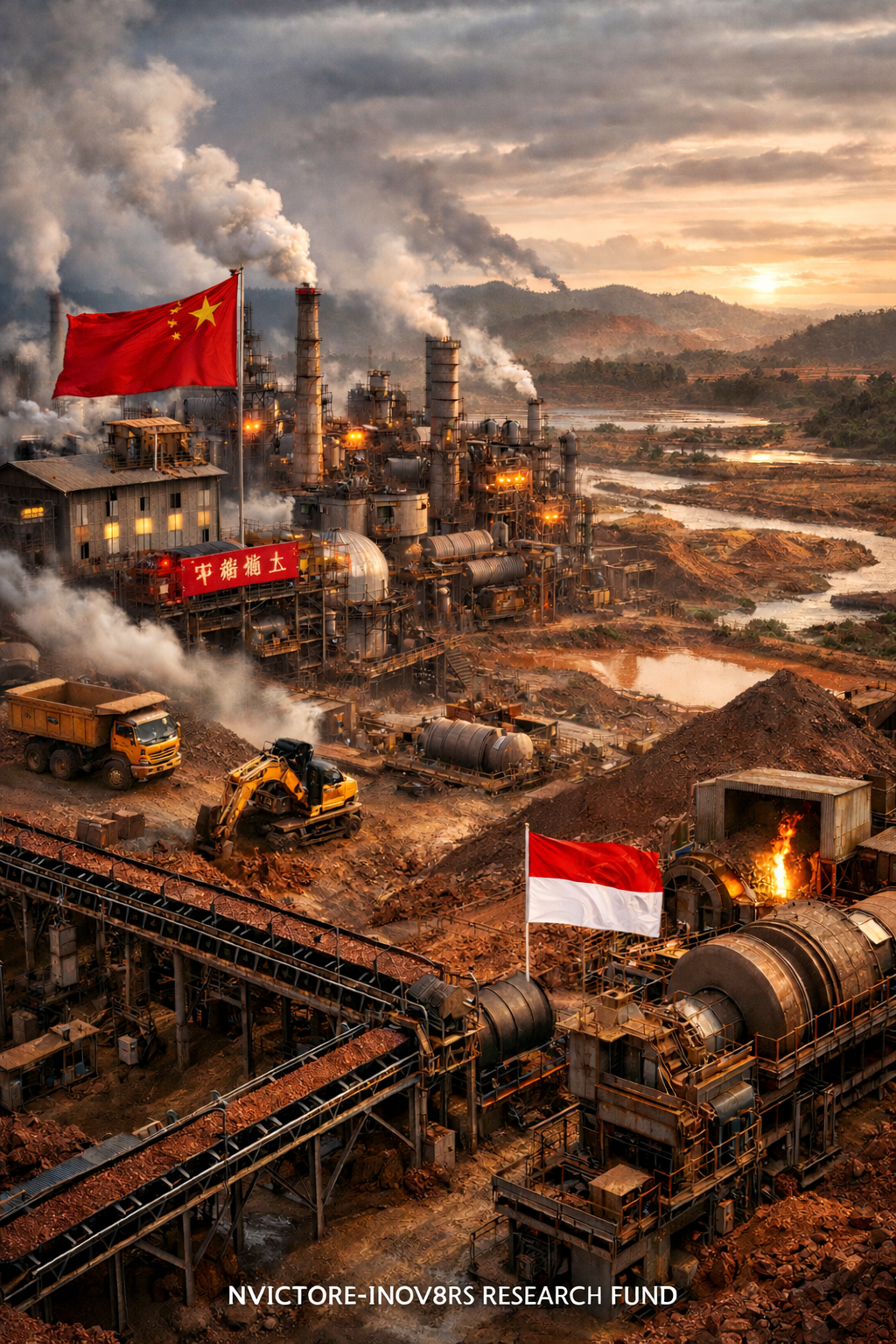
Over the past decade, Indonesia has become the world’s largest processor of nickel, driven in large part by Chinese investment. Industrial estates expanded rapidly in Sulawesi and eastern Indonesia, driving an export boom. Indonesia moved closer to its goal of capturing more value from its mineral resources rather than exporting raw ore.
This outcome followed deliberate policy choices. Jakarta banned the export of unprocessed nickel, expedited permit approvals and promoted downstream processing as a national priority. Chinese firms responded with capital, engineering capacity and speed. The arrangement aligned mutual interests and reshaped global nickel supply.
This scale of investment now underscores the urgent need for robust governance to protect national interests.
Failure to enforce a core reporting obligation for years reveals a critical regulatory gap. If rules are not followed, institutional oversight breaks down and Indonesia’s authority over its strategic nickel sector is weakened.
The environmental implications are immediate. Nickel processing is energy-intensive and often relies on coal. Industrial expansion can increase deforestation, water stress, and flood risk if controls weaken. Central Sulawesi has already experienced environmental pressure around industrial zones. Effective monitoring depends on accurate, routine reporting.
Indonesia’s advantage lies not only in its nickel reserves but in its ability to govern them. Natural resources create opportunity; institutions determine outcomes.
The next phase of China-Indonesia economic cooperation will test that capacity. Industrial ambition has delivered rapid gains for Indonesia. Sustaining them will depend on disciplined enforcement, clear data and consistent oversight.











 A Blog for Browsing Mining, Mineral Processing, and Metals Info