Two new initial resources for Canada Nickel’s (TSX-V: CNC; US-OTC: CNIKF) sulphide deposits in northern Ontario now make its Timmins Nickel District the largest undeveloped nickel base in the country and among the largest globally by contained metal.
The Bannockburn deposit hosts 63 million indicated tonnes grading 0.28% nickel for 180,000 tonnes of contained metal, and 129 million inferred tonnes at 0.27% nickel for 340,000 contained tonnes, the company reported Thursday.
Midlothian holds 595 million inferred tonnes grading 0.28% nickel for 1.68 million tonnes of nickel.
Those resources bump the total contained nickel across the company’s eight projects by about 12% to 20.9 million tonnes.
Globally, the Timmins District tops The Metals Company’s (Nasdaq: TMC) resource for its seabed Clarion-Clipperton Zone project that hosts an estimated 15.5 million contained tonnes of nickel and other critical metals.
The four decades that China spent building dominance in the small world of critical minerals is proving frustratingly hard to overcome.
Energy independence was for decades a fantasy in the US, until the advent of a new kind of oil production technology in the early aughts changed the rules of the game. Thanks to fracking and horizontal drilling, the US overtook petroleum heavyweights such as Russia and Saudi Arabia to become the world’s top oil producer, no longer at the mercy of mercurial trading partners.
Today, President Donald Trump’s White House is chasing a similar dream—this time with rare earth elements, the hard-to-pronounce metals that underpin much of modern technology. But unlike with shale oil and gas, it’s extremely unlikely the US is going to be able to innovate its way out of this profound deficit anytime soon.
Washington must move even faster to bolster critical minerals projects and offset Beijing’s grip on the world’s supply of the building blocks for electronics, weapons and a range of other goods, three U.S. mining and refining executives said on Thursday.
The push underscores how Washington’s surging support this year for the sector – including taking stakes in mining companies and guaranteeing a price floor for the only U.S. rare earths mine – is falling short of what industry leaders say is needed amid intense Chinese competition.
Executives from Perpetua Resources, American Rare Earths and Westwin Elements told the Reuters NEXT conference in New York that the U.S. government should release a comprehensive minerals plan, pressure Indonesia to trim nickel production, and speed up the time for the U.S. Export-Import Bank and other agencies to approve loan funding, among other steps.
Presently, there are a few small Indian companies engaged in manufacturing rare earth magnets. The industry needs a big push to feed the new generation of industries – from electric vehicles to fighter aircraft engines, wind turbines, and laptops to mention a few. Lately, it has come into a big focus as the world is moving towards electric vehicles. Rare earth magnet is a crucial component of electric vehicles (EVs). Fortunately, India has large rare earth deposits. Globally, it ranks third after China and Brazil.
The demand for rare earth magnets in India is expected to increase sharply in the coming years, driven by the expansion of EV manufacturing, increasing electronics output, defence production, industrial automation and renewable energy generation. For the present, the country uses rare earth magnets to the extent of 4,000 tonnes per year, mostly through imports. Among the companies currently manufacturing rare earth magnets in India are: IREL (India) Limited, Permanent Magnets Limited, Ashvini Magnets Private Limited, Star Trace, Eriez Magnets, Kumar Magnet, Sonal Magnetics, A to Z Magnet Mfg. Co. and Pragati Enterprises. The demand for rare earth magnets is projected to double by 2030. Lately, China has imposed restrictions on exports. Earlier this year, China slapped export licenses for seven types of rare earth elements and derivative products.
Canada is entering a pivotal era, one in which leadership in critical minerals will determine our economic resilience and national security as global supply chains shift away from dependence on China.
Nickel is at the centre of this race and one of the resources in which Canada can once again become a global leader. The federal government’s referral of the Crawford Project to the Major Projects Office makes it clear that Ottawa understands the importance of what is unfolding in northeastern Ontario.
Rare earths company MP Materials is partnering with the US military and Saudi Arabia’s flagship mining company to build a rare earth refinery in the Kingdom, in a move that aims to diversify the global critical minerals supply chain.
Saudi Arabian Mining Company (Maaden) and the Pentagon will create a joint venture to process rare earth materials from Saudi Arabia and other parts of the world to supply the US and Saudi manufacturing and defense sectors.
North Americans and Europeans need reliable processes to refine both light and heavy rare earth metals.
The processes currently available in North American and Europe to refine light and heavy rare earth elements do not meet the economic and environmental standard.
Prior to going into mining in unexplored part of the world:
1. We need immediate research and development to improve the existing technologies.
2. Build refineries in the existing mines with infrastructure using developed technologies.
3. Take the price control of the Rare Earth Elements by tariffs or other means until the local refineries optimize the refining processes and operating cost.
We do not want to send the concentrate to another country to do final refining.
Process Development:
“Two different rare earth elements may be fractions of an angstrom different in diameter — that means it’s very difficult to separate using physical means. The processes that are used right now … can be 100 steps,” Chrisey said, also noting that the procedure can be very expensive and environmentally hazardous due to the chemicals used to separate and purify the metals.
Molycorp was struggling to stay solvent. Those new innovative technologies? They didn’t generate significant revenue or work as designed. By 2013, the company’s revenues were in free fall.
Molycorp’s most profitable assets being transferred to Chinese-linked Neo Materials, where he formerly served as CEO. Molycorp’s final remaining husk declared bankruptcy in 2014. Unsurprisingly, the majority of Neo Materials’ revenue-producing operations are now in China. To make matters worse, the Mountain Pass mine was purchased out of bankruptcy by a consortium that included a Chinese-owned firm.
Mountain Pass was now sending U.S.-mined rare earth concentrate to China for processing. The dream of a one-stop American rare earths solution was over, and the private sector had little appetite for reviving it.
Crucial innovation is also needed to break China’s stranglehold on the sector without sacrificing environmental quality, industry analysts said, with concerns over current processes’ toxic waste impeding projects.
Technical complexities, partnership strains and pollution concerns are hampering companies’ ability to wrest market share away from China, which according to the International Energy Agency controls 87% of global rare earths refining capacity.
Late last year, U.S.-based MP said it was commissioning refining equipment near its California mine as part of an intricate calibration process that has so far not succeeded, leaving the company reliant on China for refining and thus nearly all of its revenue.
The town of Mountain Pass, California, is home to the largest rare-earth element mine in the U.S. Its story began in the 1940s, when prospectors went searching for uranium.
The U.S. contains potential sources for many of them, and powerful voices in politics and business insist that the country must exploit them. But despite skyrocketing demand for the energy-critical elements, would-be domestic producers just can’t compete with global forces. This then is a story of comprehensive failure — but not the obvious one. Molycorp’s impending demise reflects failure by politicians and the media to understand how weak China’s grip on the metals market really is, and failure by Wall Street to understand the most basic dynamics of supply and demand, and failure by Silicon Valley to distinguish between hype and hard numbers.
China’s refining expertise has allowed the country to engineer rare earths prices at different stages in the processing chains to its advantage, including low prices for finished products, to inhibit foreign competition.
Beijing for years has allowed imports of lightly processed rock known as rare earths concentrate for refining. The strategy helps ensure prices that incentivize other countries to dig new mines but not build processing plants.
China plans to prohibit non-state companies from mining rare earths, further tightening its control over a strategic sector that has emerged as a battleground in its trade war with the US. The government said only large state-owned groups can mine, smelt or separate the minerals and proposed banning private firms from the activities, according to draft rules issued by the Ministry of Industry and Information Technology.
Tariffs will disrupt the long-standing flow of nickel between Canada and the US
Canada is the single largest supplier of nickel metal to the US market, typically delivering between 35–40% of the United States’ annual primary nickel requirements over the past decade according to trade statistics and CRU’s Nickel Service. However, US President-Elect Donald Trump has announced potential 25% tariffs on Canadian imports, threatening to disrupt the flow of nickel across the border.
This will not only have a negative impact on the Canadian nickel industry, which is already struggling with high costs amid a global market in chronic surplus, but also on the US industry that needs a stable and secure source of high-purity nickel in a world that is increasingly dominated by China.
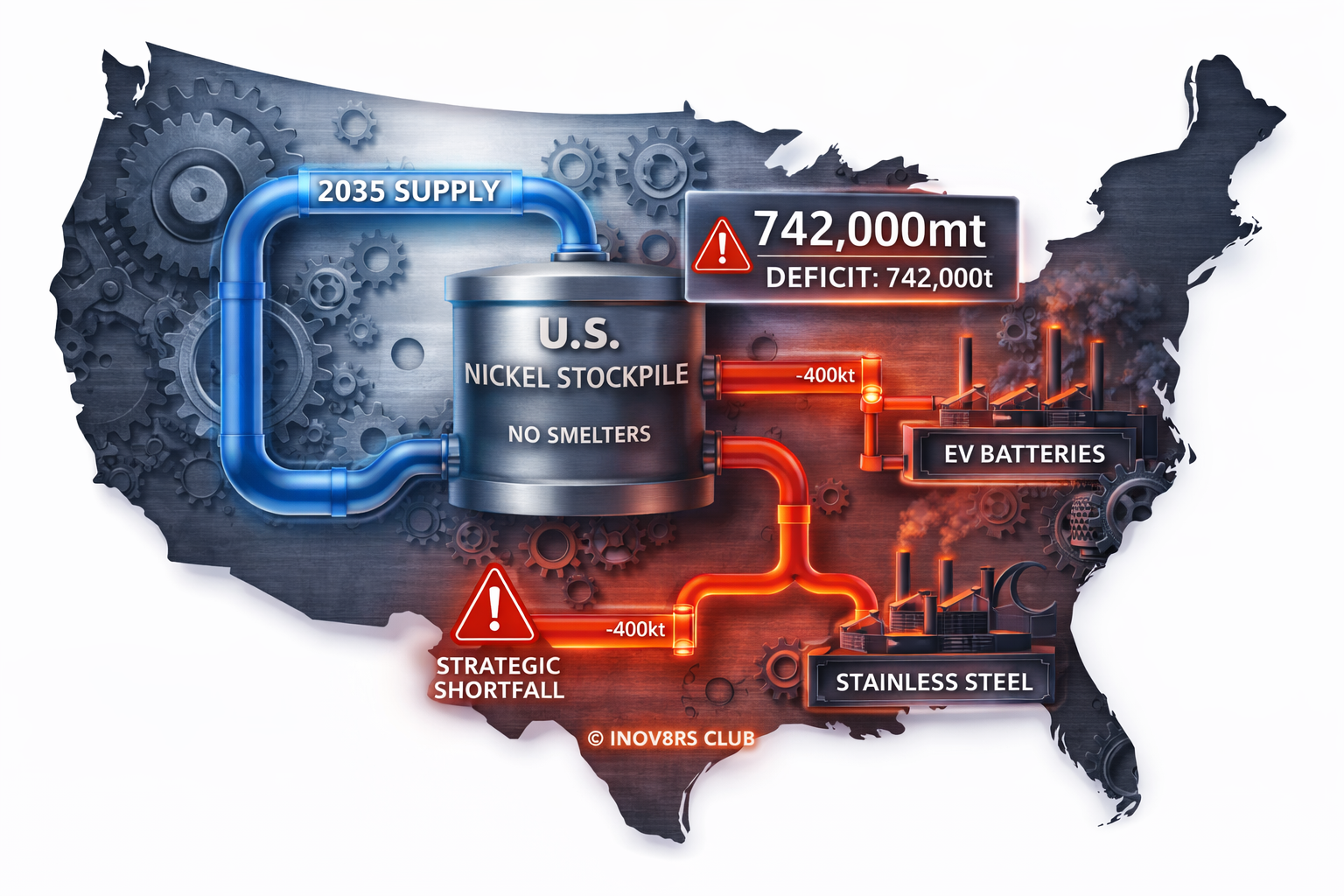
US market has no domestic nickel industry and is fully reliant on imports
In the US, nickel is largely used to make stainless steel followed by uses in foundry, alloying and plating applications – very little nickel is used domestically in battery applications. When it comes to stainless steel, the US has a mature scrap collection and distribution network meeting more than 80% of stainless-steel nickel requirement. The remainder needs to be secured by purchasing ferronickel or high-purity nickel. For all other applications, high-purity nickel is required.
The US has one operating nickel mine located in Michigan, owned by Lundin. This mine produces a concentrate that is exported, given the US has no domestic nickel smelters or refineries with the capability to process nickel-bearing concentrates. However, this mine is anticipated to exhaust its production by the end of 2025, leaving the US with no domestic nickel industry. As a result, the US will be completely reliant on imports to meet its primary nickel requirements.
Depending on the permanence of tariffs, US domestic nickel refining may become an attractive proposition and there is at least one company with plans to build a carbonyl nickel refinery producing high-purity nickel. However, the challenge this plant will have is sourcing intermediate feed.
Tariffs will push Canadian nickel to other markets
Although Canada is home to several large nickel producers, only one has the right surface assets and ore sources to be able to supply the US market from Canada. Vale produces high-purity nickel from its Sudbury and Long Harbor operations. However, its Canadian assets sit in the third and fourth quartile of CRU’s Net Cash Cost Excl. Royalties Industry Costs Curve.
Despite being positioned near the top of the cost curve, Vale’s operations appear to be able to turn a profit at YTD prices. However, when simulating for the impact of tariffs, Vale’s operations come under tremendous pressure.
The Canadian province of Saskatchewan has vowed to compete with China in processing and production of rare earths and become the first North American commercial alternative source for the metals, used to make magnets for electric vehicles and wind turbines.
The Saskatchewan Research Council Rare Earth Processing facility is betting on demand for these magnets to jump in the next couple of years, driven by demand from original equipment manufacturers such as automakers.
The SRC Rare Earth processing facility has begun production on a commercial scale and expects to hit a production target of 40 tonnes of rare earth metals per month by the end of this year. And it will produce 400 tonnes of the NdPr metals per year, which is enough to produce 500,000 EVs, according to SRC. The facility has already tied up with potential clients in South Korea, Japan and the United States.
China’s Ministry of Industry and Information Technology on Wednesday issued new guidelines for its lithium-ion battery industry, aiming to transform, upgrade and promote high-quality development amid rapid expansion in the sector.
The guidelines, following a proposal in May, will help firms scale back manufacturing projects that only expand production capacity, while enhancing technology innovation and product quality and trimming output costs, the ministry said.
Projects built on farmland and ecological zones would be required to be shut down, or strictly reined in and gradually removed.
Rapid expansion of production capacity along the lithium battery supply chain has led to a plunge in prices for products, including battery and raw materials, eroding companies’ profits in the world’s biggest market.
Industry planning and launch of new projects should be in line with national development of resources, ecological protection and energy saving management, the ministry said.