Category Archives: Technology

#Chile plans to nationalize its vast #Lithium industry

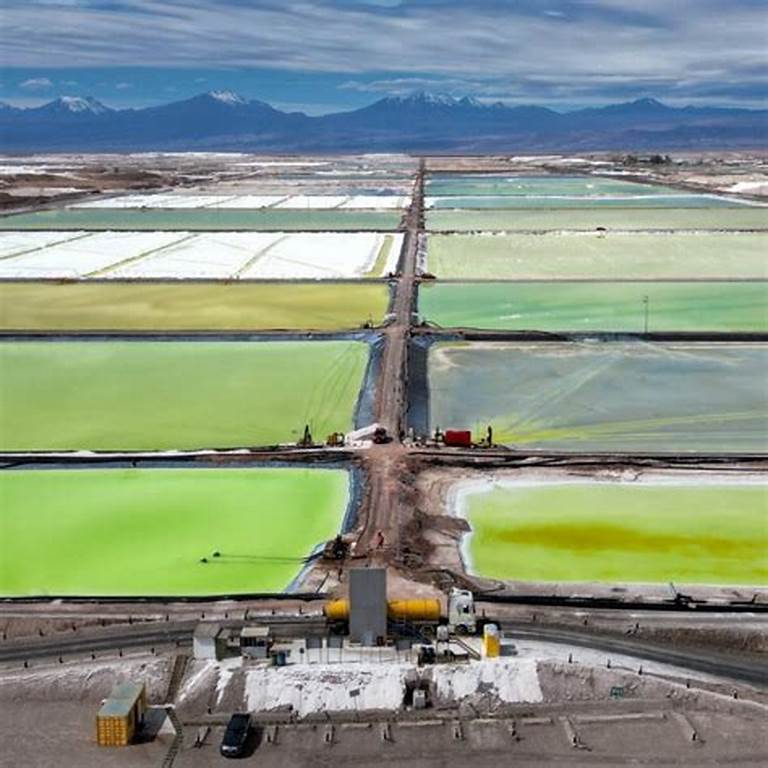
SANTIAGO, April 20 (Reuters) – Chile’s President Gabriel Boric said on Thursday he would nationalize the country’s lithium industry, the world’s second largest producer of the metal essential in electric vehicle batteries, to boost its economy and protect its environment.

The shock move in the country with the world’s largest lithium reserves would in time transfer control of Chile’s vast lithium operations from industry giants SQM and Albemarle to a separate state-owned company.

It poses a fresh challenge to electric vehicle (EV) manufacturers scrambling to secure battery materials, as more countries look to protect their natural resources. Mexico nationalized its lithium deposits last year, and Indonesia banned exports of nickel ore, a key battery material, in 2020.

“This is the best chance we have at transitioning to a sustainable and developed economy. We can’t afford to waste it,” Boric said in an address televised nationwide.

Read more at: https://www.reuters.com/markets/commodities/chiles-boric-announces-plan-nationalize-lithium-industry-2023-04-21/

#Fastmarkets: Proposal to launch #Asian black mass payable indicators: pricing notice

Fastmarkets’ proposal follows initial feedback that market participants demand a price reference for black mass, referring to the remains of a battery pack after shredding and processing.

South Korea is one of the major importing nations of end-of-life (EOL) electric vehicle (EV) black mass, as well as a significant importer of EOL scrap batteries for processing into black mass within its growing domestic market.

Spot market trading for EOL EV black mass materials is more prevalent and more mature in Asian markets than it is currently in both Europe and North America, according to market participants. In China, while there is a large domestic black mass market, importing these materials is officially prohibited.

Fastmarkets’ South Korean black mass payable indicators will assess the payables for EOL EV black mass produced from nickel, manganese cobalt (NMC) and nickel cobalt aluminium (NCA) batteries. NMC black mass is the chemistry which is most prevalent in the South Korean spot market, according to market sources.

NMC and NCA black mass is usually priced according to the value of their nickel and cobalt content, with these components comprising the largest non-graphite material share and being high in value. Both nickel and cobalt are materials vital for making EV batteries and have become extremely strategic markets in recent years.

Read more at: https://www.fastmarkets.com/insights/proposal-to-launch-asian-black-mass-payable-indicators-pricing-notice

China’s Newest Weapon to Nab Western Technology—Its Courts

Rulings nullify patents in industries it deems important, including technology, pharmaceuticals and rare-earth minerals.

The growing conflict between China and the U.S. extends from computer-chip factories to a suspected spy balloon over American skies. Running through it all is a struggle for technological superiority.

China has striven for years to develop cutting-edge technologies, in part through heavy spending on research. Now, according to Western officials and executives, it also has mobilized its legal system to pry technology from other nations.

Read more at: https://www.wsj.com/articles/u-s-china-technology-disputes-intellectual-property-europe-e749a72e

Electric vehicle sales are racing ahead, but is there a plan for the waste they create?

There’s a new venture taking place in a large, nondescript warehouse in Kingston, Ont.: Lithium-ion battery recycling. And it could be an important component of Canada’s net-zero future.

The facility, owned by Canadian startup Li-Cycle, houses stacks of depleted lithium-ion batteries that not long ago would have been destined for a landfill. The company is giving them new life — recycling the batteries that power most electric vehicles, phones and laptops.

Read more at: https://www.cbc.ca/news/business/electric-vehicle-battery-recycling-1.6695010

#Volkswagen Begins Search for Battery Plant Site in #Canada

Volkswagen AG signed an agreement to begin searching for a battery cell factory site in Canada as it plans a “rapid expansion to North America” of its electric vehicle battery business.

Canadian Industry Minister François-Philippe Champagne signed the document with Volkswagen on Thursday during his visit to Germany.

Read more at: https://www.bloomberg.com/news/articles/2022-12-01/volkswagen-begins-search-for-battery-plant-site-in-canada?leadSource=uverify%20wall

#Indonesia proposes to #Canada setting up #OPEC-like group for #Nickel

JAKARTA — Indonesia has proposed in talks with Canada establishing an OPEC-like organization for nickel producing countries, the Southeast Asian nation’s investment ministry said in a statement on Wednesday.

Indonesia and Canada are the first and sixth biggest nickel producers in the world, respectively.

The proposal was made when Indonesian Investment Minister Bahlil Lahadalia met Canada’s International Trade Minister Mary Ng on Tuesday on the sideline of the G20 summit in Bali.

Read more at: https://financialpost.com/pmn/business-pmn/indonesia-proposes-to-canada-setting-up-opec-like-group-for-nickel

#Glencore looking to trade #Lithium on soaring EV demand

Mining and commodity giant Glencore  is looking to add lithium to the suite of metals it trades, as the raw material is in hot demand due to the rapidly growing production of electric vehicles (EVs), two sources with knowledge of the matter said.

If it goes ahead, the Switzerland-based company’s trading team would be part of the zinc and copper business run by Jyothish George and Nick Popovic, the sources said.

Glencore declined to comment.

The company does not own lithium mines but produces copper, nickel and cobalt, other raw materials that it terms “commodities of the future,” as they are needed to manufacture batteries, electric cars and renewable infrastructure that will help the world transition to a greener economy.

Read more at: https://www.reuters.com/markets/europe/glencore-looking-trade-lithium-soaring-ev-demand-sources-2022-09-16/

Can #Indonesia’s electric car, battery sector have a smooth ride beyond #China?

  • US offers tax rebate for EV buyers whose vehicles’ batteries use minimal metal from ‘foreign entities of concern’, in reference to China, Russia firms
  • A lot of nickel, used for EV batteries, is from Indonesia, but experts say sector must become greener to gain more global market share.

A new regulation in the United States offering incentives to buyers of electric vehicles with battery components only minimally made by “foreign entities of concern” has paved the way for Indonesia to expand its burgeoning EV battery industry beyond the Chinese market.

However, the nation’s lacklustre green energy revolution may dampen that prospect in the future, analysts said.

The US Inflation Reduction Act (IRA), passed into law last month, offers a tax rebate of US$7,500 for EV consumers whose vehicles undergo final assembly in North America, and if their batteries use minimal metal components from “foreign entities of concern”, in a veiled reference to Chinese and Russian companies.

At least 40 per cent of the important metals in the EV battery, including lithium, nickel, cobalt and manganese, must also come from the US and its Free Trade Agreement partners. That percentage will rise to 80 per cent by 2026, according to Reuters. The new law will be effective until at least 2032.

There will be implications for Indonesia, “directly or indirectly, considering that China-made batteries imported by the US use Indonesian nickel”, said Putra Adhiguna, a Jakarta-based energy analyst in the transport sector at the Institute for Energy Economics and Financial Analysis. “But at this point in time, it’s unclear what the magnitude of that implication will be.”

While currently the largest markets for EV batteries are China and the European Union, “the Chinese market is still twice or three times bigger than the US market now,” Putra said.

But, Putra said that in the future, the US will be a “significant market” for nickel producers.

“The US is a significant growth market, so if they block products from China, and implement additional measures such as the IRA, our nickel industry’s future growth will feel the impact of the US’ drive to localise the EV supply chain.”

Read more at: Can Indonesia’s electric car, battery sector have a smooth ride beyond China? | South China Morning Post (scmp.com)

New cathode design solves major barrier to better lithium-ion batteries

Researchers at the U.S. Department of Energy’s (DOE) Argonne National Laboratory have a long history of breakthrough discoveries with lithium-ion batteries. Many of these discoveries have focused on a battery cathode known as NMC, a nickel-manganese-cobalt oxide. Batteries with this cathode now power the Chevy Bolt.

The team at Argonne National Laboratory developed a method for producing boundary-free single crystals. Testing of small cells with such single-crystal cathodes at very high voltage showed a 25% increase in energy storage per unit volume, with almost no loss of performance over 100 cycles of testing. By contrast, over the same cycle life, the capacity declined by 60% to 88% in NMC cathodes composed of single crystals with many internal boundaries or with coated polycrystals.

“We now have guidelines that battery manufacturers can use to prepare cathode material that is boundary free and works at high voltage,” said Khalil Amine, an Argonne Distinguished Fellow. ​“And the guidelines should apply to other cathode materials besides NMC.”

Read more at: New cathode design solves major barrier to better lithium-ion batteries | Argonne National Laboratory (anl.gov)

F-35 Deliveries Halted Over a Chinese #Cobalt and #Samarium Alloy, #Pentagon Says

The Pentagon has halted deliveries of Lockheed Martin Corp.’s F-35 after finding an alloy used in magnets for pumps on the fighter jet was made in China.

“Once the issue was discovered,” the F-35 program office “found an alternative source for the alloy that will be used in future turbomachines,” Goemaere said, and deliveries of F-35s were halted as a precaution. 

Lockheed said in a statement that “we are working with our partners and DoD to ensure contractual compliance within the supply chain.” The contractor said the F-35 remains safe for flight, “and we are working with the DoD to resolve the issue as quickly as possible to resume deliveries.”

Read more at: https://www.bloomberg.com/news/articles/2022-09-07/f-35-deliveries-halted-over-use-of-chinese-alloy-pentagon-says-l7rsjt36

« Older Entries Recent Entries »