Category Archives: Technology

Development of new magnet that reduces use of rare-earth element by 30%

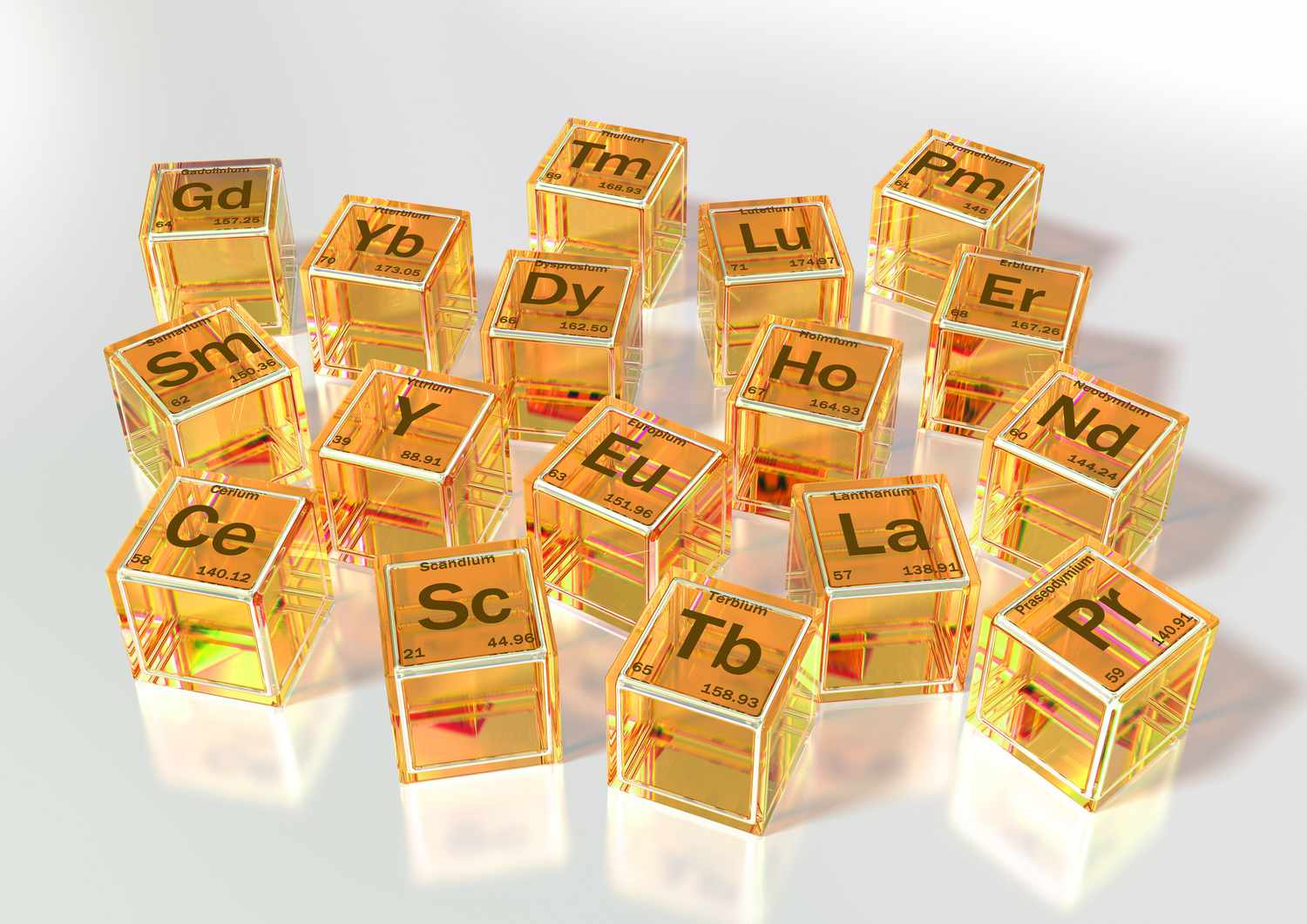
Neodymium is an expensive and unstably supplied material, but it is essential for manufacturing rare-earth permanent magnets. In order to develop an Nd-reduced permanent magnet, the content of cerium (Ce), an inexpensive element, was increased, instead of reducing the content of Nd. Until now, with the increased content of Ce, deterioration of the magnetic properties was inevitable. The research team focused on clarifying the reason for and mechanism of the deterioration of the magnetic properties caused by the increased Ce content, and they successfully solved the problem of rare-earth-reduced permanent magnets by controlling the atomic-scale microstructure.

The researchers discovered that unnecessary magnetic particles were formed during the manufacturing process, the underlying reason for the deterioration of the magnetic and microstructural properties of the magnets. They modified the microstructure and enhanced the magnetic properties by preventing the diffusion of atoms so that the formation of unnecessary magnetic particles is suppressed.

The research team applied the melt-spinning method and the hot-deformation method, which have very fast cooling rates compared to the conventional process, to the process of fabricating rare-earth-reduced precursors and final bulk magnets, respectively. As a result, they succeeded in optimizing the microstructure of the magnets by suppressing the formation of unnecessary magnetic particles. In addition, they were able to simultaneously improve the residual magnetization and coercive force, which are the main properties of permanent magnets.

Read more at: Development of new magnet that reduces use of rare-earth element by 30% (phys.org)

#Canada can help #Europe turn to renewables instead of #Russian oil

Hydrogen is still in the early stages as an energy industry in Canada — Canada is in the top 10 of hydrogen producers globally but makes about three million tonnes of it for industrial use. China, the world’s top producer, makes more than eight times that much.

But hydrogen was a major part of the conversation between German Chancellor Olaf Scholz and Prime Minister Justin Trudeau when they met in Berlin Wednesday. 

“This is one aspect for a very long-term strategic co-operation between Canada and Germany, because we understand acutely that Canada is a country that can help us import hydrogen, which will be produced in an environmentally friendly manner,” Scholz said in German.

It is not entirely clear how Canada can quickly ramp up hydrogen production to supply Europe, or how Europe can quickly adjust its energy systems to use more hydrogen.

On March 21, the International Energy Agency is hosting a meeting in Paris to discuss options to help Europe. Natural Resources Minister Jonathan Wilkinson is to attend.

At the CERAWeek energy conference in Houston Tuesday, Wilkinson also pitched Canada’s hydrogen but as a “medium- and longer-term opportunity.”

“Canada has huge opportunities associated with the production of ultralow carbon hydrogen,” he said. “Hydrogen will be important for domestic use but can also enable huge international opportunities for supply to geographies including Europe and Japan.”

Wilkinson pointed specifically to hydrogen projects announced recently, including an Air Products $1.3 billion net-zero hydrogen production and liquefaction facility, a joint venture into hydrogen between Suncor and ATCO, and an agreement between Mitsubishi and Shell Canada to produce hydrogen for export to Japan. 

Read more at: https://www.msn.com/en-ca/news/canada/canada-can-help-europe-turn-to-renewables-instead-of-russian-oil-guilbeault/ar-AAUQWc6

#TheWhiteHouse: FACT SHEET- Securing a Made in America Supply Chain for Critical Minerals

Biden-Harris Administration, Companies Announce Major Investments to Expand Domestic Critical Minerals Supply Chain, Breaking Dependence on China and Boosting Sustainable Practices.

Critical minerals provide the building blocks for many modern technologies and are essential to our national security and economic prosperity. These minerals—such as rare earth elements, lithium, and cobalt—can be found in products from computers to household appliances. They are also key inputs in clean energy technologies like batteries, electric vehicles, wind turbines, and solar panels. As the world transitions to a clean energy economy, global demand for these critical minerals is set to skyrocket by 400-600 percent over the next several decades, and, for minerals such as lithium and graphite used in electric vehicle (EV) batteries, demand will increase by even more—as much as 4,000 percent. The U.S. is increasingly dependent on foreign sources for many of the processed versions of these minerals. Globally, China controls most of the market for processing and refining for cobalt, lithium, rare earths and other critical minerals.

Today, President Biden will meet with Administration and state partners, industry executives, community representatives, labor leaders, and California Governor Gavin Newsom to announce major investments in domestic production of key critical minerals and materials, ensuring these resources benefit the community, and creating good-paying, union jobs in sustainable production.

Read more at: FACT SHEET: Securing a Made in America Supply Chain for Critical Minerals | The White House

#BBC Future: #Lithium batteries’ big unanswered question

“The current method of simply shredding everything and trying to purify a complex mixture results in expensive processes with low value products,” says Andrew Abbott, a physical chemist at the University of Leicester. As a result, it costs more to recycle them than to mine more lithium to make new ones. Also, since large scale, cheap ways to recycle Li batteries are lagging behind, only about 5% of Li batteries are recycled globally, meaning the majority are simply going to waste.

But as demand for EVs escalates, as it’s projected to, the impetus to recycle more of them is set to barrel through the battery and motor vehicle industry.

The current shortcomings in Li battery recycling isn’t the only reason they are an environmental strain. Mining the various metals needed for Li batteries requires vast resources. It takes 500,000 gallons (2,273,000 litres) of water to mine one tonne of lithium. In Chile’s Atacama Salt Flats, lithium mining has been linked to declining vegetation, hotter daytime temperatures and increasing drought conditions in national reserve areas. So even though EVs may help reduce carbon dioxide (CO2) emissions over their lifetime, the battery that powers them starts its life laden with a large environmental footprint.

We can no longer treat the batteries as disposable – Shirley Meng

If the millions upon millions of Li batteries that will give out after around 10 years or so of use   are recycled more efficiently, however, it will help neutralise all that energy expenditure. Several labs have been working on refining more efficient recycling methods so that, eventually, a standardised, eco-friendly way to recycle Li batteries will be ready to meet skyrocketing demand.

“We have to find ways to make it enter what we call a circular lifecycle, because the lithium and the cobalt and nickel take a lot of electricity and a lot of effort to be mined and refined and made into the batteries. We can no longer treat the batteries as disposable,” says Shirley Meng, professor in energy technologies at the University of California, San Diego.

Read more at: Lithium batteries’ big unanswered question – BBC Future

#Vale Aims To Transform Misfiring Metals Division To Win Business Of #Tesla

Vale is greatest generally known as one of many world’s largest producers of iron ore from its sprawling Brazilian operations — however its chief government desires to alter that.

For Eduardo Bartolomeo, being seen as a “one geography, one mineral firm” is harmful and Vale must be attempting to spotlight the worth of its industrial metals enterprise, which he says has the potential to be a key provider of battery supplies to the North American automotive.

Attaining that can be no straightforward activity. To provide Tesla, Ford, Normal Motors and others with the required copper, nickel and cobalt to scale up manufacturing of electrical autos, Bartolomeo should rework the efficiency of the misfiring metals division.

“We predict we might be the provider alternative,” Bartolomeo instructed the Monetary Occasions throughout a latest go to to London to satisfy traders. “However we have to produce. We have to get the manufacturing up. That’s basic. Then we have to get the reserves and sources.

He has already made one decisive transfer, changing the top of the enterprise, Mark Travers, with Deshnee Naidoo, a former government at India’s Vedanta Assets.

However that is only a first step after, by his personal admission, one other difficult 12 months for the division in 2021, with a labour dispute in Canada, a fireplace on the Solobo copper mine and a short lived halt of nickel manufacturing at its Onca Puma challenge in Brazil. On high of that, 39 staff have been rescued after being trapped within the underground Totten mine in Ontario.

Whereas output is forecast to get well subsequent 12 months, Bartolomeo, who ran the base-metals enterprise earlier than he was appointed chief executive in April 2019, is aware of there may be plenty of work to do if Vale is to fulfil its ambition of capturing 30-40 per cent of the North American marketplace for battery-grade nickel in 5 years.

“We’re speaking to Ford, GM, we’re speaking to all of them,” he mentioned, mentioning that Vale had already struck a deal to promote 5 per cent of its annual highest-grade Class 1 nickel output to a US carmaker, broadly rumoured to be Tesla. A typical electric-vehicle battery pack wants about 35 kilogrammes of nickel, in response to the IMF, whereas charging stations require substantial quantities of copper.

Read more at: https://uk.universalpersonality.com/market/vale-aims-to-transform-misfiring-metals-division-to-win-business-of-tesla/

#NYTimes: Why a #Chinese Company Dominates Electric Car Batteries

CATL has given China a commanding lead in electric car batteries, a technology central to the broader green revolution. The company already supplies batteries to almost all of the world’s automakers, including G.M., Volkswagen, BMW and Tesla. CATL has emerged as one of the biggest winners of the electric car boom, along with Tesla.

Chinese government officials made sure CATL’s business stayed in Chinese hands. They created a captive market of battery customers. And when CATL needed money, they doled it out.

“CATL definitely seems like it’s the concept and creation of a master plan,” said Michael Dunne, a former G.M. executive in Asia and now an analyst.

Read more at: How China’s CATL Became the Top Electric Car Battery Maker – The New York Times (nytimes.com)

#Vedanta Ltd acquires #Nickel and #Cobalt maker Nicomet in Goa

India to actually bead China to all – electric new -car pledge, targets 2030

Anil Agarwal-led Vedanta Ltd has acquired Nicomet, a Nickel and Cobalt producer based in Goa making Vedanta the sole producer of Nickel in India.

“India imports 100% of its Nickel requirements; our focus will be to boost domestic production that would fuel India’s transition to a Net Zero economy,” chairman Anil Agarwal said in a release on Monday.

India’s demand for nickel is currently pegged at 45 KTPA, as per reports, which is entirely met through imports. At present, Nicomet’s plant has a capacity to produce 7.5 KTPA Nickel & Cobalt.

Read more at:
https://economictimes.indiatimes.com/industry/indl-goods/svs/metals-mining/vedanta-ltd-acquires-nickel-and-cobalt-maker-nicomet-in-goa/articleshow/88389538.cms?utm_source=contentofinterest&utm_medium=text&utm_campaign=cppst

Reuters: #China EV, battery makers grapple with #Graphite squeeze

Dec 15 (Reuters) – As they scour the globe for the lithium, nickel and cobalt resources needed to keep China on top in the electric vehicle (EV) stakes, Chinese battery and EV makers are fretting about supply of another mineral closer to home – graphite.

Graphite, in both natural and synthetic forms, is used for the negative end of a lithium-ion battery, known as the anode. Around 70% of all graphite comes from China, and there are few viable alternatives for batteries.

Read more at: https://www.reuters.com/business/autos-transportation/china-ev-battery-makers-grapple-with-graphite-squeeze-2021-12-15/

#Reuters: #BHP completes first #Blockchain #Copper concentrate trade with #Minmetals

LONDON, Dec 14 (Reuters) – Miner BHP Group (BHPB.L) has completed a $30 million blockchain trade in copper concentrate with China Minmetals Corp, online platform MineHub (MHUB.V) said on Tuesday.

The pilot transaction was the first cross-border shipment for copper concentrates using blockchain, MineHub said in a statement.

Read more at: BHP completes first blockchain copper concentrate trade with Minmetals | Reuters

#Africa – #China – #US: How #Cobalt has become new crude oil

China quickly realised that the emergence of companies like Tesla was driving the move from combustion fuelled engines. This led the Organization of the Petroleum Exporting Countries (OPEC) to have a combined daily production volume of 30.6m barrels of crude oil thereby placing non-producing western countries at risk.

China had to implement its energy policy through companies like CNOOC and SINOPEC in Africa, exchanging oil for infrastructure and loan deals as a means to secure the country’s energy future.

They also had to invest in the long term direction of funding state-backed enterprises that will strategically over the next decade, rise up to become the largest and highest producers of cobalt, an element mined from layers of copper and nickel, that are vital in making lithium-ion batteries in electric cars. As China could not get domestic companies to compete with Nissan and Tesla, a large supply of cobalt could be equally as useful.

While the US government has been concerned about the environmental, social and governance standards of American companies, and about the ‘boys club’ way of doing business that operates in Africa, the Chinese government has gotten into the trenches to acquire the basic assets necessary for a clean energy transition.

Workers have constantly complained about how their safety, social and economic standards have dropped at these mines since the Americans sold off and handed them over to the Chinese, which begs the question; shouldn’t safety and support of workers be considered important for sourcing the primary material necessary for a transition to clean energy?

Read more at: Africa – China – US: How cobalt has become new crude oil (theafricareport.com)

« Older Entries Recent Entries »