Category Archives: Technology

#Birmingham to become #UK’s first centre for rare earth magnet recycling

Pioneering rare earth recycling company HyProMag, which was formed by researchers from the University of Birmingham’s School of Metallurgy and Materials, is to be acquired by Maginito Ltd, in a deal that aims to catalyse the further scale-up and international roll-out of technology first piloted at the University of Birmingham and forming the basis for the UK’s first full scale remanufacturing facility for rare earth magnets at Birmingham’s Tyseley Energy Park being developed later this year.

HyProMag’s core technology is the based upon the patented process – Hydrogen Processing of Magnet Scrap (HPMS), which was originally developed within the University’s Magnetic Materials Group (MMG) to extract rare earth magnets from scrap and redundant equipment and subsequently licensed to HyProMag.

The development of domestic sources of recycled rare earths in the UK, Germany, United States and other territories is a significant opportunity to fast-track the development of sustainable and competitive recycled rare earth magnet production.

Read more at: https://www.birmingham.ac.uk/news/2023/birmingham-to-become-uks-first-centre-for-rare-earth-magnet-recycling

Can the World Make an Electric Car Battery Without China?

It is one of the defining competitions of our age: The countries that can make batteries for electric cars will reap decades of economic and geopolitical advantages.

The only winner so far is China.

Despite billions in Western investment, China is so far ahead — mining rare minerals, training engineers and building huge factories — that the rest of the world may take decades to catch up.

Even by 2030, China will make more than twice as many batteries as every other country combined, according to estimates from Benchmark Minerals, a consulting group.

Here’s how China controls each step of lithium-ion battery production, from getting the raw materials out of the ground to making the cars, and why these advantages are likely to last.

China controls:41% of the world’s cobalt
28% of lithium
6% of the world’s nickel
78% of graphite
5% of manganese
REFINING:95% of manganese
73% of cobalt
70% of graphite
67% of lithium
63% of nickel
Components making:74% of separators
77% of cathodes
92% of anodes
Cathodes making:73% of NMC cathodes
99% of LFP cathodes
Battery Cells66% of the world’s battery cells

Read more at: https://www.nytimes.com/interactive/2023/05/16/business/china-ev-battery.html

#ElonMusk, #GregAbbott celebrate groundbreaking of #Tesla’s new #Texas facility

Tesla CEO Elon Musk traveled to Texas on Monday to celebrate the groundbreaking of the company’s new lithium refinery that the electric vehicle maker hopes will give the company more control over its supply chain.

Musk said the facility, which will be one of the largest of its kind in the world, will produce lithium for “about a million vehicles” and have more lithium refining capacity than “the rest of North American refining capacity combined.” 

He explained that the refinery’s capacity could be expand.

Read more at: https://www.foxbusiness.com/markets/elon-musk-greg-abbott-celebrate-groundbreaking-teslas-new-texas-facility

US-EU Critical Minerals Deal Would Give EU Broader Trade Relief

An agreement between the US and the European Union over critical minerals would unlock wider benefits than previously thought, with a deal paving the way to remove several more trade barriers introduced by President Joe Biden’s massive green subsidy law, according to people familiar with the matter.

An accord would essentially allow EU companies to take advantage of some of the benefits in the Inflation Reduction Act on the 50 minerals defined as critical in the law, said the people who spoke on the condition of anonymity.

The Biden administration has said that nations with trade agreements with the US will be able access some of the IRA’s benefits, which will offer some $369 billion in handouts and tax credits over the next decade for clean-energy programs in North America. If the minerals accord is passed, it would act as the equivalent of a free-trade agreement and that status would in turn enable electric vehicles containing EU-extracted and processed critical minerals to be eligible for IRA subsidies, the people said.

The US Trade Representative’s office declined to comment.

An early draft of the EU-US minerals agreement lists five minerals — cobalt, graphite, lithium, manganese and nickel — covered by that standalone accord, Bloomberg previously reported. Such a deal would echo one that the Biden administration signed last month with Japan.

Read more at: https://www.bloomberg.com/news/articles/2023-04-28/us-eu-critical-minerals-deal-would-give-eu-broader-trade-relief#xj4y7vzkg

#Chile plans to nationalize its vast #Lithium industry

SANTIAGO, April 20 (Reuters) – Chile’s President Gabriel Boric said on Thursday he would nationalize the country’s lithium industry, the world’s second largest producer of the metal essential in electric vehicle batteries, to boost its economy and protect its environment.

The shock move in the country with the world’s largest lithium reserves would in time transfer control of Chile’s vast lithium operations from industry giants SQM and Albemarle to a separate state-owned company.

It poses a fresh challenge to electric vehicle (EV) manufacturers scrambling to secure battery materials, as more countries look to protect their natural resources. Mexico nationalized its lithium deposits last year, and Indonesia banned exports of nickel ore, a key battery material, in 2020.

“This is the best chance we have at transitioning to a sustainable and developed economy. We can’t afford to waste it,” Boric said in an address televised nationwide.

Read more at: https://www.reuters.com/markets/commodities/chiles-boric-announces-plan-nationalize-lithium-industry-2023-04-21/

#Fastmarkets: Proposal to launch #Asian black mass payable indicators: pricing notice

Fastmarkets’ proposal follows initial feedback that market participants demand a price reference for black mass, referring to the remains of a battery pack after shredding and processing.

South Korea is one of the major importing nations of end-of-life (EOL) electric vehicle (EV) black mass, as well as a significant importer of EOL scrap batteries for processing into black mass within its growing domestic market.

Spot market trading for EOL EV black mass materials is more prevalent and more mature in Asian markets than it is currently in both Europe and North America, according to market participants. In China, while there is a large domestic black mass market, importing these materials is officially prohibited.

Fastmarkets’ South Korean black mass payable indicators will assess the payables for EOL EV black mass produced from nickel, manganese cobalt (NMC) and nickel cobalt aluminium (NCA) batteries. NMC black mass is the chemistry which is most prevalent in the South Korean spot market, according to market sources.

NMC and NCA black mass is usually priced according to the value of their nickel and cobalt content, with these components comprising the largest non-graphite material share and being high in value. Both nickel and cobalt are materials vital for making EV batteries and have become extremely strategic markets in recent years.

Read more at: https://www.fastmarkets.com/insights/proposal-to-launch-asian-black-mass-payable-indicators-pricing-notice

China’s Newest Weapon to Nab Western Technology—Its Courts

Rulings nullify patents in industries it deems important, including technology, pharmaceuticals and rare-earth minerals.

The growing conflict between China and the U.S. extends from computer-chip factories to a suspected spy balloon over American skies. Running through it all is a struggle for technological superiority.

China has striven for years to develop cutting-edge technologies, in part through heavy spending on research. Now, according to Western officials and executives, it also has mobilized its legal system to pry technology from other nations.

Read more at: https://www.wsj.com/articles/u-s-china-technology-disputes-intellectual-property-europe-e749a72e

Electric vehicle sales are racing ahead, but is there a plan for the waste they create?

There’s a new venture taking place in a large, nondescript warehouse in Kingston, Ont.: Lithium-ion battery recycling. And it could be an important component of Canada’s net-zero future.

The facility, owned by Canadian startup Li-Cycle, houses stacks of depleted lithium-ion batteries that not long ago would have been destined for a landfill. The company is giving them new life — recycling the batteries that power most electric vehicles, phones and laptops.

Read more at: https://www.cbc.ca/news/business/electric-vehicle-battery-recycling-1.6695010

#Volkswagen Begins Search for Battery Plant Site in #Canada

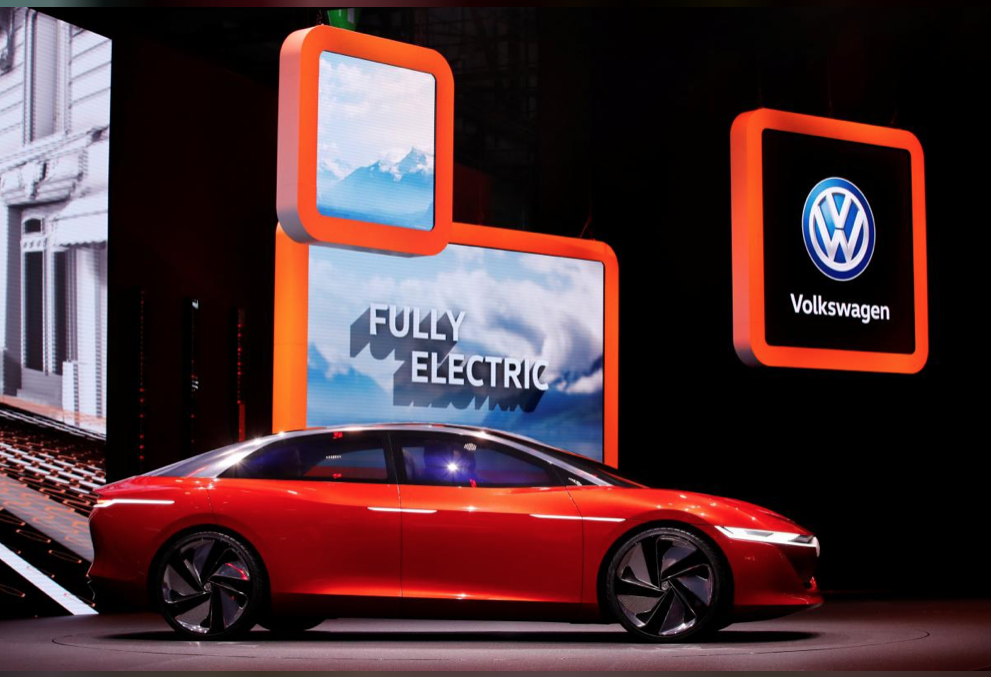
Volkswagen AG signed an agreement to begin searching for a battery cell factory site in Canada as it plans a “rapid expansion to North America” of its electric vehicle battery business.

Canadian Industry Minister François-Philippe Champagne signed the document with Volkswagen on Thursday during his visit to Germany.

Read more at: https://www.bloomberg.com/news/articles/2022-12-01/volkswagen-begins-search-for-battery-plant-site-in-canada?leadSource=uverify%20wall

#Indonesia proposes to #Canada setting up #OPEC-like group for #Nickel

JAKARTA — Indonesia has proposed in talks with Canada establishing an OPEC-like organization for nickel producing countries, the Southeast Asian nation’s investment ministry said in a statement on Wednesday.

Indonesia and Canada are the first and sixth biggest nickel producers in the world, respectively.

The proposal was made when Indonesian Investment Minister Bahlil Lahadalia met Canada’s International Trade Minister Mary Ng on Tuesday on the sideline of the G20 summit in Bali.

Read more at: https://financialpost.com/pmn/business-pmn/indonesia-proposes-to-canada-setting-up-opec-like-group-for-nickel

« Older Entries Recent Entries »