Category Archives: Related Inventions

Smartphones to produce high-resolution 3D images

Imagine pulling smartphone out of your pocket, taking a snapshot of an object with its integrated 3D imager, sending it to the 3D printer and within minutes you have reproduced an accurate replica of the original object.

This feat may soon be possible because of a new tiny high-resolution 3D imager developed by researchers at California Institute of Technology.

ORNL-led team demonstrates desalination with graphene membrane

Nature Nanotech Pores

A team of experimentalists led by the U.S. Department of Energy’s Oak Ridge National Laboratory has demonstrated an energy-efficient desalination technology that uses a porous membrane made of strong, slim graphene—a carbon honeycomb one atom thick. The results are published in the March 23 advance online issue of Nature Nanotechnology

Read more at: http://oakridgetoday.com/2015/03/30/ornl-led-team-demonstrates-desalination-with-graphene-membrane/

Santhi Particles: The smallest superparamagnetic plant materials

The unique distinction of having invented the world’s first superparamagnetic particle of plant material has been accorded to Dr T Theivasanthi, a faculty member of the international research centre of Kalasalingam University.

Students create clean drinking water solution in Sri Lanka – Collegiate Times : News

The Society of Military Engineers (SAME) at Virginia Tech is creating a solar-powered water purification system for export to Sri Lanka.

SAME is the brainchild of sophomore electrical engineering major Michael Sherburne, public relations coordinator for the group. Last year, he saw an opportunity to help while spending eleven weeks in Morocco, Turkey and finally Sri Lanka through Tech’s 21st Century Studies fellowship program.

Read more at: Students create clean drinking water solution in Sri Lanka – Collegiate Times : News.

New low-calorie rice could help cut rising obesity rates

New low-calorie rice could help cut rising obesity rates

A new, easy method for cooking rice could reduce calories by as much as 60 percent. Credit: Anoja Megalathan, Institute of Chemistry, College of Chemical Sciences, Sri Lanka

Scientists have developed a new, simple way to cook rice that could cut the number of calories absorbed by the body by more than half, potentially reducing obesity rates, which is especially important in countries where the food is a staple.

The presentation will take place here at the 249th National Meeting & Exposition of the American Chemical Society (ACS).

Read more at: http://phys.org/news/2015-03-low-calorie-rice-obesity.html#jCp

Advancement in Innovative Agricultural Nano-Bio-Fertilizers

Dr. Theivasanthi, a woman research faculty of International Research Center, Kalasalingam University has advanced a step ahead in the innovative field of agricultural nano-bio-fertilizers. She has made an art of science for the development of both plants and cultivating land. She has utilized nanotechnology in such a sense, towards creation of wealth from waste. Enhanced efficiency, nourishing crops in more effective ways, low price, large production within short period, safe to environment and renewable are the salient features of this new fertilizer technology.

Read more at: http://www.pr.com/press-release/601533

New solar power nanotechnology material converts 90 percent of captured light into heat

Increasing the light absorption across the wide solar spectrum has important implications for applications in solar-thermal and photovoltaic energy conversion.

Copper oxide (CuO) nanowires (NWs) and cobalt oxide (Co3O4) nanoparticles (NPs). Copper oxide NWs of 100–200 nm in diameter and 5 µm long are grown thermally on copper foil in air and cobalt oxide NPs of 100–200 nm in diameter are synthesized hydrothermally. Tandem structures of spectrally selective coating (SSC) layer are built with three different methods: spray-coating, dip-coating of cobalt oxide NPs into copper oxide NWs forest, and transferring of copper oxide NWs layer onto cobalt oxide NPs layer. The tandem-structured SSC layers fabricated from the spray-coating, dip-coating and transferring methods exhibit figure of merit (FOM) values of 0.875, 0.892 and 0.886, respectively, which are significantly higher than that of the starting copper oxide NWs (FOM=0.858) and cobalt oxide NPs (FOM=0.854). Results demonstrate the efficacy of using novel tandem structures for enhanced light absorption of solar spectrum, which will find broad applications in solar energy conversion.

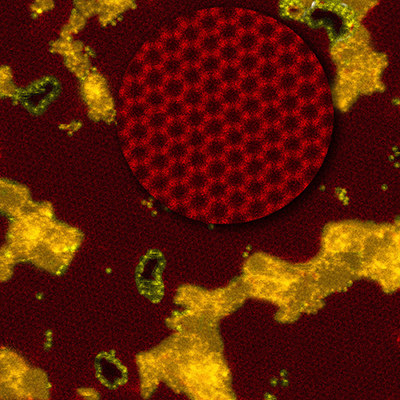
SEM of Multisurface Material

Read more at: http://www.nanowerk.com/nanotechnology-news/newsid=37903.php

Tesla Motors – Innovation

Tesla’s Model S is the first zero-emission, zero-gas, full-size electric vehicle on the market. In addition, Tesla will produce battery packs, electric motors, and other powertrain components that will power all-electric, plug-in vehicles (not only Tesla’s, but also other vehicle manufacturers, such as Daimler and Toyota).

Read more at:

Niobium Aerospace Alloy Successfully Processed by Metal AM Makers

Metal Technology (MTI) has successfully 3D printed coupons in a key alloy required for space travel. C-103 is a niobium based alloy containing approximately 10% Hafnium and 1% Titanium. It is widely used in space applications because of its excellent formability, cost, weight, and reliability.

Read more at:  http://www.engineering.com/3DPrinting/3DPrintingArticles/ArticleID/8198/Niobium-Aerospace-Alloy-Successfully-Processed-by-Metal-AM-Makers.aspx

Aerospace firms place long-term bets on 3D printing

FARNBOROUGH, England, July 17 (Reuters) – The prospect of huge time savings, less waste and more design options have drawn aerospace firms to invest in additive layer manufacturing, also known as 3D printing, though it may be years before parts made this way are common in planes and weapons.

Read more at:  http://www.reuters.com/article/2014/07/17/airshow-britain-3dprinting-idUSL6N0PS4TV20140717

« Older Entries Recent Entries »