Category Archives: Related Inventions

#TheWashingtonPost: How a Battery Metals Squeeze Puts EV Future at Risk

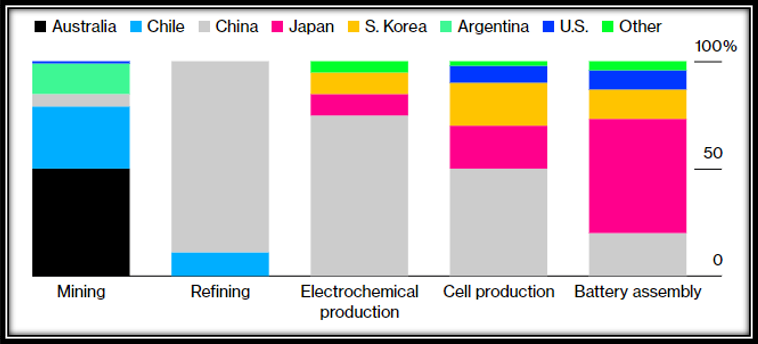
The world’s epic shift into electric vehicles needs to overcome a major obstacle: how to meet rocketing demand for batteries, the vital component, while cutting the cost to help the cars go mainstream. Factory lines churning out power packs to fuel a clean energy future are being built faster than strained supply chains can keep up. A global rush to lock in stocks of lithium, nickel, cobalt and other key ingredients from a handful of nations has sent prices hurtling higher.

There are major concerns over China’s industry-wide dominance and moves in some other countries to restrict mineral exports in hopes of building their own manufacturing base. It’s a scenario that risks slowing the pace of EV adoption.

1. Why the shortages? 

2. What’s the fallout? 

3. Which minerals are in focus?

4. How will this affect the EV transition?

How a Battery Metals Squeeze Puts EV Future at Risk – The Washington Post

#Bloomberg: #Nickel Royalty Helps #Burundi Boost Its Spending Plan by 40%

https://burundi-agnews.org/economie/burundi-le-canadien-cvmr-investit-40-millions-usd-pour-le-nickel/

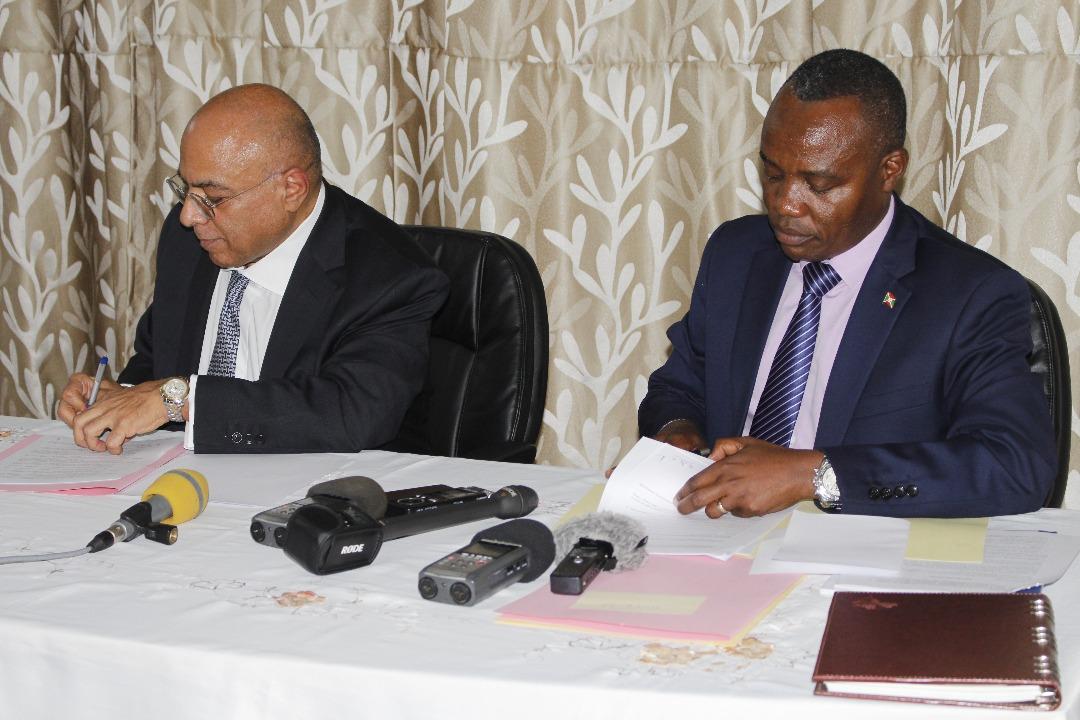
Burundi plans to increase its national budget by almost 40% for the fiscal year starting July as it eyes revenue from a nickel concession it awarded to a new partner.

Burundi, which has an estimated 6% of the world’s known nickel deposits, awarded a mining concession to East African Regional Projects. The deal involves remitting $1.5 billion to the government annually, with the first $500 million expected soon. 

The government plans to increase investment in farming and infrastructure, including starting to build a railroad to neighboring Tanzania, according to the statement.

The nation’s economy may grow by 3.6% this year and 4.6% in 2023, according International Monetary Fund estimates. 

Read more at: Nickel Royalty Helps Burundi Boost Its Spending Plan by 40% – Bloomberg

#VW CEO Follows #GM’s Lead, Aims To Overtake #Tesla’s Sales By 2025

Multiple automakers are aiming for Tesla, but supply chain issues are making it difficult to forecast what lies ahead.

Volkswagen Group CEO Herbert Diess appeared on CNBC’s “Squawk Box Europe” this week at the World Economic Forum in Switzerland. He noted that VW still plans to catch up and potentially overtake Tesla on EV sales by 2025.

Tesla is the global leader when it comes to electric cars, and it’s growing rapidly, even amid factory shutdowns and supply chain constraints. Diess shared that once the supply chain issues are resolved, it should help Volkswagen to start ramping up momentum once again.

Read more at: VW CEO Follows GM’s Lead, Aims To Overtake Tesla’s Sales By 2025 (msn.com)

Elon Musk Misses the Big Picture on Lithium Mining

Lack of investment in refining technologies, and companies have been put at a disadvantage. They’re now gearing up to deal with surging raw material demand — much sooner than they expected — and supply chain snarls. But the methods and processes haven’t fully evolved.

Elon Musk has a suggestion for entrepreneurs: Get into lithium mining for juicy margins. It’s a pithy recommendation, but it fails to grasp the complicated challenges for producing more of the metal.

Soaring lithium prices have dampened the excitement around electric vehicles. Musk noted that the production of the white metal was the biggest “limiting factor” for EVs. That may be true — along with all the other battery supply chain bottlenecks — but just mining more lithium or buying a mine isn’t the solution.

As the gap widens between supply and demand for the metal, prices have been rising for everything from the ore of lithium, spodumene, to lithium carbonate and a more refined form, lithium hydroxide. Mexico has nationalized lithium production, and Chile, home to some of the largest mines in the world, is moving closer to doing so as well. China is keeping a tight lid on prices and pushing them down to ensure its companies don’t suffer setbacks. The US is trying to find ways to expand lithium supply.

Yet no solutions to close the gap — and make widespread adoption of EVs a reality — are readily emerging. Part of that is because mining, more broadly, has acquired a bad reputation over the years and was dumped in the non-ESG investor bucket. That meant a lack of investment in refining technologies, and companies have been put at a disadvantage. They’re now gearing up to deal with surging raw material demand — much sooner than they expected — and supply chain snarls. But the methods and processes haven’t fully evolved.

Read more at: https://www.washingtonpost.com/business/energy/elon-musk-misses-the-big-picture-on-lithium-mining/2022/05/16/b95193cc-d56c-11ec-be17-286164974c54_story.html

Supply chains endanger #American security. Here’s what #Biden is doing.

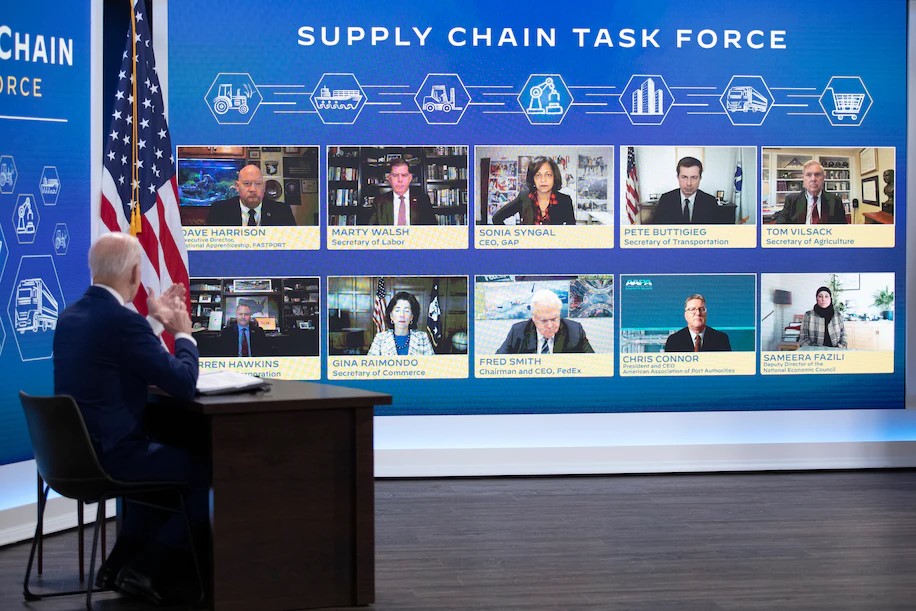
In late February, as most people were focusing on the war in Ukraine, the White House published over 1,300 pages of reports from a year-long and unprecedented investigation into the economic vulnerabilities caused by global supply chains.

These reports received almost no press attention. Yet they shed light on one of the crucial side effects of the war in Ukraine. Decoupling the economies of the United States and its allies from the economies of authoritarian nations may cause massive disruption.

Shortly after coming into office, the Biden-Harris administration issued an executive order on “America’s Supply Chains.” Seven federal agencies were directed to undertake comprehensive studies of the national and international economic organization of supply chains for strategic minerals, pharmaceuticals, semiconductors and batteries within 100 days. The administration also told the government departments to report back within a year about how those industries related to broader “industrial bases” for defense, green energy, public health, information technology, transportation and food.

The reports call for green industrial policy

The U.S. government reports argue that these critical dependencies could be reduced by an ambitious green industrial policy. By 2030, the U.S. agencies are targeting goals that 50 percent of vehicles sold in the United States will be electric, 30 gigawatts of offshore wind will be built in the United States (that’s about four times the annual energy use of New York City), battery storage costs will be reduced by 90 percent, production costs for green hydrogen (made from water and electricity) will be lower than fossil fuel-derived hydrogen, and 90 percent of the key mineral iridium will be recycled. The agencies recommend strengthening the federal government’s “Buy American” program, subsidizing green industries through the Defense Production Act and building stockpiles of clean energy like the United States has for petroleum, along with other measures.

Read more at: https://www.washingtonpost.com/politics/2022/05/17/us-supply-chain-security-national-defense/

#Reuters: #Pentagon asks #Congress to fund mining projects in #Australia, #UK

The U.S. Department of Defense has asked Congress to let it fund facilities in the United Kingdom and Australia that process strategic minerals used to make electric vehicles and weapons, calling the proposal crucial to national defense.

The request to alter the Cold War-era Defense Production Act (DPA) came as part of the Pentagon’s recommendations to Congress for how to write the upcoming U.S. military funding bill, known as the National Defense Authorization Act.

Read more at: https://www.reuters.com/markets/commodities/pentagon-asks-congress-fund-mining-projects-australia-uk-2022-05-11/

The Metals Company deep-water tests polymetallic nodule collector vehicle in Atlantic

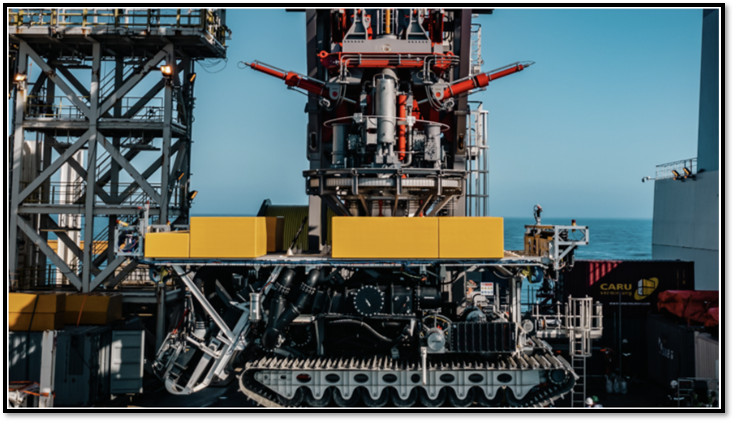
The Metals Company, an explorer of lower-impact battery metals from seafloor polymetallic nodules, announced Tuesday it has completed initial deep-water trials of the polymetallic nodule collector vehicle in the Atlantic Ocean.

Mining international waters is in the spotlight as companies and countries are looking at minerals concentrated on the ocean floor that can be used in batteries for smart phones and electric vehicles. Last year, TMC said the nodule resource is now estimated at four megatons (Mt) measured, 341Mt indicated and 11Mt inferred mineral resources.

The Vancouver-based company said engineers successfully lowered the Allseas-designed collector vehicle to the seafloor at depths of 2,470 meters, marking the first time the vehicle had been subjected to ultra-deep-water temperatures and pressures. The company said engineers then subjected the vehicle to extensive testing of its various pumps and critical mobility functions, driving 1,018 meters across the seafloor.

Read more at: The Metals Company deep-water tests polymetallic nodule collector vehicle in Atlantic – MINING.COM

#Nickel, #Graphite make up half #Tesla’s battery emissions

According to the Tesla’s so-called Impact Report released on Friday, nickel is by far the biggest problem in its supply chain for batteries when it comes to emissions, outpacing CO2 created by cathode manufacture and cell assembly combined. 

Tesla said it commissioned London-based consulting and software firm Minviro “to identify hotspots with high global warming potential across eight specific processing routes from which we currently source cobalt, nickel and lithium.”

The report says Tesla sources over 95% of its lithium, 50% of its cobalt and 30% of its nickel directly and that “key drivers of CO2 in its global supply chain are the cathode and anode supply chains.” 

Cobalt represents only 1%, while lithium, responsible for 13%, makes a more modest contribution than anode material graphite with the company pointing out that “chemical processing (refining / smelting) was a larger driver than mining.”

GRAPH: Nickel, graphite make up half Tesla’s battery emissions – MINING.COM

#BBC – Mine e-waste, not the Earth, say scientists

New research by the RSC also revealed a growing demand from consumers for more sustainable technology. In an online survey of 10,000 people across 10 countries, 60% said they would be more likely to switch to a rival of their preferred tech brand if they knew the product was made in a sustainable way.

The survey also suggested that people did not know how to deal with their own e-waste. Many respondents said they worried about the environmental effect of unused devices they have in their homes, but did not know what to do with them or were concerned about the security of recycling schemes.

Elements in smartphones that could run out in the next century:

  • Gallium: Used in medical thermometers, LEDs, solar panels, telescopes and has possible anti-cancer properties
  • Arsenic: Used in fireworks, as a wood preserver
  • Silver: Used in mirrors, reactive lenses that darken in sunlight, antibacterial clothing and gloves for use with touch screens
  • Indium: Used in transistors, microchips, fire-sprinkler systems, as a coating for ball-bearings in Formula One cars and solar panels
  • Yttrium: Used in white LED lights, camera lenses and can be used to treat some cancers
  • Tantalum: Used in surgical implants, electrodes for neon lights, turbine blades, rocket nozzles and nose caps for supersonic aircraft, hearing aids and pacemakers.

Read more at: https://www.bbc.com/news/science-environment-61350996

#Vale signs deal with #Tesla for #Canadian #Nickel

Brazilian miner Vale SA said on Friday it has signed a long-term deal with Tesla Inc to supply the U.S.-based electric vehicle maker with nickel from its Canadian operations.

Vale did not provide financial details on the deal and did not say how long it will last.

“We are pleased to have the leading electric vehicle manufacturer Tesla among our customers,” Deshnee Naidoo, Vale’s executive vice president of Base Metals, said in a release. “This agreement reflects a shared commitment to sustainability and shows very clearly we are the supplier-of-choice for low-carbon and high purity nickel products essential for long-range batteries.”

The Brazilian miner said in a securities filing that the agreement involves supplying Tesla with low-carbon Class 1 nickel and is in line with its strategy of increasing its exposure to the electric vehicle industry.

Read more at: Vale signs deal with Tesla for Canadian nickel | The Daily Press (timminspress.com)

« Older Entries Recent Entries »