Mining giants looking to jointly develop copper deposits in Sudbury, via Glencore’s Nickel Rim South Mine.
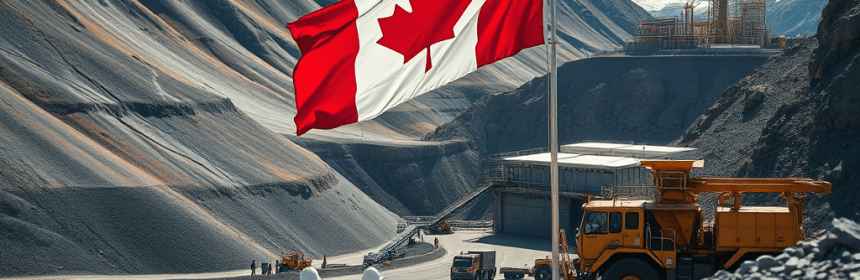
Vale Base Metals announced on Tuesday that it has signed an agreement with Glencore Canada to jointly evaluate a potential brownfield copper development project at their adjacent properties in the Sudbury Basin.
The project would churn out 880,000 metric tons of copper over 21 years, with a capital cost of up to US$2 billion.
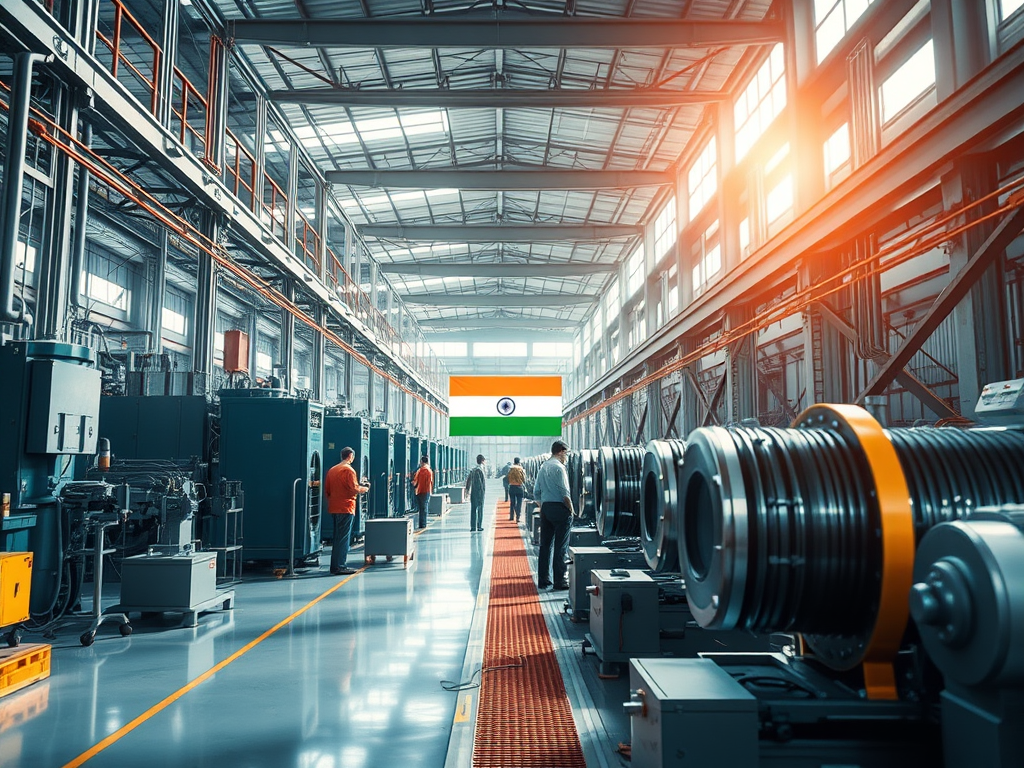
Presently, there are a few small Indian companies engaged in manufacturing rare earth magnets. The industry needs a big push to feed the new generation of industries – from electric vehicles to fighter aircraft engines, wind turbines, and laptops to mention a few. Lately, it has come into a big focus as the world is moving towards electric vehicles. Rare earth magnet is a crucial component of electric vehicles (EVs). Fortunately, India has large rare earth deposits. Globally, it ranks third after China and Brazil.
The demand for rare earth magnets in India is expected to increase sharply in the coming years, driven by the expansion of EV manufacturing, increasing electronics output, defence production, industrial automation and renewable energy generation. For the present, the country uses rare earth magnets to the extent of 4,000 tonnes per year, mostly through imports. Among the companies currently manufacturing rare earth magnets in India are: IREL (India) Limited, Permanent Magnets Limited, Ashvini Magnets Private Limited, Star Trace, Eriez Magnets, Kumar Magnet, Sonal Magnetics, A to Z Magnet Mfg. Co. and Pragati Enterprises. The demand for rare earth magnets is projected to double by 2030. Lately, China has imposed restrictions on exports. Earlier this year, China slapped export licenses for seven types of rare earth elements and derivative products.
An official government release stated, “This first-of-its-kind initiative aims to establish 6,000 Metric Tons per Annum (MTPA) of integrated Rare Earth PM IndiaPermanent Magnet (REPM) manufacturing in India, thereby enhancing self-reliance and positioning India as a key player in the global REPM market.”
The government plans to allocate the proposed capacity to up to five beneficiaries through a global competitive bidding process, with each eligible for a maximum of 1,200 MTPA. The scheme will run for seven years, including a two-year gestation period to establish fully integrated REPM manufacturing facilities and five years of incentives linked to actual sales.
The U.S. Department of Energy’s (DOE) Portsmouth Paducah Project Office has issued an Expression of Interest (EOI) seeking input from industry on operationally mature technologies capable of supporting the potential reuse of approximately 9,700 tons of volumetrically contaminated nickel stored at the Paducah Gaseous Diffusion Plant in Paducah, Kentucky.
DOE will use the information gathered from this EOI to evaluate whether it is in the Department’s best interest to have industry selectively extract the nickel from the ingots to produce a high-purity nickel product suitable for release into commerce in accordance with DOE’s criteria for unrestricted release of materials. (DOE Order 458.1).
Responses gathered as part of this EOI may also be used in the future to develop an acquisition strategy for commercial-scale processing of a nickel extraction technology. This effort could support broader national energy priorities, including grid-scale batteries, the nuclear power industry, and artificial intelligence initiatives, contingent upon:
Successful technical validation of the proposed process (including verification testing)
Completion of an economic assessment, by DOE, of the proposed approach demonstrating, if appropriate, the overall advantages of the initiative
The development of an acceptable regulatory approval and environmental impact evaluation approach.
Canada is entering a pivotal era, one in which leadership in critical minerals will determine our economic resilience and national security as global supply chains shift away from dependence on China.
Nickel is at the centre of this race and one of the resources in which Canada can once again become a global leader. The federal government’s referral of the Crawford Project to the Major Projects Office makes it clear that Ottawa understands the importance of what is unfolding in northeastern Ontario.
Rare earths company MP Materials is partnering with the US military and Saudi Arabia’s flagship mining company to build a rare earth refinery in the Kingdom, in a move that aims to diversify the global critical minerals supply chain.
Saudi Arabian Mining Company (Maaden) and the Pentagon will create a joint venture to process rare earth materials from Saudi Arabia and other parts of the world to supply the US and Saudi manufacturing and defense sectors.
In a rapidly shifting global landscape, we are building One Canadian Economy turbo-charged by major nation-building projects that unleash our natural resources, diversify our products and markets and create hundreds of thousands of high-paying careers for our workers, all while protecting the environment and upholding the rights of Indigenous Peoples.
Honourable Tim Hodgson, Minister of Energy and Natural Resources, visited Canada Nickel Company’s Crawford Project to highlight the Government of Canada’s efforts to build one Canadian economy and build Canada’s leadership in the critical minerals sector.
The Crawford Project will serve as an anchor of Canada’s global leadership in clean industrial materials. Located in the world’s second-largest nickel reserve, the Crawford Project will produce high-quality, low-carbon nickel essential for batteries and green steel. With projected emissions 90 percent below the global average and the potential for a net-negative carbon footprint, it represents a model for the future of responsible mining. Canada Nickel is also planning an expansion to commence once mining operations have started, which would include producing other metals such as iron, cobalt, platinum, palladium and chromium; developing a nickel refinery for stainless steel and electric vehicle markets; and planning to construct a stainless steel and alloy production facility. The project is expected to attract $5 billion in investment and could create 4,000 new careers, securing Canada’s place at the forefront of the clean economy.
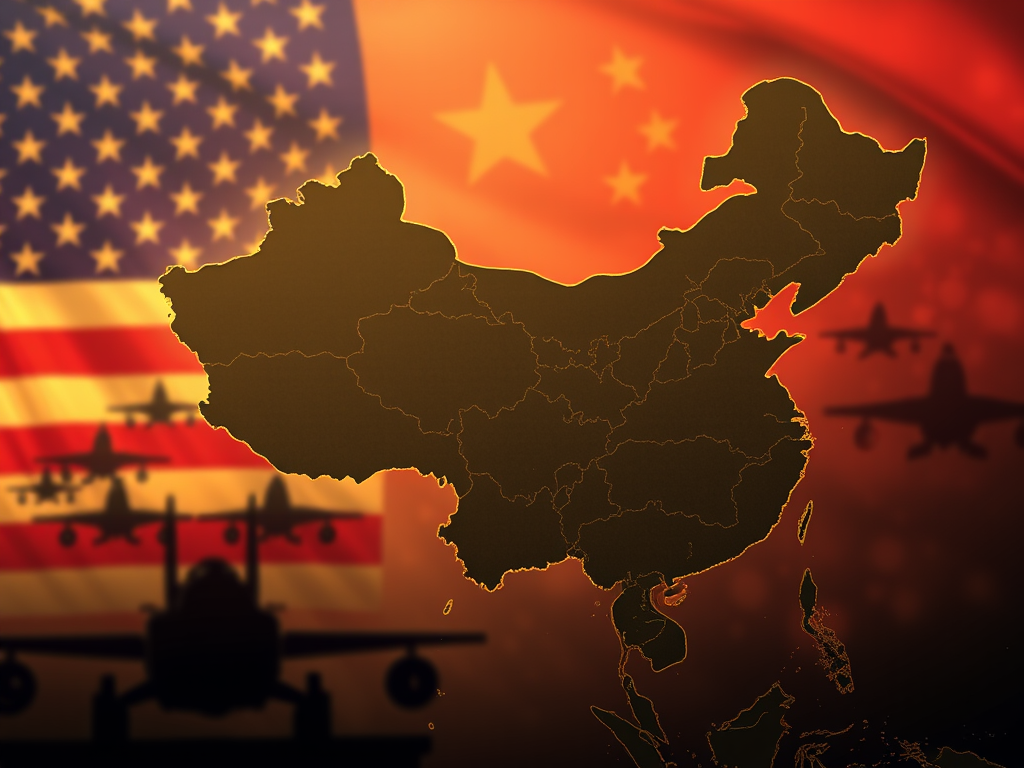
Despite agreeing to relax its export controls on rare earths, China is now preparing a new licensing regime that would continue to restrict shipments to US military-linked firms, The Wall Street Journal reported on Wednesday.
According to sources cited by WSJ, the Chinese government plans to launch a “validated end-user” (VEU) framework that would vet companies with no ties to US defense contractors to receive faster export approvals for rare earths and other sensitive materials, while keeping tighter scrutiny over dual-use exports.
The new system is designed to let Chinese leader Xi Jinping to honor the trade truce with US President Donald Trump to ease the flow of strategic materials like rare earths, without compromising Beijing’s national security priorities, the report said.
Canada announced on Friday the first round of projects under a G7 critical minerals production alliance envisioned as a counterweight to China’s dominance in the sector.
The 25 initiatives include purchase agreements for a Quebec graphite mine and investments to scale up a rare earth elements refinery in Ontario.
Canada’s energy and natural resources minister said the alliance’s first initiatives should be seen as a clear signal the group is serious about reducing market concentrations, safeguarding national security and driving investment.
“As we move swiftly to reduce dependence on concentrated supply chains, our collective commitment is clear. Every delay is a concession of economic and national security interests. We will no longer accept that,” said Minister Tim Hodgson.
Lynas managing director Amanda Lacaze says the wave of new, government-backed rare earths projects will face higher construction costs because Chinese manufacturers will deliberately starve Australian and American projects of the equipment and consumables they need.
The warning from Lynas, the biggest producer of separated rare earth oxides outside China, came as the company reported its strongest quarterly revenue in more than two years.
The US, Australia and other countries are pumping billions of dollars into construction of new rare earths mines and refineries in a bid to break China’s stranglehold on the metals needed for defence and decarbonisation products.
Lynas mines rare earths in WA and refines them in Malaysia, and has spent the past decade fighting China’s ability to suppress rare earth prices, and curious cyber campaigns that appeared to act in the Chinese national interest.
Speaking to investors on Thursday, Lacaze said China was also limiting the availability of equipment and consumables for the construction and operation of rare earths refineries.
Prior to going into mining in unexplored part of the world:
1. We need immediate research and development to improve the existing technologies.
2. Build refineries in the existing mines with infrastructure using developed technologies.
3. Take the price control of the Rare Earth Elements by tariffs or other means until the local refineries optimize the refining processes and operating cost.
We do not want to send the concentrate to another country to do final refining.









 A Blog for Browsing Mining, Mineral Processing, and Metals Info