Category Archives: Metals

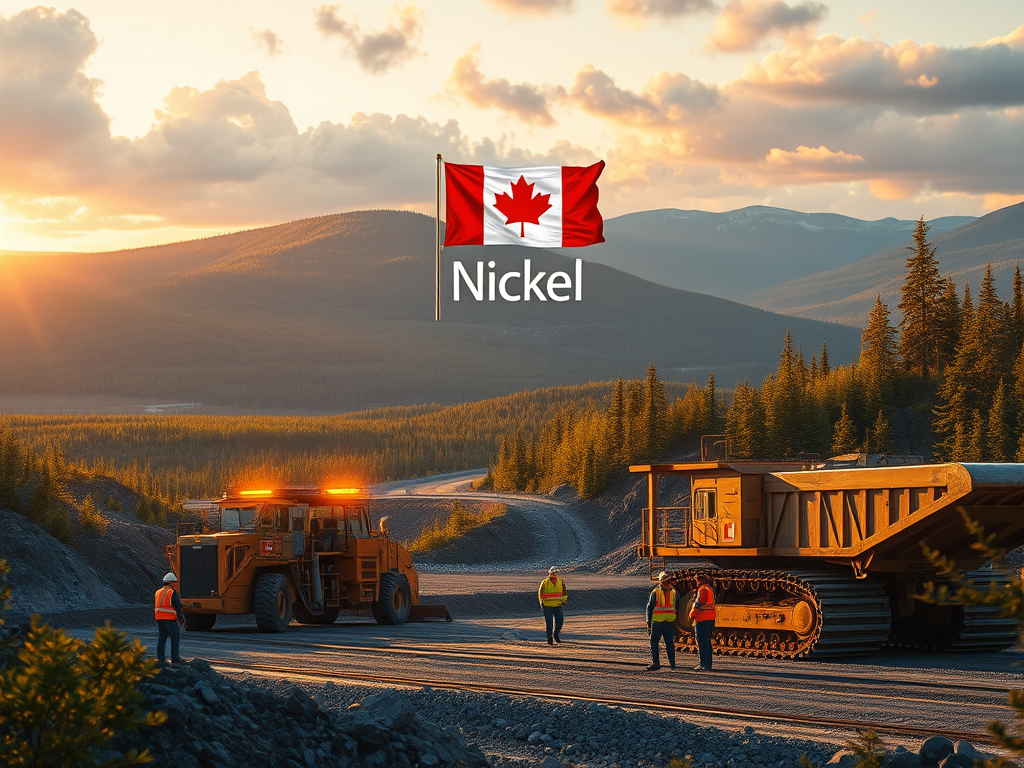
#Ontario provincial funds will support #Vale Base Metals’ #NickelCarbonyl refining project.

A modern carbonyl reactor used in nickel production, featuring a Canadian flag design, with workers in lab coats and safety gear operating the equipment in a well-lit industrial facility.

Development of new reactor will expand processing capacity, enable processing of alternative feedstocks.

The reactor in operation currently has been operating since 1973,

Vale Base Metals (VBM) has been awarded $500,000 in provincial funding to advance a refining process used in nickel production at its Copper Cliff refinery.

Provided by the Ontario Critical Minerals Innovation Fund (CMIF), the money will go toward research and development of a next-generation carbonyl reactor, which is used to produce “one of the purest forms of nickel available,” according to the company.

“Carbonyl-refined nickel is used for the most demanding applications in aerospace, defence, and electronics for our key critical mineral clients looking for secure and reliable supply chains. We are grateful to the CMIF for their generous support as we take the carbonyl process to the next stage in its evolution.”

Pioneered by Vale more than 100 years ago, carbonyl refining is described as a complex process that’s still used by only a “handful” of companies today.

Read more at: https://www.sudbury.com/local-news/provincial-funds-will-support-vale-base-metals-carbonyl-refining-project-11386421

Concerned carmakers race to beat #China’s rare earths deadline

A red electric car with an open door is showcased in a manufacturing facility. The background features workers and an European Union flag, emphasizing the automotive industry's focus on electric vehicle production.

LONDON/BERLIN, Oct 21 (Reuters) – Global automakers are scouring the globe for crucial rare earths ahead of looming Chinese export controls, with executives worried they could lead to parts shortages and plant closures.

Rare earth magnets power motors in car parts such as side mirrors, speakers, oil pumps, windshield wipers and fuel leakage and braking sensors. They play an even bigger role in EVs.

While a U.S.-China deal diverted a supply threat, stockpiles were depleted by similar restrictions earlier this year, while Beijing has also made it harder to get export licenses.

China has since dramatically expanded export curbs, with companies facing global supply shortages.

Consultancy AlixPartners estimates China controls up to 70% of global rare-earths mining, 85% of refining capacity and about 90% of rare-earths metal alloy and magnet production.

The new Chinese export control list includes elements like ytterbium, holmium and europium, also used in making cars.

Read more at: https://www.reuters.com/business/autos-transportation/concerned-carmakers-race-beat-chinas-rare-earths-deadline-2025-10-21/

#Trump Signs #RareEarths ‘Framework’ With #Australia and Vows to Speed Delivery of Nuclear Submarines

Australian Prime Minister Anthony Albanese and President Donald Trump engaged in a discussion at the White House, with a map of the Pacific and Australian flag visible in the background.

Australian Prime Minister Anthony Albanese came to the White House Monday offering cheaper access to the continent’s rare earth minerals and an invitation to visit to play golf. President Donald Trump gifted his fellow world leader a pledge to not only honor a Biden-era agreement on nuclear-powered submarines, but speed up production in an effort to boost allied naval power in the Pacific.

China’s influence loomed over both deals, as well as Albanese’s entire visit. Over the course of the meeting in the Cabinet Room, the longstanding alliance between Australia and the U.S. seemed bolstered as both countries made moves to counter Beijing’s creeping influence over the Pacific and China’s dominance of the raw materials used in new technologies.

Read more at: https://time.com/7327042/trump-australia-rare-earth-minerals-china/

#WhiteHouse Is Cutting #Rare-Earth Research at the Wrong Time

A scientist in a lab coat examines a sample in a laboratory, with a map of China and the US in the background featuring charts and data related to rare-earth materials.

The US shouldn’t have ignored a warning shot that was fired a decade and a half ago about China’s ability to use its dominance in the mining and refining of rare-earth metals to disrupt global manufacturing.

In 2010, China restricted the supply of rare-earth materials for a few months after Japanese coast guard vessels collided with a Chinese fishing boat near disputed islands in the East China Sea, resulting in a diplomatic crisis when the captain was arrested.

Following the spat, Japan rushed to develop its own supply of rare-earth elements and is now the second-largest maker of permanent magnets behind China. The US government started a review of its rare-earth dependency and joined Japan in filing a case to the World Trade Organization, but the US response was mostly muted.

This unheeded warning has now resulted in a national security crisis in which China has the ability to disrupt global production by withholding supply. The US government can turn the crisis into opportunity by stepping up funding for both research and production of rare-earth materials, but it’s headed in the wrong direction in some vital areas.

Read more at: https://www.bloomberg.com/opinion/articles/2025-10-20/white-house-is-cutting-rare-earth-research-at-the-wrong-time

#India invites #Canadian #PMCarney for AI summit, both sides agree to begin trade talks again

Trade and investments, re-establishing Canada India Ministerial Energy dialogue, relaunching the Joint Science and Technology Cooperation Committee are among some of the major agreements, the two sides said in a joint statement after a meeting between External Affairs Minister S. Jaishankar and Canadian Foreign Minister Anita Anand.

Read more at: https://www.thehindu.com/news/national/india-canada-ties-joint-statement-jaishankar-meets-anita-anand/article70158087.ece

#Xi reignites tensions ahead of #Trump meeting with dramatic curbs on critical rare-earths

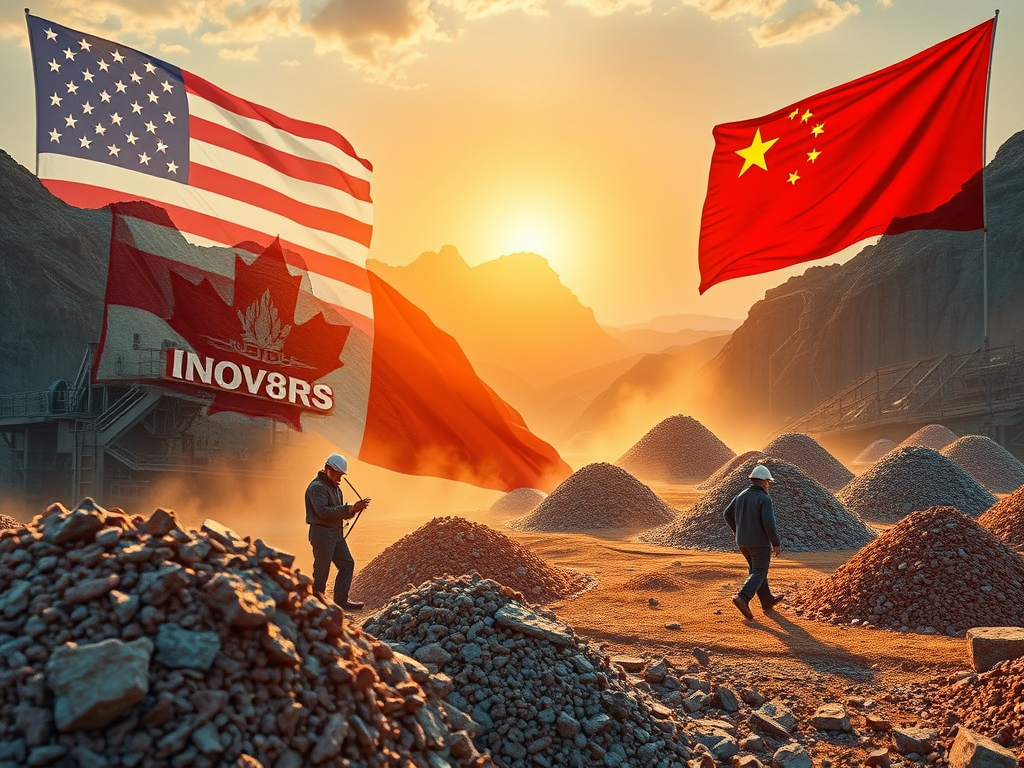
A dramatic landscape featuring colored rocks resembling rare earth minerals, with smoky clouds and industrial structures in the background. Flags of the United States and China are prominently displayed.

Beijing ramped up sweeping restrictions on rare earth exports on Thursday, expanding the list of minerals under control and extending curbs to target their production technologies and their overseas use, including for military and semiconductor applications.

China dominates the global processing of rare earths – essential in everything from everyday electronics to fighter jets. The latest move came as Beijing broadened its leverage in trade talks with the United States and ahead of an expected meeting between Chinese leader Xi Jinping and President Donald Trump on the sidelines of the APEC summit in South Korea later this month.

Under the new rules, Beijing further asserts its dominance in the sector by adding five rare-earth elements, including holmium, erbium, thulium, europium, ytterbium, and related magnets and materials, to its existing control list, requiring export licenses. The announcement on Thursday brought the total number of restricted elements to 12, out of the 17 types of rare earths.

Read more at: https://www.cnn.com/2025/10/09/business/china-tightens-rare-earth-export-controls-intl-hnk

A molecular dance in rare earth element chemistry

What do magnets, smartphones and medical imaging devices have in common? They all depend on rare earth elements called lanthanides, which are vital for modern technology. Yet, separating these chemically similar elements from one another has long been one of chemistry’s toughest puzzles. 

Now, scientists at the U.S. Department of Energy’s (DOE) Argonne National Laboratory have cracked open the mystery, revealing the molecular choreography that governs lanthanide separation — a breakthrough that could transform how we process these critical materials.

The team at Argonne used advanced computer simulations and experiments to reveal the hidden choreography of molecules during the extraction process. Traditionally, lanthanides are separated using a method called solvent extraction. In this process, the lanthanides are dissolved in an acidic solution and then selectively separated into an oil phase. Special molecules in the oil, called extractant molecules, bind to the lanthanides and help separate them.

Read more at: https://www.anl.gov/article/a-molecular-dance-in-rare-earth-element-chemistry

Fast-Track Approval for Key Mining Projects in Canada – #Canadian PM #MarkCarney

McIlvenna Bay and Red Chris among first five projects to move under Ottawa’s new framework

Prime Minister Mark Carney has named several mining operations among the first five major projects to undergo fast-track approval under Canada’s new Major Projects Office (MPO).

Key among them is the Foran Mining’s McIlvenna Bay copper-zinc mine in east-central Saskatchewan, operating in one of Canada’s richest mineral belts, which will supply critical minerals for clean energy, advanced manufacturing, and modern infrastructure.

Also included is the expansion of the Red Chris copper mine in northwestern British Columbia, which will increase annual copper production by over 15% and extend the mine’s lifespan by more than a decade, while reducing greenhouse gas (GHG) emissions by over 70% when the expanded operations are in full swing.

Both projects include collaboration with Indigenous Nations — the Peter Ballantyne Cree Nation in Saskatchewan and the Tahltan Nation in B.C. — underscoring the government’s emphasis on Indigenous partnership in mining operations.

The other projects referred to the MPO are LNG Canada Phase 2 in Kitimat, B.C., which would double LNG Canada’s output; the Darlington New Nuclear Project in Bowmanville, Ont. — Canada’s first G7 small modular reactor; and the Contrecœur Terminal Container Project near Montréal, which would expand the Port of Montréal’s capacity by about 60%. Together with the two mining ventures, these initiatives reflect the federal government’s priority of expediting critical energy and resource projects that underpin Canada’s transition to a net-zero economy.

Read more at: https://www.canadianminingjournal.com/news/carney-launches-fast-track-reviews-for-major-mines-and-energy-projects/

#Missouri based #US firm makes a $500 million investment deal with Pakistan for #CriticalMinerals

Two people shaking hands over signed documents, with mineral samples displayed in the foreground.

A U.S. metals company signed a $500 million investment deal with Pakistan on Monday.

Pakistan’s Frontier Works Organization — which is the country’s largest miner of critical minerals — signed a memorandum of understanding with Missouri-based U.S. Strategic Metals for collaboration plans that include setting up a poly-metallic refinery in Pakistan.

Read more at: https://www.seattletimes.com/business/u-s-firm-agrees-500-million-investment-deal-with-pakistan-for-critical-minerals/

#US #RareEarths qualified for EV magnets

A truck and a car drive on a road surrounded by rocky terrain and mountains, with American flags positioned on either side of the road.

U.S.-mined and processed rare earth elements have been successfully manufactured into permanent magnets for use in electric vehicles and hybrids.

This development represents a significant milestone in establishing a China-independent “mine-to-magnet” supply chain using rare earth oxides produced in the United States. The NdPr oxide has been qualified for use in high-temperature drive units installed in EVs and hybrid vehicles manufactured by major automotive companies across North America, Europe, Japan, and Korea.

“We are excited to announce that rare earth oxides mined, processed and produced in America are expected to be powering EVs and hybrids for sale around the world very soon, representing a major achievement in restoring domestic critical mineral supply chains,” said Mark S. Chalmers, CEO of Energy Fuels .

« Older Entries Recent Entries »