Category Archives: Metals

Global miner #BHP plans to expand #Nickel output amid battery boom

20180904BL-8

Global miner BHP Group said it plans to expand its nickel sulphide operations amid an expected boom in demand for the material in electric vehicle batteries.

But the company is not looking to produce main battery ingredient lithium as it sees such output having slimmer profits.

Speaking at a strategy briefing on long-term asset allocation, BHP Chief Financial Officer Peter Beaven said growth in nickel could come from either exploration or acquisitions.

Read more at: https://www.reuters.com/article/us-mining-bhp/bhp-seeks-more-nickel-sulfides-on-bright-battery-demand-idUSKCN1SS00G

#BillGates: This is what we need to do to tackle climate change

img-20171115-5a0c6f1305ee0

1. Improved energy storage systems: The sun and the wind are incredible energy sources. Finding ways to store that energy to use after the sun sets and the wind stops blowing is a big challenge we need to solve. We do have ways to store energy for a matter of hours—like lithium ion batteries—that are becoming cheaper every year.

2. Carbon capture and storage and nuclear: I often hear that lower cost solar and wind power along with the emerging breakthroughs in energy storage mean that these sources will be enough to get us to a carbon-free power grid. But because the world must balance the need to eliminate carbon emissions with economic growth, we should also consider what solutions would be most affordable. A recent study from researchers at MIT found that supporting renewable energy with a mix of clean energy solutions—including nuclear and carbon capture and storage (CCS)—would make carbon-free electricity up to 62 percent cheaper than using renewables alone.

3. High-voltage, long-distance transmission lines: Renewable power resources like wind and solar are often located far from the cities or industrial areas where energy demand is the greatest. Connecting our renewable energy supply with demand will require us to build transmission lines that can handle large amounts of power over very long distances. High-voltage direct current (HVDC) transmission technology—as opposed to the alternating current power lines most electric grids in the U.S. use today for transmission—would help us integrate renewable energy into our world’s power supply. Expanding HVDC lines, however, will not only require new investments in our power grids, but also supportive national and local policies to support their construction. Research and development at U.S. Department of Energy national laboratories like the Pacific Northwest National Laboratory and the National Renewable Energy Laboratory is helping lay the groundwork for how we can design, build, and operate a 21st-century grid.

Read more at: https://www.weforum.org/agenda/2019/05/a-critical-step-to-reduce-climate-change/

#Graphite coating makes perovskite #SolarCells waterproof

2-solarpowered

Most solar cells currently on the market are made of silicon, however they are expensive to make and require a lot of very pure silicon to manufacture. They are also quite thick and heavy, which limits their applications.

Perovskite solar cells, using materials with the same 3-D structure as calcium titanium oxide, are cheaper to make, thinner and can be easily printed onto surfaces. They also work in low light conditions and can produce a higher voltage than silicon cells, meaning they could be used indoors to power devices without the need to plug into the mains.

The downside is they are unstable in water which presents a huge obstacle in their development and also limits their use for the direct generation of clean hydrogen fuels.

The team of scientists and chemical engineers, from the University of Bath’s Centre for Sustainable Chemical Technologies, has solved this problem by using a waterproof coating from graphite, the material used in pencil leads.

Read more at: https://phys.org/news/2019-05-graphite-coating-perovskite-solar-cells.html

#US senate introduces new bill to boost domestic battery minerals supply

MIT-Lithium-Supplies-1_0

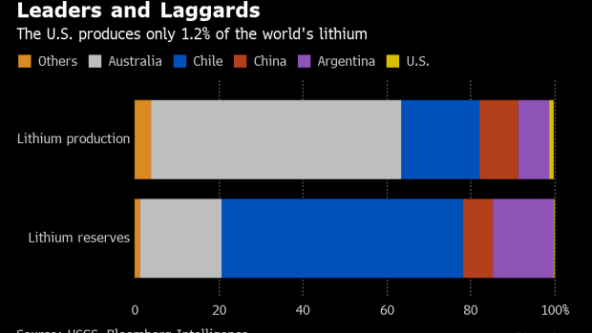
Republican senators led by Lisa Murkowski has introduced bipartisan legislation to secure mineral resources and supply chains, reducing reliance on foreign sources. The new legislation – the American Minerals Security Act – listed lithium, graphite, cobalt and nickel as “critical minerals” to the auto and energy industries.

Read more at: http://www.mining.com/us-senate-introduces-new-bill-boost-domestic-critical-minerals-supply/

How air conditioners could keep you cool and capture carbon

180930716

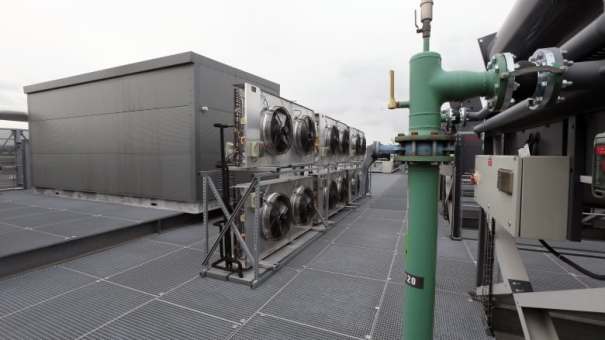
Researchers propose modules attached to AC fans to help suck carbon out of ambient air.

A #German-#Canadian team thinks it might be possible to use ordinary building air conditioners to pull carbon dioxide out of the atmosphere and convert into “net-zero” emission carbon fuels.

These systems use large fans to expose air to carbon dioxide absorbing materials. The fans need to move vast amounts of air through the systems because carbon dioxide isn’t very concentrated in ordinary air. Even at its current high level, it’s only about 400 parts per billion in the atmosphere.

Read more at: https://www.cbc.ca/radio/quirks/may-4-2019-brain-resuscitation-hippos-supply-algae-skeletons-slug-surgical-glue-and-more-1.5119885/how-air-conditioners-could-keep-you-cool-and-capture-carbon-1.5119911


#Tesla Sees Risk of Battery-Minerals Shortage in Future

lithium-ore-falls-from-a-chute-onto-a-stockpile-at-a-talison-lithium-ltd-facility-a-joint-venture-between-tianqi-lithium-corp-and-albemarle-corp-in-greenbushes-australia

Booming demand for electric vehicles and insufficient investment in mines could result in a global shortage of minerals needed to manufacture rechargeable batteries in a few years’ time, a Tesla Inc. representative told U.S. officials and mining executives in a meeting in Washington.

Prices for some of the minerals, which include graphite, cobalt, lithium and nickel, could increase as a result of the high demand and the limited supply, Tesla global supply manager of battery metals Sarah Maryssael said in a closed-door presentation Thursday confirmed by the company. Investment is important to ensure there is sufficient supply for the industry to grow, she said.

Read more at: https://www.bloomberg.com/news/articles/2019-05-02/tesla-manager-sees-risk-of-battery-minerals-shortage-in-future?srnd=premium-middle-east

Climate change: #Scotland to set faster target for net-zero emissions

_106764214_climate_edinburgh2_getty

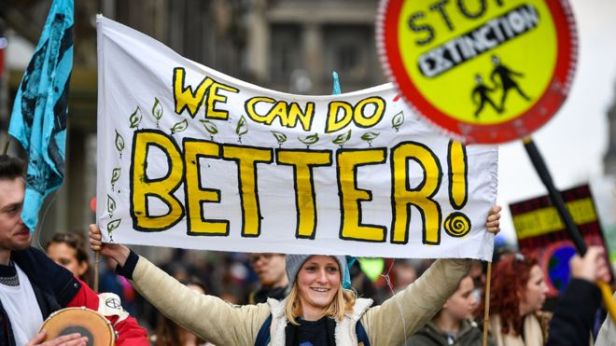
The Scottish government will legislate to reduce greenhouse gas emissions to net-zero by 2045 after receiving fresh advice from an expert panel.

The Committee on Climate Change (CCC) urged that Scotland set the target five years ahead of the UK as a whole.

The panel says Scotland has more potential sites for carbon capture and a greater landmass for tree planting.

It came after a report to the UN last year urged the world to go “further and faster” in tackling climate change.

Read more at: https://www.bbc.com/news/uk-scotland-48123960

Purifying water with #Graphene – possible to avoid further chlorination

howtopurifyw

Graphene and graphene oxide (a more stable version of the material in colloidal solutions) are carbon nanostructures that are extremely promising for biomedicine. For example, it can be used for targeted drug delivery on graphene scales and for tumor imaging. Another interesting property of graphene and graphene oxide is the ability to destroy bacterial cells, even without the additional use of antibiotic drugs.

In the current study, the researchers injected graphene oxide into solutions (nutrient medium and the saline) containing E.coli. Under the terms of the experiment, saline simulated water, and the nutrient medium simulated human body medium. The results showed that the graphene oxide along with the living and the destroyed bacteria form flakes inside the solutions. The resulting mass can be easily extracted, making water almost completely free of bacteria. If the extracted mass is then treated with ultrasound, graphene can be separated and reused.

Read more at: https://phys.org/news/2019-04-purifying-graphene.html

This scientist thinks she has the key to curb climate change: super plants

3400

The esteemed scientist – who has long banged the climate drum and now leads a project that could lower the Earth’s temperature – is perhaps the world’s leading botanist and is on the cusp of something so big that it could truly change our planet.

“We’re trying to do something that’s a huge, complicated thing even though it sounds so simple,” Chory says. “Plants evolved to suck up CO2 and they’re really good at it. And they concentrate it, which no machine can do, and they make it into useful materials, like sugar. They suck up all the CO2, they fix it, then it goes back up into the atmosphere.”

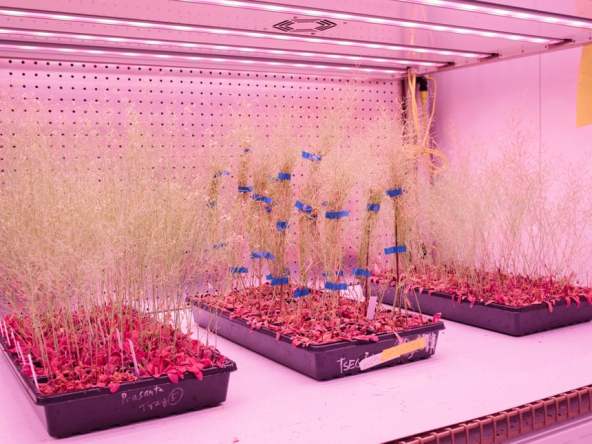
She is now working to design plants capable of storing even more carbon dioxide in their roots. Her Ideal Plant project uses gene editing – via traditional horticulture and Crispr – to do so. On a large scale, this could suck enough carbon out of the atmosphere to slow down climate change.

This concept basically splices the genes of regular crops and everyday plants like beans, corn and cotton, with a new compound that makes them absorb more carbon. Their roots then transfer it to the soil to keep it there.

Read more at: https://www.theguardian.com/environment/2019/apr/16/super-plants-climate-change-joanne-chory-carbon-dioxide

#Climate change targets are slipping out of reach: Kemp

Square-3

LONDON, April 16 (Reuters) – For all the commentary around a transition to a clean energy system, the amount of carbon dioxide (CO2) in the atmosphere is still continuing to rise rapidly and shows no sign of slowing down.

Climate change targets are slipping out of reach as the concentration of CO2 in the atmosphere continues to march higher, leaving policymakers confronting uncomfortable choices.

If the concentration continues to rise, policymakers will have to plan for a world with significantly higher temperatures, or rely on untested strategies to remove CO2 from the air later in the century.

Read more at: https://www.reuters.com/article/energy-climatechange-kemp/column-climate-change-targets-are-slipping-out-of-reach-kemp-idUSL5N21Y4A0

« Older Entries Recent Entries »