Category Archives: Metals

#Birmingham to become #UK’s first centre for rare earth magnet recycling

Pioneering rare earth recycling company HyProMag, which was formed by researchers from the University of Birmingham’s School of Metallurgy and Materials, is to be acquired by Maginito Ltd, in a deal that aims to catalyse the further scale-up and international roll-out of technology first piloted at the University of Birmingham and forming the basis for the UK’s first full scale remanufacturing facility for rare earth magnets at Birmingham’s Tyseley Energy Park being developed later this year.

HyProMag’s core technology is the based upon the patented process – Hydrogen Processing of Magnet Scrap (HPMS), which was originally developed within the University’s Magnetic Materials Group (MMG) to extract rare earth magnets from scrap and redundant equipment and subsequently licensed to HyProMag.

The development of domestic sources of recycled rare earths in the UK, Germany, United States and other territories is a significant opportunity to fast-track the development of sustainable and competitive recycled rare earth magnet production.

Read more at: https://www.birmingham.ac.uk/news/2023/birmingham-to-become-uks-first-centre-for-rare-earth-magnet-recycling

Can the World Make an Electric Car Battery Without China?

It is one of the defining competitions of our age: The countries that can make batteries for electric cars will reap decades of economic and geopolitical advantages.

The only winner so far is China.

Despite billions in Western investment, China is so far ahead — mining rare minerals, training engineers and building huge factories — that the rest of the world may take decades to catch up.

Even by 2030, China will make more than twice as many batteries as every other country combined, according to estimates from Benchmark Minerals, a consulting group.

Here’s how China controls each step of lithium-ion battery production, from getting the raw materials out of the ground to making the cars, and why these advantages are likely to last.

China controls:41% of the world’s cobalt
28% of lithium
6% of the world’s nickel
78% of graphite
5% of manganese
REFINING:95% of manganese
73% of cobalt
70% of graphite
67% of lithium
63% of nickel
Components making:74% of separators
77% of cathodes
92% of anodes
Cathodes making:73% of NMC cathodes
99% of LFP cathodes
Battery Cells66% of the world’s battery cells

Read more at: https://www.nytimes.com/interactive/2023/05/16/business/china-ev-battery.html

#India and #Canada likely to sign interim free trade deal this year

According to the officials, the interim negotiation with Canada is “progressing fast” and the two countries may sign a deal in the second half of this year.

India and Canada may sign an interim free trade deal by this year, the precursor to a Comprehensive Economic Partnership Agreement (CEPA), officials said after commerce minister Piyush Goyal and his Canadian counterpart Mary Ng reviewed the progress of ongoing negotiations for a free trade agreement between the two countries a day before the CEOs roundtable, held in Toronto on Tuesday.

Read more at: https://www.hindustantimes.com/india-news/india-and-canada-may-sign-interim-free-trade-deal-by-year-end-precursor-to-comprehensive-economic-partnership-agreement-101683746661784.html

#Indonesia emerges as world’s second-largest #Cobalt producer

Indonesia has emerged as the world’s second-largest supplier of cobalt, contributing to a sharp fall in the price of the battery metal and adding to western anxieties about Beijing’s dominance across the electric car supply chain. The south-east Asian country generated 9,500 tonnes of cobalt last year — 5 per cent of the global supply — up from minimal volumes before 2021, according to an annual market report by the Cobalt Institute, an industry group. That means it has overtaken established producers Australia and the Philippines.

The surge in the supply of Indonesian cobalt — a byproduct from its rapidly growing nickel industry — has helped drive prices down from $40 per pound in April last year to about $15, according to Fastmarkets.

Read more at: https://www.ft.com/content/aae97af3-02ac-4723-a6fd-dbb0e5de55ff

#ElonMusk, #GregAbbott celebrate groundbreaking of #Tesla’s new #Texas facility

Tesla CEO Elon Musk traveled to Texas on Monday to celebrate the groundbreaking of the company’s new lithium refinery that the electric vehicle maker hopes will give the company more control over its supply chain.

Musk said the facility, which will be one of the largest of its kind in the world, will produce lithium for “about a million vehicles” and have more lithium refining capacity than “the rest of North American refining capacity combined.” 

He explained that the refinery’s capacity could be expand.

Read more at: https://www.foxbusiness.com/markets/elon-musk-greg-abbott-celebrate-groundbreaking-teslas-new-texas-facility

#Oklahoma Gov. Stitt sees growing foreign interest in investments in state

Oklahoma is seeing a sharp increase in foreign investment interest, especially in its renewable energy sector, and is on the cusp of signing large new deals with firms in Switzerland and Asia, Governor Kevin Stitt told Reuters on Wednesday.

“If you want a manufacturing center in the U.S., there’s not a better state to be located in than Oklahoma. We’re dead center located in the middle of the U.S.,” he said, citing a big push by countries and companies to diversify their supply chains and reduce reliance on China.

The state’s low energy costs – about one-third the cost of energy in Europe and the lowest in the United States – were a big draw, Stitt said, adding that Oklahoma derived about 45% of its electricity from renewable sources.

He said he had met recently with officials from Germany, Switzerland, South Korea, Taiwan, France and Qatar, and was in talks with various firms about potential deals valued at around $1 billion, but ranging higher.

Japan’s Panasonic Holdings, a battery supplier to electric vehicle maker Tesla Inc, said on Sunday it is considering building a battery plant in Oklahoma, its third in the United States.

Stitt said agriculture and rare earths production were other promising areas.

USA Rare Earth is investing heavily in a rare-earth metal manufacturing facility in Stillwater, Oklahoma, Stitt said.

Read more at: https://www.reuters.com/world/us/oklahoma-gov-stitt-sees-growing-foreign-interest-investments-state-2023-05-04/

US-EU Critical Minerals Deal Would Give EU Broader Trade Relief

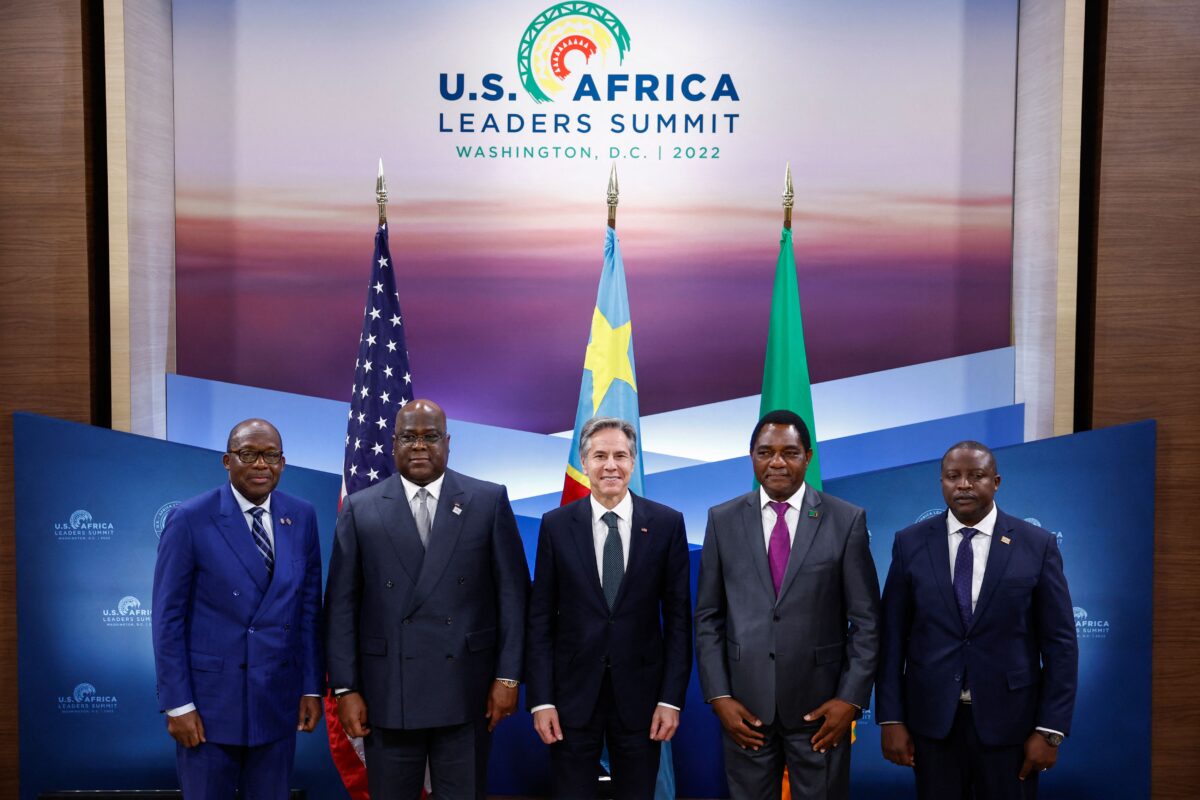
An agreement between the US and the European Union over critical minerals would unlock wider benefits than previously thought, with a deal paving the way to remove several more trade barriers introduced by President Joe Biden’s massive green subsidy law, according to people familiar with the matter.

An accord would essentially allow EU companies to take advantage of some of the benefits in the Inflation Reduction Act on the 50 minerals defined as critical in the law, said the people who spoke on the condition of anonymity.

The Biden administration has said that nations with trade agreements with the US will be able access some of the IRA’s benefits, which will offer some $369 billion in handouts and tax credits over the next decade for clean-energy programs in North America. If the minerals accord is passed, it would act as the equivalent of a free-trade agreement and that status would in turn enable electric vehicles containing EU-extracted and processed critical minerals to be eligible for IRA subsidies, the people said.

The US Trade Representative’s office declined to comment.

An early draft of the EU-US minerals agreement lists five minerals — cobalt, graphite, lithium, manganese and nickel — covered by that standalone accord, Bloomberg previously reported. Such a deal would echo one that the Biden administration signed last month with Japan.

Read more at: https://www.bloomberg.com/news/articles/2023-04-28/us-eu-critical-minerals-deal-would-give-eu-broader-trade-relief#xj4y7vzkg

#Finland’s Fortum begins battery material recovery from EV ‘black mass’

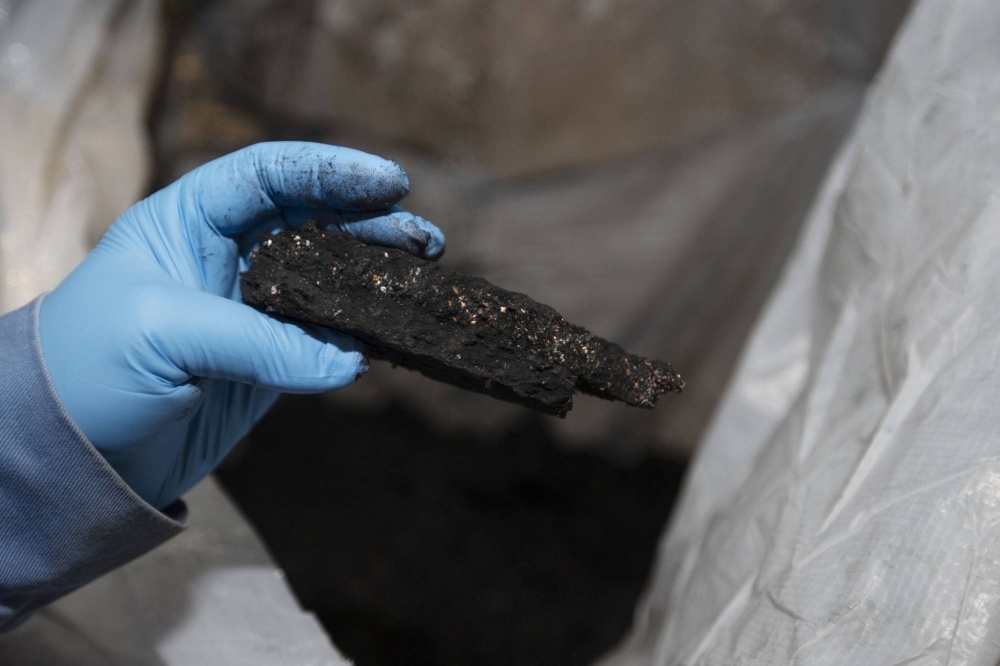
Finnish utility Fortum said on Tuesday it has begun recovering raw materials from the “black mass” of electric vehicle batteries at its new recycling facility in Finland.

Black mass is the shredded material which comes from used batteries, which can include lithium, cobalt, and nickel. These metals can then be extracted and used to make new batteries.

Carmakers such as Tesla, Volkswagen and Stellantis are accelerating their drive to secure these scarce battery raw materials, while the European Union is tightening its regulation on recycling them.

Fortum said it had invested some 27 million euros ($30 million) in the new facility, which it called the first of a kind in Europe, in Harjavalta, southwestern Finland.

It said it would be able to recover 95% of the raw materials contained in the black mass of lithium-ion batteries, to produce a sulphate of nickel and cobalt for reuse in car batteries.

Read more at: https://www.mining.com/web/finlands-fortum-begins-battery-material-recovery-from-ev-black-mass/

#Japan to subsidize half the costs of #Lithium, critical minerals projects

Japan’s Ministry of Economy, Trade and Industry will subsidize up to half the cost of mine development and smelting projects for lithium and other critical minerals by Japanese companies, Nikkei Asia reported on Sunday.

Lithium, manganese, nickel, cobalt, graphite and rare earths are reportedly the main targets for support.

The initiative seeks to secure raw materials used in manufacturing electric car engines and batteries. Japan is planning to diversify its supply chains, as, like most countries, it is dependent on China for many key minerals.

Read more at: https://www.mining.com/japan-to-subsidize-half-the-costs-of-lithium-critical-minerals-projects-report/

#Chile plans to nationalize its vast #Lithium industry

SANTIAGO, April 20 (Reuters) – Chile’s President Gabriel Boric said on Thursday he would nationalize the country’s lithium industry, the world’s second largest producer of the metal essential in electric vehicle batteries, to boost its economy and protect its environment.

The shock move in the country with the world’s largest lithium reserves would in time transfer control of Chile’s vast lithium operations from industry giants SQM and Albemarle to a separate state-owned company.

It poses a fresh challenge to electric vehicle (EV) manufacturers scrambling to secure battery materials, as more countries look to protect their natural resources. Mexico nationalized its lithium deposits last year, and Indonesia banned exports of nickel ore, a key battery material, in 2020.

“This is the best chance we have at transitioning to a sustainable and developed economy. We can’t afford to waste it,” Boric said in an address televised nationwide.

Read more at: https://www.reuters.com/markets/commodities/chiles-boric-announces-plan-nationalize-lithium-industry-2023-04-21/

« Older Entries Recent Entries »