Category Archives: Metals

Miner backed by #Canada province vows to compete with #China in rare earths
The Canadian province of Saskatchewan has vowed to compete with China in processing and production of rare earths and become the first North American commercial alternative source for the metals, used to make magnets for electric vehicles and wind turbines.

The Saskatchewan Research Council Rare Earth Processing facility is betting on demand for these magnets to jump in the next couple of years, driven by demand from original equipment manufacturers such as automakers.

The SRC Rare Earth processing facility has begun production on a commercial scale and expects to hit a production target of 40 tonnes of rare earth metals per month by the end of this year. And it will produce 400 tonnes of the NdPr metals per year, which is enough to produce 500,000 EVs, according to SRC. The facility has already tied up with potential clients in South Korea, Japan and the United States.

Read more at: https://www.reuters.com/markets/commodities/miner-backed-by-canada-province-vows-compete-with-china-rare-earths-2024-09-23/


#China’s Grip on #RareEarths Undercuts Projects From #US to #Japan

  • Lynas facility near Houston shows challenges facing industry
  • Beijing controls about 70% of production of the key minerals

A couple hours outside Houston, in a remote field near a Dow Chemical Co. plant, America’s bid to undercut China’s grip on the global supply of rare earth minerals critical to high technology has yet to break ground.

Even when it does, China’s dominance of the market — it controls about 70% of output and more than 90% of refining — means that goal will likely remain out of reach.

Read more at: https://www.bloomberg.com/news/articles/2024-09-16/china-s-grip-on-rare-earths-undercuts-projects-from-us-to-japan

Carbonyl Iron Powder: Steady voltage, for smartphones, tablets and more?

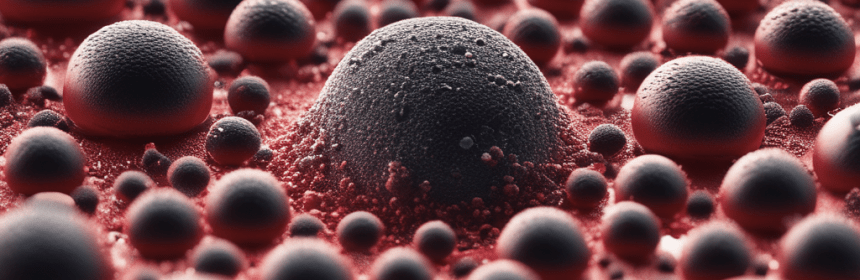
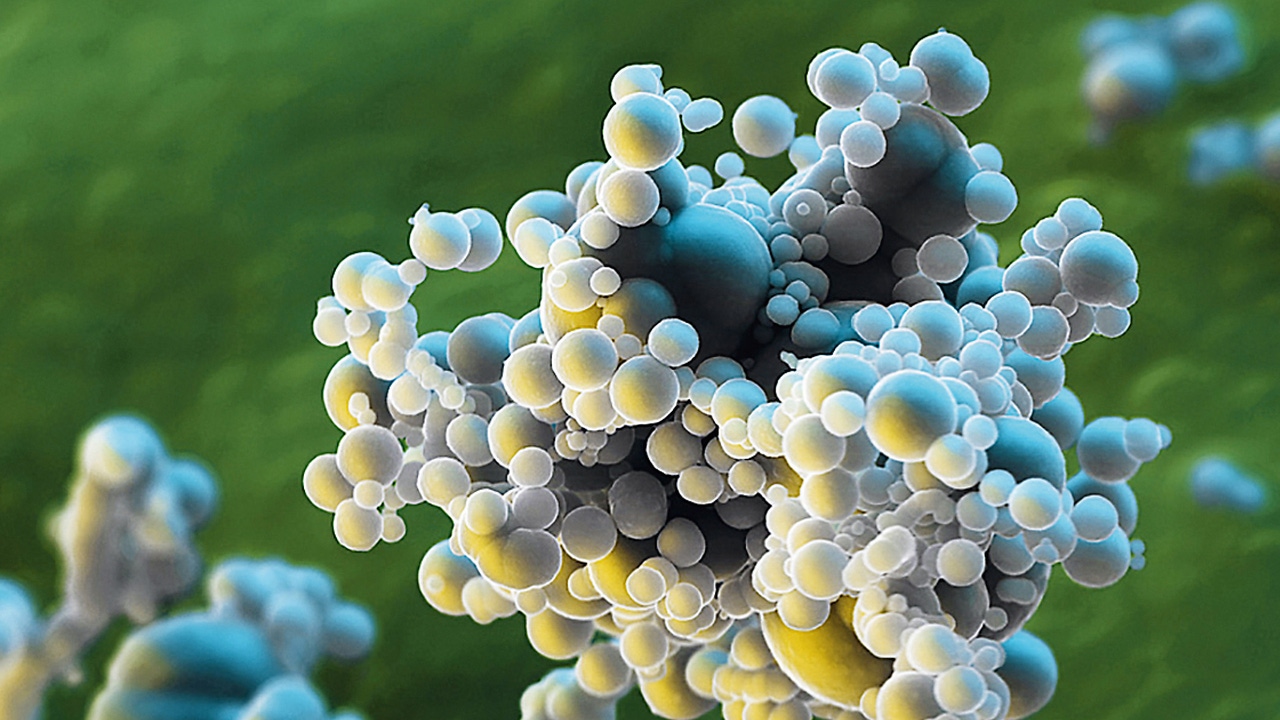
Carbonyl Iron Powder with high-purity, microscopically small ferrous spheres that have a precisely defined structure and size. Incorporated in the cores of high-frequency coils, this carbonyl iron powder intensifies the magnetic field that is generated when electricity flows into the iron core of the coils, and thus ensures stable direct current. To prevent the energy losses that typically occur with an electroconductive iron core, each of the tiny particles is surrounded by an electrically insulating layer. This suppresses leakage current in the core.

In this way, carbonyl iron powder makes sure that the sensitive electronic components in the compact devices we use every day receive a steady supply of the required voltage. It protects them from voltage fluctuations and makes them more efficient, so even very small high-frequency coils can be extremely powerful. Every tablet computer contains three or four such high-frequency coils with a carbonyl iron powder core, while a notebook has up to 10.

Read more at: https://www.basf.com/sa/en/we-create-chemistry/creating-chemistry-magazine/resources-environment-and-climate/steady-voltage-for-smartphones-tablets

#US military announces $20M US grant to build #Cobalt refinery in #Ontario

The U.S. military has made its largest move so far in a novel national-security effort to fund mining initiatives in Canada. 

The Pentagon on Tuesday announced a $20 million US grant to create a cobalt refinery in northern Ontario’s Temiskaming Shores. The money will go to the Toronto-based Electra Battery Materials Corporation; the government of Canada is adding $3.6 million US ($4.9 million Cdn) of its own to the project.

This is the third and, by far largest, in a series of Washington’s grants to Canadian projects as part of an initiative announced when U.S. President Joe Biden visited Ottawa in 2022.

Read more at: https://www.cbc.ca/news/world/us-ontario-funding-cobalt-refinery-1.7298973

New tracking system to prevent fraud in #Nickel, #Tin mining

The government has launched an online tracking system for nickel and tin shipments to increase state revenue and improve governance in the mining sector. Already implemented for coal shipments since 2022, the Mineral and Coal Information System (Simbara) has now been expanded to encompass nickel and tin and is to be applied to other metallic minerals in the future.

Resource-rich Indonesia is the world’s biggest producer of nickel and one of the largest producers of tin. Simbara will enable the government to track the supply of nickel and tin from mines to domestic smelters. Finance Ministry Budget Director General said the government had launched the online tracking system for nickel and tin shipments given the two commodities’ increasingly strategic role in national and global economic development.

Read more at: https://www.thejakartapost.com/business/2024/07/22/new-tracking-system-to-prevent-fraud-in-nickel-tin-mining.html.

#Chilean lithium to be eligible for #US tax break

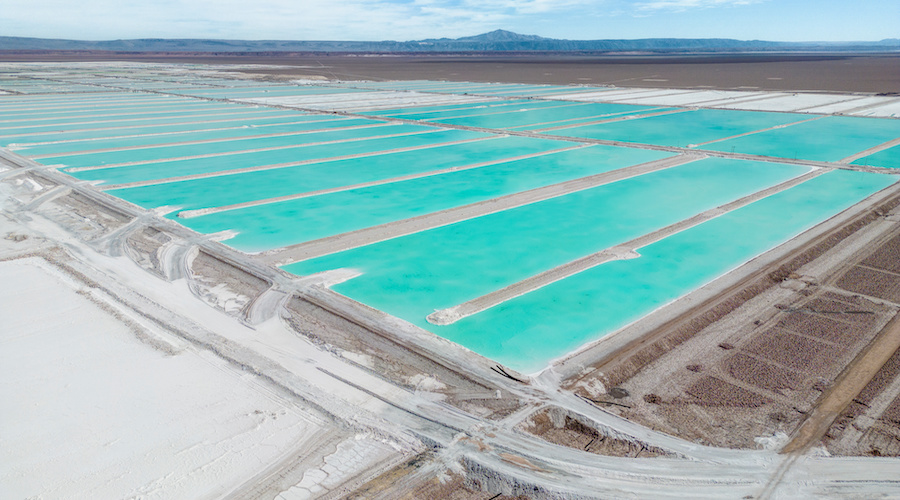
Products made with Chilean-mined lithium – used for electric-vehicle batteries – will be eligible for U.S. tax benefits, the Andean country’s government said on Thursday.

Chile, the world’s largest copper producer and second-largest lithium producer, will be eligible for tax breaks laid out in the U.S. Inflation Reduction Act (IRA), which includes subsidies for electric vehicles based on their battery metal sourcing.

Read more at: https://www.reuters.com/markets/commodities/chilean-lithium-be-eligible-us-tax-break-2024-07-11/

Revolutionary Iron-Based Lithium-Ion Battery for Affordable and Sustainable EVs

A new type of lithium-ion battery could help make electric vehicles cheaper, safer, and more sustainable — all thanks to the power of iron.

Yes, that’s right — scientists have developed an innovative iron-based cathode material that could replace pricier and rarer metals like cobalt and nickel, paving the way for EV batteries that are easier on the wallet and the planet.

A unique mix of fluorine and phosphate anions that allow reversible conversion between iron powder, lithium fluoride, lithium phosphate, and iron salts.

Read more at: https://www.yahoo.com/tech/scientists-achieve-remarkable-breakthrough-could-120000787.html

#BASF, #Eramet Cancel $2.6 Billion #Nickel Project on EV Slump

BASF SE and Eramet SA abandoned plans to spend up to $2.6 billion building a nickel-cobalt refinery in Indonesia, reversing course after slowing sales growth for electric vehicles crimped demand.

Global availability of battery-quality nickel has improved since the project was conceived, BASF said Monday in a statement. A surge in EV sales has also dimmed in the past year, leading to declines in nickel and cobalt prices.

Read more at: https://www.bloomberg.com/news/articles/2024-06-24/basf-to-exit-2-6-billion-nickel-smelter-project-in-indonesia

#China to regulate #Lithium-ion battery industry amid fast expansion

China’s Ministry of Industry and Information Technology on Wednesday issued new guidelines for its lithium-ion battery industry, aiming to transform, upgrade and promote high-quality development amid rapid expansion in the sector.

The guidelines, following a proposal in May, will help firms scale back manufacturing projects that only expand production capacity, while enhancing technology innovation and product quality and trimming output costs, the ministry said.

Projects built on farmland and ecological zones would be required to be shut down, or strictly reined in and gradually removed.

Rapid expansion of production capacity along the lithium battery supply chain has led to a plunge in prices for products, including battery and raw materials, eroding companies’ profits in the world’s biggest market.

Industry planning and launch of new projects should be in line with national development of resources, ecological protection and energy saving management, the ministry said.

Read more at: https://www.reuters.com/markets/commodities/china-regulate-lithium-ion-battery-industry-amid-fast-expansion-2024-06-19/

#Scientists find new way to enhance durability of #Lithium batteries.

Safe and efficient energy storage is important for American prosperity and security. With the adoption of both renewable energy sources and electric vehicles on the rise around the world, it is no surprise that research into a new generation of batteries is a major focus. Researchers have been developing batteries with higher energy storage density and, thus, longer driving range. Other goals include shorter charging times, greater tolerance to low temperatures and safer operation.

One of the more promising such batteries has a lithium-containing cathode supplemented with nickel, manganese and cobalt (NMC). At the U.S. Department of Energy’s (DOE) Argonne National Laboratory, a team of scientists has recently developed a new coating method for NMC cathodes with high nickel content, which boosts the energy density substantially. The cathode is the positively charged battery component that supplies lithium ions that shuffle between it and the battery’s negatively charged electrode, called the anode, during cycling.

The repeated charging of batteries under conditions of high voltage and rapid recharge leads to structural instability and breakdown over time. To overcome the problem, Argonne scientists developed a new coating that allows the cathode particles to withstand the fracturing in their crystalline structure that had previously occurred upon cycling. They call this material ​“epitaxial entropy-assisted coating,” or EEC for short. According to Xu, ​“entropy assistance” ensures that the coating helps to prevent the breakdown of the material beneath it due to a thermodynamic effect, which leads materials to naturally become destabilized over time.

Read more at: https://www.anl.gov/article/scientists-find-new-way-to-enhance-durability-of-lithium-batteries

« Older Entries Recent Entries »