Rare earths company MP Materials is partnering with the US military and Saudi Arabia’s flagship mining company to build a rare earth refinery in the Kingdom, in a move that aims to diversify the global critical minerals supply chain.
Saudi Arabian Mining Company (Maaden) and the Pentagon will create a joint venture to process rare earth materials from Saudi Arabia and other parts of the world to supply the US and Saudi manufacturing and defense sectors.
In a rapidly shifting global landscape, we are building One Canadian Economy turbo-charged by major nation-building projects that unleash our natural resources, diversify our products and markets and create hundreds of thousands of high-paying careers for our workers, all while protecting the environment and upholding the rights of Indigenous Peoples.
Honourable Tim Hodgson, Minister of Energy and Natural Resources, visited Canada Nickel Company’s Crawford Project to highlight the Government of Canada’s efforts to build one Canadian economy and build Canada’s leadership in the critical minerals sector.
The Crawford Project will serve as an anchor of Canada’s global leadership in clean industrial materials. Located in the world’s second-largest nickel reserve, the Crawford Project will produce high-quality, low-carbon nickel essential for batteries and green steel. With projected emissions 90 percent below the global average and the potential for a net-negative carbon footprint, it represents a model for the future of responsible mining. Canada Nickel is also planning an expansion to commence once mining operations have started, which would include producing other metals such as iron, cobalt, platinum, palladium and chromium; developing a nickel refinery for stainless steel and electric vehicle markets; and planning to construct a stainless steel and alloy production facility. The project is expected to attract $5 billion in investment and could create 4,000 new careers, securing Canada’s place at the forefront of the clean economy.
Despite agreeing to relax its export controls on rare earths, China is now preparing a new licensing regime that would continue to restrict shipments to US military-linked firms, The Wall Street Journal reported on Wednesday.
According to sources cited by WSJ, the Chinese government plans to launch a “validated end-user” (VEU) framework that would vet companies with no ties to US defense contractors to receive faster export approvals for rare earths and other sensitive materials, while keeping tighter scrutiny over dual-use exports.
The new system is designed to let Chinese leader Xi Jinping to honor the trade truce with US President Donald Trump to ease the flow of strategic materials like rare earths, without compromising Beijing’s national security priorities, the report said.
Canada announced on Friday the first round of projects under a G7 critical minerals production alliance envisioned as a counterweight to China’s dominance in the sector.
The 25 initiatives include purchase agreements for a Quebec graphite mine and investments to scale up a rare earth elements refinery in Ontario.
Canada’s energy and natural resources minister said the alliance’s first initiatives should be seen as a clear signal the group is serious about reducing market concentrations, safeguarding national security and driving investment.
“As we move swiftly to reduce dependence on concentrated supply chains, our collective commitment is clear. Every delay is a concession of economic and national security interests. We will no longer accept that,” said Minister Tim Hodgson.
Lynas managing director Amanda Lacaze says the wave of new, government-backed rare earths projects will face higher construction costs because Chinese manufacturers will deliberately starve Australian and American projects of the equipment and consumables they need.
The warning from Lynas, the biggest producer of separated rare earth oxides outside China, came as the company reported its strongest quarterly revenue in more than two years.
The US, Australia and other countries are pumping billions of dollars into construction of new rare earths mines and refineries in a bid to break China’s stranglehold on the metals needed for defence and decarbonisation products.
Lynas mines rare earths in WA and refines them in Malaysia, and has spent the past decade fighting China’s ability to suppress rare earth prices, and curious cyber campaigns that appeared to act in the Chinese national interest.
Speaking to investors on Thursday, Lacaze said China was also limiting the availability of equipment and consumables for the construction and operation of rare earths refineries.
Prior to going into mining in unexplored part of the world:
1. We need immediate research and development to improve the existing technologies.
2. Build refineries in the existing mines with infrastructure using developed technologies.
3. Take the price control of the Rare Earth Elements by tariffs or other means until the local refineries optimize the refining processes and operating cost.
We do not want to send the concentrate to another country to do final refining.
China’s tightening of export controls of its rare earth minerals by expanding licensing requirements for foreign firms has ramifications for countries such as the United States. The latter’s heavy reliance on Chinese imports and lack of domestic processing facilities make it increasingly vulnerable. The delay in treating rare earth minerals as a strategic necessity, the absence of reforms and the failure over the years to initiate domestic industrial policies will ensure that it lags behind.
Mere adoption of reactionary measures against Beijing to gain geopolitical dominance on rare earths will not cut it.
Strategic vulnerability makes achieving self-sufficiency challenging. China, unlike the United States, has massive strategic leverage as it mines around 70 per cent of minerals globally and accounts for 90 per cent of global processing capability. Its tightened export controls via expansion of licensing prerequisites further demonstrates its strategic capital and ability to affect supply chains across the world. Even before the announcement of the latest curbs, shipments of rare earth magnets to the US fell 28.7 per cent month on month in September.
Prior to going into mining in unexplored part of the world:
1. We need immediate research and development to improve the existing technologies.
2. Build refineries in the existing mines with infrastructure using developed technologies.
3. Take the price control of the Rare Earth Elements by tariffs or other means until the local refineries optimize the refining processes and operating cost.
We do not want to send the concentrate to another country to do final refining.
Development of new reactor will expand processing capacity, enable processing of alternative feedstocks.
The reactor in operation currently has been operating since 1973,
Vale Base Metals (VBM) has been awarded $500,000 in provincial funding to advance a refining process used in nickel production at its Copper Cliff refinery.
Provided by the Ontario Critical Minerals Innovation Fund (CMIF), the money will go toward research and development of a next-generation carbonyl reactor, which is used to produce “one of the purest forms of nickel available,” according to the company.
“Carbonyl-refined nickel is used for the most demanding applications in aerospace, defence, and electronics for our key critical mineral clients looking for secure and reliable supply chains. We are grateful to the CMIF for their generous support as we take the carbonyl process to the next stage in its evolution.”
Pioneered by Vale more than 100 years ago, carbonyl refining is described as a complex process that’s still used by only a “handful” of companies today.
LONDON/BERLIN, Oct 21 (Reuters) – Global automakers are scouring the globe for crucial rare earths ahead of looming Chinese export controls, with executives worried they could lead to parts shortages and plant closures.
Rare earth magnets power motors in car parts such as side mirrors, speakers, oil pumps, windshield wipers and fuel leakage and braking sensors. They play an even bigger role in EVs.
While a U.S.-China deal diverted a supply threat, stockpiles were depleted by similar restrictions earlier this year, while Beijing has also made it harder to get export licenses.
China has since dramatically expanded export curbs, with companies facing global supply shortages.
Consultancy AlixPartners estimates China controls up to 70% of global rare-earths mining, 85% of refining capacity and about 90% of rare-earths metal alloy and magnet production.
The new Chinese export control list includes elements like ytterbium, holmium and europium, also used in making cars.
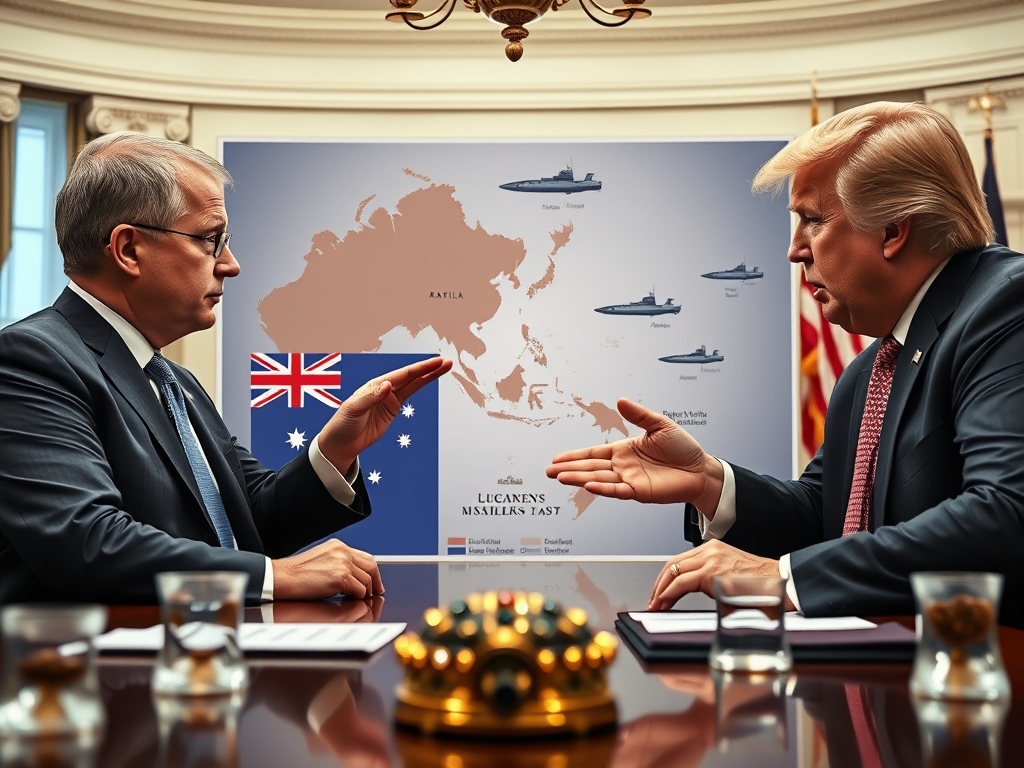
Australian Prime Minister Anthony Albanese came to the White House Monday offering cheaper access to the continent’s rare earth minerals and an invitation to visit to play golf. President Donald Trump gifted his fellow world leader a pledge to not only honor a Biden-era agreement on nuclear-powered submarines, but speed up production in an effort to boost allied naval power in the Pacific.
China’s influence loomed over both deals, as well as Albanese’s entire visit. Over the course of the meeting in the Cabinet Room, the longstanding alliance between Australia and the U.S. seemed bolstered as both countries made moves to counter Beijing’s creeping influence over the Pacific and China’s dominance of the raw materials used in new technologies.
The US shouldn’t have ignored a warning shot that was fired a decade and a half ago about China’s ability to use its dominance in the mining and refining of rare-earth metals to disrupt global manufacturing.
In 2010, China restricted the supply of rare-earth materials for a few months after Japanese coast guard vessels collided with a Chinese fishing boat near disputed islands in the East China Sea, resulting in a diplomatic crisis when the captain was arrested.
Following the spat, Japan rushed to develop its own supply of rare-earth elements and is now the second-largest maker of permanent magnets behind China. The US government started a review of its rare-earth dependency and joined Japan in filing a case to the World Trade Organization, but the US response was mostly muted.
This unheeded warning has now resulted in a national security crisis in which China has the ability to disrupt global production by withholding supply. The US government can turn the crisis into opportunity by stepping up funding for both research and production of rare-earth materials, but it’s headed in the wrong direction in some vital areas.















 A Blog for Browsing Mining, Mineral Processing, and Metals Info