Make America Mine Again – #MAMA – Nationally or Internationally

The U.S. Geological Survey tracks 88 commodities. The U.S. is at least 25% dependent on imports for 62 of them. Of the top 50, 28 come from China and Russia.

The U.S. Geological Survey tracks 88 commodities. The U.S. is at least 25% dependent on imports for 62 of them. Of the top 50, 28 come from China and Russia.

MELBOURNE (Reuters) – A nickel processing plant owned by Metallurgical Corp of China (MCC) that spilled mine waste into Papua New Guinea’s Basamuk Bay faces compensation claims and possibly closure, the head of the country’s minerals authority said on Thursday.
Senator Marco Rubio (R-FL) recently introduced S-2093, a bill called the Rare Earth Coop 21st Century Manufacturing Act. Rubio’s bill would allow investors to form a cooperative that is exempt from antitrust laws, in an attempt to shield it from government-backed competition from China and volatile markets that destroyed this industry in America. The Commerce Secretary would grant a charter for the privately-funded coop that would be operated as dictated in the legislation.
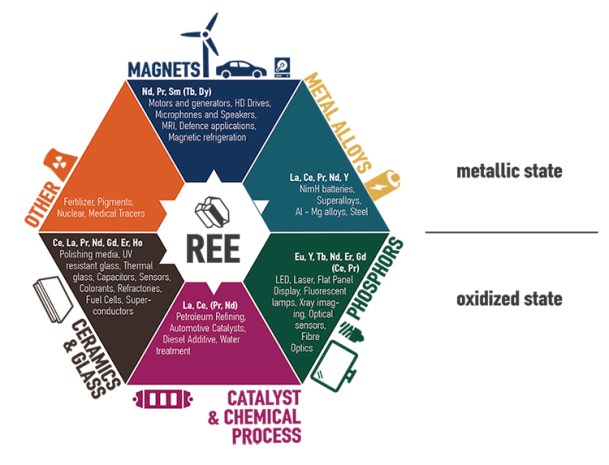
This bill is critical since the uses, applications, and demand for rare-earth elements has expanded over the years and underpin our entire electronics-driven society. Globally, most REEs are used for catalysts and magnets. In America, the majority of REEs are used for catalysts, ceramics, glass and polishing, petroleum refining, diesel additives, and magnet production for electric motors in hybrid and electric vehicles, generators in wind turbines, hard disc drives, portable electronics, microphones, and speakers.
Thorium is used in alloys, although a major use in the future will be to make energy in thorium nuclear reactors.
The rare metals Ce, La, Ga and Nd are important in alloy making, in the production of fuel cells, Nickel-metal hydride batteries, and in the production of LCD and plasma screens, smartphone cameras, fiber optics and lasers as well as in medical imaging. Additional uses for earth elements are as tracers in medical applications, fertilizers, agriculture and water treatment. It’s difficult to find a part of our society that is not dependent on rare metals.
Neodymium is now almost $54,000/ton and praseodymium is $59,000/ton.
Read more at: https://www.forbes.com/sites/jamesconca/2019/08/21/marco-rubio-knows-americas-future-depends-on-rare-elements/#29c5d30a6088

Samsung is rumored to be working on a smartphone that has a graphene battery. What’s with this kind of battery that the Korean giant wants it?
Graphene, touted as a “wonder material” is stronger than steel but lighter than paper. First created by scientists in 2004, it is a thin layer of pure carbon extracted from graphite and packed tightly into a honeycomb structure.
The material can be built into batteries to greatly enhance their performance. It can improve energy storage, helping to prolong battery life and enhance performance.
Graphene can also speed up energy transfer between batteries and chargers. Scientists believe that the material can act as a “superhighway” for charging because it allows energy to pass through very quickly — enough to charge a phone from zero to 100% in a mere 7 seconds.

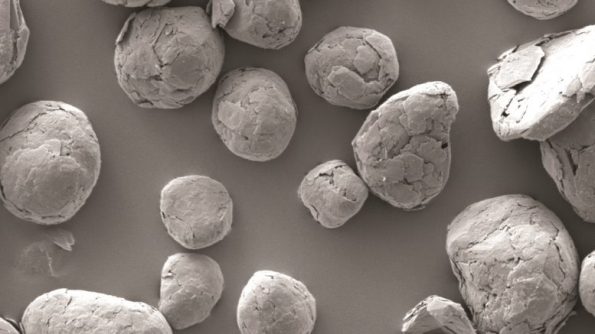
With the increasing adoption of electric vehicles (EVs) and energy storage technologies, there is little doubt demand will grow for battery raw materials that must be sourced from the mining industry.
We expect automotive companies and battery manufacturers to invest US$300 billion in the sector in the next 10 years, and they will require new battery mineral deposits to be developed.
Over the next 10 years, we expect demand related to battery raw materials to increase four times for lithium, five times for cobalt, and up to seven times for graphite.
Beyond that, vanadium will be required in increasing volumes for use in stationary batteries for energy storage in renewable energy installations, while rare earths already have a place in high-performance magnets widely used in electric motors and wind turbines.
Processing innovation
There will be pressure on the supply of specialty raw materials, and new deposit types are already being assessed for economic viability.
Innovation in mineral extraction and process development is needed to meet the challenges posed by end-use markets — especially in green technology, renewable energy and battery applications.
Already, physical and chemical specifications on mineral products and processed materials are only getting more stringent. Many products must reach 99.99% purity (“four nines”), but even more pronounced are the impurities themselves, at the parts per million level, as they risk affecting the performance of the final product.
Read more at: https://www.northernminer.com/news/commentary-innovation-is-needed-in-processing-of-battery-raw-materials/1003807563/

The mountains north of the village of Lingbeizhen in southern Jiangxi province no longer echo with the rumble of bulldozers and trucks. New bamboo groves climb the ravines. Tropical pines and navel orange trees grace terraces carved from the mountainsides, covering what was a hive of activity a few years back.
Higher up, where it is more difficult to replant and where erosion has taken its toll, nearly every knoll and mountaintop is scarred from mining activity. Black rubber hoses curl in the sun. PVC pipes, their ragged edges protruding from the red clay, mark where small crews of miners injected tons of ammonium sulfate, ammonium chloride, and other chemicals into the earth to separate valuable rare earth metals from the surrounding soil.
Beginning in the 1990s, rare earth mining took off in this region, located in Southeast China about 300 miles north of Hong Kong. As China began to produce more smartphones, wind turbines, electric vehicles, and other high-tech products requiring rare earth elements, the mining intensified. But the removal of these elements from the earth’s crust, using a mix of water and chemicals, caused extensive water and soil pollution.
Today, concrete leaching ponds and plastic-lined wastewater pools dot the hills. At one abandoned site, large wastewater ponds sit uncovered and open to the elements. Satellite images show dozens of similar pools dotting the mountains, all just one landslide or barrier failure away from a spill of their contaminated contents into waterways or groundwater.
Read more at: https://e360.yale.edu/features/china-wrestles-with-the-toxic-aftermath-of-rare-earth-mining
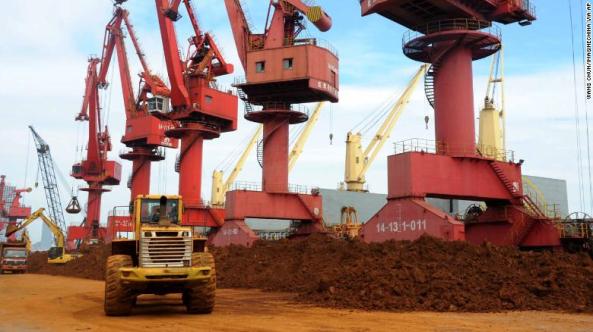
Hong Kong (CNN Business) China is preparing to tighten its grip on the supply of a group of minerals the global tech industry can’t live without.
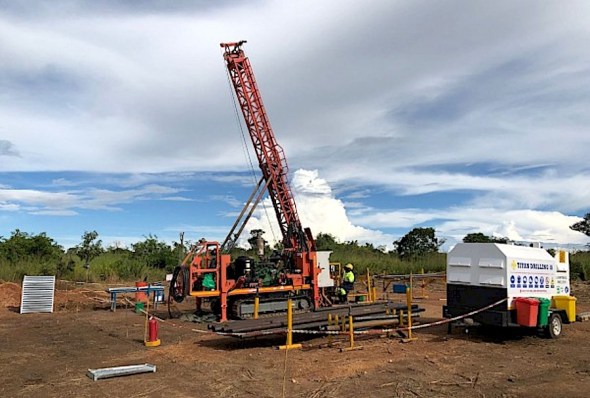
Ivanhoe Mines secured on Tuesday an additional C$612 million (about $464m) granted by its largest shareholder, China’s state-owned CITIC Metal, in April this year, which the Canadian miner is using to build a giant copper mine in the Democratic Republic of Congo.
The investment, now fully approved, is CITIC’s second major one in less than a year, bringing its total financing to about $1 billion.
WASHINGTON, June 20 (Reuters) – U.S. President Donald Trump and Canadian Prime Minister Justin Trudeau ordered officials on Thursday to develop a plan for U.S.-Canada collaboration on “critical minerals,” the White House said in a statement after a meeting of the two leaders.
Washington has grown concerned about its dependence on imports of rare earth minerals from China after Beijing suggested using them as leverage in their trade war.
Rare earths, a group of 17 elements that appear in low concentrations in the ground, are used in a wide variety of products ranging from lasers and military equipment to magnets found in consumer electronics.
China supplied 80% of the rare earths imported by the United States from 2014 to 2017.
Trump and Trudeau “instructed officials to develop a joint action plan on critical minerals collaboration,” the White House statement said. (Reporting by Eric Beech; Editing by Mohammad Zargham and Jonathan Oatis)
Source: https://finance.yahoo.com/news/1-trump-trudeau-seek-collaboration-215739132.html


 A Blog for Browsing Mining, Mineral Processing, and Metals Info