Midland Exploration Inc said on Monday it had struck a funding deal with a subsidiary of BHP Group Plc for nickel exploration in the Canadian province of Quebec.
The company’s partnership with Rio Algom Ltd to explore nickel in Nunavik comes as demand for the metal surges from use in automotive batteries to power electric cars.
As the world’s largest producer of nickel, Indonesia has been eyeing a more strategic position in the global supply chain for the development of lithium batteries and eventually, electric cars.
he government announced last year the start of development of an approximately $3.2 billion car battery factory in Morowali, Central Sulawesi, backed by Chinese battery manufacturer Contemporary Amperex Technology (CATL), among others.
Battery-maker PT International Chemical Industry, widely known for its ABC battery product, has also committed to pouring Rp 207.5 billion ($14 million) worth of investment to build lithium ion battery production facilities, commercial production of which is to commence by 2021, according to the Industry Ministry.
The company aims to produce 25 million lithium ion cell batteries per year, equivalent to 256 megawatt-hours (MWh) of electricity.
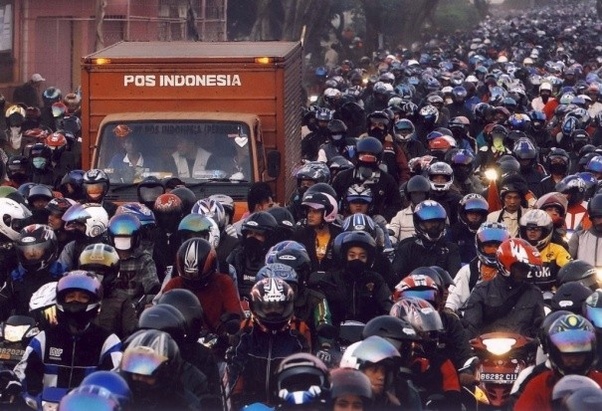
Despite the challenges, Nizam said Indonesia had a huge potential for EV battery demand in the future due to its population size, the growth of the global EV industry and the government’s support for low-emission vehicles.
According to his calculation, if 10 percent of scooters and motorcycles in Indonesia were converted into electric scooters, the demand for electric power through batteries would reach 15 gigawatts, adding that electric scooters could become the primary choice for short-haul vehicles in the future.
“Electric motorcycles and battery producers should aim to reach a range of 100 kilometers per charge for the motorcycle to reach its economic factor,” he said.
Europe has now overtaken China – not long ago responsible for every other electric car sold worldwide – as the globe’s largest EV market.
Recovery accelerates
The MINING.COM EV Metal Index, which tracks the value of battery metals in newly sold passenger EVs around the world surged 64% in June, after dropping to its lowest level since January 2018 in April.
The jump in raw material deployed in June lifted the value of battery raw materials tracked by the index in newly-sold EVs to $184 million for the month.
At $794 million year-to-date, the index is still more than 25% below 2019 levels although, as testament to the youth of the electric vehicle market, is almost double the value of the same period in 2017.
LFP gains
European carmakers favour higher energy density, longer-range NCM (nickel-cobalt-manganese) cathodes, which together with Tesla’s NCA (nickel-cobalt-aluminum) account for the vast majority of batteries in passenger EVs.
The continued adoption of nickel-rich cathode chemistries like NCM811 (which Tesla also uses in China for higher range models instead of NCA) also boosted raw material values per vehicle with the first half 2020 nickel sub-index surpassing the full year 2017 total.
The battery mix is likely to change this year, with LFP (lithium-iron-phosphate) units gaining market share, not least because Tesla has opted for this technology for its entry level Chinese Model 3s where range is less of a concern for motorists.
The proportion of NEVs sold in China installed with LFP batteries increased to just over 16% from January through July, an increase of 14% compared to the same period in 2019.
LFP batteries are significantly cheaper than NCM, but not likely to catch on outside China for light-duty vehicles, meaning market share growth should not come at the expense of cobalt, nickel and manganese demand.
When including the stationary energy storage market, LFP is likely to grow its share more rapidly with estimates of as high as 30% of the battery market by 2030, from 10% currently.
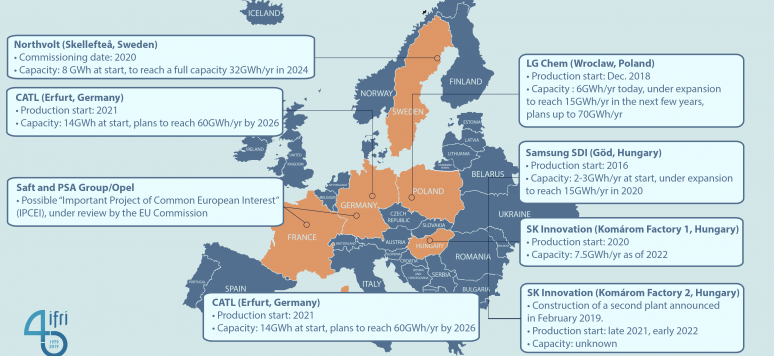
August 13 (Reuters) – European battery makers are gearing up to take advantage of massive “green” stimulus packages unveiled since the coronavirus pandemic though many acknowledge it will be tough to match the Asian giants that dominate the mainstream market.
While Sweden’s Northvolt, and more recently France’s Verkor, are making a play for large-scale production, other European companies are focusing on niche markets and new technologies rather than taking on Chinese and South Korean firms with mass production of batteries destined for electric vehicles (EVs).
Researchers at the Fraunhofer Institute for Reliability and Microintegration IZM have joined forces with partners in industry and healthcare to develop a handy graphene oxide-based sensor platform to detect acute infections such as sepsis or the antibodies against the coronavirus within minutes.
The current situation with the COVID-19 pandemic underscores the importance of detecting infections quickly and accurately to prevent further spread. Today, symptoms provide the clues that help diagnose viral or bacterial infections. However, many infections have similar symptoms, so these signs can easily be misread and the disease misdiagnosed. Blood tests provide certainty, but laboratories only carry these out when prescribed by the family physician. By the time the results arrive from the lab, doctors have often prescribed an antibiotic that may well be unnecessary.
Just one drop of blood for a diagnosis
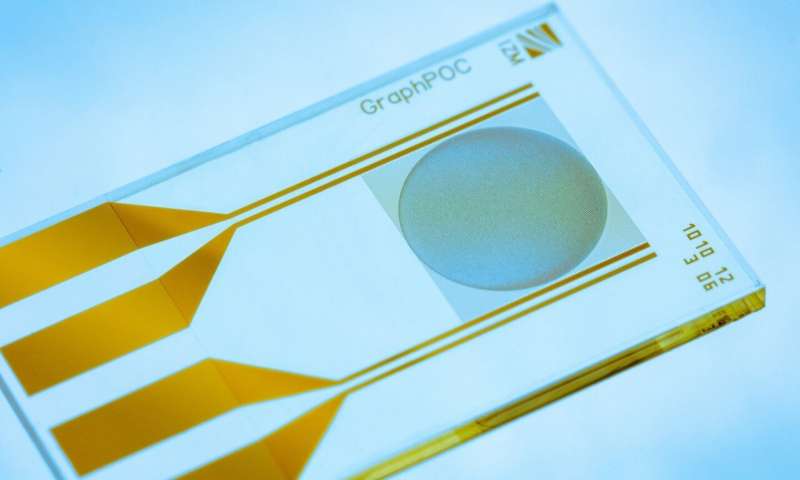
Researchers at the Fraunhofer IZM in Berlin have been working on the project Graph-POC since April 2018 on a graphene oxide-based sensor platform to rise to precisely these challenges in diagnosing infections. A single drop of blood or saliva is all it takes to perform an accurate analysis. Just a few minutes after the drop is applied to the sensor’s surface, electrical signals convey the test result to the family doctor’s office. This rapid test provides certainty within just 15 minutes to replace the protracted blood work in the lab. It takes the error and guesswork out of diagnosis so the physician can prescribe the appropriate treatment or suitable antibiotics.
The test may also be set up to detect antibodies that are present after a patient has recovered from an infection. Fraunhofer IZM researchers are now focusing on this application to detect earlier infections with the COVID-19 virus, which can help with efforts to trace how the infection has spread. The human body forms molecules or proteins called biomarkers in response to an infection. Capture molecules placed on the surface of the graphene-based sensor to detect these biomarkers. Differential measurements of biomarkers’ concentration determine if an infection is present.
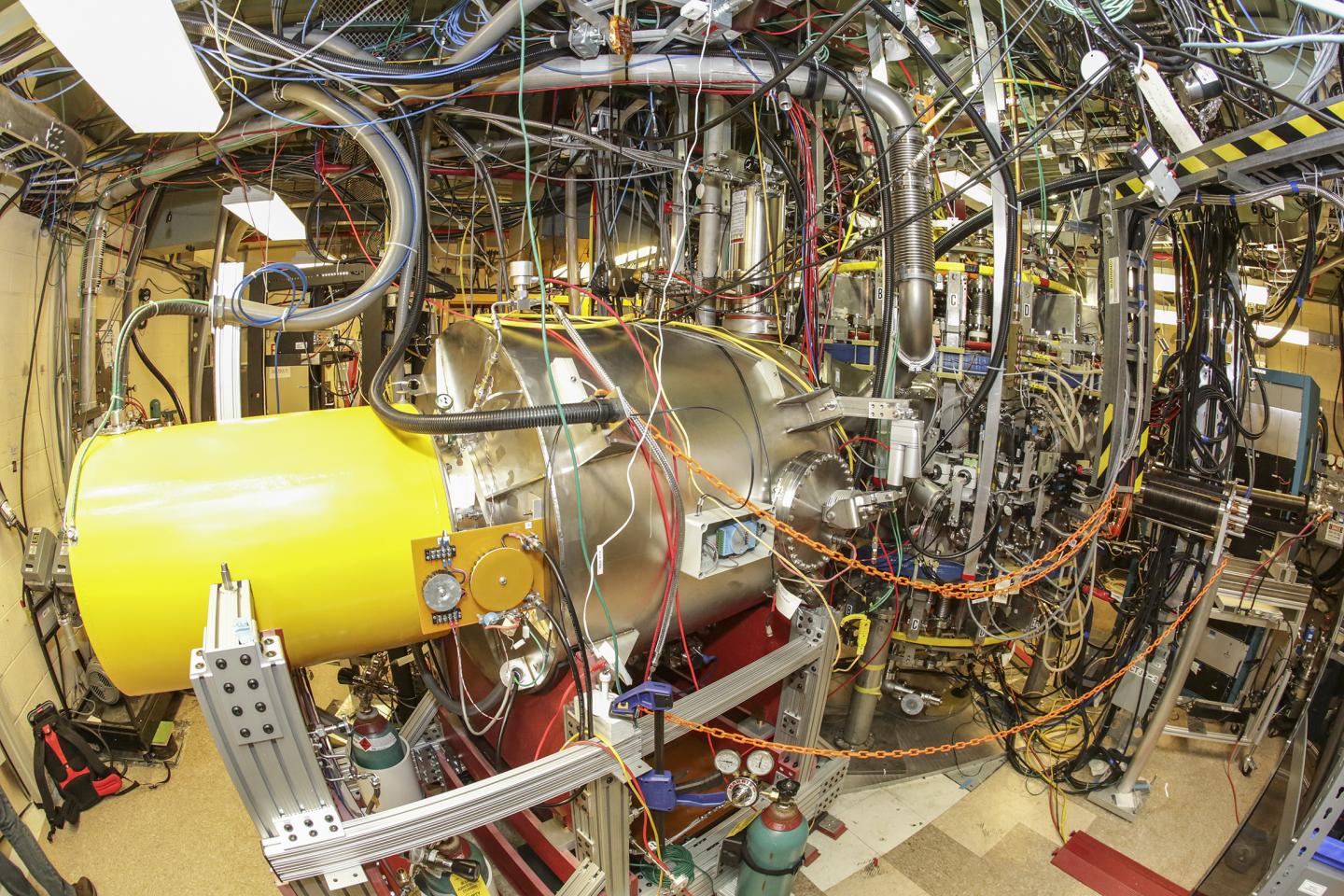
Lithium, the silvery metal that powers smart phones and helps treat bipolar disorders, could also play a significant role in the worldwide effort to harvest on Earth the safe, clean and virtually limitless fusion energy that powers the sun and stars. First results of the extensively upgraded Lithium Tokamak Experiment-Beta (LTX-β) at the U.S. Department of Energy’s (DOE) Princeton Plasma Physics Laboratory (PPPL), demonstrate that the major enhancements operate as designed and improve the performance of the hot, charged plasma that will fuel future fusion reactors.
Fusion reactions combine light elements in the form of plasma—the state of matter composed of free electrons and atomic nuclei that makes up 99% of the visible universe—to release enormous amounts of energy. Physicists around the world are seeking to duplicate and control fusion reactions to create boundless safe, carbon-free power to generate electricity.
SEOUL (Reuters) – Tesla Inc Chief Executive Officer Elon Musk said on Tuesday that the company is open to licensing software and supplying powertrains and batteries.
Tesla has previously supplied batteries to Mercedes and Toyota Motor <7203.T> under separate partnership deals. Battery manufacturing is an area that analysts and industry officials say the U.S. electric car maker has a competitive edge compared with legacy automakers.
“Tesla is open to licensing software and supplying powertrains & batteries. We’re just trying to accelerate sustainable energy, not crush competitors!” Musk said in message on Twitter.
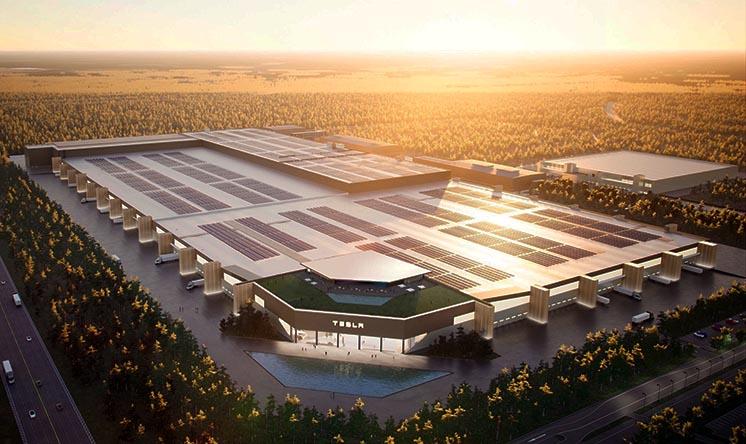
Tesla is also planning to build its own battery manufacturing facility at its Fremont, California, plant under its “roadrunner” project.
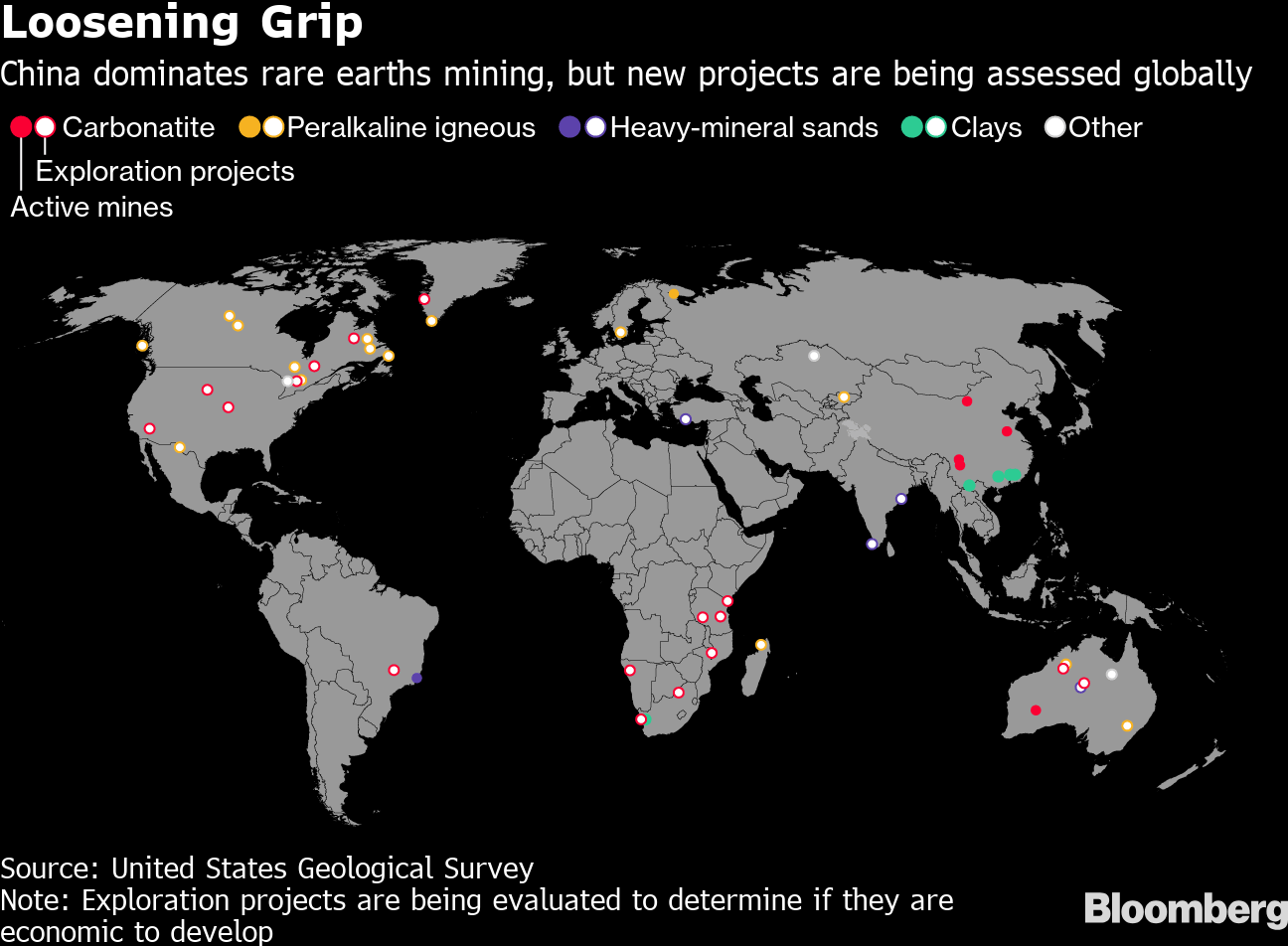
The U.S. Department of Defense has just committed funding for two rare earth separation plants on U.S. soil.
It’s one small step towards the Trump administration’s stated goal of breaking the country’s dependence on Chinese supplies of critical minerals.
But the direct involvement of the Pentagon underlines the scale of the task associated with creating from scratch a non-Chinese rare earths supply chain.
The United States was almost totally dependent on imports of rare earth compounds and metals last year, just as it was the year before and the year before that. China remained the largest supplier to the tune of around 80% of all imports, according to the United States Geological Survey (USGS).
That reliance on China for minerals with critical uses across a wide spectrum of civilian and military applications is becoming ever more problematic as Sino-U.S. relations deteriorate.
However, to break it, as the United States is finding out, requires a mix of direct government support, alliances with like-minded countries, and a long-term focus on the six-stage process chain from ore to rare earth magnet.
Elon Musk has a plea for mining companies: “Please mine more nickel.”
“Tesla will give you a giant contract for a long period of time if you mine nickel efficiently and in an environmentally sensitive way,” said Musk, chief executive officer of the electric-carmaker, during a second-quarter earnings call.
Musk’s plea comes as one of Japan’s general trading giants is about to take a roughly $500 million write down on a nickel project in Madagascar because of low prices and the coronavirus pandemic.
Supplies of battery-grade nickel — a key component in the cathode of an electric vehicle’s battery — could run short as early as 2023. BloombergNEF expects a tight balance in the next two to three years as lithium-ion battery demand picks up.
Nickel is just one metal still facing hurdles, despite the rebound in prices it saw in Q2. During the first half of 2020, mining and refining facilities for nickel were disrupted at a global scale, from the Philippines to Canada, as a result of coronavirus containment measures.
“We expect primary refined nickel supply to decline by a little more than 1 percent year-on-year in 2020 because of the disruptions,” Roskill Senior Analyst Jack Anderson told.
“By 2030, we forecast nickel demand from the batteries sector to account for a little over 25 percent of the total nickel market,” Anderson said. “These nickel-rich cathodes will also be joined by non-nickel-containing cathodes such as lithium iron phosphate, which is favored in the Chinese market for its lower cost and safety record in powering EVs.”
Despite the economic weakening due to the COVID-19 pandemic, Europe and China have strengthened their EV subsidy programs and maintained their CO2 and EV targets, which Roskill believes will continue to support EV adoption and therefore nickel demand from the battery space.
As the second half of the year begins, the world continues to be challenged by the uncertainty from COVID-19, with commodities being no exception.
“For nickel, we are waiting to see whether the Indonesian NPI producers are impacted by any outbreaks in the locations they operate,” Anderson said. “This is significant because it supplies NPI to Chinese stainless steel mills as well as integrated domestic operations.”
He also pointed to several battery-grade nickel intermediate projects under construction in Indonesia.
“The timely development of these projects to produce battery-grade nickel to feed the lithium-ion battery market could be under threat,” the expert said. “Roskill believes that battery-grade nickel intermediates are the pinch point in the EV battery supply chain.”











 A Blog for Browsing Mining, Mineral Processing, and Metals Info