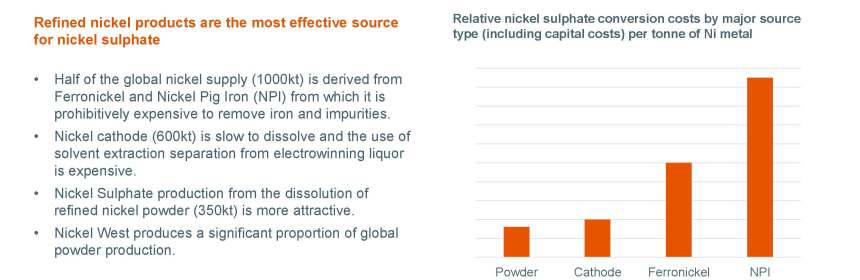
PERTH (miningweekly.com) – Global financial services provider Macquarie Group has called for investment into the nickel sector, despite an anticipated oversupply in the near-term and immediate investment in the nickel sector would be required to meet the potential “explosive” demand post 2025.
Lennon pointed out that world nickel use was expected to fall by 7.3% in 2020.
“The market is likely to get back into balance by 2024, and will move to a deficit by 2025,” Lennon told delegates.
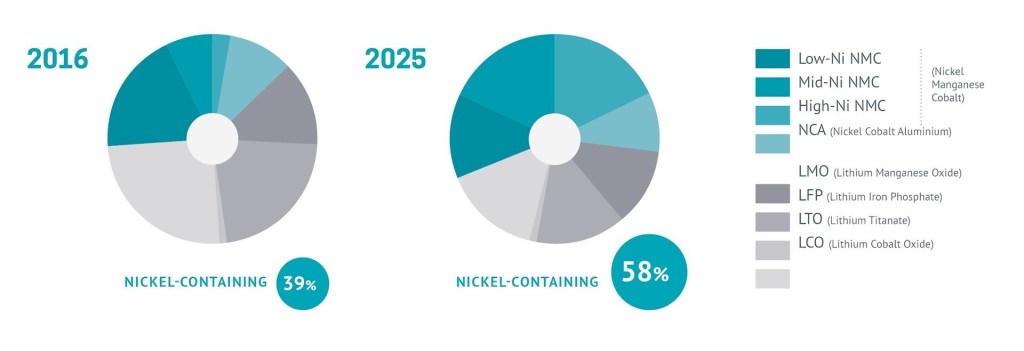
He pointed out that in the medium-term, the pace of growth of the stainless steel market, and the pace of uptake of nickel in the lithium battery market would determine nickel demand.
California needs batteries. When California is on fire, it needs batteries that can keep a home, a hospital, a fire station, a senior center running longer than the four-hour standard of lithium-ion.
“What’s happened that’s brought this to bear has been the wildfires and the contingency issues we have in the PSPS (public-safety power shut-off) events,” said Mike Gravely, research program manager for the California Energy Commission.
What California needs has outsized significance in the energy-storage industry. The state expects to install 2,400 megawatts of energy storage in the next two years, a market-driving number that is, even so, a mere fraction of the 20,000 to 30,000 MW Gravely expects the state to need by 2045.
Lithium-ion’s seeming limitation to four hours can also be traced to California. It’s not so much a feature of the technology as a feature of California’s market, Gravely explained. The grid operator there reimburses storage resources that supply a minimum of four hours and, he said, “that’s what’s been driving most of our systems.”
Price is one reason why Tesla might be looking at its own supplies of nickel with a strong recovery developing as the primary market for the metal, stainless steel, picks up, especially in China.
From $5 a pound as recently as March nickel has risen to trade around $6.50/lb and is forecast by Morgan Stanley to top the $7/lb mark next year.
Environmental sustainability is another issue with questions routinely raised about a mining and processing technology called Nickel Pig Iron which has caused problems in country’s such as Indonesia and the Philippines.
If Tesla is serious about ensuring future supplies of essential raw materials then nickel ought to be top of its mining plans.
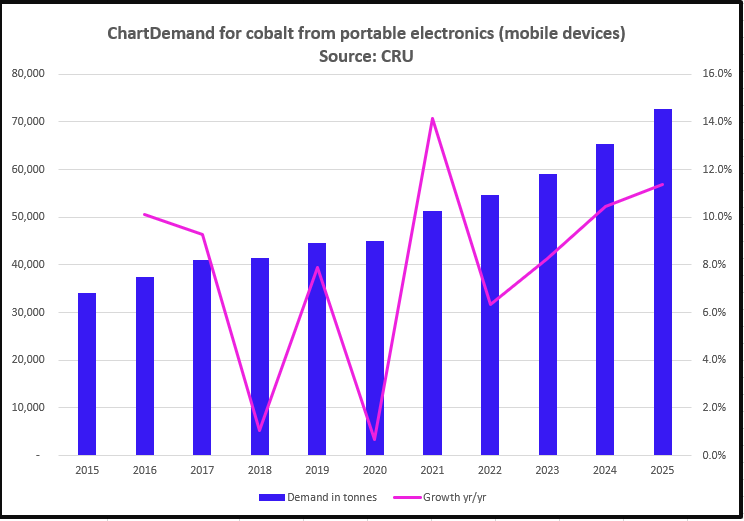
LONDON (Reuters) – The need for larger rechargeable batteries and more energy storage for 5G technology is expected to significantly boost demand for cobalt over coming years and potentially pit the sector against electric vehicle makers.
The fundamental challenge is economic. America’s goal should be secure supply chains, not national autarky of supply. The U.S. should do this by promoting domestic production; diversifying mineral imports away from China; cooperating with allies to insulate each other from Chinese control; developing multiple alternative supply chains; stockpiling rare earths to create shock absorbers in case of a crisis; and reducing demand by investing in alternatives.
Start with the fundamentals. Rare-earth elements exist in small quantities not easily separable from surrounding detritus. Significant known deposits exist in China, Brazil, Canada, Australia and India, as well as in the deep seabed. Sixteen of the 17 rare earths exist in the U.S. at a single west Texas site currently under development.
Their extraction and treatment is expensive and environmentally damaging, yet they are essential to $7 trillion in finished products. Wealthy countries have made licensing harder and raised other barriers, pushing the industry to China and Malaysia, where low labor costs and weak environmental enforcement make them economical.
As a report this year from the Colorado School of Mines concluded, “China’s strength is in refining those Rare Earth oxides into metallic alloys to manufacture end-products.” Breaking China’s monopoly will require development of processing plants and supply chains outside Beijing’s control.
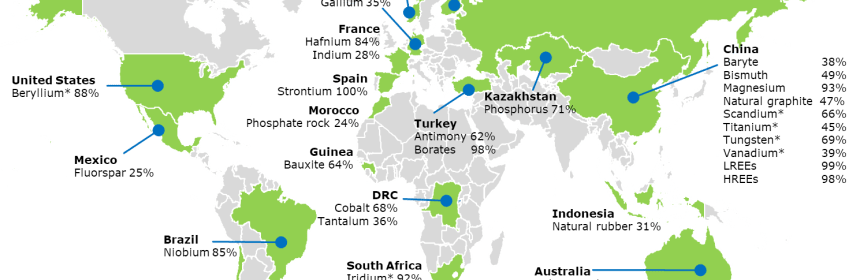
China dominates the global market in rare-earth minerals, producing 70% of the world’s exports. But this isn’t a gift of nature — it’s the result of 15 years of industrial policy. The Chinese government identified a critical economic chokehold, invested in building companies, subsidized production to underprice and ultimately destroy competition, and then constructed a monopoly.
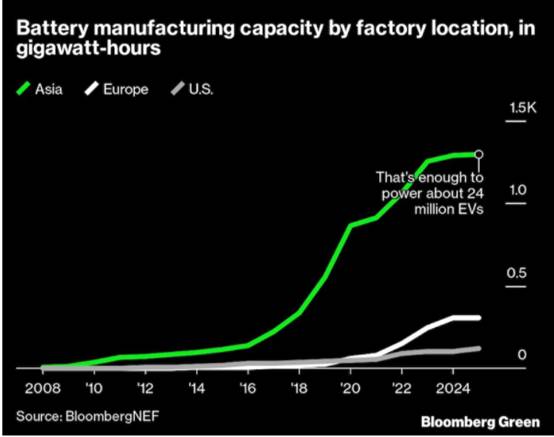
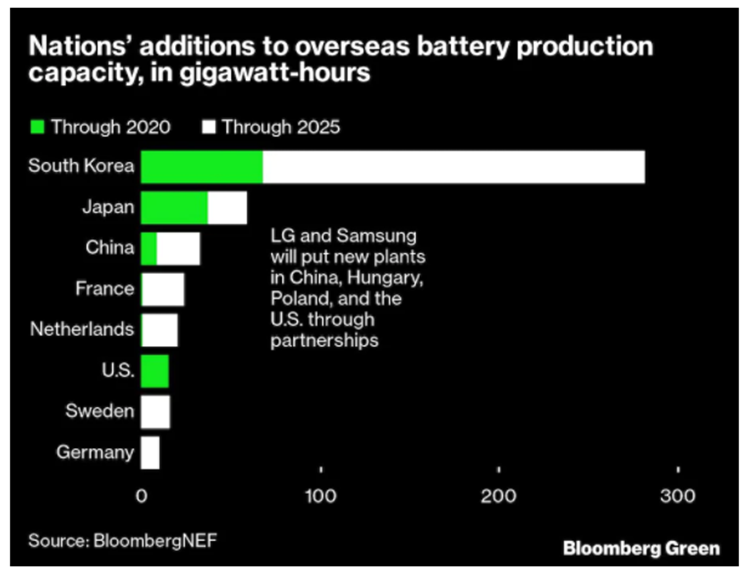
The global battery market to power EVs and consumer electronics and to store renewable energy on power grids will be worth about $116 billion a year by 2030, BloombergNEF forecasts, up from around $28 billion now. The U.S. is on course to capture only a small piece of that.
American and German automakers dominated the 20th century, pioneering and continually improving the internal-combustion engine. Japan and China, which industrialized later, were left to play catch-up. But now Asia—led by China and South Korea—leads the way in developing cheap, powerful technology for the EV era.
U.S. industries will suffer if rising battery demand is met only by foreign companies, experts say, and job losses in the already shrinking auto sector will be even greater if cell production is concentrated overseas.
Indonesia is keen to create a full nickel supply chain industry, starting from mining the ore, extract nickel chemicals used in EV batteries, down to building EVs at home.
Indonesia this year stopped exports of unprocessed nickel ore to ensure its nickel supply will be processed domestically, including for the battery chemical plants that are currently under constructions.
Indonesia sets an ambitious target on the adoption of electric vehicles (EV) with 2.1 million e-motorcycles and 2,200 e-cars expected to take the road by 2025. However, the availability of charging infrastructure and expensive price of EV remain to be the main challenges for the EV adoption.
The Indonesian government put high hopes on e-motorcycles adoption, while the development of e-cars is directed at certain areas, such as tourist areas, industries, and offices. The government also aimed the electric vehicles to be used as public transportation and operational vehicles.
BRUSSELS, Sept 3 (Reuters) – The European Commission added battery element lithium to its critical raw materials list on Thursday and set out a plan to guarantee their supply to support a green recovery.
The European Union needs to diversify its sources of materials, ranging from silicon to rare earths, the Commission said, an issue highlighted after global supply chains were disrupted when the COVID-19 pandemic struck.
The EU executive, which first drew up a list of critical raw materials in 2011 in response to booming commodity prices, said it had added lithium, aluminium ore bauxite, titanium – used in aerospace and for orthopaedic implants, and strontium.













 A Blog for Browsing Mining, Mineral Processing, and Metals Info