Rulings nullify patents in industries it deems important, including technology, pharmaceuticals and rare-earth minerals.
The growing conflict between China and the U.S. extends from computer-chip factories to a suspected spy balloon over American skies. Running through it all is a struggle for technological superiority.
China has striven for years to develop cutting-edge technologies, in part through heavy spending on research. Now, according to Western officials and executives, it also has mobilized its legal system to pry technology from other nations.
Competition, government incentives and falling raw material prices are making battery-powered cars more affordable sooner than expected.
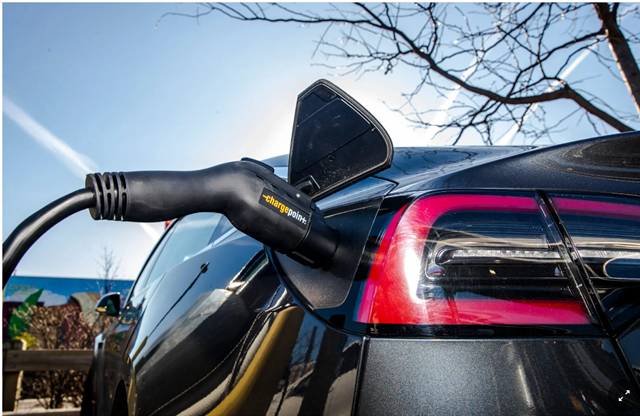
More quickly than seemed possible a few months ago, sticker prices for electric vehicles are falling closer to the point where they could soon be on a par with gasoline cars.
Increased competition, government incentives and falling prices for lithium and other battery materials are making electric vehicles noticeably more affordable. The tipping point when electric vehicles become as cheap as or cheaper than cars with internal combustion engines could arrive this year for some mass market models and is already the case for some luxury vehicles.
Prices are likely to continue trending lower as Tesla, General Motors, Ford Motor and their battery suppliers ramp up new factories, reaping the cost savings that come from mass production. New electric vehicles from companies like Volkswagen, Nissan and Hyundai will add to competitive pressure.
The battery-powered version of G.M.’s Equinox crossover, for example, will start around $30,000 when it arrives this fall, the carmaker has said. That is $3,400 more than the least expensive gasoline-fueled Equinox. But factoring in government incentives, the electric Equinox should be cheaper. Like all electric vehicles, the car will need less maintenance, and the electricity to power it will cost less than the gasoline used by its combustion engine equivalent.
Congo accounts for three-quarters of the world’s mined cobalt supply. Industrial mines produce most of Congo’s cobalt, but “artisanal” miners, who dig by hand and often die when tunnels cave in, account for up to 30% of production, though that fluctuates depending on price.
Companies that use cobalt in products from electric cars to smartphones should work to improve conditions at artisanal mines instead of seeking to cut artisanal cobalt out of their supply chains, an independent report on the visit argued on Wednesday.
As consumers become more concerned that the products they buy are tainted by poor working conditions or child labour, global tech firms and carmakers have been using less mined cobalt in their batteries by increasing recycling and switching to lower-cobalt chemistries.
The metals demand from the energy transition “may top current global supply,” the International Monetary Fund warned in a 2021 analysis. Difficulty securing materials such as lithium, cobalt, tellurium and copper could hamper the shift to cleaner energy, Imperial College London’s Energy Futures Lab wrote in December.
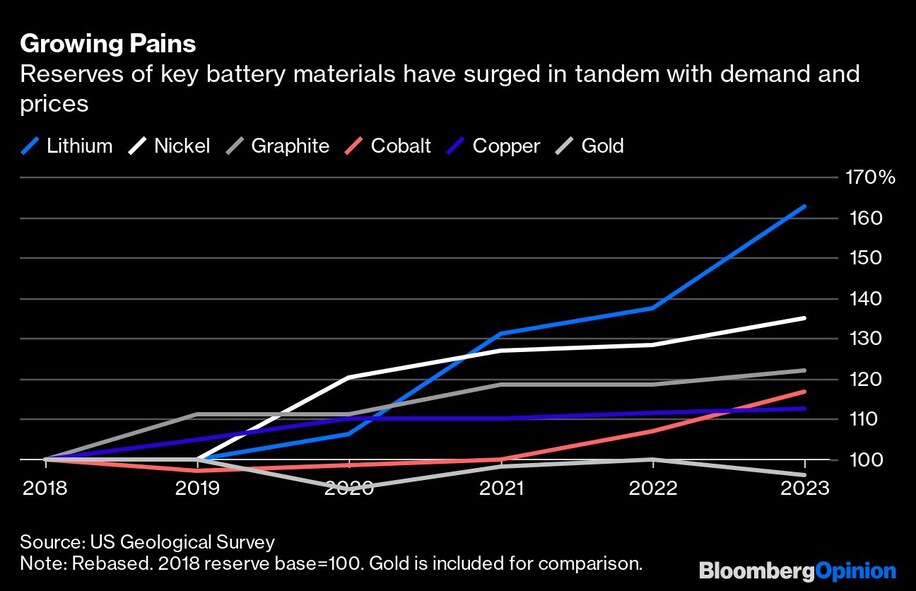
New data from the US Geological Survey show why some of those fears are likely to be overblown. Each year, the USGS analyzes almost every commodity on earth, from iron ore to indium and palladium to peat, to get a handle on whether production is sufficient to meet the world’s — and in particular, America’s — needs.
The latest figures show a boom in supplies of many of the most important minerals for the energy transition. Lithium reserves are up 18% from last year. Cobalt has seen a 9.2% gain. Rare earths, which have a range of high-tech applications including magnets in electric car motors and wind turbines, saw reserves up 8.3% after standing still for at least five years.
Recycling of lithium-ion batteries for electric cars and consumer electronics is an urgent priority given tight global supplies of pricey metals like lithium, nickel and cobalt, but it has a downside: current techniques like controlled burning can release toxic chemicals. Scientists at Lawrence Berkeley National Laboratory, however, say they’ve found a solution: a new material that allows old lithium-ion cells to be recycled with just water. And it could soon make battery recycling cheaper and safer.
Battery cells use glue-like binders to hold the positively charged cathode and negatively charged anode—the elements that transmit electricity—together. Lawrence Berkeley’s material is a “quick-release” binder made from two widely available polymers that dissolves when placed in room-temperature alkaline water containing sodium hydroxide. The battery metals can then be filtered out of the solution and air-dried, the researchers said. There’s no burning and no release of toxins.







 A Blog for Browsing Mining, Mineral Processing, and Metals Info