
#Swedish research multiplies the life of rechargeable #NiMH batteries
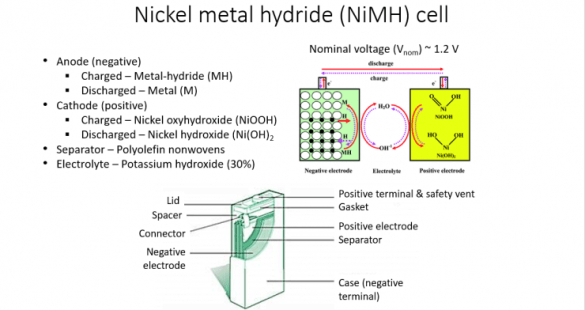
Researchers at #Stockholm University have developed a method to multiply the lifespan of nickel-metal hydride batteries. This means that the batteries can handle a great many more charging cycles without losing capacity. The new method also means that the batteries can easily be restored once they have begun to wear out, unlike other rechargeable batteries that must be melted down for recycling.
Most rechargeable batteries are based on either lead, nickel-cadmium (NiCd) or various combinations with lithium. Batteries based on nickel-metal hydride (NiMH) with an aqueous electrolyte are both eco-friendly and safe. The NiMH battery is developed from the nickel-hydrogen battery (NiH2). It has long been known that (NiH2) batteries have a superior lifespan compared to other battery types. This is why they are (for example) used in satellites in orbit in space, where the batteries must function for decades without servicing. The Hubble space telescope is one example, but NiH2 batteries are also spinning around our neighboring planets. However, these structures of the batteries are impractically large, because the hydrogen is stored in gas tanks. NiMH batteries can be made much more compact, because the hydrogen is stored in a metal alloy/metal hydride with a hydrogen density equivalent to that of liquid hydrogen. Researchers at Stockholm University has now developed a technique by which to achieve the same long lifespan for NiMH batteries as in the large NiH2 batteries.
The inspiration for the new technology came from a new NiMH battery manufactured by Nilar AB in Gävle.
Read more at: https://phys.org/news/2018-12-swedish-life-rechargeable-nimh-batteries.html#jCp





 A Blog for Browsing Mining, Mineral Processing, and Metals Info