Category Archives: Related Inventions

Ames Laboratory scientists create cheaper magnetic material for cars, wind turbines

Melting material in preparation for producing a new type of magnet

Karl A. Gschneidner and fellow scientists at the U.S. Department of Energy’s Ames Laboratory have created a new magnetic alloy that is an alternative to traditional rare-earth permanent magnets.

The new alloy—a potential replacement for high-performance permanent magnets found in automobile engines and wind turbines—eliminates the use of one of the scarcest and costliest rare earth elements, dysprosium, and instead uses cerium, the most abundant rare earth.

The result, an alloy of neodymium, iron and boron co-doped with cerium and cobalt, is a less expensive material with properties that are competitive with traditional sintered magnets containing dysprosium.

Read more at: http://www.rdmag.com/news/2015/04/ames-laboratory-scientists-create-cheaper-magnetic-material-cars-wind-turbines

Researchers used 4D printing to create a valve that opens and contracts according to water temperature

While 3D printing technology has proven to be a revolutionary solution with wide-ranging technological applications, a number of research teams have already begun looking beyond 3D printing, to the realm of 4D printing technology. While a number of 4D printed successes have already been achieved, researchers from the University of Wollongong in Australia have now created something very remarkable: a 4D printed a valve that automatically opens and contracts when exposed to either water or to high temperatures.

Read more at: http://www.3ders.org/articles/20150424-researchers-used-4d-printing-to-create-self-folding-valve.html

Solar Roadways pushes ahead with power-producing pavement

To demonstrate the concept, the company has created a small parking lot at its headquarters, using 108 solar panels. Vehicles have been driven onto the space, without damaging the panels.

The solar panels that Idaho inventors Scott and Julie Brusaw have built aren’t meant for rooftops. They are meant for roads, driveways, parking lots, bike trails and, eventually, highways.

Scott Brusaw, an electrical engineer, says the hexagon-shaped panels can withstand the wear and tear that comes from inclement weather and vehicles, big and small, to generate electricity.

Read more at: http://www.cbc.ca/news/technology/solar-roadways-pushes-ahead-with-power-producing-pavement-1.2703852

Scientists invent aluminium battery that charges a phone in a minute

Stanford University scientists have invented a way to recharge a phone in minute using an aluminium battery.

In a breakthrough Stanford University has invented the first high-performance aluminium battery that is fast-charging, long-lasting and inexpensive. It is also flexible too so can be used in new folding devices in development.

However at present the rechargeable aluminium battery generates about two volts of electricity, the highest achieved yet with aluminium.”

Read more at: http://www.telegraph.co.uk/technology/mobile-phones/11518767/Scientists-invent-aluminium-battery-that-charges-a-phone-in-a-minute.html

Smartphones to produce high-resolution 3D images

Imagine pulling smartphone out of your pocket, taking a snapshot of an object with its integrated 3D imager, sending it to the 3D printer and within minutes you have reproduced an accurate replica of the original object.

This feat may soon be possible because of a new tiny high-resolution 3D imager developed by researchers at California Institute of Technology.

ORNL-led team demonstrates desalination with graphene membrane

Nature Nanotech Pores

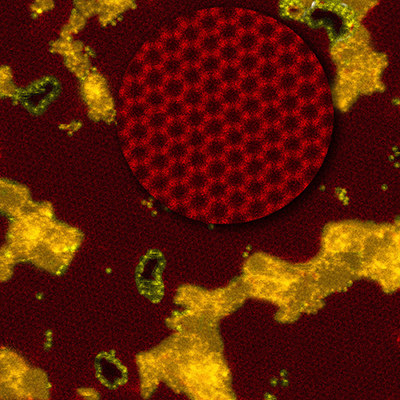
A team of experimentalists led by the U.S. Department of Energy’s Oak Ridge National Laboratory has demonstrated an energy-efficient desalination technology that uses a porous membrane made of strong, slim graphene—a carbon honeycomb one atom thick. The results are published in the March 23 advance online issue of Nature Nanotechnology

Read more at: http://oakridgetoday.com/2015/03/30/ornl-led-team-demonstrates-desalination-with-graphene-membrane/

Santhi Particles: The smallest superparamagnetic plant materials

The unique distinction of having invented the world’s first superparamagnetic particle of plant material has been accorded to Dr T Theivasanthi, a faculty member of the international research centre of Kalasalingam University.

Students create clean drinking water solution in Sri Lanka – Collegiate Times : News

The Society of Military Engineers (SAME) at Virginia Tech is creating a solar-powered water purification system for export to Sri Lanka.

SAME is the brainchild of sophomore electrical engineering major Michael Sherburne, public relations coordinator for the group. Last year, he saw an opportunity to help while spending eleven weeks in Morocco, Turkey and finally Sri Lanka through Tech’s 21st Century Studies fellowship program.

Read more at: Students create clean drinking water solution in Sri Lanka – Collegiate Times : News.

New low-calorie rice could help cut rising obesity rates


A new, easy method for cooking rice could reduce calories by as much as 60 percent. Credit: Anoja Megalathan, Institute of Chemistry, College of Chemical Sciences, Sri Lanka

Scientists have developed a new, simple way to cook rice that could cut the number of calories absorbed by the body by more than half, potentially reducing obesity rates, which is especially important in countries where the food is a staple.

The presentation will take place here at the 249th National Meeting & Exposition of the American Chemical Society (ACS).

Read more at: http://phys.org/news/2015-03-low-calorie-rice-obesity.html#jCp

Advancement in Innovative Agricultural Nano-Bio-Fertilizers

Dr. Theivasanthi, a woman research faculty of International Research Center, Kalasalingam University has advanced a step ahead in the innovative field of agricultural nano-bio-fertilizers. She has made an art of science for the development of both plants and cultivating land. She has utilized nanotechnology in such a sense, towards creation of wealth from waste. Enhanced efficiency, nourishing crops in more effective ways, low price, large production within short period, safe to environment and renewable are the salient features of this new fertilizer technology.

Read more at: http://www.pr.com/press-release/601533

« Older Entries Recent Entries »