
Category Archives: Related Inventions

Chinese nickel pig iron prices robust
Nickel pig iron prices in China moved up this week after stainless steel mills raised their purchase prices and producers withheld material as ore became more expensive.
High grade NPI (Ni 10-15%) was traded at 990-1,010 yuan ($161) per nickel unit in the local spot market on Tuesday March 11, up 10 yuan from a week ago. Zhangjiagang Pohang Stainless Steel and Xinan Stainless Steel have both increased their price of high-grade NPI by 10 yuan from previous level to 1,020 yuan and 1,040 yuan per nickel unit, respectively, sources in China told.
Read more at: http://www.metalbulletin.com/Article/3318374/Channel/197818/Chinese-nickel-pig-iron-prices-robust.html
Share this:

ORNL and Cincinnati Inc. sign an agreement on additive manufacturing
Cincinnati Incorporated (Harrison, Ohio) and the Department of Energy’s Oak Ridge National Laboratory (ORNL, Oak Ridge, Tenn.) have signed a partnership agreement to develop a new large-scale additive manufacturing system capable of printing polymer components up to 10 times larger than currently producible, and at speeds 200 to 500 times faster than existing additive machines. The cooperative research and development agreement – signed at ORNL’s Manufacturing Demonstration Facility in Oak Ridge, TN – aims to introduce significant new capabilities to the U.S. machine tool sector, which supplies manufacturing technology to a wide range of industries including automotive, aerospace, appliance and robotics. A prototype of the large-scale additive machine is in development using the chassis and drives of Cincinnati’s gantry-style laser cutting system as the base, with plans to incorporate a high-speed cutting tool, pellet feed mechanism and control software for additional capability.
Read more at: http://www.compositesworld.com/news/ornl-and-cincinnati-inc-sign-an-agreement-on-additive-manufacturing
Share this:

Discovery of highly promising new class of Nickel-Platinum Nanocatalyst
A big step in the development of next-generation fuel cells and water-alkali electrolyzers has been achieved with the discovery of a new class of bimetallic nanocatalysts that are an order of magnitude higher in activity than the target set by the U.S. Department of Energy (DOE) for 2017.
Read more at: http://www.rdmag.com/news/2014/02/researchers-discover-highly-promising-new-class-nanocatalyst
Share this:

General Electric could get $15 million a year from Kentucky incentive program
LOUISVILLE, Ky. (WDRB) — General Electric Co. could get $15 million a year from Kentucky taxpayers under a bill pushed by State Rep. Larry Clark of Louisville, according to a new analysis by the Legislative Research Commission.
GE — which makes dishwashers, laundry machines and refrigerators at its 60-year-old Appliance Park factory in Louisville — has already been promised $20.5 million from the state coffers over 10 years, or about $2 million a year.
But Clark’s bill would sweeten the taxpayer assistance to GE by offering the same mega-deal incentives the state currently reserves for automakers such as Ford Motor Co. and Toyota and for their suppliers.
Read more at: http://www.wdrb.com/story/24829599/general-electric-could-get-15-million-a-year-from-kentucky-incentive-program
Share this:

Ames Lab, Critical Materials Institute speed metals research
To find alternatives to rare-earth elements and other critical materials, scientists will need new and advanced tools. The Critical Materials Institute at the U.S. Department of Energy’s Ames Laboratory, operated by Iowa State University, has a new one: a 3D printer for metals research.
The Critical Materials Institute (CMI) will apply the advantages of the 3D printing process for materials discovery, so researchers can find substitutes to critical materials at risk of being in short supply. CMI scientists will use the printer instead of traditional casting methods to streamline the process of bulk combinatorial materials research, producing a large variety of alloys in a short amount of time.
“Metal 3D printers are slowly becoming more commonplace,” said Ryan Ott, principal investigator at the Ames Laboratory and the CMI. “They can be costly, and are often limited to small-scale additive manufacturing in industry. But for us, this equipment has the potential to become a very powerful research tool. We can rapidly synthesize large libraries of materials. It opens up a lot of new possibilities.”
Read more at: http://www.onlineamd.com/ames-lab-critical-materials-institute-metals-research-022214.aspx
Share this:

How a pomegranate inspired a new lithium ion battery design
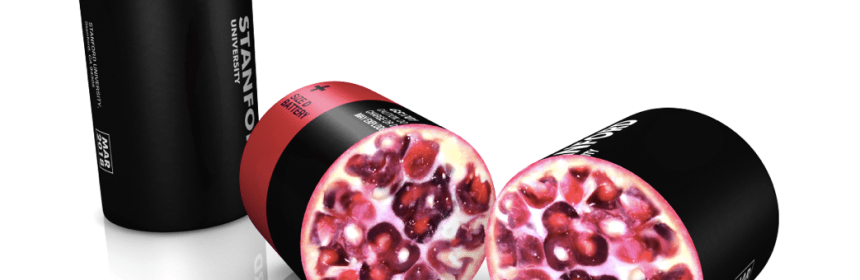

The lithium ion battery could get a boost from the humble pomegranate. According to researchers at Stanford, including Amprius founder Yi Cui, and the SLAC National Accelerator Laboratory, clustering tiny silicon particles in a hard carbon rind — like seeds in a pomegranate — could be a helpful design breakthrough for using silicon in the next generation of lithium ion batteries.
A lithium-ion battery — the standard being used in gadgets today — is made up of three pieces: an anode, a cathode and an electrolyte that shuttles lithium-ions between the cathode and anode. That shuttling process is what happens when you charge and discharge a battery.
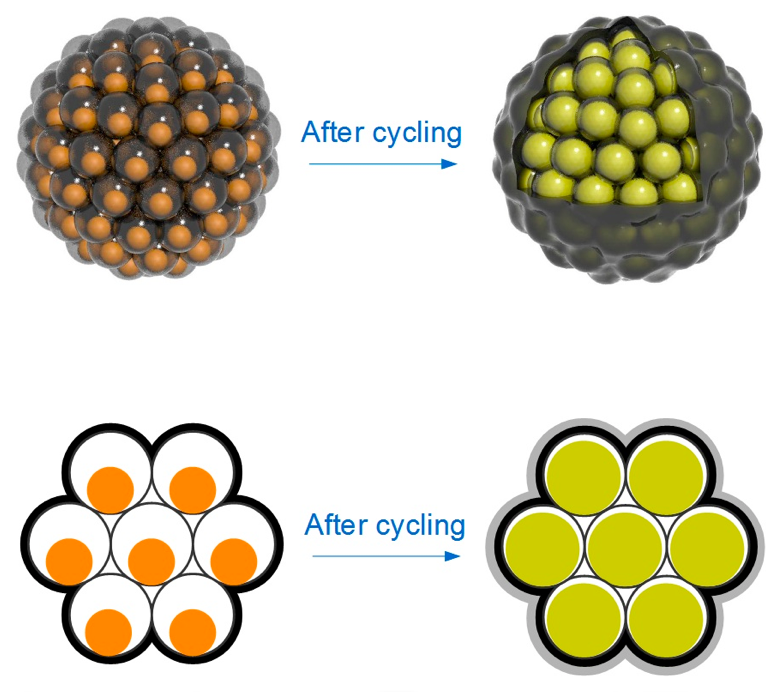
Scientists have long wanted to use silicon in the anode of a lithium ion battery because it can hold more energy per given volume than the traditional graphite that is commonly used — so a silicon anode battery could be smaller and…
View original post 146 more words
Share this:

AREVA Initiates Mining Innovation Center Project
AREVA (Paris:AREVA) initiated this week the project for the construction of the Mining Innovation Center at its Bessines site (Limousin, France). This facility for mining research and expertise represents an investment of 33 million euros and will entail the construction of a new building.
Current activities at SEPA (Service d’Etudes de Procédés et Analyses) are lead by a team of 80 people who develop new processes for mineral ore treatment. Created in the 1980’s, the SEPA is currently divided between two separate buildings: one unit for developing pilot projects and a dedicated analysis laboratory.
Read more at: http://online.wsj.com/article/PR-CO-20140214-911269.html
Share this:

NASA boards the 3-D-manufacturing train
Given NASA’s unique needs for highly customized spacecraft and instrument components, additive manufacturing, or “3-D printing,” offers a compelling alternative to more traditional manufacturing approaches.
“We’re not driving the additive manufacturing train, industry is,” said Ted Swanson, the assistant chief for technology for the Mechanical Systems Division at NASA’s Goddard Space Flight Center in Greenbelt, Md. Swanson is the center’s point-of-contact for additive manufacturing. “But NASA has the ability to get on-board to leverage it for our unique needs.”
Read more at: http://phys.org/news/2014-02-nasa-boards-d-manufacturing.html#jCp
Share this:

Self-assembly of graphene oxide coated soft magnetic carbonyl iron particles and their magnetorheology
The surface of carbonyl iron (CI) microspheres was modified with graphene oxide (GO) as a coating material using 4-aminobenzoic acid as the grafting agent. The morphology, elemental composition, and magnetic properties of the GO-coated CI (GO/CI) particles were examined byscanning electron microscopy, energy dispersive X-ray spectroscopy and vibrating samplemagnetometry, respectively, confirming their composite formation. The magnetorheological(MR) performance of the GO/CI particle-based suspension was examined using a rotational rheometer connected to a magnetic field supply. The GO/CI particles suspension exhibited typical MR properties with increasing shear stress and viscosity depending on the appliedmagnetic field strength.
Source: http://scitation.aip.org/content/aip/journal/jap/115/17/10.1063/1.4863381

 A Blog for Browsing Mining, Mineral Processing, and Metals Info